 Semiahmoo Siding
 Custer's Climate Is Harder on Windows Than It Looks
Custer sits in that stretch of northern Whatcom County where the weather off the Strait of Georgia and the Semiahmoo area shapes almost every exterior decision on a house. It's not dramatic weather most days — no hurricanes, no hailstorms — but it is relentless. Salt-laden air moves inland off the water, driving rain comes in sideways during fall and winter storms, and the region's long stretches of damp, low-light weather keep everything from siding to window sills perpetually a little wet. That combination is exactly what window systems are worst at handling when they're installed with shortcuts.
A window that would last 25 years without complaint in a dry inland climate can start failing in half that time out here if the flashing, sealants, or fit weren't done correctly the first time. Moss and algae growth on sills and lower sashes, fogged glass from failed seals, and soft trim around window openings are common calls we get on homes throughout this part of the county — and almost all of it traces back to water finding a path in.
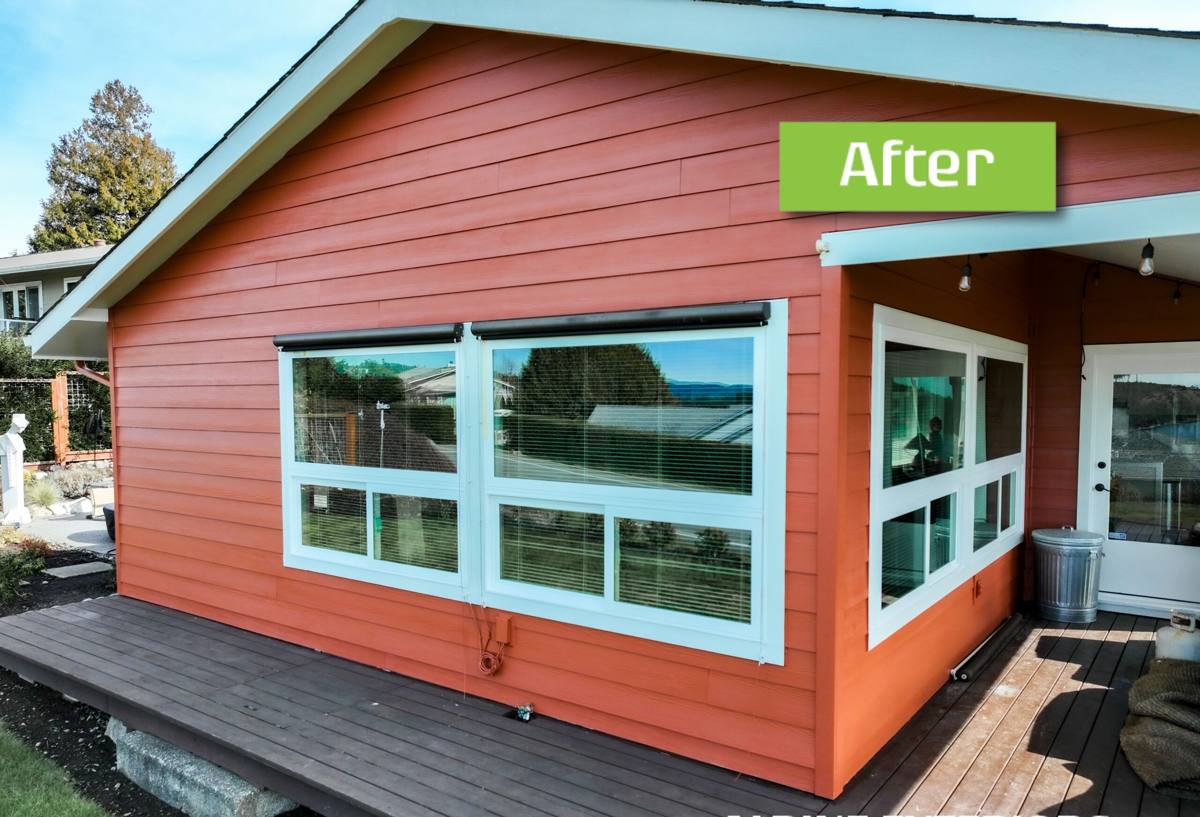
What "Correct" Window Installation Actually Means
Window installation looks simple from the curb — pull the old unit, set the new one, caulk the edges. Done that way, it's also one of the most common sources of hidden water damage in this climate. A correct installation is really about water management first and appearance second.
Flashing and Water Management
Every window opening needs a drainage path that assumes water will get behind the trim eventually — because in a wet marine climate, it will. That means properly lapped flashing tape at the sill, jambs, and head, a sloped sill pan so any water that gets in drains back out instead of pooling on the framing, and integration with the home's weather-resistive barrier so water sheds down and over the opening rather than into the wall cavity. Skipping or rushing this step is invisible on installation day and expensive five or ten years later.
Air Sealing and Insulation
The gap between the window frame and the rough opening needs to be sealed and insulated correctly — not overpacked with expanding foam that can bow the frame, and not left with gaps that let cold, damp air infiltrate. Done right, this also reduces the condensation on interior glass that a lot of Custer homeowners deal with during our colder, wetter months.
Structural Fit and Shimming
A window has to be plumb, level, and square in the opening, shimmed at the correct load points so the frame doesn't rack over time. A slightly out-of-square window puts uneven stress on the seals and hardware, which is often why an otherwise decent window starts sticking, leaking air, or leaking water years before it should.
Signs Your Current Windows Are Past Their Service Life
Not every issue means full replacement — some are fixable with re-caulking or hardware repair. But in a climate like ours, these are the signs worth taking seriously:
- Fogging or a visible film between panes of double-glazed glass — the seal has failed and can't be repaired, only replaced
- Soft or discolored wood trim, sills, or framing around the window, especially on north- and west-facing walls that take the brunt of driving rain
- Moss or algae buildup on the sill or lower sash that returns quickly after cleaning
- Drafts you can feel with a hand near the frame on a windy day
- Windows that are difficult to open, close, or lock — often a sign the frame has shifted or swollen
- Visible daylight or gaps around the frame from outside
- A noticeable jump in heating costs without any other explanation
Choosing Windows for a Coastal-Influenced Climate
Material choice matters more here than it does in drier parts of the state. Salt air accelerates corrosion on certain hardware and fasteners, and constant moisture punishes anything prone to swelling, rot, or paint failure. Here's how the common options generally compare for a home in this area:
| Material | How It Handles This Climate | Maintenance | Typical Trade-Offs |
|---|---|---|---|
| Vinyl | Doesn't rot, resists moisture well, unaffected by salt air | Low — occasional cleaning | Frame color/style options are more limited; quality varies a lot by manufacturer |
| Fiberglass | Very stable in temperature and moisture swings, holds paint well | Low to moderate | Higher upfront cost than vinyl |
| Wood (clad exterior) | Good insulator, classic look, but exterior cladding must stay intact to protect the wood core | Higher — any breach in the exterior clad finish needs prompt attention | More installation-sensitive; a small flashing mistake causes bigger problems over time |
| Aluminum | Strong but a poor insulator and more prone to condensation and corrosion near salt air | Moderate | We generally steer homeowners away from it for this specific climate |
We don't push one brand or material on every job. The right call depends on the specific wall, sun exposure, and how much upkeep a homeowner actually wants to do. What we won't do is install a product in a location where its known weak points — moisture sensitivity, corrosion risk, or a maintenance schedule the homeowner isn't prepared to keep up with — are going to cause problems in a climate like Custer's.
Our Installation Process, Start to Finish
- On-site assessment. We look at each opening individually — not every window on a house needs the same fix, and we'll tell you honestly if a window needs replacing versus just re-sealing or repairing.
- Measurement and product selection. Exact rough-opening measurements, discussion of material and glazing options suited to that wall's sun and weather exposure.
- Removal of the old window. Careful removal to protect surrounding siding and trim, with inspection of the rough opening for any hidden rot or damage before the new window goes in.
- Repair of any framing damage found. If water has already gotten into the framing, we address that before installing anything new — installing a new window over a compromised opening just hides the problem.
- Flashing and sill pan installation. Proper water management built into the opening, not just caulk around the edges.
- Setting, shimming, and securing the new window. Checked for plumb, level, and square before final fastening.
- Insulating and sealing the gap. Correct fill and air-seal between frame and rough opening.
- Exterior trim and finish work. Restoring or replacing trim, caulking exterior joints with a sealant rated for this climate.
- Final walkthrough. Operation check on every window, cleanup, and a clear explanation of any care the new windows need.
What Affects the Cost of a Window Project in Custer
Every project is different, and honest pricing depends on what we actually find once an opening is open. In general terms, the biggest cost drivers are:
| Factor | Effect on Cost |
|---|---|
| Window size and number of openings | Larger and more numerous openings raise material and labor cost |
| Material (vinyl vs. fiberglass vs. wood-clad) | Vinyl is typically the most affordable; fiberglass and clad wood cost more upfront |
| Condition of the existing framing | Hidden rot or water damage found during removal adds repair cost before the new window goes in |
| Installation type | Full-frame replacement generally costs more than an insert replacement into an existing sound frame |
| Access and story height | Second-story or hard-to-access windows take more time and equipment |
As a rough sense of scale, most single-window replacement jobs on a typical Custer home fall somewhere in the range of several hundred to a few thousand dollars per window, depending on the factors above. We'll always give you a written, itemized number after we've actually looked at the openings — not a phone-quote guess.
Why a Local Crew That Already Works in Custer Matters
Window installation isn't a one-size-fits-all trade, and a crew that only occasionally works this far north in Whatcom County doesn't always account for what this specific stretch of coastline does to a building envelope. We work homes in and around Custer and the Semiahmoo area regularly, which means we're not guessing at how salt air, driving rain, and moss season affect flashing details, sealant choice, or which walls on a house take the worst weather exposure. That local familiarity shows up in small decisions — which sealant actually holds up here, how far to extend flashing laps, where moss tends to establish itself first — that a generic installation crew from outside the region wouldn't necessarily think to apply.
It also matters for accountability. A local contractor is easy to reach if a question comes up two years after the install, not just during the warranty call window.
Permits, Codes, and Energy Requirements
Window replacement in Whatcom County generally needs to meet current Washington State Energy Code requirements for glazing performance, and depending on the scope of work, a permit may be required — particularly if framing is being altered or the opening size is changing. We handle the permitting conversation as part of the project so you're not left figuring out county requirements on your own. Meeting code isn't just paperwork; the energy performance standards exist because they genuinely affect comfort and heating costs in a climate that's damp and cool for a large part of the year.
If your windows are showing any of the signs above, or you're planning ahead for a remodel, we're happy to take a look and give you a straightforward, no-pressure estimate — free, with no obligation. Use the form below to get started.