 Semiahmoo Siding
 Roof Replacement Built for Cherry Point's Shoreline Climate
Cherry Point sits along the same stretch of Whatcom County shoreline as Semiahmoo, out where open water meets low-lying, rural land and a mix of waterfront homes and larger acreage properties. It's a quieter part of the county than Blaine or Bellingham, but the weather doesn't treat it any gentler. Roofs here take on salt-laden marine air, rain that comes in sideways off open water rather than falling straight down, and a moss season that can run most of the year on shaded or north-facing slopes. None of that is unique to Cherry Point on its own, but the combination hits harder here than it does a few miles inland, and a roof replacement that doesn't account for it will show problems well before it should.
This page focuses on one thing: what a correct roof replacement actually involves for a home in Cherry Point, near Semiahmoo. Not exterior work in general — replacement specifically, from the point where a homeowner decides an old roof is done to the point where the new one is finished, inspected, and built to hold up to this climate for decades rather than years.
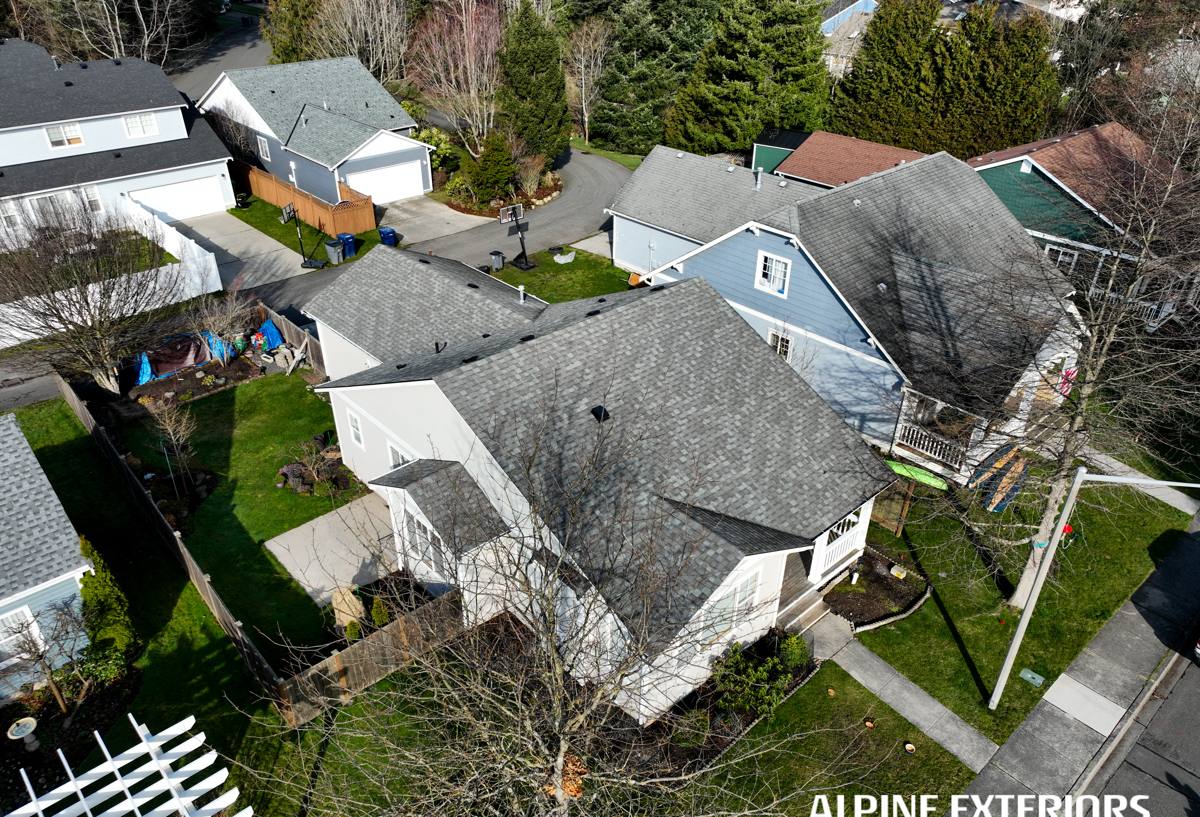
What This Climate Does to a Cherry Point Roof
Salt Air and Corrosion
Open water exposure means Cherry Point roofs sit in salt-laden air more consistently than roofs set back from the shoreline. Salt speeds up corrosion on exposed metal — flashing, fasteners, vent caps, gutter hangers — often in ways that aren't visible until a fastener has already lost its holding power or a flashing seam has rusted through from behind. A roof replacement on a property like this needs corrosion-resistant hardware built into the plan from the start, not added later once a leak forces the issue.
Wind-Driven Rain Off the Water
With open water nearby and little to break the wind, rain on a Cherry Point roof doesn't just fall — it gets pushed sideways and forced up under shingle edges and flashing laps with more force than a sheltered, inland roof ever experiences. That's a heavier moisture load than the region's overall rainfall totals suggest on their own, and it's exactly why underlayment grade and flashing detail matter more on a property like this than they do on a calmer lot.
A Moss Season That Runs Most of the Year
Mild temperatures and near-constant humidity keep moss and algae active across most of the calendar in this part of Whatcom County, and shaded, north-facing roof planes are usually the first places it shows up. Moss doesn't just sit on top of a roof looking bad — its rhizoids work down into the granule layer and lift shingle edges as they grow, holding moisture directly against the roof surface for months at a stretch.
Signs a Cherry Point Roof Needs Replacing, Not Just Repair
Roofs rarely fail all at once. They give warning signs first, and catching them early is often the difference between a targeted repair and a full replacement.
- Heavier-than-expected granule loss showing up in gutters and downspouts, or visible bald patches on the shingle field
- Moss buildup on shaded slopes that keeps returning within a season or two of cleaning
- Multiple past repairs on the same roof, especially recurring leaks in the same spot
- Soft, spongy, or sagging areas along the roofline or in the attic decking
- Flashing around chimneys, skylights, or vents that's visibly lifted, rusted, or patched over repeatedly with caulk
- A roof at or past its material's expected lifespan, particularly one that's had limited maintenance over the years
Any single item on this list might just call for a repair. Several of them together, especially on an older roof, usually mean it's time to stop patching and start planning for a full replacement instead.
Choosing the Right Roofing Material for This Location
| Material | Fit for Cherry Point's Shoreline Exposure | Typical Lifespan Here |
|---|---|---|
| Architectural asphalt shingle | Strong all-around choice with proper underlayment and algae-resistant granules | 20-25 years |
| Standing seam metal | Excellent wind and moisture resistance; correct fastener spec matters more in salt air | 35-50 years |
| Composite/synthetic shingle | Good moisture and impact resistance; performance varies more by manufacturer | 25-40 years |
| 3-tab asphalt shingle | Lower upfront cost, but a thinner profile and lower wind rating are a weaker fit for open, exposed lots | 12-18 years |
For most Cherry Point homes, architectural shingles with algae-resistant granules or standing seam metal are the two options that consistently hold up best against this specific combination of salt air, wind-driven rain, and moss. Which one makes the most sense for a given home usually comes down to budget, roof pitch, and how long the homeowner plans to stay in the house.
What a Correct Roof Replacement Involves
Tear-Off and Deck Inspection
A full tear-off down to the plywood or OSB decking is the only reliable way to find rot or hidden moisture damage that's been developing quietly underneath the old roofing — damage that's common on older shoreline roofs and easy to miss from inside the attic until it's advanced. A layover, where new shingles go directly over the old layer, buries whatever problems already exist instead of fixing them.
Underlayment
Synthetic or self-adhered underlayment gives a Cherry Point roof a real second line of defense against wind-driven rain that gets forced under shingle tabs rather than simply running off. Ice-and-water shield membrane at eaves and valleys adds extra protection at the spots most likely to let water in during a heavy storm off the water.
Flashing
Most roof leaks in this area don't start out in the open shingle field — they start at flashing. Valleys, chimney and skylight penetrations, and roof-to-wall transitions all need new flashing that's properly lapped and integrated with the underlayment, not old, corroded flashing patched over with caulk once the shingles are already down.
Ventilation
Balanced intake and exhaust ventilation keeps the underside of the roof deck dry year-round, which slows both wood rot and the moss growth that gets a head start from underneath a poorly ventilated roof. A roof can look fine from the ground and still be losing years of usable life to trapped attic moisture nobody's checked.
Cost Factors Worth Understanding
| Factor | What It Affects |
|---|---|
| Tear-off vs. layover | Whether hidden deck damage gets found and repaired before new roofing goes on |
| Underlayment grade | How well the roof resists wind-driven rain getting under shingle or panel edges |
| Material choice | Upfront cost versus expected lifespan given shoreline exposure |
| Flashing scope | How thoroughly valleys, penetrations, and wall transitions get addressed |
| Roof pitch and access | Labor time, staging needs, and safety requirements for the crew |
| Existing deck condition | Whether sheathing repair or replacement is needed before new roofing goes down |
Two estimates for the same roof can land thousands of dollars apart, and the gap is almost always real scope rather than one contractor padding a number. A written, itemized estimate that breaks these factors out separately is worth far more than a single lump-sum price when you're comparing bids side by side.
How Our Process Works
- In-person inspection: We walk the roof and attic ourselves, not from a photo, and check for the deck-level issues that salt air and wind-driven rain tend to hide.
- Written estimate: A clear, itemized bid covering tear-off, underlayment, flashing, material, and ventilation, so you know exactly what's included before agreeing to anything.
- Scheduling around weather: Wet-season delays are a normal part of working on shoreline properties in this part of Whatcom County, and we build reasonable flexibility into the timeline rather than rushing the job to hit an arbitrary date.
- Tear-off and deck repair: Old roofing comes off completely, and any deck damage we find gets addressed before anything new goes down.
- Installation to spec: Underlayment, flashing, and roofing material go on to manufacturer specification, with extra attention paid at valleys, penetrations, and wall transitions.
- Final walkthrough and cleanup: We review the finished roof with you in person and do a full site and nail sweep before we consider the job done.
Why Hiring a Crew That Already Works Cherry Point Matters
A crew that's replaced roofs along this stretch of Whatcom County shoreline before already knows how salt air corrodes underspecified hardware, how wind-driven rain finds its way through weak underlayment, and which roof orientations hold moss longest through the wet months. That's practical, earned knowledge, and it shows up in dozens of small decisions over the course of a job — fastener choice, flashing detail, where extra drainage gets added — the kind of decisions that separate a roof that lasts one hard winter from one that lasts several decades.
It also matters once the crew has left. A workmanship warranty is only as good as the company standing behind it years later, and that's worth more on a property exposed to this much weather than it is somewhere more sheltered inland.
A Checklist Before You Hire a Roofer for a Cherry Point Property
- Do they perform a full tear-off with deck inspection, not just a layover?
- Does the estimate name the specific underlayment and roofing material, not just "new roof"?
- Is flashing work at valleys, penetrations, and walls explicitly written into the bid?
- Do they carry current Washington contractor licensing, liability insurance, and workers' compensation?
- Can they point to real, recent work along this stretch of the Whatcom County coast?
- Does the bid clearly separate the manufacturer's material warranty from the contractor's own workmanship warranty?
If your roof in Cherry Point or nearby Semiahmoo is showing any of these signs, or you'd simply like a straight answer about what shape it's actually in, we're glad to take a look in person. Estimates are free and there's no pressure to sign anything on the spot — use the form below to get started.