 Semiahmoo Siding
 Siding Built for the Marietta Coastline
Marietta sits along the water in the Semiahmoo area of Whatcom County, close enough to Semiahmoo Bay and Drayton Harbor that salt air is simply part of daily life here. Homes in this pocket of the county deal with a combination most inland Washington towns don't: brackish, moisture-laden air off the water, wind-driven rain that comes in sideways during winter storms, and a growing season for moss and algae that can run nine or ten months out of the year. Exterior materials that hold up fine forty miles inland often start showing problems within a few years once they're facing this kind of exposure day after day.
We work on homes throughout this corridor, and the pattern is consistent: the houses that age well are the ones with siding, trim, and flashing detailed specifically for a marine climate. The ones that don't tend to have the same handful of failure points — caulked joints that gave out, paint that couldn't keep up with the moisture cycle, or a siding material that was never really engineered for salt exposure in the first place.
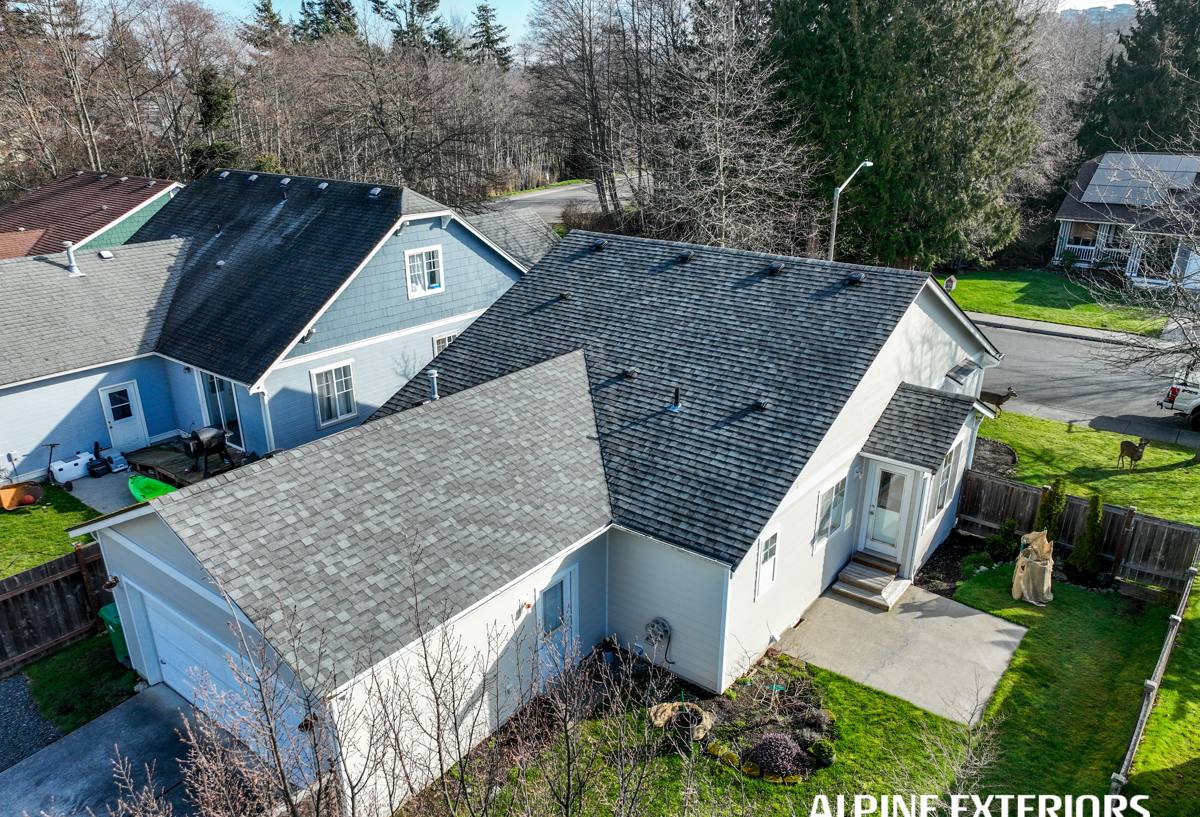
What the Climate Actually Does to Homes Here
Salt Air and Fasteners
Airborne salt accelerates corrosion on anything metal — nail heads, flashing, hose bibs, light fixtures. On a house, that shows up first at the fasteners holding siding and trim in place. Once fasteners start to rust and back out, water finds a path behind the siding, and that's when small cosmetic issues turn into structural repairs.
Driving Rain
Storms coming off the water don't fall straight down — they push rain horizontally into walls, especially on the west and north-facing sides of a house. That means seams, butt joints, and trim intersections take on more water pressure than they would on a sheltered elevation. A siding system with weak water-shedding detailing at those joints will eventually let moisture in, even if the field of the wall looks fine.
Moss and Algae Season
Whatcom County's damp, mild climate keeps humidity high for most of the year, and shaded or north-facing walls in Marietta rarely get a full dry-out period. Moss, algae, and mildew take hold on porous or absorbent siding surfaces and are a constant maintenance item for homeowners here — pressure washing, cleaning solutions, and repainting become a recurring chore rather than an occasional one.
Why We Install James Hardie Fiber Cement — and Nothing Else
We made a decision as a company to install only James Hardie fiber cement siding. We don't install vinyl, LP SmartSide, primed spruce, cedar, or other fiber cement brands. That's not a marketing angle — it's a standard we hold because of what we've seen these materials do (and not do) in exactly the kind of coastal, wet climate Marietta sits in.
Hardie fiber cement is non-combustible, which matters more each year as wildfire smoke and ember exposure become a regional concern even west of the Cascades. It's engineered from cement, sand, and cellulose fiber, so it doesn't absorb and swell with moisture the way wood-based products can, and it doesn't degrade under UV and salt exposure the way vinyl can over time. Hardie also builds region-specific product lines — their HZ5 formulation is engineered for climates with freeze-thaw cycles and sustained moisture, which describes Whatcom County's winters well.
The factory-applied ColorPlus finish is baked on under controlled conditions, rather than field-painted, which gives it more consistent coverage and a longer color life than a job-site paint job — a real advantage in a climate where field-applied finishes are fighting rain and humidity from day one. Backed by a strong transferable warranty, it's the product we're comfortable standing behind on homes that are going to spend decades facing salt air and driving rain.
None of this means other siding products are junk — cedar has real appeal, vinyl is inexpensive, and other fiber cement brands have loyal installers. But we don't install them, because in our experience on homes like the ones in Marietta, they ask more of the homeowner in ongoing maintenance and are less forgiving of the marine exposure this area gets.
Our Siding Process for Marietta Homes
Every project starts with an honest look at what's actually going on behind the existing siding, not just what's visible from the curb.
- Assessment: We check for moisture intrusion, soft sheathing, failed flashing, and trim condition — not just siding surface wear.
- Moisture and structural repair: Any water-damaged sheathing or framing gets addressed before new siding goes on. Covering up a moisture problem is how small issues become expensive ones.
- Weather-resistive barrier and flashing: Proper house wrap, flashing at windows, doors, and penetrations, and correct lap sequencing are what actually keep driving rain out — the siding itself is the last line of defense, not the only one.
- Hardie installation to manufacturer spec: Correct fastener spacing, gapping, and caulking at butt joints — details that matter more in a marine climate than in a sheltered one.
- Trim and finish work: Consistent detailing at corners, window returns, and eaves so water sheds away from the wall assembly instead of collecting at joints.
More Than Siding: The Whole Exterior Envelope
Siding doesn't work in isolation — the roof, windows, and decks on a home all interact with the same weather Marietta deals with, so we handle all four rather than treating siding as a standalone project.
Roofing
A roof in poor condition undermines even a perfect siding job, since water that gets past a failing roofline often ends up running down behind wall assemblies. We assess roofing condition as part of any full exterior evaluation.
Windows
Old or poorly flashed windows are one of the most common sources of hidden moisture intrusion we find when we open up a wall. Replacing siding is a natural point to also address window flashing and, where needed, the windows themselves.
Decks
Decks facing the water take the same driving rain and salt exposure as siding, with the added stress of foot traffic and standing water. We build and repair decks with the same climate-first mindset we apply to siding.
Signs Your Siding Needs Attention
- Visible cracking, warping, or delamination in the siding panels
- Soft or spongy spots when you press on the wall near the base or around windows
- Paint that's peeling, bubbling, or wearing unevenly across the wall
- Persistent moss, algae, or dark streaking that keeps returning after cleaning
- Gaps opening up at trim, corners, or butt joints
- Rising heating bills that suggest air and moisture are getting through the wall assembly
- Visible rust staining running from fastener heads
What Drives Siding Project Cost
Every home is different, but the same factors tend to move the price up or down on most Marietta projects.
| Factor | Why It Matters |
|---|---|
| Home size and wall area | More square footage means more material and labor hours |
| Tear-off vs. overlay | Removing old siding to inspect sheathing adds labor but catches hidden moisture damage |
| Existing moisture or rot repair | Damaged sheathing or framing found during removal needs to be fixed before new siding goes on |
| Stories and access | Multi-story homes or difficult site access require more scaffolding and time |
| Trim complexity | Homes with more corners, windows, and architectural detail take longer to finish correctly |
| Siding profile and finish | Different Hardie profiles and ColorPlus finish options carry different material costs |
Why a Local Crew Matters in This Area
A crew that works this specific stretch of Whatcom County coastline understands things a general contractor pulling in from elsewhere might not — which elevations take the worst of the driving rain, how aggressive the moss growth gets on shaded walls, and how much extra attention flashing and joint detailing need this close to the water. That local knowledge shows up in the details: fastener choice, flashing sequencing, and where we spend extra time sealing joints that a drier climate wouldn't demand.
It also means we're around after the job is done. A siding, roofing, window, or deck project in a marine climate isn't a "install and forget" situation — being a local outfit means we're reachable if a question comes up five years down the road, not a name on an invoice from a job that moved on to the next county.
Get a Free Estimate for Your Marietta Home
If your home in Marietta is dealing with worn siding, persistent moss, or you're just planning ahead for a coastal climate that doesn't go easy on exteriors, we'd be glad to take a look. Fill out the form below for a free, no-pressure estimate — we'll walk the property, answer your questions honestly, and give you a straight assessment of what your home actually needs.