 Semiahmoo Siding
 Siding Built for Wiser Lake's Weather, Not Just Any Weather
Homes around Wiser Lake sit in a stretch of Whatcom County where the weather doesn't do anything dramatic — it just doesn't let up. Marine air moves through year-round, rain settles in for weeks at a time, and the shaded, tree-lined lots that make this area so livable also mean siding stays damp longer than it would in a more open, sun-exposed neighborhood. None of this is unusual for northwest Washington. But it does mean the exterior products and installation choices that work fine in a dry climate can fall short here, sometimes within a few years instead of a few decades.
We're a local exterior contractor working the Semiahmoo area and surrounding Whatcom County communities, including Wiser Lake. We install siding, roofing, windows, and decks, and on the siding side we've made a deliberate choice: James Hardie fiber cement, and nothing else. That's not a marketing angle — it's a standard we hold because of what we've seen happen to other products in exactly this kind of climate.
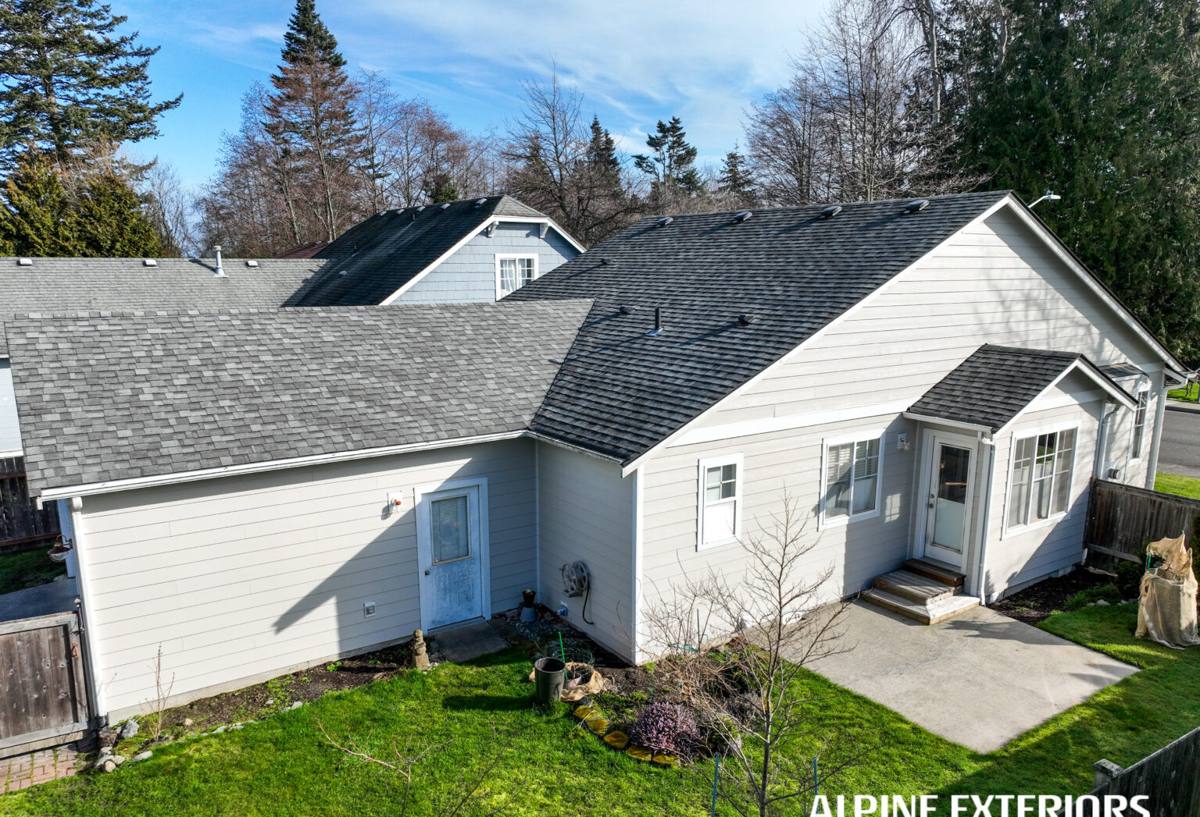
What This Climate Actually Does to a House
Salt Air
Proximity to the Salish Sea means salt-laden air reaches further inland than most homeowners assume. Salt accelerates corrosion on fasteners, flashing, and any exposed metal trim, and it can degrade certain coatings and caulks faster than their rated lifespan suggests. Siding materials and finishes that aren't engineered with coastal exposure in mind tend to show wear — chalking, fading, or edge deterioration — earlier here than they would fifty miles inland.
Driving Rain
Rain in this part of Washington doesn't just fall straight down — wind off the water pushes it sideways into wall assemblies, seams, and butt joints. Any weak point in a siding system's water management (a poorly lapped seam, an under-flashed window, a caulk joint that was never meant to be a primary water barrier) becomes a slow, hidden entry point for moisture. The damage often isn't visible from the outside until it's already reached the sheathing.
Moss and Sustained Dampness
Long, mild, wet seasons are ideal for moss and algae growth, especially on north-facing walls, shaded elevations, and anywhere siding stays damp between rain events. Beyond the cosmetic issue, sustained moisture contact is hard on wood-based and wood-composite products in particular — it's the kind of slow, chronic exposure that swelling, edge softening, and coating breakdown come from.
Why We Only Install James Hardie Fiber Cement
We get asked why we don't offer vinyl, LP SmartSide, or other fiber cement brands. The honest answer is that we looked at how each of these products actually performs over 10, 20, and 30 years in a climate like this one, and we decided we didn't want to be the crew that installs something we know is a compromise.
Vinyl
Vinyl is inexpensive and low-maintenance in the sense that it doesn't need painting, but it's a thin plastic product that can warp, crack in cold snaps, and fade unevenly over time. It also relies on loose-fit installation to allow for expansion and contraction, which limits how tightly it can be sealed against wind-driven rain. In a driving-rain environment, that's a real trade-off, not a hypothetical one.
LP SmartSide and Other Wood-Based Composites
LP SmartSide is an engineered wood product, and engineered wood is still wood at its core — it depends on factory-applied coatings and correct field installation (proper caulking, correct fastener placement, strict clearance from grade and roof lines) to keep moisture out. When that installation isn't followed exactly, or when coating wears thin at cut edges, moisture can wick into the substrate. In a region with a long wet season and heavy moss growth, that margin for error is thinner than we're comfortable with.
Other Fiber Cement Brands
Products like Cemplank or Allura are also fiber cement, and fiber cement as a category is the right general direction. But we standardized on James Hardie specifically because of its ColorPlus factory finish (baked-on color that doesn't rely on job-site painting for its warranty), its HZ5 product engineering for colder, wetter climates, and a long track record of consistent manufacturing quality. We'd rather install one product line we trust completely than offer a menu of similar-but-not-equal alternatives.
How James Hardie Siding Handles What This Area Throws at It
- Fiber cement is non-combustible, which matters for wildfire ember exposure as much as for everyday fire safety.
- It doesn't rot, and it resists the kind of moisture-driven swelling that affects wood and wood-composite siding.
- ColorPlus factory finish is engineered to hold color and resist the fading and chalking that salt air and UV exposure cause over time.
- HZ5 product lines are specifically engineered for colder, wetter climate zones like ours, with moisture and freeze-thaw performance in mind.
- Correctly installed and maintained Hardie siding routinely reaches multi-decade service life, backed by a strong transferable warranty.
Installation Is Where Climate-Ready Siding Either Works or Doesn't
Fiber cement siding is only as good as the installation behind it. In a wet, wind-driven-rain climate, a few installation details matter more than most homeowners realize:
| Detail | Why It Matters Here |
|---|---|
| Correct flashing at windows, doors, and butt joints | Primary defense against wind-driven rain finding its way behind the siding plane |
| Proper fastener type and placement | Salt air accelerates corrosion on the wrong fastener, which can lead to staining and loosened boards |
| Correct clearance from grade, decks, and roof lines | Keeps siding out of standing water and prolonged splash-back moisture |
| Rain screen or drainage gap where appropriate | Lets moisture that does get behind the siding actually drain and dry out |
| Factory-cut and sealed panel edges where possible | Field-cut edges are the most vulnerable point on any fiber cement product if not sealed correctly |
This is also the core reason a local crew matters. A contractor who works this exact region day in and day out has already seen where water finds its way in on this type of home, in this kind of weather, and builds the installation around avoiding it — rather than following a generic instruction sheet written for a national market.
Roofing, Windows, and Decks: The Rest of the Envelope
Siding doesn't work in isolation. A home's roof, windows, and deck all interact with the same climate stresses, and problems in one area often show up as damage in another.
Roofing
Moss growth on roofing shortens shingle life and can channel water under the roofline and into fascia and siding. Roof and gutter condition directly affects how much water your siding has to deal with.
Windows
Window flashing integration is one of the most common failure points we find when we open up a wall during a siding replacement. Old or poorly flashed windows are a direct path for wind-driven rain, no matter how good the siding around them is.
Decks
Decks that attach to or sit close to the house need proper ledger flashing and separation from siding, or they become a moisture trap right at the wall.
Because we handle all four — siding, roofing, windows, and decks — we can look at a home's whole exterior envelope rather than treating siding as an isolated project.
What a Wiser Lake Siding Project Typically Involves
- An on-site walkaround to assess current siding condition, moisture damage, and any related roof, window, or deck issues.
- A written estimate covering material, labor, and any needed repairs to sheathing or trim found during tear-off.
- Removal of existing siding and inspection of the wall assembly before anything new goes on.
- Installation of James Hardie fiber cement with attention to flashing, fastening, and drainage detail appropriate to this climate.
- Final walkthrough and warranty paperwork.
Questions Worth Asking Any Siding Contractor
- Are you licensed and insured to work in Whatcom County?
- What siding brands and products do you install, and why?
- Will you show me your flashing and drainage plan before work starts?
- Is your crew's own labor covered by a workmanship warranty, separate from the manufacturer's material warranty?
- How do you handle sheathing or framing damage discovered once old siding comes off?
A contractor who answers these clearly and specifically, without vague reassurances, is usually one who's done this work enough times in this exact climate to know what actually matters.
Ready to Talk About Your Home
If you're in Wiser Lake or elsewhere around Semiahmoo and Whatcom County and want a straight assessment of your siding's condition, we're happy to take a look. We'll tell you honestly what we see, what it would take to fix it right, and why we'd install James Hardie fiber cement if new siding makes sense. Reach out for a free, no-pressure estimate using the form below.