 Semiahmoo Siding
 Peace Arch's Coastal Climate: What Your Siding Is Up Against
Homes in and around Peace Arch sit close to the water at the northwest corner of Whatcom County, right where Semiahmoo Bay meets the Salish Sea. That location is beautiful, but it's also demanding on an exterior. Salt-laden air moves inland off the bay, wind-driven rain comes in sideways during winter storms, and the mix of marine humidity and shade from mature trees keeps siding damp far longer than it would stay in a drier inland climate. Add in a moss season that can run from fall through spring, and you've got an exterior that's working hard every single month of the year, not just during the occasional storm.
None of this means a home here is doomed to premature siding failure. It means the materials and installation details matter more in Peace Arch than they do in a lot of other places, and a crew that actually understands this specific stretch of Whatcom County coastline will make different calls than a crew installing the same product two hours inland.
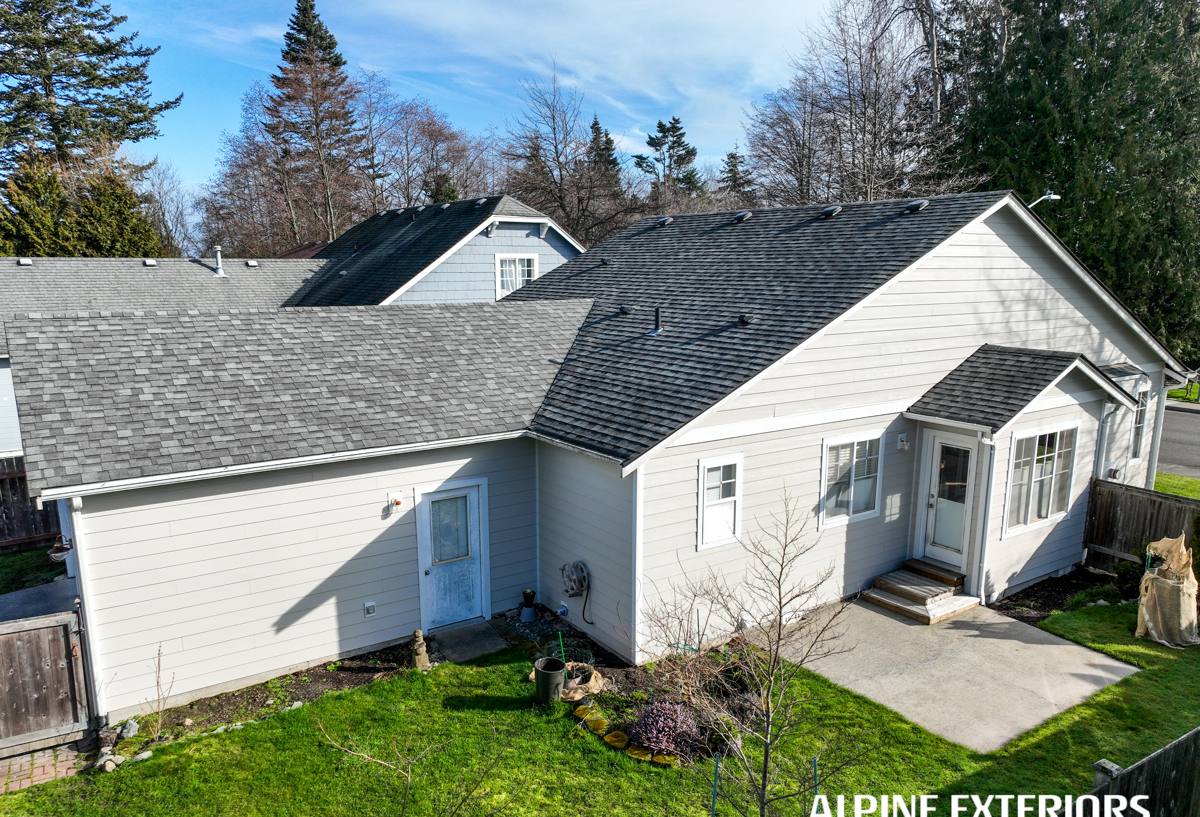
The Real Damage Pattern We See on Whatcom County Homes
Moss and Mildew Growth
Persistent moisture plus shaded north and east elevations is a recipe for moss, algae, and mildew staining on siding. On some materials this is cosmetic and cleans off. On others, especially wood-based products with exposed or compromised seams, sustained moisture behind that surface growth becomes a long-term moisture problem rather than a surface one.
Salt-Driven Corrosion
Salt air doesn't just affect metal fasteners and flashing directly on the coastline — it travels. Homes several blocks inland from Semiahmoo Bay still see accelerated corrosion on fasteners, hinges, and light fixtures compared to homes further from the water. This is one of the reasons fastener choice and flashing detail matter as much as the siding material itself.
Wind-Driven Rain Intrusion
Storms off the water don't just drop rain straight down — they push it horizontally into wall assemblies, testing every seam, joint, and penetration in the siding system. A siding product and installation method that performs fine in calm rain can still let moisture in under sustained wind-driven conditions if the details weren't built for it.
Why We Install Only James Hardie Fiber Cement
We made a decision as a company to install James Hardie fiber cement siding exclusively, and not offer vinyl, LP SmartSide, Cemplank, Allura, or bare cedar or spruce siding. That's not a marketing angle — it's a standard we settled on after weighing how each product actually performs against a climate like this one over the long haul, not just how it looks on installation day.
What Fiber Cement Does Differently
Fiber cement is a non-combustible, cement-and-cellulose composite. It doesn't absorb moisture the way wood-based siding can, it doesn't soften or delaminate under sustained damp conditions, and it holds paint and factory finishes far longer than wood substrates. James Hardie's ColorPlus finish is baked on at the factory under controlled conditions, which gives more consistent, longer-lasting color than field-applied paint — a real advantage in a climate where siding stays wet more often than it's dry.
Where Other Products Fall Short
Vinyl is affordable and low-maintenance, but it's a thin plastic product that can warp under heat, crack in impact-prone spots, and it isn't fire-resistant — increasingly relevant given Washington's evolving wildfire exposure even on the wetter west side. LP SmartSide and other engineered wood products use treated wood strand substrates that perform reasonably well when installed and maintained correctly, but they remain wood at the core, meaning any breach in the factory coating or field-cut edge sealing creates an entry point for moisture — a real risk given how much sustained dampness this area sees. Cemplank and Allura are also fiber cement products and share fiber cement's core moisture advantages, but we've standardized on Hardie specifically for its engineered climate-specific HZ product lines, the depth of its color and texture options, and the strength of its transferable warranty. Bare cedar or spruce siding can look great initially, but it demands ongoing sealing, staining, and inspection to hold up in a marine climate — maintenance that a lot of homeowners underestimate when they choose it.
How Siding Options Compare for This Climate
| Material | Moisture Behavior Here | Maintenance Demand | Fire Resistance |
|---|---|---|---|
| James Hardie fiber cement | Does not absorb or swell; factory finish resists coastal humidity | Low — periodic washing, no repainting on the standard cycle | Non-combustible |
| Vinyl | Doesn't absorb moisture but can trap it behind panels; warps with heat/cold cycling | Low but panels can crack or fade and aren't repairable in sections | Combustible plastic |
| LP SmartSide / engineered wood | Wood-strand core; vulnerable at cut edges and coating breaches | Moderate — edge sealing and coating checks matter | Treated, but wood-based |
| Bare cedar / spruce | Absorbs moisture readily; prone to cupping and rot without upkeep | High — regular sealing/staining required | Combustible |
Beyond Siding: Roofing, Windows, and Decks Working as One System
Siding doesn't work in isolation. On a Peace Arch home, the roofline, window flashing, and any attached deck or porch structure all interact with the siding at the seams and transitions — and those transitions are exactly where wind-driven rain finds its way in if they're not detailed correctly. We handle roofing, windows, and decks in addition to siding for that reason: it lets one crew think through the whole envelope instead of siding being installed around whatever roofing and window flashing was already there, guesswork included.
A roof with worn or improperly lapped flashing at a wall intersection will feed water behind new siding no matter how well that siding was installed. Aging windows with failed seals or poor flashing integration do the same thing. And a deck ledger board attached without proper flashing is one of the more common hidden moisture entry points on coastal homes. Looking at these systems together, rather than siding alone, is how problems actually get caught before they become rot.
What Correct Installation Looks Like on a Peace Arch Home
James Hardie siding performs the way it's rated to perform only when it's installed to the manufacturer's specifications — and in a climate like this one, the installation details carry real weight. That includes:
- Proper rain-screen or drainage-plane assembly behind the siding so incidental moisture has somewhere to go
- Correct fastener type and spacing, chosen with coastal corrosion resistance in mind
- Factory-cut edges kept intact wherever possible, with field cuts properly sealed
- Flashing integration at every window, door, roofline, and deck ledger penetration
- Correct clearance between siding and grade, decks, roofing, and other transitions to avoid wicking moisture
- Caulking and joint treatment matched to Hardie's published installation guidelines, not generic practice
Skipping or shortcutting any one of these doesn't usually show up as a problem in year one. It shows up in year five or eight, as moisture damage that's expensive to trace and repair. This is why installation quality matters as much as the product choice itself.
Choosing a Local Contractor for Peace Arch
A crew that primarily works inland or in a different climate zone may not naturally account for the salt exposure, sustained dampness, and moss pressure that define this stretch of coastline. When you're evaluating contractors for siding, roofing, window, or deck work near Semiahmoo, it's worth asking:
- Do you carry current Washington state contractor licensing and adequate insurance?
- Are you a certified or factory-trained installer for the siding product you're proposing?
- Can you explain how your flashing and drainage details are adapted for coastal wind-driven rain?
- Will you put the scope of work, materials, and warranty terms in a written contract?
- Do you have experience working on homes in this specific part of Whatcom County?
- Who is responsible for coordinating siding, roofing, and window work if more than one system is being touched?
Maintenance and What to Expect Over Time
Even with the right product and correct installation, an exterior in this climate benefits from periodic attention. A yearly rinse to knock down moss and salt residue, a visual check of caulking and flashing joints after major winter storms, and prompt attention to any trim or transition point showing staining will keep a well-installed system performing for the long term. James Hardie's ColorPlus finish is designed to hold color without repainting on the schedule bare wood requires, which cuts down on the maintenance burden considerably compared to the alternatives — but "low-maintenance" doesn't mean "no-maintenance," and a quick annual look at the exterior catches small issues before they become expensive ones.
James Hardie also backs its siding with a strong transferable warranty, which matters both for your own peace of mind and for resale — a documented, warrantied exterior is a real asset when a coastal home eventually changes hands.
If you're weighing a siding project, or want a second opinion on roofing, windows, or a deck that's showing its age, we're happy to take a look and put together a free, no-pressure estimate for your Peace Arch home.