 Semiahmoo Siding
 A Peninsula With Its Own Rules
Point Roberts is unlike almost anywhere else we work. It sits on a small peninsula that hangs off the bottom of the Tsawwassen area in British Columbia, technically part of Whatcom County, Washington, but reachable by land only by driving through Canada. Water surrounds it on three sides. That geography is exactly why homes here take a different kind of weathering than a house twenty minutes inland, and why the exterior work on them needs to be planned differently too.
We serve Point Roberts out of our base near Semiahmoo, so we already build our schedules around the border crossing, ferry-adjacent logistics, and the reality that a "quick trip back for a forgotten part" isn't quick out here. That matters more than it sounds like it should when you're hiring someone to work on your house.
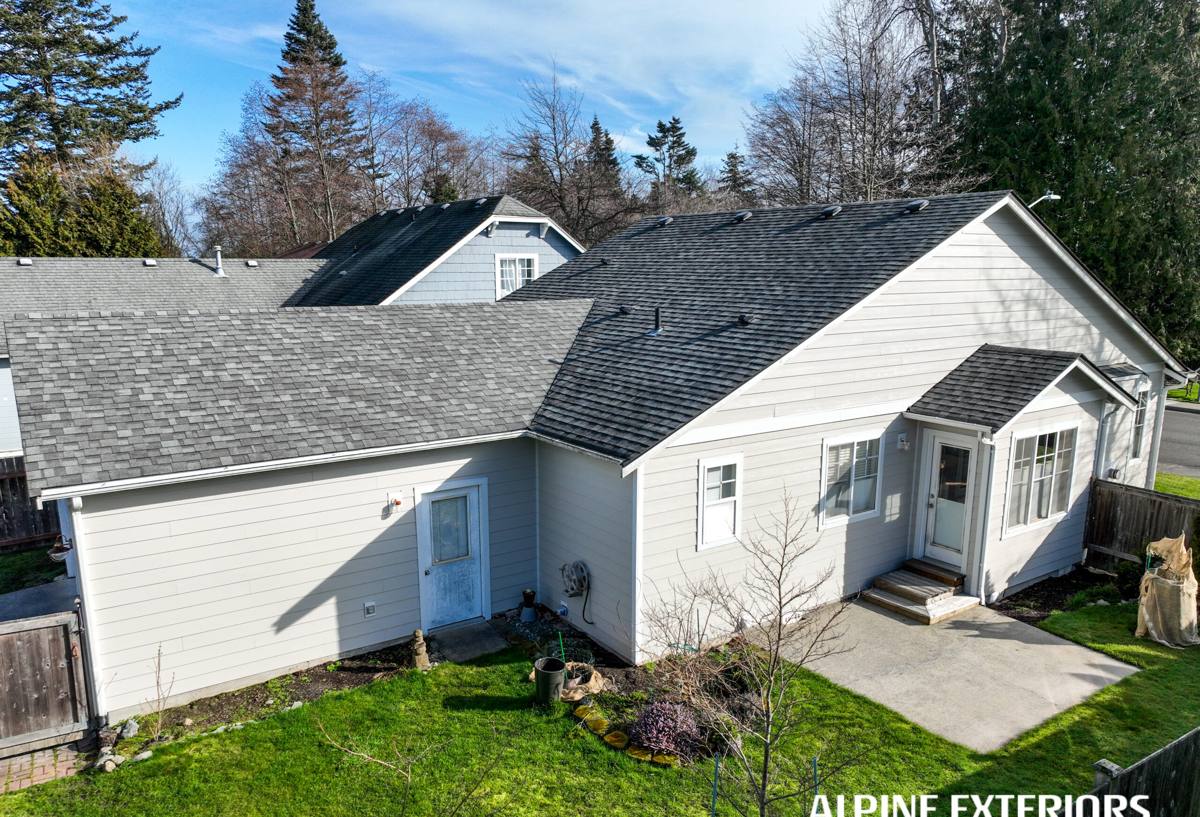
What the Climate Does to a Point Roberts Home
Being surrounded by open water means Point Roberts gets a heavier dose of a few specific stressors than a lot of Whatcom County:
Salt Air
Constant exposure to salt-laden air accelerates corrosion on fasteners, flashing, and any metal trim that isn't properly rated or protected. It also degrades cheaper paints and coatings faster than they'd fail further inland, leading to chalking, fading, and early clear-coat breakdown on siding that wasn't built for a marine environment.
Driving, Wind-Driven Rain
Open exposure means rain doesn't just fall here, it gets pushed sideways into walls, seams, and trim by wind coming off the water. That kind of horizontal water load finds every weak seam, every under-caulked joint, and every material that swells or wicks moisture. It's a much tougher test than the sheltered rain a house in a tree-lined neighborhood deals with.
A Long Moss Season
Cool, damp, and often shaded conditions on north-facing walls and roof planes give moss and algae a long runway to establish. Once it's growing on a roof or siding surface, it holds moisture against the material underneath it, which shortens the life of anything not built to resist it.
None of this means a home here is doomed to constant repairs. It means material choice and installation quality matter more in Point Roberts than in a lot of other places, because there's less margin for error.
Why a Local, Border-Aware Crew Matters
A contractor who doesn't regularly work this exclave will underestimate a few things: how a crossing delay affects a delivery window, how limited local supply access is if something is missed, and how important it is to have every material and tool accounted for before the crew heads out for the day. We plan Point Roberts jobs around those realities instead of discovering them mid-project. That means fewer surprise delays and a crew that shows up prepared, not one that's improvising because a part is stuck on the wrong side of the border.
It also means we understand the specific microclimate differences within the peninsula itself — a home facing open water takes a different beating than one tucked behind a rise, and we account for that when we talk through material and detailing choices with you.
Siding Materials: What Actually Holds Up Out Here
We get asked to compare siding options more in a place like this than almost anywhere else, because homeowners can see the salt-and-rain toll on a neighbor's house and want to avoid repeating it. Here's an honest look at how the common choices perform under Point Roberts conditions:
| Material | Salt Air / Moisture Behavior | Maintenance Burden | Typical Lifespan Here |
|---|---|---|---|
| Vinyl | Doesn't rot, but seams and panels can distort with wind loading and UV/salt exposure over time; caulked joints are a weak point for wind-driven rain | Low, but limited repair options once faded or warped | Moderate, shorter under harsh coastal exposure |
| Cedar / Wood | Attractive but absorbs moisture readily; constant rain and damp shade accelerate rot and support moss growth | High — regular refinishing, caulking, and moss/algae treatment | Shorter without diligent, ongoing upkeep |
| LP SmartSide (engineered wood) | Better than raw wood but still an engineered wood product — edges and cut ends are vulnerable if not sealed and maintained precisely | Moderate — depends heavily on installation care and ongoing sealant maintenance | Moderate, installation-sensitive |
| James Hardie Fiber Cement | Non-combustible, dimensionally stable, engineered specifically for wet/humid climates in its HZ5 product line; resists moisture-driven warping and doesn't feed rot | Low — factory ColorPlus finish resists fading, chalking, and salt-driven wear | Long, when installed to spec |
Why We Install Only James Hardie Fiber Cement
We made a decision as a company to install James Hardie fiber cement exclusively, and it's worth explaining why rather than just stating it.
- Non-combustible material — a real consideration anywhere in the Pacific Northwest with wildfire seasons stretching further each year.
- Climate-engineered product lines — Hardie's HZ5 formulation is built for wetter, harsher climates like ours, which is directly relevant to a peninsula taking constant salt spray and driving rain.
- Factory-applied ColorPlus finish — baked-on color that resists the fading and chalking that salt air accelerates on field-applied paint.
- Dimensional stability — fiber cement doesn't swell, cup, or warp the way wood and engineered-wood products can when they take on repeated moisture cycling.
- Strong, transferable warranty backing — meaningful protection on a product built for exactly this kind of exposure.
We don't install vinyl, LP SmartSide, Cemplank, Allura, primed spruce, or cedar siding. Some of those are decent products in the right setting, but none of them line up with what we've seen hold up long-term against salt air, driving rain, and a long moss season without turning into a maintenance project of their own. Hardie is what we're willing to put our name behind and warranty here.
It's Not Just Siding: Roofing, Windows, and Decks Take the Same Beating
Salt air and wind-driven rain don't stop at the siding. The same exposure affects the rest of a home's exterior envelope, and we handle all of it as one connected system rather than treating each trade in isolation.
Roofing
Moss on a roof isn't just cosmetic — it holds moisture against shingles or panels and works its way under flashing over time. Flashing and fastener quality matter more here because of the corrosion risk from salt exposure.
Windows
Wind-driven rain tests window flashing and sealant details harder than a sheltered installation would. Proper integration between the window and the surrounding siding is where most long-term leaks actually start, not the window unit itself.
Decks
Open-water exposure means deck fasteners, hardware, and finishes need to be rated for a coastal environment, and horizontal surfaces need drainage details that account for near-constant dampness through the wetter months.
Because we handle all four trades, we can look at a Point Roberts home's full exterior envelope together — siding, roofing, windows, and decks — and catch the places where one trade's detailing affects another's performance.
A Seasonal Maintenance Checklist for Point Roberts Homes
Even the right materials need basic upkeep in this environment. A short list worth working through once or twice a year:
- Rinse salt residue off siding and trim periodically, especially on water-facing walls
- Check and clear moss or algae growth on shaded roof planes and siding before it spreads
- Inspect caulking around windows, doors, and trim for cracking or separation
- Look at deck fasteners and hardware for early corrosion, especially near open-air railings
- Clear gutters and downspouts ahead of the wetter months so water sheds away from siding, not down it
- Walk the exterior after any major windstorm to check for loosened trim or flashing
What to Expect When You Reach Out
Because of the border crossing and limited local supply access, we plan Point Roberts projects with a bit more lead time than a job closer to our shop — not because the work itself is different, but because we'd rather build in the logistics up front than deal with a delay mid-project. When we walk a property here, we're looking at sun and water exposure on each elevation, existing moss or moisture damage, and how the siding, roofline, windows, and any deck surfaces are interacting with each other, not just quoting a single trade in isolation.
If you're weighing a siding replacement, a re-roof, window upgrades, or deck work on a Point Roberts home, we're happy to walk the property with you and give you a straight, no-pressure estimate — including an honest read on what your current exterior is dealing with and what actually makes sense to fix first.