 Semiahmoo Siding
 Custer's Climate Is Harder on a House Than It Looks
Custer sits in that stretch of Whatcom County where the marine air off the Salish Sea meets open farmland, and that combination is tougher on exterior materials than most homeowners realize. The salt-laden air drifting in off the water accelerates corrosion on fasteners, trim, and anything with exposed metal. Add in Whatcom County's driving rain — the kind that comes in sideways during winter storms — and you've got moisture finding its way into every seam, lap joint, and nail hole that wasn't detailed correctly the first time.
Then there's moss season, which in this part of Washington isn't really a season at all — it's most of the year. Shaded north-facing walls, tree-lined lots, and the persistent damp keep organic growth active on siding, roofing, and trim for months at a stretch. On the wrong material, that's not just a cosmetic problem. It's a moisture trap that shortens the life of the wall behind it.
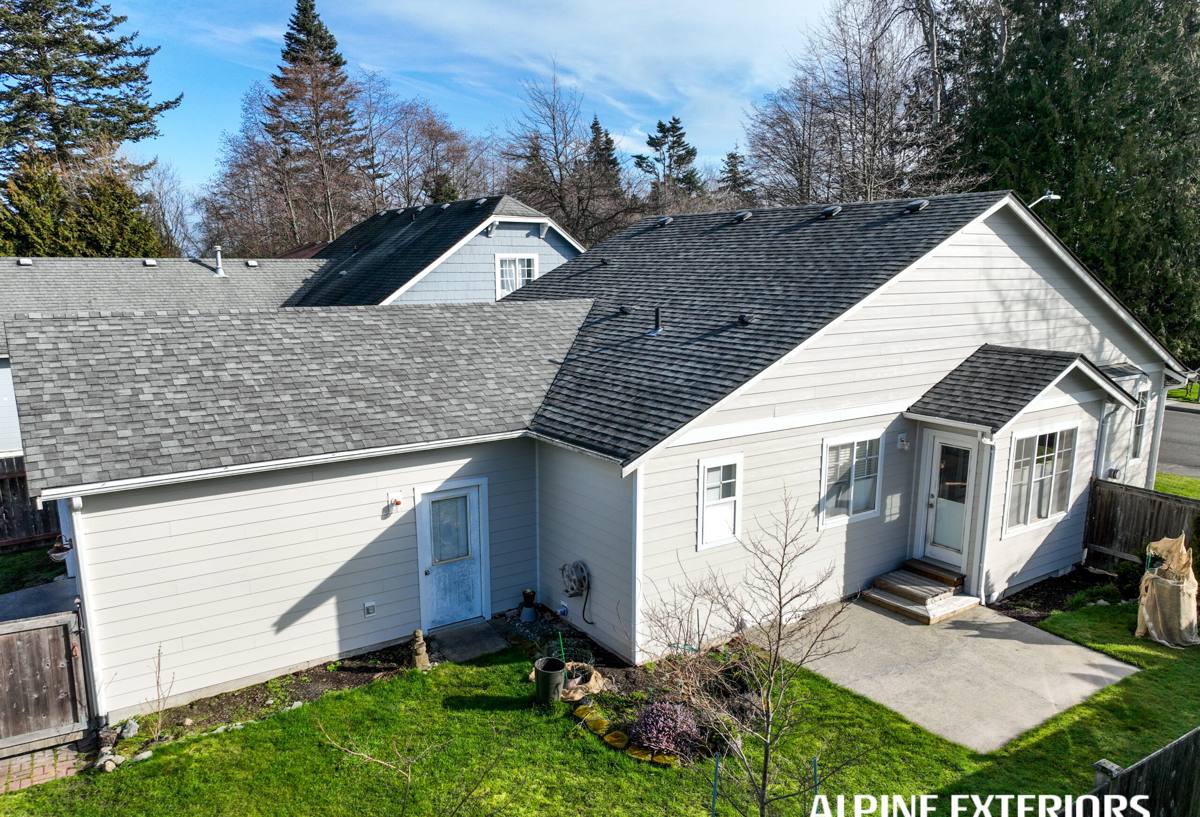
What Salt Air, Rain, and Moss Actually Do to Siding
Moisture Intrusion
Siding's real job isn't to look good — it's to keep water out of the wall assembly. In Custer, that job never really lets up. Wind-driven rain pushes water into laps, corners, and penetrations around windows and doors. Materials that swell, warp, or lose their seal over time give that water a path inward, where it can rot sheathing and framing long before anyone notices a problem on the surface.
Algae, Mold, and Moss Growth
Persistent dampness plus shade equals biological growth. Algae staining and moss encroachment aren't just an appearance issue — moss holds moisture directly against the siding surface, which keeps that section of wall wet far longer than it should be. Over years, that constant damp cycle degrades paint, caulking, and the substrate underneath.
Salt Air Corrosion
Fasteners, flashing, and hardware exposed to salt-influenced coastal air corrode faster than the same materials would inland. Once fasteners start failing, siding panels can loosen, and a loose panel is an open door for water.
Why We Only Install James Hardie Fiber Cement
We've made a deliberate decision as a company: we install James Hardie fiber cement siding, and we don't install vinyl, LP SmartSide, Cemplank, Allura, primed spruce, or cedar. That's not a marketing angle — it's a standard we hold because of what we've seen happen to each of those products in exactly this climate.
What the Alternatives Get Right — and Where They Fall Short Here
Vinyl is inexpensive and low-maintenance in the short term, but it's a petroleum-based product that expands and contracts with temperature swings, can crack in impact-prone areas, and simply doesn't hold up to decades of driving coastal rain and UV exposure the way a cement-based product does. It's also a material we can't stand behind for the long haul in a climate this wet.
LP SmartSide and other engineered wood products perform well when installation and maintenance are perfect, but they're wood-based at the core — that means any breach in the coating or caulking gives moisture a direct path into a material that swells and deteriorates when it gets wet repeatedly. In a moss-season climate, that margin for error is thin.
Cedar and primed spruce are beautiful, traditional choices, but they're solid wood: they need regular refinishing, they're vulnerable to rot and insect damage, and in a region with this much sustained moisture, the maintenance schedule to keep them performing is demanding and never really finished.
Cemplank and Allura are also fiber cement, and fiber cement as a category is the right call for this climate. Where we've drawn the line is on the specific manufacturer: James Hardie's ColorPlus factory-applied finish, its HZ5 product engineering for our climate zone, and its warranty structure are what we've standardized on after years of installs in Whatcom County conditions.
Why Hardie Specifically
- Non-combustible fiber cement core that doesn't feed a fire the way wood-based siding can
- ColorPlus factory-baked finish, which resists fading and holds up to UV and moisture better than field-applied paint
- HZ5 product line engineered for wet, freeze-prone climates like ours
- A strong transferable warranty that adds real value if you sell the home later
- A long track record of performing correctly when installed to manufacturer spec — which is the other half of the equation
Correct installation matters as much as the product itself. Proper flashing, correct fastener spacing, the right gap at grade, and sealed penetrations are what actually keep water out — on any siding, including Hardie. We install to spec because we've seen what happens when that detailing is skipped.
How Hardie Compares in a Custer Climate
| Factor | James Hardie Fiber Cement | Vinyl | Cedar / Primed Spruce |
|---|---|---|---|
| Moisture resistance | Engineered for wet climates, non-organic core | Doesn't absorb water, but seams and expansion gaps can let it in | Absorbs moisture, prone to rot if coating fails |
| Maintenance | Occasional wash, no repainting needed with ColorPlus | Low, but cracks and fading over time | Regular refinishing and sealing required |
| Fire resistance | Non-combustible | Melts/deforms under heat | Combustible |
| Typical lifespan | Multiple decades when installed to spec | 15-25 years before fading/cracking issues | Highly variable, dependent on upkeep |
| Coastal/moss climate fit | Purpose-built HZ5 line for the Pacific Northwest | No regional engineering advantage | Struggles without consistent maintenance |
More Than Siding: Roofing, Windows, and Decks
Siding doesn't work in isolation — it's one piece of the exterior envelope. We also handle roofing, windows, and decks, because those systems all interact with each other. A roof with failing flashing at the wall line will feed water directly behind good siding. Old windows with degraded seals let moisture into the same wall cavities we're trying to protect. And decks in this climate face their own battle with the same rain and moss pressure, especially where they meet the house.
When we look at a Custer property, we're looking at the whole exterior, not just one component. That's often how we catch a moisture problem that would otherwise get sided over and hidden for years.
Why a Local Crew Matters in This Area
Whatcom County's microclimates aren't uniform. A property closer to the water deals with more direct salt exposure and wind-driven rain, while a more inland or tree-covered lot in Custer may fight moss and shade-driven dampness more than salt corrosion. A crew that works this specific area regularly knows which detailing matters most for a given lot — how much clearance to leave at grade, where extra flashing attention pays off, and which sides of a house need the most protection from the prevailing weather.
That local knowledge also means faster response for site visits, estimates, and any follow-up service, without the delay of a crew traveling in from outside the region.
What to Watch For on Your Home
Some early warning signs are easy to catch during a walk around the property. If you're noticing any of the following, it's worth having it looked at before it becomes a bigger repair:
- Moss or dark algae staining building up on north-facing or shaded walls
- Soft, spongy, or discolored spots on wood-based or engineered wood siding
- Paint that's peeling, bubbling, or chalking heavily
- Warped, buckled, or separating panels or lap joints
- Rust streaks or corrosion around fasteners and trim
- Gaps or cracks around window and door trim where water could be getting in
What Factors Affect Your Project
| Factor | Why It Matters |
|---|---|
| Home size and wall complexity | More corners, gables, and trim details mean more labor and material |
| Current siding condition | Rot or water damage found underneath may need repair before new siding goes on |
| Exposure to weather | Sides facing prevailing wind and rain often need extra flashing attention |
| Product line and color | Hardie's HZ5 panel styles and ColorPlus finishes vary in cost |
| Access and site conditions | Tree cover, slope, and staging space affect labor time |
Our Process for Custer Homes
We start with an on-site look at the whole exterior — siding, trim, roofline, windows, and any deck structures tied into the house — so we understand the full picture before recommending anything. From there, we walk through what we're seeing, what's driving any damage, and what a Hardie fiber cement system would look like on that specific home, including color and product line options suited to the site's exposure. Every install follows manufacturer installation specs for flashing, fastening, and clearances, because that's what actually determines how the siding performs over the next several decades in this climate.
If you're in Custer and want an honest look at your home's exterior, we're happy to come take a look. The estimate is free, there's no pressure, and you'll get a straight answer about what your home actually needs — just fill out the form below to get started.