 Semiahmoo Siding
 Exterior Work Built for California Creek's Coastline
California Creek sits close enough to Semiahmoo Bay and Drayton Harbor that the weather off the water shapes almost every decision a homeowner makes about their exterior. This isn't a climate where you pick a siding product for looks alone. Salt-laden air moves inland on a regular basis, rain comes in sideways more often than most inland Washington towns ever see, and the tree cover and marine humidity that make this part of Whatcom County so green also keep exterior surfaces damp for long stretches of the year. A siding, roofing, window, or deck system that works fine forty miles inland can struggle here within a decade.
We work throughout the Semiahmoo area, and California Creek's mix of wooded lots, waterfront-adjacent properties, and older homes built before modern moisture detailing became standard gives us a clear picture of what actually fails out here — and what holds up.
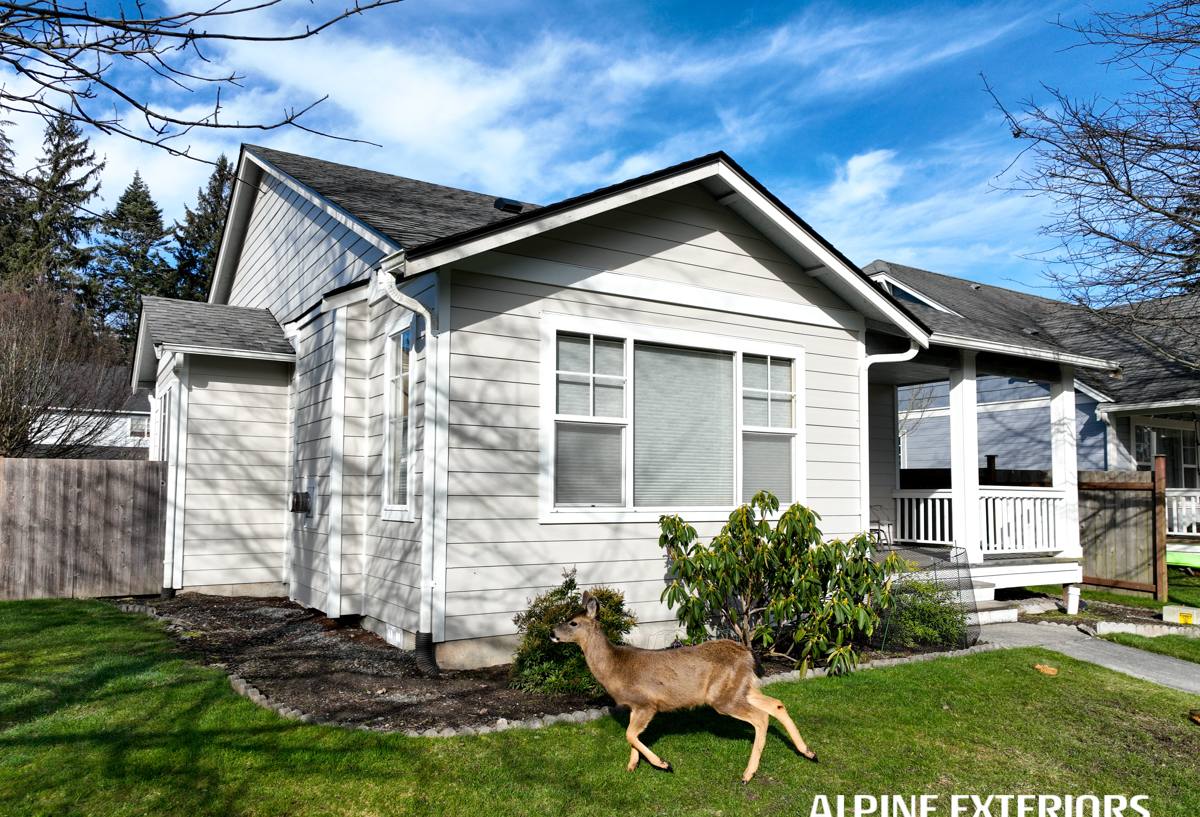
What the Coastal Climate Does to a Home's Exterior
Salt Air and Corrosion
Proximity to Semiahmoo Bay means airborne salt is a constant, low-level presence, even on lots set back from the water. Salt accelerates corrosion on fasteners, flashing, and any metal trim that isn't rated for coastal exposure. It also breaks down cheaper paint films faster than inland conditions would, which is why siding that looks fine in a showroom photo can chalk, fade, or peel noticeably sooner once it's on a California Creek home.
Driving Rain and Wind-Driven Moisture
Storms coming off the Strait of Georgia and the Salish Sea don't just drop rain straight down — wind pushes it sideways into wall assemblies, especially around windows, corners, and butt joints. Siding systems and installation details that assume mild, vertical rainfall leave gaps that coastal storms will find. Proper flashing, house wrap integration, and caulking at penetrations matter more here than in drier parts of the state.
Moss, Mildew, and the Long Wet Season
Whatcom County's wet season stretches long, and California Creek's tree cover keeps shaded walls and rooflines damp well after a storm has passed. Moss and mildew take hold on any surface that stays wet and doesn't dry out quickly, and once established, they hold moisture against the substrate underneath. Roofs are the most visible casualty, but siding, trim, and deck boards in shaded spots see the same pattern.
Why We Install Only James Hardie Fiber Cement
We get asked regularly why we don't offer vinyl, LP SmartSide, or other engineered wood siding products. The honest answer is that after years of exterior work in this climate, we standardized on James Hardie fiber cement because it holds up to exactly the conditions California Creek deals with — and because we'd rather stand behind one product we trust completely than offer several and hope the homeowner picked the right one.
Vinyl siding is affordable and low-maintenance in mild climates, but it's a petroleum-based product that expands, contracts, and can become brittle with age and UV exposure. In wind-driven coastal storms, vinyl panels are more prone to rattling loose or cracking at fastener points than a heavier, rigid material. LP SmartSide and other engineered wood products use wood strand cores that, while treated, are still wood — meaning any breach in the factory finish or a caulking failure at a seam can lead to swelling or rot, which is a real risk in a climate this wet for this much of the year. Cedar and primed spruce require the kind of repainting and caulk maintenance cycle that most homeowners underestimate until they're three years in and already behind on it.
James Hardie fiber cement is cement, sand, and cellulose fiber — it doesn't absorb moisture the way wood-based products do, it's non-combustible, and it doesn't degrade from salt air the way untreated or lightly coated materials do. Hardie's ColorPlus factory finish is baked on and warranted separately from the substrate, which matters in an environment where UV and salt both work against paint.
| Material | How It Handles Salt Air & Moisture | Maintenance Burden |
|---|---|---|
| Vinyl | Can become brittle with UV/age; rattles or cracks in high wind | Low, but limited lifespan in coastal wind |
| LP SmartSide / engineered wood | Wood-strand core vulnerable if finish or seams fail | Moderate — seam and caulk inspection critical |
| Cedar / primed spruce | Absorbs moisture, prone to rot without upkeep | High — regular repainting and sealing |
| James Hardie fiber cement | Non-combustible, dimensionally stable, resists moisture absorption | Low — factory finish, periodic washing |
How We Approach a California Creek Project
Every home we work on in this area starts with an assessment of what the current siding, trim, and flashing are actually doing — not just how they look. On older homes especially, we're checking for moisture that's already gotten behind the cladding, soft trim, and flashing that was never properly integrated with the water-resistive barrier. Skipping this step and just re-siding over hidden problems is how homeowners end up paying twice.
From there, our process typically includes:
- A full exterior walkthrough, including areas around windows, roof-to-wall intersections, and any deck ledger connections
- Removal of existing siding and inspection of the sheathing and house wrap underneath
- Repair or replacement of any compromised sheathing before new siding goes on
- Installation of James Hardie panels or lap siding with manufacturer-specified fastening and clearances
- Corrosion-resistant flashing and trim details sized for coastal wind-driven rain
- Final inspection of caulking, joints, and drainage paths
We don't shortcut the flashing and water management details, even though they're invisible once the job is done. In a climate that gets this much wind-driven rain, those details are the difference between siding that lasts thirty-plus years and siding that fails from behind in ten.
Beyond Siding: Roofing, Windows, and Decks
Siding rarely fails in isolation out here — the same rain, salt, and moss pressure hits the roof, windows, and any exterior deck structure at the same time. We handle all four because they interact with each other. A roof that's shedding moss and holding moisture at the edges will eventually push water into the top course of siding. Windows with failed seals let moisture into wall cavities that no amount of good siding can protect against. Decks exposed to the same wet season need materials and fastening that account for standing moisture and freeze-thaw cycles during colder snaps.
Addressing these as one exterior system, rather than four separate problems handled by four separate contractors over several years, tends to catch issues earlier and avoids the finger-pointing that happens when a leak shows up and nobody's sure whose work is responsible.
Why a Local Crew Matters Here
California Creek and the broader Semiahmoo area have specific enough conditions — coastal wind exposure, tree-shaded lots, salt air — that generic installation practices from a crew unfamiliar with the region show up as callbacks within a few years. A local crew knows which sides of a house typically take the worst wind-driven rain, where moss tends to establish first, and how the wet season here compares to the rest of Whatcom County. That local knowledge shapes flashing choices, fastener selection, and where we pay extra attention during installation.
It also matters for accountability. A contractor based in the area is still here if a warranty question comes up five or ten years down the road, not a crew that moved on to the next region after the job was done.
Maintaining Your Exterior Once It's Installed
James Hardie siding is low-maintenance, not no-maintenance. A few habits go a long way in this climate:
- Rinse siding annually to remove salt residue and organic buildup before it takes hold
- Keep gutters clear so overflow doesn't run down siding and trim repeatedly
- Trim back vegetation that keeps walls shaded and damp longer than necessary
- Check caulking at trim joints and window edges every couple of years
- Address any moss on the roof promptly, since runoff carries spores onto the siding below
What Affects the Cost of a Project
Every home is different, but a few factors consistently move the price on siding, roofing, window, and deck work in this area:
| Factor | Why It Matters |
|---|---|
| Condition of existing sheathing | Hidden moisture damage found during tear-off adds repair scope |
| Home size and wall complexity | More corners, dormers, and trim details mean more labor and flashing |
| Siding profile and finish selection | Lap width, texture, and ColorPlus color affect material cost |
| Access and site conditions | Wooded or sloped lots common in the area can affect staging and equipment |
| Scope of accompanying work | Bundling roofing, window, or deck work can affect overall project pricing |
We walk through these specifics on-site rather than quoting blind, since two homes on the same street can need very different scopes of work depending on age and condition.
If you're weighing your options for siding, roofing, windows, or a deck on a California Creek property, we're happy to take a look and give you a straightforward, no-pressure estimate — just fill out the form below.