 Semiahmoo Siding
 Board & Batten in a Salt-Air Climate
Board and batten has become one of the most requested siding profiles for homes around Semiahmoo and the Laurel area, and it's easy to see why. The vertical lines read as clean and modern on newer builds, and just as at home on a farmhouse-style remodel along Whatcom County's rural roads. But the look is only half the story. Out here, siding doesn't just have to look good — it has to hold up against salt-laden air rolling in off Semiahmoo Bay and the Strait of Georgia, driving rain that hits walls sideways during winter storms, and a moss season that can stretch nearly eight months on shaded, north-facing walls. Board and batten's deep vertical shadow lines and exposed batten joints make it a beautiful profile, but they also make it a profile that punishes cheap materials and sloppy installation. Get it right and it's one of the most durable, low-maintenance looks you can put on a Whatcom County home. Get it wrong and every batten seam becomes a place for water to find its way in.
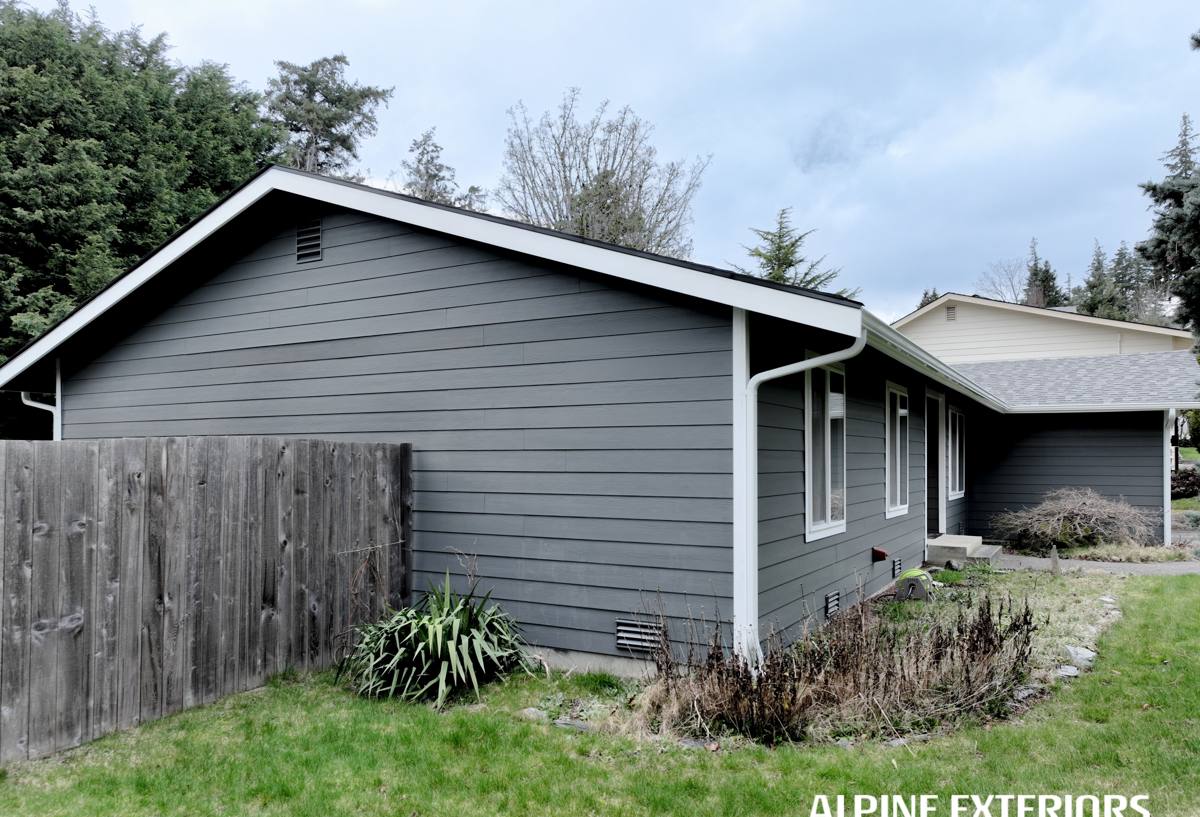
What Laurel's Climate Actually Does to Vertical Siding
Salt Air and Corrosion
Homes closer to Semiahmoo Bay and Drayton Harbor deal with airborne salt that accelerates corrosion on fasteners, flashing, and any metal trim. On a board and batten wall, the battens themselves are fastened directly through the field panel, which means every batten run has its own set of fastener heads exposed to weather. Cheap or improperly coated fasteners in a salt-air environment can start bleeding rust through paint within a few years, staining the very lines that make board and batten attractive in the first place.
Driving Rain and Wind-Loaded Water
Storms moving in off the water don't just drop rain straight down — they push it horizontally into walls, and board and batten's vertical battens can actually channel water downward along the seams if the underlying drainage plane isn't built correctly. A profile with this many vertical joints needs a real water management system behind it, not just caulk at the seams.
Moss, Algae, and Prolonged Dampness
Laurel's tree cover and the region's long damp stretches mean shaded walls stay wet longer than homeowners often realize. Moss and algae take hold fastest on porous or absorbent siding materials, and once established they trap moisture against the wall surface. Board and batten's texture and shadow lines can hide early growth until it's well established, which is part of why the material underneath matters as much as the profile on top.
Why We Only Build This Profile in James Hardie Fiber Cement
Board and batten can be built out of several materials, but not all of them hold up the same way in this climate. We install James Hardie fiber cement exclusively — no vinyl, no LP SmartSide, no primed spruce or cedar — and on a profile as exposed as board and batten, that decision matters even more than it does on lap siding.
For this style, we typically build the field with HardiePanel vertical siding and cap the seams with HardieTrim battens, all finished in a factory-applied ColorPlus coating. Fiber cement doesn't absorb water the way wood-based products can, so it resists the swelling, cupping, and rot that show up first at batten edges on lesser materials. It's also non-combustible, which matters given Whatcom County's dry summer stretches and wildfire smoke seasons. And because the color coat is baked on at the factory rather than field-applied, the battens and panels weather as a matched system instead of drifting apart in tone the way field-painted wood trim often does within a few seasons.
What a Correct Board & Batten Installation Actually Involves
A board and batten wall is only as good as what's behind it. This is a profile where installation quality has an outsized effect on long-term performance, because every batten line is a potential water entry point if it isn't detailed correctly.
- A continuous weather-resistive barrier installed and lapped correctly behind the entire wall assembly
- A rainscreen or furring gap that lets any moisture that gets behind the panel drain and dry instead of sitting against the sheathing
- Correct flashing at every window, door, roofline, and horizontal transition — not just caulk
- Fastener spacing and placement that follows the manufacturer's engineering specs, not a generalized nailing pattern borrowed from lap siding
- Battens fastened through the panel and into framing, not just into the panel itself
- Proper joint and seam treatment at panel-to-panel transitions, including sealant rated for the application
- Corrosion-resistant fasteners and flashing appropriate for a coastal, salt-air environment
- Clearance at grade and hard surfaces so the bottom edge of the siding isn't sitting in standing water or splash-back
Skip any one of these and the wall might look fine for a year or two. The problems that show up from a rushed board and batten job — staining at fastener heads, soft spots at the base of battens, moss taking hold behind poorly drained seams — usually take a couple of wet seasons to surface, which is exactly why installation discipline matters more than it seems to on day one.
Our Process for a Laurel Board & Batten Project
- On-site assessment. We look at wall orientation, shade exposure, drainage at grade, and the condition of the existing siding and sheathing before recommending anything.
- Tear-off and sheathing check. Old siding comes off and we inspect what's underneath for rot or water damage before it gets covered up again — a rainscreen system doesn't fix a wall that's already compromised.
- Water management install. Weather-resistive barrier, flashing, and rainscreen furring go on first, with extra attention at window and door openings and any horizontal transitions.
- Panel and batten installation. HardiePanel goes up to manufacturer spec, followed by HardieTrim battens fastened through to framing, with fastener spacing and joint treatment done to code and warranty requirements.
- Final detailing. Caulking, touch-up, and a walk-through so you understand what was done and why.
Cost Factors: Board & Batten Material Options
| Material | Moisture Behavior | Salt-Air Durability | Maintenance Over Time |
|---|---|---|---|
| James Hardie fiber cement | Doesn't absorb water or swell at seams | Strong; non-combustible, engineered for coastal climates | Low; factory finish holds color, periodic wash for moss/algae |
| Vinyl vertical/board & batten panel | Won't rot, but seams can flex and gap over time | Can become brittle with UV and temperature swings | Low upfront, but panels crack or discolor and are hard to spot-repair |
| LP SmartSide board & batten | Engineered wood; vulnerable at cut edges and seams if not fully sealed | Moderate; edge sealing is critical near salt air | Moderate; edge maintenance and repainting needed over time |
| Real wood (cedar) board & batten | Absorbs moisture; prone to cupping and checking at battens | Weakest without diligent upkeep in salt air | High; regular refinishing and moss treatment required |
Material cost is only part of the equation. The bigger cost driver on any board and batten job is the water management work behind the panels — the rainscreen, flashing, and fastening detail — because that's what determines whether the wall performs for twenty years or needs remedial work in five.
Why Hiring a Crew That Already Works Laurel Matters
Board and batten forgives fewer mistakes than horizontal lap siding, and the mistakes that do happen are climate-specific. A crew that's used to building walls in a drier, inland climate may not think twice about rainscreen detailing or corrosion-rated fasteners, because they've never had to. Working in and around Semiahmoo and the greater Blaine area means building every wall assuming salt air, wind-driven rain, and long damp stretches are the normal case, not the exception. That shows up in small decisions — fastener choice, batten spacing, where the drainage gap terminates at the base of the wall — that don't show up on a spec sheet but show up on the wall five years later.
Signs Your Laurel Home's Siding Needs Attention
- Soft or spongy spots at the base of battens or panel seams
- Rust streaking below fastener heads
- Moss or algae establishing on shaded walls faster each season
- Visible gaps or separation at batten-to-panel joints
- Paint or finish that's peeling or chalking unevenly across the wall
- Interior signs of moisture near exterior walls — musty smell, staining, or soft drywall
Any one of these on its own might be minor. Several together, especially on a wall that faces the prevailing weather, usually means it's worth a closer look before the next wet season.
Get a Straight Answer on Your Siding
If you're considering board and batten for a home in Laurel or anywhere around Semiahmoo, we're happy to take a look and give you an honest read on what your walls need — no pressure, no upsell. Use the form below to request a free estimate and we'll walk the property with you before recommending anything.