 Semiahmoo Siding
 Two Very Different Materials, One Job
Homeowners in Semiahmoo often narrow their siding decision down to two finalists: James Hardie fiber cement and LP SmartSide engineered wood. Both are legitimate, widely-used products with real manufacturer backing. But they are built from fundamentally different materials, and on a piece of coastline that gets salt-laden wind off Semiahmoo Bay, driving winter rain, and a moss season that can run six months or longer, that material difference matters more than most marketing brochures let on.
This page walks through both products honestly — what LP SmartSide does well, where it tends to struggle in a climate like ours, how James Hardie is built differently, and why we made the call to install only Hardie on the homes we work on.
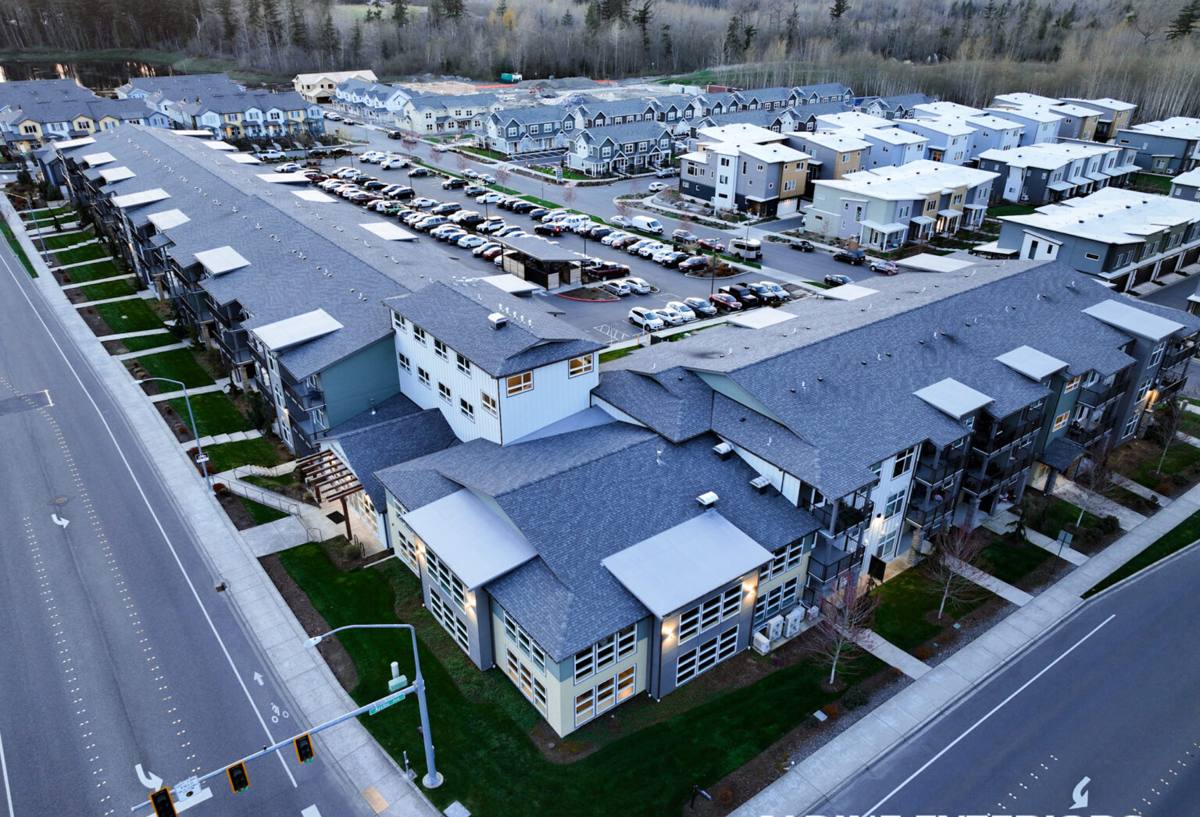
What LP SmartSide Gets Right
LP SmartSide is a strand-based engineered wood product, made from wood fibers bonded with resin and treated with a zinc borate additive for moisture and pest resistance, then finished with a resin-saturated overlay. It's lighter than fiber cement, easier for crews to cut and nail without special blades, and it holds paint well when installed correctly. For inland, drier climates, it has a solid track record and a real cost advantage over fiber cement in many markets.
We're not going to pretend it's a poor product across the board — it isn't. It's an engineered wood system that performs the way engineered wood performs: well, as long as every seam, cut edge, and joint stays sealed and dry.
Where the "as long as" Becomes the Problem
That conditional is the whole story. LP SmartSide is still a wood-based product at its core. Wood swells, wicks moisture along cut edges, and — if water gets past the factory treatment through a nail hole, a butt joint, or a gap where trim meets siding — it can soften and deteriorate from the inside before a visual problem ever shows up on the surface.
Why That Matters More in Semiahmoo Than Most Places
Semiahmoo sits right on the water, with prevailing weather rolling in off the Strait of Georgia and Semiahmoo Bay. That combination brings three things that stress exterior siding harder than a typical inland Whatcom County lot:
- Salt-laden air that accelerates corrosion of exposed fasteners and degrades some factory finishes faster than inland exposure
- Driving, wind-blown rain that gets pushed sideways into laps, joints, and trim intersections instead of just running straight down the wall
- A long moss and algae season, typical of the Pacific Northwest's wet, mild winters, that keeps siding surfaces damp for extended stretches rather than drying out quickly between storms
Any siding product can be installed to handle occasional rain. The test is what happens after years of near-constant dampness, salt exposure, and moss growth holding moisture against the wall.
Edge Sealing: The Detail That Decides Everything
LP SmartSide's manufacturer instructions are explicit that every cut end and factory edge must be field-sealed with an approved sealant before installation, and that this sealing must be maintained over the life of the siding. Skip a cut edge, let a bead of sealant fail, or let paint film crack at a joint, and moisture has a direct path into the substrate. In a climate where siding rarely gets a long dry stretch to shed absorbed moisture, that margin for error shrinks considerably.
What James Hardie Fiber Cement Is Actually Made Of
James Hardie siding is fiber cement — a mix of Portland cement, sand, and cellulose fiber, cured and formed into planks and panels. There's no wood fiber in the exposed material to absorb water and swell. Hardie's HZ5 product line is specifically engineered for climates with high moisture and freeze-thaw exposure, which describes the Whatcom County coastline well.
Because it's cement-based rather than wood-based, fiber cement doesn't rot, and it's non-combustible — a meaningful consideration for insurance and wildfire-adjacent building codes in Washington. It also holds dimensional stability better across wet and dry cycles, which matters directly for paint and caulk life: siding that doesn't expand and contract as much keeps its joints sealed longer.
ColorPlus Factory Finish
Most Hardie siding on the market today comes with the ColorPlus finish — a color baked on in a controlled factory environment, cured through multiple coats, rather than field-painted after installation. That finish is backed by its own separate warranty against fading and peeling, and it removes a major variable: field-applied paint quality depends on weather conditions on install day, while a factory finish doesn't.
Side-by-Side: How the Two Actually Compare
| Factor | LP SmartSide | James Hardie Fiber Cement |
|---|---|---|
| Core material | Engineered wood strand, resin-treated | Portland cement, sand, cellulose fiber |
| Moisture behavior | Resists moisture when sealed correctly; vulnerable at unsealed cuts/joints | Does not rot or wick moisture like wood; dimensionally stable wet or dry |
| Combustibility | Combustible (wood-based) | Non-combustible |
| Finish options | Field-primed or field-painted; factory-primed available | Factory-applied ColorPlus finish widely available, separately warrantied |
| Maintenance | Requires ongoing edge/joint sealant inspection and repainting cycles | Lower ongoing maintenance; occasional caulk and wash |
| Typical material cost | Generally lower upfront material cost | Higher upfront material cost, often offset by lower lifecycle maintenance |
| Warranty structure | Manufacturer warranty, often with maintenance-compliance conditions | Long-term transferable limited warranty; ColorPlus finish warranty separate |
Installation Sensitivity: Why the Crew Matters as Much as the Material
Neither product performs to its potential with a sloppy install, but the consequences of a mistake differ. Get a fastener pattern wrong on fiber cement and you risk cracking; get an edge unsealed on engineered wood and you risk moisture intrusion that can go undetected for a long time behind the surface. Both products depend on correct flashing, proper clearance from grade and roof lines, and correct gapping at trim and penetrations — details that matter even more when the wall is regularly hit with wind-driven rain, as many Semiahmoo properties are given their exposure to open water.
Manufacturer installation manuals for both products are long for a reason. A crew that treats install specs as optional is the single biggest variable in how either siding performs ten or twenty years out — more important, in a lot of cases, than which product was chosen in the first place.
Warranty and Real-World Longevity
Warranty language is often where the two categories diverge most. Engineered wood warranties frequently include maintenance obligations — documented recoating and sealant maintenance schedules — as a condition of coverage staying valid. That's not unreasonable given the material, but it does put ongoing upkeep responsibility squarely on the homeowner in a way that's easy to fall behind on.
James Hardie's fiber cement warranty is transferable to a subsequent homeowner, which also tends to matter for resale in a market like Semiahmoo, where buyers often ask directly what the siding is and how it's held up.
A Homeowner's Checklist for Comparing Bids
Whichever direction you lean, these are the questions worth asking any contractor bidding a siding job on the water:
- Is every cut edge and factory edge being field-sealed per the manufacturer's written instructions, and how is that verified?
- What clearance is being maintained between the siding's bottom edge and grade, decks, and roof lines?
- Is the finish factory-applied or field-applied, and what does each finish's specific warranty actually cover?
- What fastener type and spacing is specified for this product in a coastal wind zone?
- Is the warranty transferable to a future buyer, and are there maintenance conditions attached to keeping it valid?
- How is moisture managed at windows, doors, and other penetrations — not just at the field of the wall?
Why We Standardized on James Hardie
We made the decision to install only James Hardie fiber cement, and we don't install LP SmartSide, vinyl, or other alternative siding products. It comes down to what we see hold up on this stretch of coastline over the long haul: a non-combustible material that doesn't depend on a perfect, forever-maintained seal at every cut edge to resist moisture, backed by a factory finish and a transferable warranty. Given the salt air, the driving rain, and the moss season Semiahmoo homes deal with every year, we'd rather stand behind one system we can install to spec and stand behind fully than offer several and hope each one gets babied through its maintenance schedule.
That's a defensible choice, not a knock on every alternative product on the market — but it's the standard we hold our own work to.
If you're weighing your options for an upcoming siding project in Semiahmoo or anywhere in Whatcom County, we're happy to walk your home, point out where moisture and wind exposure are working against your current siding, and give you a straightforward, no-pressure estimate for what a proper Hardie install would look like.