 Semiahmoo Siding
 Sumas Roofs Work Harder Than the Brochures Suggest
Sumas sits in the low-lying valley along the Whatcom County border, and that location comes with its own weather personality. Fog settles in and lingers. Rain doesn't just fall here, it drives sideways on windy fronts and then sits in shaded valleys long after the rest of the county has dried out. Add in tree cover on a lot of older Sumas properties and you get the two things that shorten a roof's life faster than almost anything else: standing moisture and moss.
Homeowners elsewhere in our Whatcom County service area, closer to the water near Semiahmoo, deal with salt-laden air that corrodes fasteners and flashing over time. Sumas doesn't get that same salt exposure, but it trades it for something just as hard on a roof system: prolonged dampness that never fully evaporates between rain events. A new roof installed here needs to be built around that reality, not around a generic spec sheet written for a drier climate.
That's the lens we bring to every new roof install in Sumas. It's not just laying shingles in rows. It's building a system, deck to ridge, that's designed to shed water fast, breathe properly, and resist moss colonization for the long haul.
What a Correct New Roof Installation Actually Involves
A lot of roof problems homeowners call us about didn't start with bad shingles. They started with corners cut somewhere underneath the shingles, where nobody was going to see it for years. Here's what we consider non-negotiable on a Sumas re-roof.
Full Tear-Off and Deck Inspection
We don't install over existing layers. A full tear-off lets us see the actual roof deck, which matters a lot in a damp valley climate like this. Soft spots, delaminated plywood, or old water staining around chimneys and valleys get found and fixed before a single new shingle goes down. Roofing over a compromised deck just hides the problem under a warranty that won't cover it.
Ice-and-Water Protection and Underlayment
Eaves, valleys, and any low-slope transitions get a self-adhering ice-and-water membrane, not just standard felt. In a climate where water sits and refreezes on cold snaps, this is the difference between a roof that sheds water and one that lets it wick back under the shingles at the edges. The rest of the deck gets a synthetic underlayment sized for the pitch and exposure of that particular roof.
Flashing, Not Just Sealant
Chimneys, skylights, sidewalls, and roof-to-wall transitions are where the majority of leaks actually start, not out in the open field of the roof. We install step flashing, counter-flashing, and kick-out flashing as mechanical, overlapping pieces of metal. Caulk and roof cement are a backup, not the primary defense.
Balanced Ventilation
An attic that can't breathe traps moisture underneath the deck, and in a foggy valley climate that moisture has nowhere to go. We size and balance intake at the soffits against exhaust at the ridge or through vents, so the attic actually moves air instead of just having vents installed for show. This also protects the underside of the roof deck from the rot that shortens a roof's life from the inside out, where nobody's looking.
Material Options for a Sumas Home
There's no single "best" roofing material for every house. What's right depends on the roof's pitch, how much shade and moss pressure the property has, and what the homeowner wants to maintain over time. Here's how the common options stack up for this specific climate.
| Material | Moss & Moisture Behavior | Typical Lifespan | Maintenance Reality |
|---|---|---|---|
| Architectural asphalt shingle | Good with proper ventilation and periodic cleaning; algae-resistant granules help but don't eliminate moss on shaded slopes | 25–30 years | Low to moderate; benefits from soft-washing every few years in heavy shade |
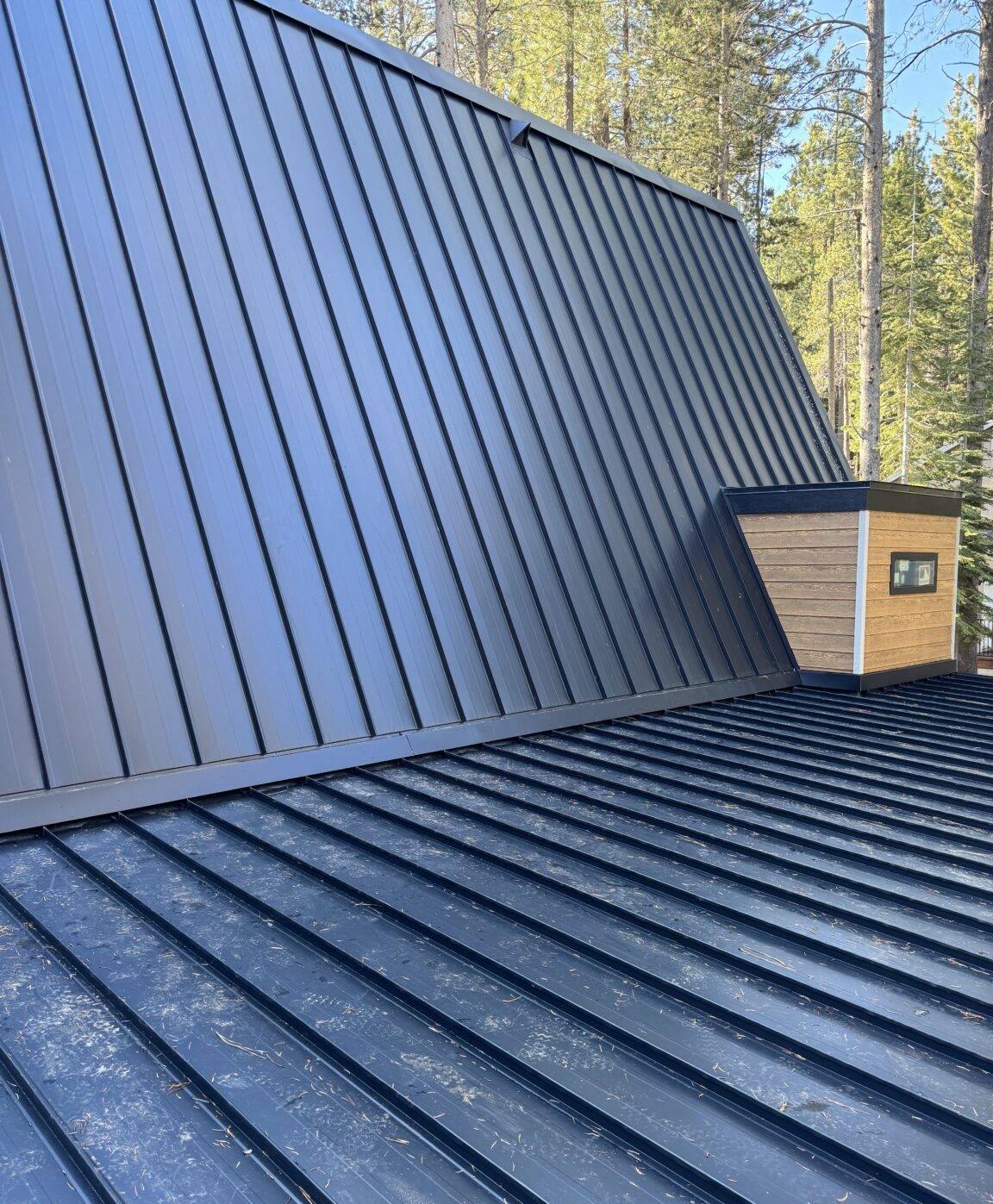
| Standing seam metal | Excellent; smooth vertical panels shed water and give moss very little to grip | 40–50+ years | Low; occasional debris clearing from valleys |
| Cedar shake | Poor in damp, shaded conditions without diligent upkeep; traps moisture in the grain | 20–25 years with upkeep | High; needs regular treatment and cleaning to hold up here |
| Synthetic composite shingle | Good; consistent, non-porous surface resists moss better than wood | 30–50 years | Low |
We install asphalt and metal roofing as our primary product lines because they hold up honestly in this climate without demanding constant upkeep from the homeowner. We're generally cautious recommending cedar shake for shaded, damp Sumas lots. It's not that the material is bad, it's that it needs a level of ongoing maintenance most homeowners don't want to sign up for once the roof is on, and skipped maintenance in a wet climate shows up as rot faster than people expect.
Our Process, Start to Finish
- On-site inspection and estimate. We walk the roof (weather permitting) or inspect from the deck and attic, check ventilation, flashing points, and deck condition, and give you a written estimate that spells out materials and scope.
- Material selection. We walk through shingle or metal options with you based on your budget, the roof's exposure, and how much shade the property gets.
- Scheduling around Whatcom County weather. We build in a weather buffer. Tear-off and deck work only proceed when we can dry the roof in the same day.
- Tear-off and deck repair. Old roofing comes off, the deck gets inspected board by board, and any soft or damaged sections are replaced before anything new goes down.
- Underlayment, flashing, and ventilation install. This is the part that determines whether the roof lasts its full expected life or fails early from the inside.
- Shingle or panel installation. Installed to manufacturer spec for nail pattern, exposure, and fastening, which is also what keeps the material warranty valid.
- Cleanup and magnetic sweep. Job site debris and stray fasteners are cleared from the yard and driveway before we consider the job done.
- Final walkthrough. We go over the finished roof with you, including where ridge vents, flashing, and any roof penetrations ended up.
Moss Season Is Longer Here Than People Think
In a lot of the country, moss is a spring problem. In Sumas's valley climate, shaded and damp roof sections can stay wet enough to support moss growth for most of the year, with only a short true dry stretch in mid-summer. That changes how we think about roof design. Ridge and hip caps, north-facing slopes, and anywhere a roof sits under tree cover get extra attention during install, because those are the sections that will fight moss the longest after the roof is finished.
A new roof won't make a property immune to moss, especially under heavy tree cover, but the right underlayment, ventilation, and shingle choice buy real time between cleanings, and keep moss from working its way under the shingle tabs where it does the actual damage.
Why It Matters That the Crew Already Works This Area
Roofing crews that mostly work drier or more urban parts of the Pacific Northwest sometimes underbuild for a valley climate like Sumas, because it's not what they see day to day. A crew that regularly works Whatcom County, from the water near Semiahmoo out to inland communities like Sumas, has already seen which flashing details fail in this climate, which ventilation setups actually keep attics dry, and which shortcuts show up as call-backs two winters later.
That local pattern recognition doesn't show up on a spec sheet, but it shows up in how long the roof holds up once the crew has moved on to the next job.
Signs Your Sumas Home Needs a New Roof, Not Another Patch
- Granules collecting in gutters or at the base of downspouts in noticeable amounts
- Shingles that are cupping, curling, or lifting at the edges, especially on south- or west-facing slopes
- Daylight visible through the roof deck from inside the attic
- Soft or spongy spots when walking the roof, or sagging visible from the ground
- Moss established thick enough that it's lifting shingle tabs rather than just sitting on the surface
- Repeated leaks in the same spot despite prior repairs
- A roof approaching or past 20–25 years old with no major work done to it
One or two of these can often be handled with a targeted repair. Several at once, especially deck damage or repeated leaks, usually means the repair budget is better spent on a full replacement.
Permits, Timeline, and What the Job Looks Like From Your Driveway
Most residential re-roofs in Whatcom County require a building permit, and we handle that as part of the job rather than leaving it for the homeowner to sort out. Actual install time on a typical single-family home usually runs one to a few days once weather cooperates, though Sumas's rain patterns mean we build scheduling flexibility into every project rather than promising a fixed start date months out. Expect noise during tear-off, a dumpster or trailer in the driveway for the duration, and a job site that's swept and checked for stray nails before we consider the work finished.
If you're weighing a repair against a full replacement, or just want an honest look at what your roof actually needs, we're happy to come take a look. The estimate is free, there's no pressure attached to it, and you can use the form below to get one scheduled.