 Semiahmoo Siding
 Why Wiser Lake Homeowners Ask About Energy-Efficient Windows
Wiser Lake sits inland from the coast, but it doesn't escape Whatcom County's marine-influenced weather. Homes here deal with long stretches of driving rain, heavy tree canopy around the lake that keeps siding and window sills shaded and damp longer than open ground, and winters where damp, salt-laden air moving inland off the Strait of Georgia and Semiahmoo Bay settles into every gap in an aging window frame. Add a moss season that can stretch from fall through spring, and it's easy to see why older windows in this area don't just get drafty — they get wet, swollen, and hard to operate long before they're "old" by national standards.
Energy-efficient windows address both problems at once. Done correctly, they cut the steady heat loss that drives up winter heating bills and summer cooling loads, and they close off the moisture pathways that cause rot, fogged glass, and mold at the sill. Done poorly — wrong product for the exposure, sloppy flashing, gaps behind the trim — they can trap water instead of shedding it, which is worse than the windows they replaced. That's the distinction that matters most for a lake-adjacent property.
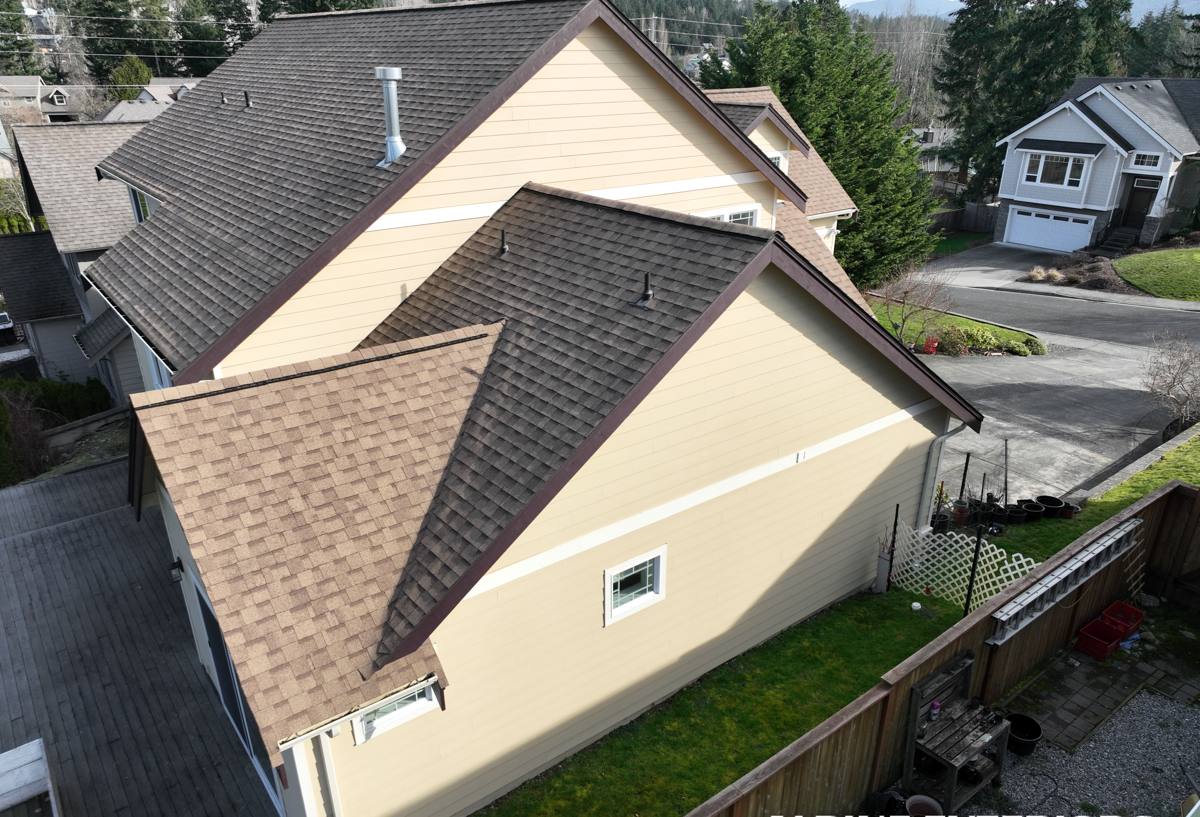
What "Energy-Efficient" Actually Means
The term gets used loosely by manufacturers and installers alike. For a homeowner comparing bids, three numbers on the National Fenestration Rating Council (NFRC) label matter more than marketing language.
U-Factor and Solar Heat Gain Coefficient
U-factor measures how much heat the window lets escape — lower is better, and it's the number that matters most in our climate since we lose far more heat through poor insulation than we gain from unwanted sun. Solar Heat Gain Coefficient (SHGC) measures how much solar heat passes through the glass. In the Pacific Northwest, a moderate SHGC is usually the right call: enough to pick up some free solar warmth on clear days without overheating south- and west-facing rooms in summer.
Air Leakage and Condensation Resistance
Air leakage (AL) matters for comfort and draft control, but condensation resistance is the number we watch closest for lake-area homes. Higher indoor humidity from nearby water, combined with cold glass surfaces in winter, is exactly the setup that fogs glass and drips onto sills. A window rated for better condensation resistance sheds that moisture instead of holding it against the frame.
| Rating | What It Measures | What to Look For Here |
|---|---|---|
| U-Factor | Heat loss through the window | Lower number — insulated glass, warm-edge spacers |
| SHGC | Solar heat passing through glass | Moderate — balance winter gain with summer comfort |
| Air Leakage | Air movement through the assembly | Lower number — tighter seals, less draft |
| Condensation Resistance | Ability to resist interior moisture buildup | Higher number — critical near the lake |
The Real Enemy Here Isn't Just Cold — It's Moisture
A window's insulation value gets most of the attention, but in this part of Whatcom County, water management is what actually determines whether a window lasts fifteen years or thirty. Driving rain doesn't just hit glass — it drives sideways into the gap between the window unit and the rough opening, and it's that hidden gap where most failures start.
Old aluminum-frame windows common in mid-century homes around Wiser Lake conduct cold straight through the frame, which is why they sweat heavily on the inside during winter. Older wood windows without proper cladding absorb moisture at the sill and bottom corners, where paint wears thin first — exactly the spots shaded by lake-side trees and slow to dry. Both problems get worse with a long moss season, since the same damp, shaded conditions that grow moss on a roof also keep window sills and exterior trim wet longer after every storm.
Correct installation means the window opening is flashed so that any water that does get behind the trim drains back out, not down into the wall framing. This is not glamorous work and it's invisible once the trim goes back on — but it's the difference between a window replacement that solves the problem and one that just hides it for a few years.
Frame and Glass Options That Hold Up in This Climate
Vinyl
Vinyl frames are a solid, budget-friendly option for most Wiser Lake homes. They don't rot, they don't need painting, and modern multi-chamber vinyl performs well thermally. The trade-off is less structural rigidity for very large openings and a look that some owners of older or higher-end homes prefer to avoid.
Fiberglass
Fiberglass frames cost more up front but expand and contract with temperature far less than vinyl, which matters for a climate with real seasonal swings and constant humidity cycling. They hold paint well if you want a custom color and generally carry stronger warranties on the frame itself. We recommend them for larger window openings and homes where the owner wants a long-term, low-maintenance product and is comfortable with the added cost.
Wood and Wood-Clad
Wood-clad windows (wood interior, aluminum or vinyl-clad exterior) give the interior warmth of real wood while protecting the exposed side from weather. Our standard is to reserve all-wood exteriors for sheltered locations only — in a driving-rain, high-moisture setting like this, an unclad wood exterior demands a maintenance schedule most homeowners don't want to keep up with, and a single missed re-coat can let rot start at the joints.
| Frame Material | Moisture Resistance | Maintenance | Typical Cost Tier |
|---|---|---|---|
| Vinyl | Very good | Low | $ |
| Fiberglass | Excellent | Low | $$$ |
| Wood-clad | Good (exterior protected) | Moderate | $$$ |
| Unclad wood | Fair — depends on upkeep | High | $$-$$$ |
Full-Frame Replacement vs. Insert (Retrofit) Windows
There are two honest ways to replace a window, and which one is right depends on the condition of what's already there — not on which is faster to install.
Insert windows fit inside the existing frame, leaving the exterior trim and flashing in place. This works well when the original frame is dry, square, and sound. It's less disruptive and usually less expensive.
Full-frame replacement removes the window down to the rough opening, including the old flashing. This is the right call — not optional — whenever there's evidence of water intrusion, soft or discolored wood at the sill, or a frame that's out of square. Installing a new insert into a compromised opening just seals moisture problems behind a new window instead of fixing them, and around a lake where sills stay damp longer, we'd rather tell a homeowner the honest scope up front than sell the cheaper option and have it fail early.
How We Approach a Window Project in Wiser Lake
- On-site assessment — we check every opening for rot, square, and existing flashing condition before recommending insert or full-frame replacement.
- Product selection — we walk through frame material, glass package, and NFRC numbers based on that specific opening's sun and rain exposure.
- Careful removal — old units and any compromised trim or sheathing come out without damaging surrounding siding.
- Flashing and air-sealing — proper house-wrap integration, flashing tape, and backer rod/sealant so water sheds outward and air gaps are closed, not just covered.
- Interior and exterior finish — trim, caulking, and touch-up work matched to the home.
- Final walkthrough — we test operation and go over care and warranty paperwork before we consider the job done.
Signs Your Current Windows Are Underperforming
Not every window that feels drafty needs full replacement, but these are the signs worth having a professional look at, especially in a damp, lake-adjacent setting:
- Fogging or a visible haze between panes of double-pane glass (a sign the seal has failed)
- Soft, spongy, or discolored wood at the sill or lower corners
- Windows that stick, won't stay open, or are hard to lock
- Visible daylight or a draft you can feel around the frame on a windy day
- Condensation on the inside of the glass that lingers well after morning
- Moss or dark staining building up on exterior sills or trim
- A noticeable difference in room temperature near the window versus the rest of the house
Why Local Experience in Wiser Lake Matters
A window that's correctly specified for a dry inland climate can still underperform here if the installer doesn't account for the extra humidity that comes with living near open water, or the extended wet season that keeps trim and sills damp longer than in a more open, sun-exposed part of Whatcom County. Crews who work this area regularly know to spec for higher condensation resistance, to flash openings with driving rain in mind rather than straight-down rain, and to flag early rot before it's hidden behind a new window. That local pattern recognition is worth as much as the product itself.
If you're weighing whether your windows need attention, or you're ready to plan a replacement before the next wet season sets in, we're happy to take a look and give you a straight answer — including telling you if a repair or partial fix makes more sense than full replacement. Reach out for a free, no-pressure estimate using the form below.