 Semiahmoo Siding
 Windows on Cherry Point Face a Different Set of Conditions
Cherry Point sits along the Strait of Georgia in unincorporated Whatcom County, and homes out here deal with a harder combination of weather than most inland properties in the region. Salt-laden air comes off the water more or less constantly, wind-driven rain hits window walls at an angle rather than falling straight down, and the long, damp moss season that defines this part of Washington keeps frames, sills, and tracks wet for much of the year. Windows take that exposure directly, more than almost any other part of the building envelope, because they're full of joints, seals, and moving hardware that all have to keep water out under pressure.
A window that's a good fit for a sheltered inland lot isn't automatically a good fit here. The right product, the right frame material, and the right installation detailing all shift once you're dealing with a shoreline property that gets weather from the open water. We install custom windows for Cherry Point homes with that exposure in mind from the first measurement, not as an afterthought once a problem shows up.
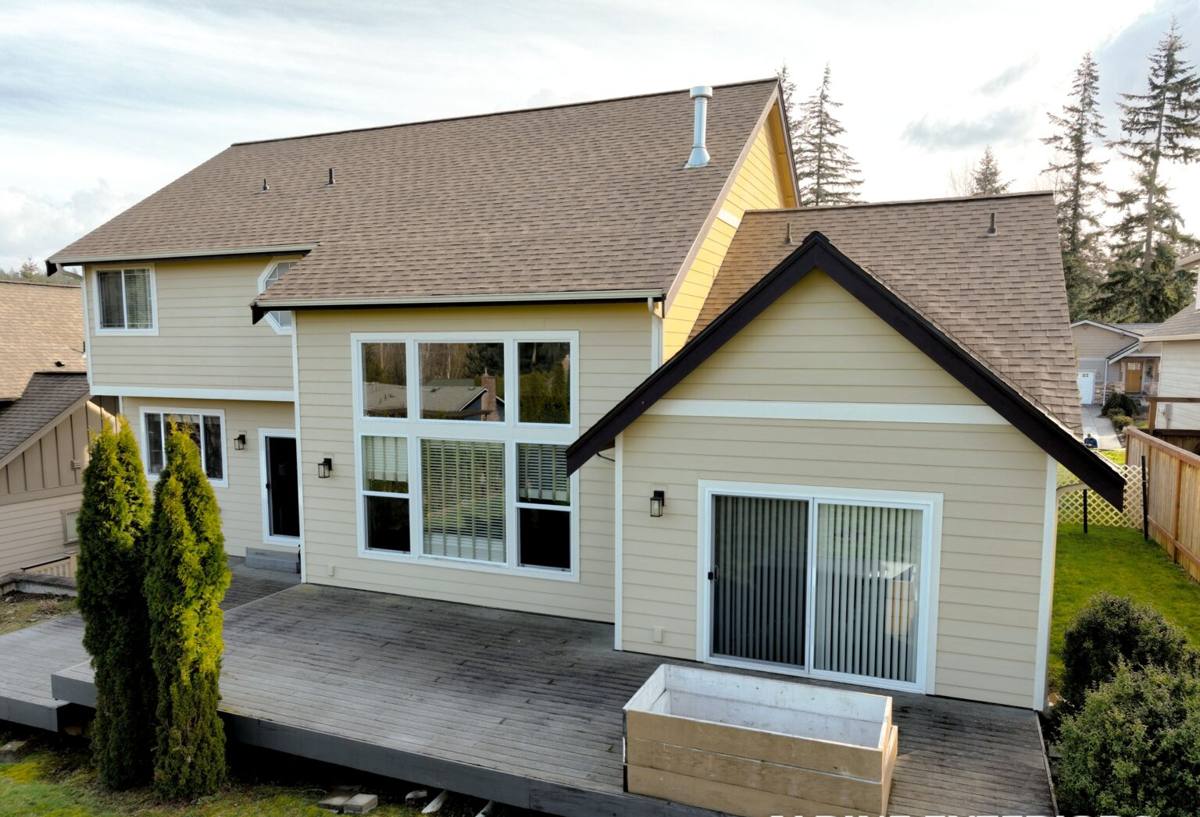
What This Climate Does to Windows Over Time
Salt Air and Corrosion
Salt in the air accelerates corrosion in window hardware — hinges, locks, balance mechanisms, and screen frames all wear faster here than they would a few miles inland. Aluminum components without adequate corrosion protection can pit and seize over time, and lower-grade fasteners rust well before the glass or frame itself shows any age. This is one of the biggest reasons hardware quality matters as much as glass quality when you're choosing a window for a waterfront lot.
Wind-Driven Rain at the Seams
With open exposure to the strait, rain doesn't just fall on a window — it gets driven sideways into the joints between the frame, the flashing, and the surrounding wall. A window that's watertight in calm conditions can still leak here if the flashing integration wasn't done correctly, because the water pressure at the seams during a windstorm is simply higher than what a typical installation detail accounts for.
Condensation, Mildew, and the Moss Season
Mild temperatures and near-constant humidity mean the moss and mildew season in this part of Whatcom County runs most of the year, and window tracks, sills, and the recesses under exterior trim are common places for it to take hold. Combined with interior condensation on cold glass during winter, that moisture load is hard on wood components in particular and can quietly rot a sill or jamb from the inside before it's visible from outside.
What a Correct Custom Window Installation Involves
Sill Pan Flashing and Weather Barrier Integration
The single most important detail in any window installation on an exposed property is how the opening is flashed before the window ever goes in. A sloped sill pan directs any water that gets past the window itself back out to the exterior instead of into the wall cavity, and the head and jamb flashing needs to integrate properly with the weather-resistive barrier and siding around it — lapped in the right order, sealed at the right points, with no shortcuts. Skipping or rushing this step is the most common reason a brand-new window starts leaking within a year or two.
Accurate Sizing for True Custom Openings
Many homes in this part of Whatcom County were built decades ago, and openings settle, shift, and go slightly out of square over time. "Custom" window work means measuring the actual opening as it exists today — not assuming it matches a stock size — and either ordering a unit built to those exact dimensions or correcting the opening itself so a window can be installed square and properly supported. Forcing a stock-size window into an opening that doesn't quite match it is a common source of air leaks, water intrusion, and hardware that never operates smoothly.
Choosing the Right Frame Material for This Location
Frame material has a bigger effect on long-term performance here than most homeowners expect, since it determines how the window handles years of salt air and repeated wetting rather than just how it looks on day one.
| Frame Material | Moisture & Salt-Air Behavior | Maintenance | Typical Fit for This Location |
|---|---|---|---|
| Vinyl | Doesn't corrode; can become brittle with age and heavy UV exposure | Low; no painting needed | Good value option; check hardware quality and weld/corner integrity |
| Fiberglass | Very stable in moisture and temperature swings; resists corrosion | Low | Strong fit for exposed, salt-air properties |
| Aluminum | Conducts cold and can condensate more; needs a corrosion-resistant finish near salt air | Moderate | Workable with a marine-grade finish, but a second choice here |
| Wood / wood-clad | Attractive but moisture-sensitive at joints and cut edges | High; regular sealing and finish upkeep | Requires the most diligence in this climate |
None of these materials is wrong in every situation, and the right call often depends on the specific exposure of a given wall, the home's existing style, and budget. What matters is picking the material with an honest understanding of the maintenance it will actually need on a property this close to the water, rather than choosing on appearance or price alone.
Full-Frame Replacement vs. Insert Replacement
When an Insert Makes Sense
An insert, or "pocket," replacement fits a new window into the existing frame, leaving the original exterior trim and flashing in place. It's faster and less invasive, and it can be a reasonable option when the existing frame is solid, dry, and free of rot. On a property like this, that means confirming the old frame hasn't already absorbed years of moisture from wind-driven rain or condensation before deciding it's sound enough to build on.
When Full-Frame Is the Right Call
Full-frame replacement removes the window down to the rough opening, which is the only way to inspect and correct the flashing and sheathing behind it. If there's any sign of past water intrusion, rot in the framing, or an opening that's shifted out of square, full-frame replacement is the honest recommendation, even though it costs more and takes longer. Covering up a compromised opening with a new window is a common shortcut that leads to repeat problems within a few years, especially in a climate that doesn't give a wall assembly much chance to dry out.
Signs Your Windows Are Due for Replacement
- Visible fogging or moisture between panes, indicating a failed seal
- Soft, discolored, or spongy wood at the sill or jamb
- Windows that are difficult to open, close, or lock, or that no longer sit flush in the frame
- Persistent condensation on the interior glass well beyond normal winter humidity
- Drafts or a noticeable temperature difference near the window on windy days
- Paint or finish that's peeling specifically around the window opening rather than the wider wall
Our Process for Custom Window Projects in Cherry Point
We start with an on-site assessment of the existing windows and the openings behind them, checking for signs of past moisture intrusion before recommending insert or full-frame replacement. From there we take precise measurements of each opening, since true custom work means building to what's actually there rather than assuming a stock size will fit. Once the product is selected, our installation follows the same flashing and sealing standards regardless of frame material — sloped sill pans, correctly lapped weather barrier integration, and hardware suited to salt-air exposure. We walk the finished work with the homeowner before we consider the job done, and we're upfront about what routine maintenance a given frame material will need going forward.
Why a Crew That Already Works This Area Matters
A contractor who regularly installs windows along this stretch of Whatcom County shoreline already knows how wind-driven rain and salt air behave differently here than they do a few miles inland — which flashing details need extra attention, which hardware holds up, and which shortcuts show up as callbacks within a year or two. That local pattern recognition is hard to replace with a generic installation checklist, and it's usually the difference between a window that performs for decades on an exposed property and one that needs attention again soon.
A Simple Checklist Before Hiring for Window Work Here
- Ask how they detail sill pan flashing and weather barrier integration on exposed, waterfront walls
- Confirm current Washington contractor licensing and active liability insurance
- Ask whether they recommend insert or full-frame replacement, and why, for your specific windows
- Get a clear, written scope covering product, frame material, and installation details before signing
- Ask what warranty covers labor and installation, separate from the manufacturer's product warranty
If you're weighing options for window replacement on a Cherry Point property, we're glad to take a look at what's there now and give you an honest read on what it actually needs. Reach out below for a free, no-pressure estimate.