 Semiahmoo Siding
 Why Point Roberts Roofs Take a Different Kind of Beating
Point Roberts sits on its own peninsula, surrounded by water on three sides and cut off from the rest of Whatcom County by the international border. That geography is part of what makes the area beautiful, but it also means roofs here absorb weather that inland homes rarely see in the same combination: near-constant exposure to salt-laden air off Boundary Bay and the Strait of Georgia, wind that has nothing to slow it down before it hits a roofline, and long stretches of damp, low-sun weather that keep roofing materials wet for days at a time. A storm that would leave a sheltered inland roof with minor cosmetic wear can leave an exposed Point Roberts roof with real, functional damage.
Storm damage roof repair here isn't just "patch what's obviously broken." It's understanding how wind, salt, and moisture work together on this particular stretch of coastline, and repairing the roof so the next storm doesn't find the same weak point again.
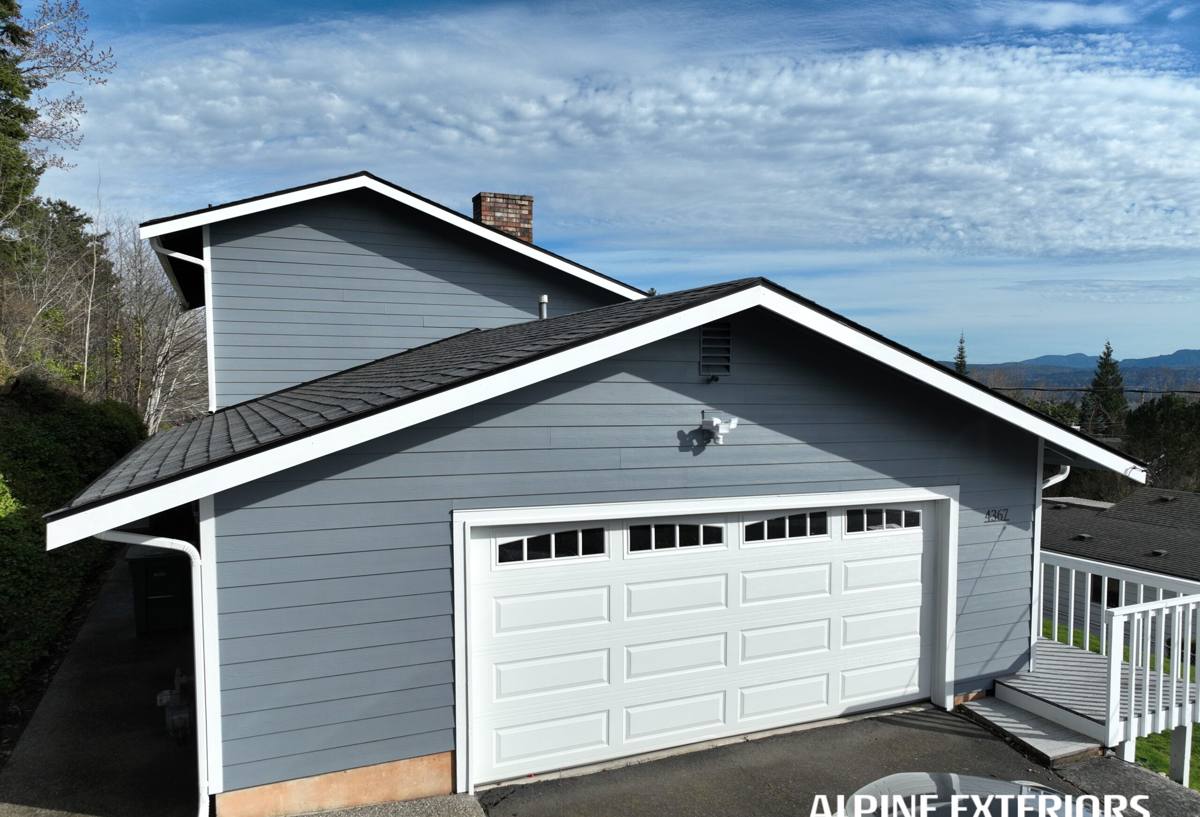
What Storm Damage Actually Looks Like on a Whatcom County Coastal Roof
Wind Damage
Sustained coastal wind lifts shingle edges and works fasteners loose over time, even when no single storm looks dramatic. By the time a shingle tears free or a section peels back, the surrounding material has usually already been flexing and loosening for months. Ridge caps and hip lines, which take the brunt of wind uplift, are usually the first place we look.
Wind-Driven Rain and Flashing Failure
Rain that comes in sideways doesn't behave like rain falling straight down. It gets pushed up under shingle laps, around chimney and vent flashing, and into any gap in the roof-to-wall transitions. Most of the "mystery leaks" we get called out for after a storm trace back to flashing that was pushed, bent, or separated just enough to let wind-driven water in — not to a hole in the shingle field itself.
Moss and Prolonged Dampness
Point Roberts' moss season runs long, and moss doesn't just sit on the surface. It holds moisture against the roofing material, works into shingle tabs and granule loss areas, and can lift edges enough for wind to get underneath during the next storm. A roof that's been carrying moss into storm season is more vulnerable to wind and rain damage than a clean one, which is why moss condition is part of any honest storm damage assessment out here.
Signs You May Have Storm Damage — Even If Nothing Looks Obviously Wrong
Storm damage isn't always a missing shingle or an obvious leak. Some of the most costly damage starts quietly. After any significant wind or rain event, it's worth checking for:
- Granules collecting in gutters or at the base of downspouts
- Shingle tabs that look curled, lifted, or slightly out of alignment from their neighbors
- Soft or discolored ceiling patches, especially near chimneys, skylights, or where roof planes meet
- Flashing that looks bent, separated, or has visible gaps around vents and chimneys
- Moss buildup that's thicker or wetter than usual after the storm
- Debris (branches, needles) packed into valleys, which can trap water against the roofing material
- Any new draft, musty smell, or humidity in the attic
None of these guarantee a serious problem on their own, but any of them is a reasonable trigger for a professional look before the next storm rolls through.
Why Being on This Peninsula Changes How Storm Repair Should Work
Point Roberts' location isn't just a climate factor — it's a logistics factor too. Because the community is only reachable by land through Canada, a contractor who doesn't already work here regularly has to plan a special trip, coordinate materials in advance, and build in extra time for the crossing. When storm damage needs attention quickly — a tarp over an exposed section, a temporary flashing fix before the next rain — that extra friction matters.
A crew that already works Point Roberts on a regular basis keeps this in mind: routes and crossing timing are already worked into scheduling, common repair materials are already on hand rather than something to source after the fact, and there's no learning curve about how homes here are built or what the local exposure typically does to a roof. That's the practical reason "local" isn't just a nice sentiment for storm repair in this particular area — it affects how fast a temporary fix can go up and how soon a permanent repair can follow.
Our Storm Damage Roof Repair Process
- Inspection. We walk the roof (or use a ladder-and-binoculars approach on steep or fragile sections) to check every plane, valley, and flashing point — not just the area where the damage was reported.
- Documentation. We photograph damage clearly, both for your records and for insurance purposes if you're filing a claim.
- Temporary protection. If there's active exposure — a torn section, exposed decking, damaged flashing — we get it tarped or temporarily sealed the same visit whenever possible, so the interior of the home isn't at risk while repairs are scheduled.
- Repair plan and honest estimate. We explain what's damaged, what's simply worn, and what the repair actually requires — no upselling a full replacement when a targeted repair will genuinely hold up.
- Repair work. Matching shingles or materials as closely as possible, resealing and reflashing affected areas, and checking fastening on surrounding material that may have been loosened by the same storm.
- Cleanup and final check. Debris removed, gutters checked for granule buildup or blockage, and a final walk-through so you know exactly what was done.
Repair or Replace? What We Actually Weigh
Not every storm-damaged roof needs to be replaced, and not every roof that "just needs a patch" should be patched. The right call depends on several factors working together, not any single one in isolation.
| Factor | Tends to Favor Repair | Tends to Favor Replacement |
|---|---|---|
| Roof age | Roof is well within its expected service life | Roof is already near or past its expected lifespan |
| Extent of damage | Isolated to one section, valley, or flashing point | Spread across multiple planes or recurring in the same spots |
| Decking condition | Decking underneath is solid and dry | Decking shows rot, soft spots, or repeated water exposure |
| Moss/wear history | Roof was in good condition before the storm | Storm damage compounds existing moss damage or granule loss |
| Material match | Existing shingle/material is still reasonably available | Material is discontinued or badly mismatched from repair patches |
We'll tell you plainly which side of this table your roof falls on, and why — including when a repair is the honest answer even though a replacement would be the bigger job for us.
Materials and Techniques That Hold Up in Salt Air and Moss
Flashing and Underlayment
In a salt-air environment, flashing quality and installation detail matter more than in most inland areas. Corrosion-resistant flashing materials and properly lapped, sealed underlayment around penetrations reduce how often wind-driven rain can find a way in — which is the failure point we see most often after storms here.
Shingle Selection and Fastening
For a wind-exposed peninsula roof, fastening pattern and shingle rating matter as much as the shingle brand. We fasten to the manufacturer's high-wind specification rather than the minimum standard, since minimum-spec fastening is a common reason otherwise-good shingles lift in coastal wind.
Ventilation as a Moss and Moisture Strategy
A roof that vents properly dries out faster between rain events, which slows moss growth and reduces the prolonged dampness that weakens shingles over a Whatcom County winter. Where storm repair work opens up a section of roof, it's often worth checking whether ventilation in that area is doing its job.
Working With Insurance on a Storm Claim
If your storm damage is significant enough to involve your homeowner's insurance, clear documentation matters more than anything else. We provide photos, a written description of the damage, and a straightforward scope of repair that your adjuster can review. We won't inflate a scope to pad a claim, and we won't downplay damage to make a quick sale — the goal is documentation that holds up and a repair that actually fixes the problem. Costs for storm repair work vary widely depending on the damage — a targeted flashing and shingle repair may run a few hundred dollars, while more extensive wind or water damage covering multiple sections can run into the thousands. We'll give you a specific number after we've actually seen the roof, not a guess over the phone.
Why Local Experience in Point Roberts Matters
Storm damage repair is one of those jobs where general roofing knowledge only gets you partway there. Knowing how salt air behaves on flashing over years, how moss season here compares to a typical Puget Sound winter, and how wind off the water tends to hit certain roof orientations comes from working on this specific peninsula repeatedly — not from a single visit after a storm. A crew that already knows Point Roberts homes can usually spot the difference between storm damage and long-term wear faster, and can tell you honestly which one you're dealing with.
If your roof took a hit in a recent storm — or you're just not sure whether recent wind and rain left damage behind — we're happy to take a look. Reach out for a free, no-pressure estimate using the form below, and we'll give you a straightforward read on what your roof actually needs.