 Semiahmoo Siding
 Cherry Point Sits Right in the Path of the Weather That Wears Siding Out Fastest
Cherry Point's location on the Semiahmoo shoreline in Whatcom County puts homes here under a combination of stresses that most siding products were never designed to handle well: salt-laden marine air moving off the water, wind-driven rain that hits walls sideways instead of falling straight down, and a long, damp shoulder season each year where moss and algae get every opportunity to take hold. None of these factors is dramatic on its own. Together, over years, they're what separates a siding job that still looks tight and clean at year fifteen from one that's cupping, staining, or rotting at the seams by year eight.
This page is about one job in one place: installing siding correctly on a Cherry Point home. Not a general overview of siding types, and not a sales pitch — just what this specific climate demands, what a correct installation actually involves, and why the crew doing the work matters as much as the material itself.
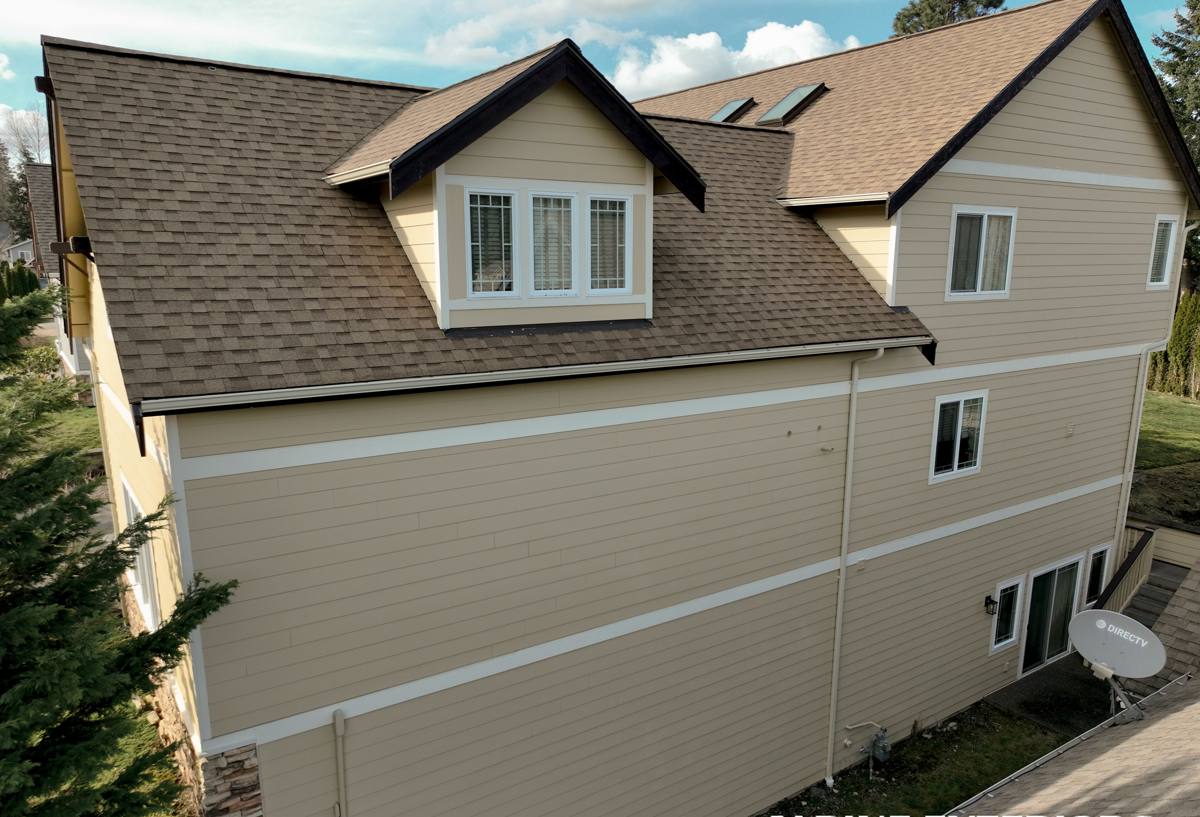
What Salt Air, Driving Rain, and Moss Season Actually Do
Salt air is corrosive to exposed metal fasteners and trim, and it's abrasive to finishes that aren't formulated to resist it — coatings can chalk, fade, or break down faster near the water than they would twenty miles inland. Driving rain is a bigger issue than most homeowners expect: on a wall facing prevailing weather, rain doesn't just run down the surface, it gets pushed and pulled sideways and even upward under pressure differences, which means any small gap, unsealed seam, or poorly lapped joint becomes an entry point. Moss and algae don't damage siding directly, but they hold moisture against the surface for extended periods, and sustained moisture contact is the single biggest driver of siding failure — swelling, delamination, rot at the substrate, and paint failure all trace back to it.
The combination matters more than any one factor alone. A product that handles rain fine in a dry climate, or handles salt fine with infrequent exposure, can still struggle here because Cherry Point delivers all three conditions at once, for months at a time, year after year.
What a Correct Siding Installation Involves
Siding is a water management system first and a finish material second. The visible panels get the attention, but the parts nobody sees — the underlayment, flashing, and gaps — are what actually keep water out of the wall assembly.
Water Management Details
- Weather-resistive barrier: a continuous, properly lapped house wrap or building paper installed shingle-style so water sheds downward and outward, never into a seam.
- Flashing at every penetration: windows, doors, hose bibs, vents, and anywhere else something passes through the wall need dedicated flashing, not just caulk.
- Drainage plane: a gap or furring behind the siding lets any moisture that does get past the outer layer drain and dry out instead of sitting against the sheathing.
- Correct panel overlap and joint treatment: horizontal laps and vertical joints have to be sized and sealed to shed wind-driven rain, not just gravity-fed rain.
Fastening and Clearances
Fasteners need to be corrosion-resistant and set to the manufacturer's specified depth and spacing — overdriven or underdriven nails are one of the most common causes of premature siding failure, and they're easy to miss on a rushed job. Siding also needs proper clearance from grade, roof lines, decks, and other siding-to-surface contact points; too little clearance traps moisture right where it does the most damage.
None of this is visible once the job is done, which is exactly why it's worth asking a contractor directly how they handle each of these steps before work starts.
Why We Install James Hardie Fiber Cement — and Only That
We standardized on James Hardie fiber cement siding for every home we work on, including here in Cherry Point, and we don't install vinyl, LP SmartSide, or other fiber cement brands. That's a deliberate professional standard, not a default.
Fiber cement is non-combustible and dimensionally stable, meaning it doesn't expand, contract, warp, or absorb water the way wood-based or wood-adjacent products can — which matters directly in a climate with sustained moisture exposure. James Hardie's HZ product lines are engineered for specific climate zones, including wetter, moisture-heavy regions like ours. The ColorPlus factory finish is baked on under controlled conditions rather than field-applied, which gives more consistent, longer-lasting color and better resistance to the fading and chalking that salt air and UV exposure cause over time. Hardie also backs the product with a strong transferable warranty, which only holds real value when the installation itself is done to spec — another reason installation quality and product choice aren't separate decisions.
We're not going to pretend there's no trade-off: fiber cement is heavier to work with and more particular about fastening and cutting practices than vinyl, and it costs more upfront than lower-tier alternatives. We think that trade-off is worth it for a home that has to stand up to this specific coastline, year after year, without repeat repairs.
Our Installation Process
The process is the same discipline every time, adjusted for the specifics of the home:
- On-site assessment: we look at current siding condition, moisture damage if any, wall orientation relative to prevailing wind and rain, and any trouble spots around windows, decks, or roof intersections.
- Tear-off and substrate check: old siding comes off and the sheathing underneath gets inspected — this is often where hidden moisture damage from a prior installation shows up.
- Weather barrier and flashing: house wrap, flashing, and drainage details go in before a single piece of finish siding is hung.
- Hardie installation to manufacturer spec: correct fastener type, spacing, and depth; correct joint and overlap treatment; correct clearances from grade and adjacent surfaces.
- Trim, caulking, and final inspection: sealing details that are actually needed, not over-caulking as a substitute for proper flashing.
Cost Factors for a Cherry Point Siding Job
| Factor | Why It Matters Here |
|---|---|
| Home size and wall complexity | More corners, dormers, and penetrations mean more flashing and cutting time |
| Current substrate condition | Moisture-damaged sheathing found during tear-off adds repair work before siding can go on |
| Siding profile and trim level | Lap width, trim detailing, and accessory pieces affect both material and labor |
| Wall exposure to prevailing weather | Sides facing the water often warrant extra attention to flashing and joint sealing |
| Access and site conditions | Slopes, landscaping, and setbacks common in this area can affect staging and labor time |
We won't quote a number without seeing the home — anyone who does is guessing. What we can say honestly is that fiber cement installed correctly costs more upfront than vinyl but avoids the repeat maintenance and premature replacement costs that show up in this climate over a shorter product's lifespan.
Signs a Cherry Point Home May Need New Siding
- Visible cupping, warping, or separation at panel seams
- Soft or spongy spots when pressed, especially near the bottom of walls or under windows
- Persistent moss, algae, or dark staining that returns quickly after cleaning
- Peeling or bubbling paint, particularly on walls facing prevailing wind and rain
- Visible gaps, cracked caulk, or daylight around trim and window edges
- A musty smell or interior moisture signs on exterior-facing walls
Any one of these on its own might be minor. Several together, especially on the weather-facing side of the home, usually means water has been getting in longer than it looks from the outside.
Why Hiring a Crew That Already Works Cherry Point Matters
A siding crew that regularly works this stretch of Whatcom County coastline already knows which wall orientations take the worst of the weather, how aggressively moss establishes itself on north- and shade-facing surfaces here, and where standard installation details need to be tightened up for salt exposure and driving rain. That's not knowledge you get from a spec sheet — it comes from having done the work, on homes like this one, in this exact climate, and having gone back to see how those installations hold up over time.
It also means accountability doesn't disappear once the job wraps. A local crew is still local next year, and the next, which is part of why the installation quality and the product warranty both matter — one backs up the other.
If you're weighing siding options for a Cherry Point home, we're glad to take a look and give you a straight, no-pressure estimate — what your walls actually need, what correct installation looks like for your specific exposure, and what it would cost to do right. Use the form below to get started.