 Semiahmoo Siding
 Windows Built for Life on the Spit
Homes in Semiahmoo Resort sit in one of the more exposed residential settings in Whatcom County. The community occupies the Semiahmoo Spit, a narrow stretch of land with open water on multiple sides and very little in the way of tree cover or terrain to break the wind. That setting is a big part of what makes the area desirable — but it also means windows here work harder than windows almost anywhere else in the county. Salt-laden air moves through constantly, storms roll in off the water with real force behind the rain, and the region's long gray season keeps everything damp for months at a time. A window that would last twenty-five years in a sheltered inland neighborhood can start showing problems in half that time out here if it wasn't installed with this exposure in mind.
This page is specifically about window replacement for Semiahmoo Resort homes — not window replacement in general. The climate factors, the product choices, and the installation details that matter here are different from what matters on a typical suburban lot twenty minutes inland, and we think that's worth explaining plainly before you decide anything.
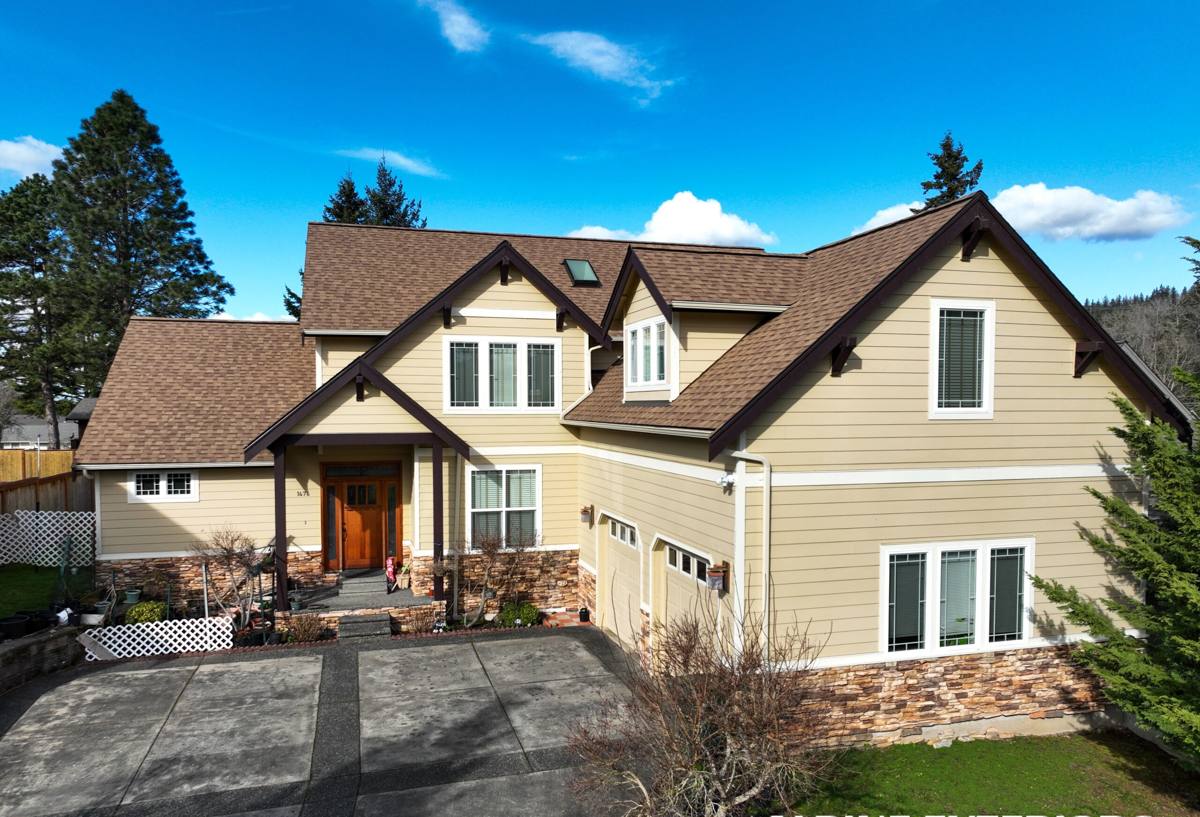
Why Windows Wear Out Faster on the Spit
Salt Air and Corrosion
Airborne salt doesn't just affect boats and railings. It settles on window hardware, frame fasteners, and any exposed metal components, and over time it accelerates corrosion in ways that plain rainwater doesn't. Cheaper hardware — hinges, locks, balance mechanisms — is often the first thing to fail on a coastal window, sometimes years before the glass or frame shows any real wear. If a window was built and installed without accounting for salt exposure, the hardware is usually the weak link.
Driving Rain and Wind-Driven Water Intrusion
Rain that falls straight down is relatively easy to keep out. Rain that's being driven sideways by sustained wind off the water is a different problem — it finds gaps in flashing, worn weatherstripping, and old caulk lines that would never leak in a calmer setting. Most of the water damage we see around older windows in this area isn't from a dramatic storm; it's from years of steady, wind-driven moisture finding its way in through small failures that went unaddressed.
Moss, Mildew, and Prolonged Dampness
Whatcom County's moss season runs long, and a home on the spit stays damp longer than one a few miles inland simply because it dries out more slowly between weather systems. Moss and mildew growth around window sills and trim isn't just cosmetic — sustained moisture against wood trim or sill framing is exactly the condition that leads to rot, and once rot sets in around a window opening, a simple window swap turns into a repair of the surrounding wall.
Signs Your Windows Need Replacing
- Visible corrosion, pitting, or stiffness in locks, cranks, or hinges
- Fogging or a cloudy haze between panes on double- or triple-glazed units (a sign the seal has failed)
- Drafts you can feel with a hand near the sash, even with the window latched
- Soft, discolored, or spongy trim and sill wood around the frame
- Windows that are difficult to open, close, or lock without extra force
- Condensation forming on interior glass or trim during cool, damp stretches
- Paint or finish that's peeling or bubbling specifically around the window opening, not the wall generally
- Noticeably higher heating bills without any other obvious cause
What a Correct Window Replacement Job Actually Involves
Removing the Old Window Without Damaging the Opening
The old sash and frame need to come out cleanly, without tearing up the surrounding sheathing or siding more than necessary. This is also the point where hidden problems — rot, old flashing failures, framing that's out of square — get found. A rushed removal skips this inspection step, which is how new windows end up installed over old, unresolved damage.
Flashing and Moisture Barrier Detail
This is the single most important part of a coastal window install and the part that's easiest to shortcut. Proper flashing tape and a correctly lapped moisture barrier (water-resistive barrier over the sill, up the jambs, and over the head flange) are what actually keep wind-driven rain from getting behind the window and into the wall assembly. Caulk alone is not a substitute for correct flashing sequence — caulk fails, layered flashing sheds water even if a bead of sealant eventually cracks.
Fastening, Shimming, and Squaring
A window that isn't shimmed plumb, level, and square will bind, won't seal evenly, and will put uneven stress on the frame that shortens its life. Fastening needs to hit structural framing, not just sheathing, and follow the window manufacturer's spec for fastener spacing and type — corrosion-resistant fasteners matter here for the same reason corrosion-resistant hardware does.
Interior and Exterior Finish Work
Once the window is set and sealed, trim, interior casing, and exterior finish (caulking, paint, or trim work) need to be completed to match the surrounding wall and to close off any remaining path for water or air. Insulation around the frame gap (not stuffed too tight, not left with gaps) is part of this step too — it affects both energy performance and condensation behavior at the frame.
Choosing the Right Window for a Coastal Whatcom County Home
There isn't one "correct" material for every situation, but there are real trade-offs worth understanding before you pick one.
| Frame Material | Salt Air / Corrosion Resistance | Maintenance | Typical Lifespan Here |
|---|---|---|---|
| Vinyl | Good — won't corrode, though hardware quality still varies by manufacturer | Low | 20-30 years with quality hardware |
| Fiberglass | Very good — dimensionally stable, resists warping in temperature and moisture swings | Low | 30-40+ years |
| Aluminum | Fair — durable but conducts heat/cold and can corrode at fastener points without proper coating | Moderate | 20-25 years, shorter if uncoated hardware is used |
| Wood / Wood-Clad | Weakest on its own — exterior wood needs a durable clad or coating to hold up to salt and rain | High — regular inspection and finish maintenance | Varies widely with maintenance |
Our standard practice for homes in this exposure is to steer clients toward fiberglass or quality vinyl with marine-grade or corrosion-resistant hardware, and away from unclad wood exteriors and lower-grade aluminum. That's not a knock on those materials in general — wood-clad and aluminum windows perform fine in a lot of settings. It's a judgment call specific to sustained salt air and wind-driven rain, where hardware corrosion and finish maintenance become bigger long-term issues than they would be a few miles inland.
Glass and Hardware Details That Matter Here
Low-E glass coatings help with energy performance year-round and are worth having regardless of location, but they don't address salt exposure directly — that's a hardware and frame material question, not a glass question. What does matter for this climate is making sure weep holes (the small drainage channels at the bottom of a window frame that let condensation and intruded water drain back out) are kept clear. Salt residue and debris can clog them faster here than inland, and a clogged weep hole turns a well-installed window into one that holds water against the frame. We check and clear these as a standard part of any install and point them out so homeowners know to check them periodically going forward.
Our Process, Start to Finish
- On-site assessment of existing windows, framing condition, and any signs of water damage or rot around openings
- Honest recommendation on repair vs. full replacement, with material options suited to a coastal exposure
- Written estimate with no pressure to decide on the spot
- Scheduled installation, including careful removal and inspection of each opening before the new window goes in
- Proper flashing, moisture barrier, and fastening per manufacturer specification
- Interior and exterior finish work to match the existing home
- Final walkthrough and function check on every window before we call the job done
What Drives the Cost of a Window Replacement
| Factor | Why It Affects Price |
|---|---|
| Frame material | Fiberglass generally costs more upfront than vinyl; both cost more than the cheapest aluminum options but last longer here |
| Number and size of windows | Larger openings and full-home replacements have per-unit efficiencies but higher total cost |
| Condition of existing framing | Rot or water damage found during removal adds repair work before the new window can go in |
| Access and window type | Upper-story, oversized, or custom-shaped windows take more labor than standard ground-floor units |
| Hardware grade | Corrosion-resistant hardware costs more than standard-grade but pays off in a salt-air setting |
| Trim and finish work | Matching existing exterior trim or siding profiles adds labor beyond the window itself |
We give exact numbers after we've actually seen the windows and openings in person — anything else would just be a guess, and guesses aren't useful when you're planning a budget.
Why a Crew That Already Works Semiahmoo Resort Matters
Resort and HOA communities often have architectural guidelines that cover exterior changes, including window replacement — approved colors, materials, or trim profiles. A crew that's worked in Semiahmoo Resort before knows to check for and work within those requirements up front, rather than finding out mid-project. There's also a practical side: knowing how a given lot sits relative to wind and water exposure helps us make a better call on hardware grade and flashing detail before we even start, instead of treating every home like a generic inland install and hoping it holds up.
None of this replaces a proper on-site look at your specific windows — every home and every opening is a little different — but it does mean fewer surprises and a job that's built for the conditions your home actually faces, not average conditions somewhere else in Whatcom County.
Ready for a Straight Answer on Your Windows
If you're dealing with drafty, corroded, or fogged windows in Semiahmoo Resort, or you just want an honest read on whether repair or full replacement makes sense for your home, we're happy to take a look. The estimate is free, there's no pressure, and you'll get a straightforward recommendation based on what we actually find — not a sales pitch. Use the form below to get started.