 Semiahmoo Siding
 Why Semiahmoo Resort Homes Take a Different Kind of Beating
Semiahmoo Resort sits about as close to the water as a Whatcom County neighborhood can get, with homes strung along the spit and shoreline facing Semiahmoo Bay and Drayton Harbor. That location is the whole appeal of living there, and it's also exactly why the exterior of a house in this neighborhood ages differently than one a few miles inland in Blaine or Ferndale. Salt-laden air off the water accelerates corrosion on fasteners, trim, and anything with a weak factory finish. Wind-driven rain doesn't just fall straight down here — it gets pushed sideways into siding laps, corner boards, and window trim, which means water intrusion problems show up at seams and penetrations long before they show up on a flat wall. And the long, wet, mild winters that define this part of Washington create ideal conditions for moss and algae to colonize any siding surface that stays damp and shaded, which describes a lot of wall area on homes tucked among trees near the water.
None of this is unique to any one house — it's the baseline condition for exterior materials anywhere on the Semiahmoo peninsula. A siding system that isn't specifically suited to marine exposure will show it within a handful of years: swelling at butt joints, peeling paint, streaking from moss and mildew, and corroded fasteners bleeding rust down the face of the wall. That's the problem we're solving for on every Semiahmoo Resort job, and it's why we don't treat this as a generic siding installation.
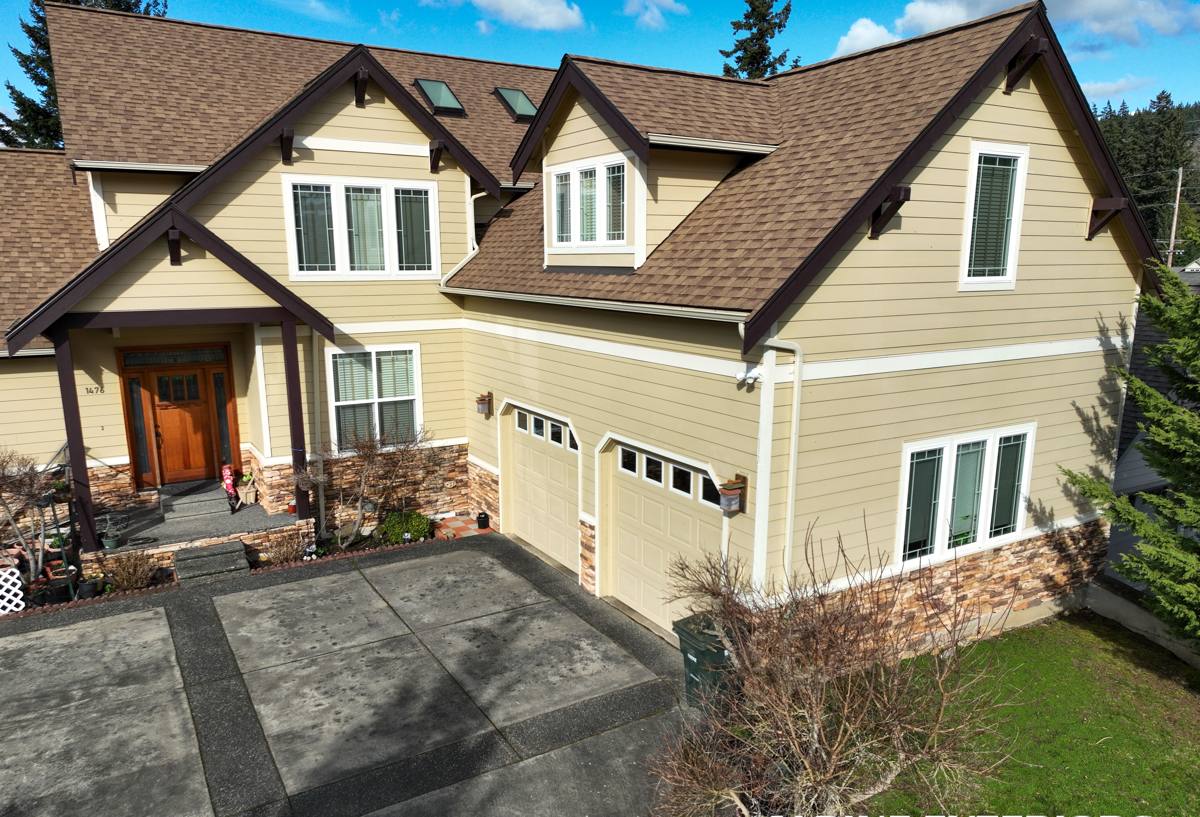
Why We Only Install James Hardie Fiber Cement
We standardized on James Hardie fiber cement siding and don't install vinyl, LP SmartSide, Cemplank, Allura, primed spruce, or cedar. That's not a marketing position — it's a decision built around what actually holds up on homes exposed to salt air, driving rain, and near-constant moisture cycling.
Fiber cement is non-combustible and dimensionally stable, which matters in a wet climate because it doesn't swell, cup, or rot the way wood-based products can when they take on repeated moisture. Vinyl siding can warp and fade under UV and temperature swings, and its butt joints and channels give wind-driven rain plenty of places to work its way behind the cladding. Wood siding products, even engineered ones, depend on an intact factory coating and diligent field maintenance to keep moisture out — miss a re-caulk or a touch-up cycle in a marine environment and the clock starts running fast. James Hardie's fiber cement board is cement, sand, and cellulose fiber, factory-cured, and finished with a baked-on ColorPlus coating that's engineered to resist fading, chipping, and cracking better than field-applied paint. That combination is why it's the only product we put on a house.
What We're Not Saying
We're not claiming other products are junk. Vinyl is inexpensive and low-maintenance in mild, dry climates. Cedar has real appearance appeal for owners who want a natural wood look and are willing to maintain it. LP SmartSide and Cemplank/Allura have their own use cases. Our position is narrower: for the specific combination of salt air, driving rain, and moss exposure that Semiahmoo Resort homes deal with year after year, James Hardie is the product we're willing to stand behind and warranty our workmanship on.
The Right Hardie Product Line for a Marine Environment
James Hardie makes climate-engineered product lines, and for a coastal, high-moisture location like Semiahmoo Resort, that engineering matters more than it would in a drier inland climate. Their HZ5 formulation, built for wetter, colder regions, is designed to resist moisture-related damage better than their warm-climate formulation. We spec HZ5 products on Semiahmoo Resort homes for that reason.
| Consideration | Why It Matters at Semiahmoo Resort |
|---|---|
| HZ5 formulation | Engineered for wet, freeze-prone climates; better moisture and durability performance than warm-climate boards |
| ColorPlus factory finish | Baked-on finish resists fading and chipping from salt air and UV better than field-applied paint |
| Lap siding vs. panel siding | Lap profiles shed wind-driven rain more predictably at horizontal joints when flashed correctly |
| Trim and fascia matching | Hardie trim boards resist the same moisture and salt exposure as the field siding, avoiding mismatched wear |
We also pay attention to color and texture choice on waterfront lots specifically. Darker ColorPlus finishes absorb more heat, which can help shed moisture faster on shaded, tree-covered elevations, while lighter finishes show less streaking from airborne salt residue. Neither is objectively "better" — it's a conversation we have with each homeowner based on how their lot sits relative to sun, wind, and tree cover.
What a Correct Installation Actually Involves
James Hardie siding performs the way it's engineered to only when it's installed to spec. In a marine environment, the installation details matter more than they would somewhere drier, because there's less margin for error before moisture finds a way behind the cladding.
The Details We Don't Skip
- Weather-resistive barrier installed and lapped correctly behind the siding, with all penetrations properly flashed
- A drainage gap (rainscreen) so any moisture that does get behind the siding can drain and dry instead of sitting against the sheathing
- Correct fastener type and spacing — stainless or hot-dip galvanized fasteners driven per Hardie's specification, not whatever is fastest
- Proper clearance between the bottom of the siding and grade, decks, patios, and roof lines, so splashback and standing water don't sit against the board
- Butt joints and corners sealed and flashed per manufacturer detail, not just caulked over as an afterthought
- Window and door head flashing installed before trim goes on, so water is directed out and away rather than trapped behind the casing
Every one of these steps is in James Hardie's published installation instructions, and skipping any of them is one of the fastest ways to void the manufacturer's product warranty — even though the board itself might look fine going up. We install to the written spec on every job, not just the visible parts.
Our Process From Estimate to Finished Siding
The process is the same discipline whether the home is a full re-side or a targeted repair, scaled to the scope of the job.
- On-site assessment. We walk the exterior, check for existing moisture damage, rot, or failed flashing behind the current siding, and evaluate sun/wind exposure specific to the lot.
- Written estimate. We spec the Hardie product line, profile, and finish, and lay out the scope in plain terms — no vague allowances.
- Tear-off and sheathing inspection. Old siding comes off and we inspect the sheathing underneath before anything new goes up. Rot or water damage found at this stage gets addressed, not covered over.
- Weather barrier and drainage plane. House wrap, flashing, and rainscreen furring go in before a single board of siding is hung.
- Siding installation. Boards, trim, and corners installed to Hardie's fastening and clearance specifications.
- Final inspection and walkthrough. We check caulking, flashing, and finish work with the homeowner before calling the job done.
Moss, Algae, and Salt Air: What Homeowners Should Expect Long-Term
No siding product is maintenance-free in this climate, and we won't tell a homeowner otherwise. James Hardie's factory ColorPlus finish holds color and resists moss and mildew growth better than bare or field-painted materials because it's a harder, more uniform surface with fewer places for organic growth to take hold. But shaded, north-facing walls near trees at Semiahmoo Resort will still see some moss and algae over time — that's a function of Whatcom County's wet winters, not a defect in the material.
Routine maintenance is simple: an occasional gentle wash (low-pressure, not a pressure washer aimed directly at seams) keeps growth from establishing, and it's worth checking caulking at trim joints every few years since caulk is the one component in the whole system that does wear out on its own schedule, independent of the siding itself.
Cost Factors on a Semiahmoo Resort Home
Every home is different, but the line items that actually move the price on a job in this neighborhood are consistent.
| Factor | How It Affects the Job |
|---|---|
| Existing sheathing condition | Rot or water damage found during tear-off adds repair scope before new siding can go on |
| Home size and wall complexity | More corners, dormers, and trim details mean more labor and cut waste |
| Product line and profile | HZ5 lap siding, panel siding, and shingle-style profiles carry different material costs |
| Access and site conditions | Waterfront lots with limited staging space or steep grades can affect scaffolding and logistics |
| Trim and accessory scope | Matching Hardie trim, soffit, and fascia to the field siding adds material and labor |
We don't quote from a distance sight-unseen — every estimate follows an actual walk of the exterior so the number reflects the real condition of the house, not a generic per-square-foot guess.
Why a Crew That Already Works Semiahmoo Resort Matters
Marine-exposure siding work isn't something you get right by reading the manufacturer's manual once. A crew that regularly works homes along the Semiahmoo peninsula has already seen how wind-driven rain behaves against specific elevations, where moss tends to establish first, and which flashing details actually hold up after a few winters of real weather — not just at installation. That experience shows up in the small decisions: where to add extra flashing beyond the bare minimum spec, which corners need tighter sealing on a wind-exposed elevation, and how to sequence a tear-off so a partially exposed wall isn't left vulnerable if weather turns mid-project.
It also matters for warranty follow-through. James Hardie's product warranty and our own workmanship warranty both depend on correct installation — a crew unfamiliar with coastal Whatcom County conditions is more likely to install to the bare minimum spec rather than the level of detail this location actually calls for.
A Quick Checklist Before You Hire Anyone for Siding Work Here
- Ask whether they install exclusively to James Hardie's written specifications, including rainscreen and flashing details — not just "Hardie siding" as a generic line item
- Confirm they carry current licensing and insurance for exterior work in Washington
- Ask what HZ product line they'd spec for a marine-exposure lot and why
- Get a written estimate based on an actual site walk, not a phone quote
- Ask how they handle sheathing repair if rot is found during tear-off — this should be addressed up front, not as a surprise change order
If you own a home at Semiahmoo Resort and want a straight answer on what your siding actually needs, we're happy to walk the exterior and give you a clear, no-pressure estimate using the form below.