 Semiahmoo Siding
 Siding Built for Life on the Semiahmoo Spit
Semiahmoo Resort sits about as close to open water as a home in Whatcom County can get. That waterfront position is exactly what makes the neighborhood desirable — and exactly why siding here fails faster than it does ten miles inland. Homes on and around the spit take a steady diet of salt-laden air off Semiahmoo Bay, wind-driven rain that hits walls sideways instead of falling straight down, and a long, damp shoulder season where moss and algae get every chance to take hold. Siding that would hold up fine in a sheltered inland lot can start showing problems here in a fraction of the time.
This page is about one job in one place: installing siding correctly on a Semiahmoo Resort home, with a product and a process matched to what this specific stretch of coastline actually does to a building envelope.
What Semiahmoo Resort's Climate Actually Does to a Wall
Three conditions define siding performance out here, and they compound each other:
- Salt air. Airborne salt from Semiahmoo Bay settles on siding, trim, and fasteners year-round. On untreated or poorly finished materials, it accelerates corrosion of metal components and breaks down paint film and coatings faster than a typical inland exposure.
- Driving rain. Open water means wind. Wind-driven rain doesn't just run down a wall — it gets pushed into laps, seams, and butt joints that were never designed to be hit from the side. Any gap in the water-resistive barrier or any siding that isn't sealed and lapped correctly becomes an entry point.
- Extended moss and algae season. Whatcom County's marine climate keeps humidity high for much of the year, and shaded, north-facing, or tree-adjacent walls near the water stay damp longer than they would elsewhere. That extended moisture window is exactly what moss and algae need to establish and spread across a siding surface.
None of these individually is unusual for the Pacific Northwest. What's different at Semiahmoo Resort is that homes get all three at once, more intensely and more often, because of proximity to the water.
Why We Only Install James Hardie Fiber Cement
We install James Hardie fiber cement siding exclusively — we don't install vinyl, LP SmartSide, Cemplank, Allura, or bare wood siding, on Semiahmoo Resort homes or anywhere else we work. That's not a marketing position; it's a standard we hold because of what we've seen these materials do in coastal, wet-climate exposure over time.
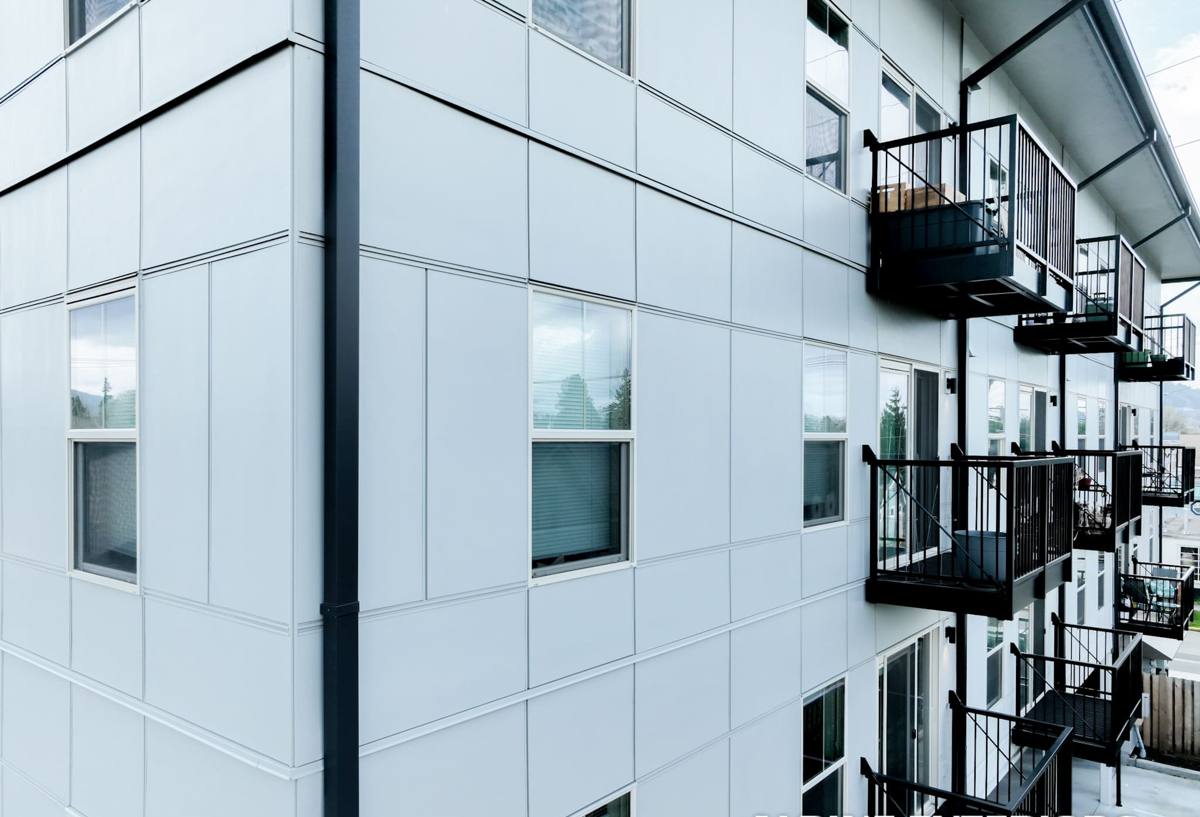
Fiber cement is non-combustible and dimensionally stable, meaning it doesn't expand, contract, or warp with moisture and temperature swings the way wood-based or vinyl products can. James Hardie's HZ5 product line is specifically engineered for climates like ours — higher moisture exposure, cooler temperatures, and more freeze-thaw cycling than the sunbelt product lines are built for. The factory-applied ColorPlus finish is baked on under controlled conditions rather than field-painted, which matters enormously in a salt-air environment where field-applied coatings tend to break down faster.
That doesn't mean fiber cement is maintenance-free or immune to the elements — no siding is. It means the material itself isn't the weak point. The weak point, on any siding, is almost always the installation: flashing, gapping, fastening, and caulking done wrong. Which is why the install matters as much as the product.
What We're Not Installing, and Why
Vinyl siding can crack and become brittle in sustained wind exposure, and its seams and panels rely on lap-and-lock joints that aren't designed to shed sideways-driven rain as reliably as a properly installed fiber cement lap. LP SmartSide and other engineered-wood products use wood strand cores that, once the outer coating is compromised at a cut edge or fastener puncture, are vulnerable to moisture intrusion and rot — a real risk in a climate where walls stay damp for extended stretches. Bare cedar or primed spruce require an ongoing paint and caulk maintenance cycle that gets harder to keep up with the more exposure a wall has to salt and rain. Each of these products has legitimate uses elsewhere. We simply don't think they hold up to what Semiahmoo Resort's exposure demands, so we don't put our name on that installation.
What a Correct Installation Involves Here
The product is only half the equation. On a waterfront exposure like this, the installation details are what actually determine whether a siding job lasts 10 years or 40.
| Install Factor | Why It Matters at Semiahmoo Resort |
|---|---|
| Weather-resistive barrier & flashing | Wind-driven rain will find any gap in the drainage plane; correct lapping and integrated flashing at windows, doors, and penetrations is non-negotiable on an exposed wall |
| Rainscreen / drainage gap | A ventilated gap behind the siding lets incidental moisture drain and dry instead of sitting against the wall — critical given the extended damp season here |
| Fastener selection | Corrosion-resistant fasteners rated for coastal exposure prevent staining and loosening that plain fasteners develop under salt air over time |
| Caulk & sealant joints | Every seam is a potential entry point under wind-driven rain; joints need to be sealed to manufacturer spec, not just visually closed |
| Cut-edge sealing | Factory ColorPlus finish is only intact where it was applied at the factory — every field-cut edge needs to be sealed to keep water out of the exposed core |
| Clearance & grade | Proper clearance from grade, decks, and roof lines keeps splash-back and standing moisture off the bottom courses, which are the first to fail on a poor install |
Skip any one of these and the siding itself becomes almost irrelevant — water will get behind it regardless of what brand is on the outside.
Our Process on a Semiahmoo Resort Home
The steps don't change from house to house, but how we handle each one is shaped by this specific exposure.
1. Walkthrough and Assessment
We look at existing siding condition, moisture staining, trim and window flashing, and which elevations take the most direct wind and rain — usually the water-facing side of the home gets a different level of scrutiny than a sheltered side.
2. Tear-Off and Sheathing Check
Removing old siding lets us see the sheathing underneath before anything new goes up. On homes near the water, this step often reveals moisture issues that were invisible from the outside — soft sheathing, rusted fasteners, or a failed barrier behind older siding.
3. Water-Resistive Barrier and Rainscreen
We install or verify a continuous drainage plane with a ventilated rainscreen gap, giving the wall a way to shed and dry moisture that gets past the outer siding layer — the single biggest factor in long-term performance on an exposed coastal wall.
4. Flashing and Trim
Windows, doors, and any wall penetration get integrated flashing detailed to shed water down and out, not into the wall cavity — the detail most commonly rushed or skipped on lower-quality installs.
5. James Hardie Installation to Spec
Panels or lap siding are installed per James Hardie's published fastening, gapping, and clearance requirements, with every field-cut edge sealed and every fastener corrosion-resistant.
6. Final Walkthrough
We walk the finished job with the homeowner, checking caulk lines, trim, and clearances before calling it complete.
Comparing Siding Options for a Waterfront Semiahmoo Home
| Material | Salt Air Behavior | Wind-Driven Rain Behavior | Long-Term Maintenance |
|---|---|---|---|
| James Hardie fiber cement | Factory ColorPlus finish resists salt-driven fading and coating breakdown | Non-combustible, dimensionally stable core; performance depends on correct lap and seal detailing | Periodic wash-down; repaint only if going beyond the factory finish's service life |
| Vinyl | Can chalk and fade faster under sustained UV and salt exposure | Panels can flex or loosen under strong, sustained wind loading | Low upkeep but not repaintable if it fades or cracks |
| LP SmartSide / engineered wood | Coating breakdown at exposed edges risks moisture reaching the wood-strand core | Vulnerable to swelling and rot if water reaches the core through a compromised edge | Requires attentive edge and seam maintenance to prevent moisture intrusion |
| Cedar / primed spruce | Salt accelerates weathering of bare or lightly finished wood | Absorbs moisture at end grain and seams if not diligently maintained | Ongoing paint/stain and caulk cycle, shorter intervals near the water |
Living With Moss and Algae Season
Even correctly installed fiber cement can develop surface growth on shaded or north-facing walls during Whatcom County's long damp stretch — that's a function of climate and sun exposure, not a defect in the material. The difference with a properly installed fiber cement wall is that surface growth stays on the surface. It doesn't have a compromised coating or a porous substrate underneath for moisture to exploit. A simple wash-down keeps growth from building up; it does not require stripping or repainting the way a wood or poorly coated surface eventually does.
Why Hiring a Crew That Already Works This Area Matters
Siding technique that's correct for a sheltered inland lot isn't automatically correct for a home facing open water. A crew that regularly works Semiahmoo Resort and the surrounding Whatcom County waterfront already knows which elevations need extra flashing attention, how much rainscreen gap actually matters in this exposure, and what fastener and sealant products hold up rather than fail early in salt air. That's the kind of judgment that only comes from doing the work in this specific environment repeatedly — not from a generic install checklist.
Questions Worth Asking Any Contractor Before You Hire
- Do you install a ventilated rainscreen gap, or does the siding go directly against the barrier?
- What fastener type do you use, and is it rated for coastal/marine exposure?
- How do you flash windows and doors, and can you walk me through that detail?
- Do you seal every field-cut edge on fiber cement panels, not just the factory edges?
- Have you installed siding on other homes on or near the Semiahmoo Spit?
- What does the manufacturer's warranty actually cover, and does it require a specific install method to stay valid?
Get a Free, No-Pressure Estimate
If your Semiahmoo Resort home's siding is showing moss buildup, staining near seams, or you're just planning ahead for a replacement, we're happy to take a look and walk you through what your home actually needs. Fill out the form below for a free estimate — no pressure, no obligation.