 Semiahmoo Siding
 Building Decks for One of the Toughest Microclimates in Whatcom County
Point Roberts sits on its own peninsula off the Semiahmoo area, surrounded on three sides by Boundary Bay and the Strait of Georgia. That location is part of what makes it beautiful, and part of what makes it hard on an outdoor deck. Homes here take salt-laden air off the water almost year-round, driving rain that comes in sideways during winter storms, and a moss and algae season that can stretch from fall through spring. A deck built to a generic spec sheet does not hold up here the way one built for this specific environment does.
We build and design custom decks for homeowners throughout the Semiahmoo area, and Point Roberts is part of our regular service area. This page covers what actually matters when you're putting a deck on a home in this stretch of Whatcom County — the material trade-offs, the structural details that get skipped on rushed jobs, and what our process looks like from first look to final walkthrough.
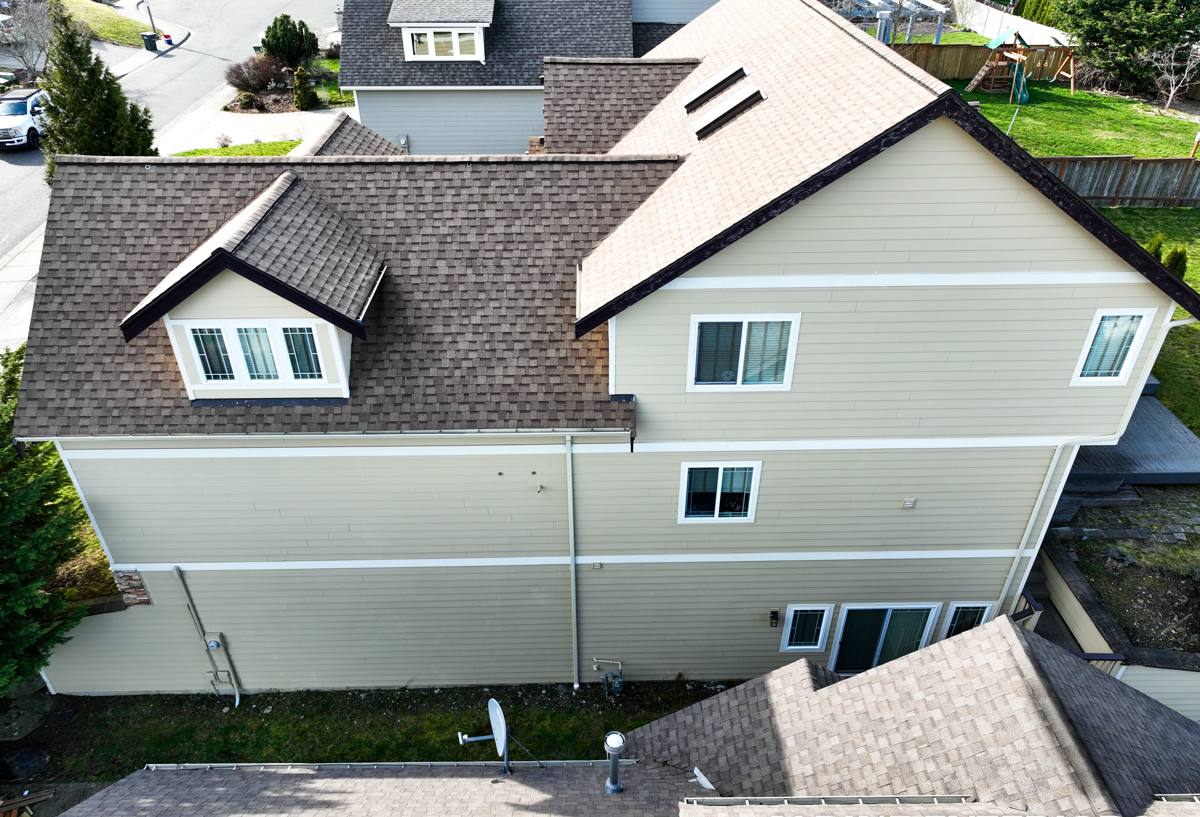
What Salt Air, Driving Rain, and Moss Actually Do to a Deck
Three things work against an outdoor deck in Point Roberts, and they work together, not separately.
Salt Air
Airborne salt accelerates corrosion on anything metal — fasteners, hidden hangers, railing hardware, and structural connectors. It also dries out and grays wood surfaces faster than inland exposure. A fastener or bracket rated for general outdoor use, rather than coastal exposure, can start corroding years before it should, long before the visible decking shows any wear.
Driving Rain
Wind-driven rain off the water doesn't just fall on a deck surface — it gets pushed sideways and upward, into ledger connections, under railing posts, and into any gap where flashing or sealant was skipped. Water that gets trapped behind a ledger board or inside an under-flashed post base does its damage where you can't see it, which is exactly why that connection point matters more here than in a sheltered inland yard.
Extended Moss and Algae Season
Shade, moisture, and mild coastal temperatures add up to a moss and algae season that can run most of the year on north-facing or heavily shaded decks. Moss holds moisture against the decking surface, degrades finishes faster, and turns boards slick — a real fall hazard on stairs and ramps. Decking choice, board spacing, and airflow underneath the deck all affect how bad this gets.
Choosing the Right Decking Material for This Climate
There's no single "best" decking material for every Point Roberts property — it depends on your budget, how much maintenance you're willing to do, and how exposed the deck is to wind and rain off the water. Here's how the common options actually compare in this specific environment.
| Material | Moisture & Salt Resistance | Moss/Algae Behavior | Maintenance | Typical Cost Tier |
|---|---|---|---|---|
| Cedar | Naturally rot-resistant but surface grays and softens with salt exposure | Textured grain holds moisture; needs regular cleaning and re-sealing | High — annual cleaning, periodic sealing | Mid |
| Pressure-Treated Fir/Pine | Treated core resists rot; fasteners and hardware must be coastal-rated | Moderate — smoother boards shed moss easier than rough-sawn cedar | Moderate — sealing every 1-2 years | Lowest |
| Capped Composite | Excellent — cap layer doesn't absorb moisture or salt | Low — smooth, non-porous surface resists moss buildup, though shaded areas still need occasional cleaning | Low — periodic washing, no sealing/staining | Higher |
| PVC Decking | Excellent — fully synthetic, unaffected by salt or moisture | Lowest of the common options | Low — occasional washing | Highest |
Homeowners who want the lowest long-term maintenance on a deck exposed to bay winds usually lean toward capped composite or PVC. Homeowners who want a natural wood look and don't mind a yearly cleaning schedule often stick with cedar. Either way, we walk through the honest trade-offs — sealing schedule, expected surface life, and how much sun or shade your specific site gets — before you commit to a material.
What a Correctly Built Deck Involves Here
The decking surface is the part everyone sees, but the parts that determine whether a deck lasts are underneath and behind it. In a climate like this, a handful of details separate a deck that holds up for decades from one that develops rot or hardware failure within a few years.
- Ledger flashing: Where a deck attaches to the house, proper flashing — installed correctly, not just caulked — keeps wind-driven rain from getting behind the siding and into the framing.
- Coastal-rated fasteners and hardware: Stainless steel or heavy hot-dip galvanized fasteners and connectors, not standard-grade hardware, given the corrosive salt air.
- Joist tape or membrane protection: A protective layer over the top of joists and beams that keeps standing water from soaking into end grain, one of the most common rot starting points.
- Proper board spacing and airflow underneath: Gaps sized to let water drain and air move, which slows moss growth and helps boards dry between rain events instead of staying damp.
- Post bases off the ground: Structural posts set on proper bases or brackets rather than buried directly in concrete, so the post end grain isn't sitting in trapped moisture.
- Railing post connections: Through-bolted and blocked properly, since a loose or under-supported railing is both a safety issue and a moisture entry point.
None of this is unusual construction — it's standard good practice. The difference in a place like Point Roberts is that skipping any one of these items shows up faster, because the environment is actively working against shortcuts in a way a drier, more sheltered site won't punish as quickly.
Our Process, Start to Finish
1. On-Site Assessment
We look at sun and shade exposure, prevailing wind direction off the water, drainage around the foundation, and how the deck will tie into the existing structure. This tells us how aggressive the moss and moisture protection needs to be for your specific site.
2. Design and Material Selection
We walk through decking material, railing style, and layout options based on your budget and how you actually plan to use the space — entertaining, grilling, a quiet spot off a bedroom, stairs down to a yard. We give straight answers on maintenance expectations for whatever material you choose.
3. Permitting
Deck construction in Whatcom County typically requires a permit, with specifics depending on the deck's height, size, and attachment to the structure. We handle this as part of the process so you're not left figuring out county requirements on your own.
4. Construction
Framing, flashing, and structural connections come first and get inspected before decking goes down. This is also where coastal-rated hardware and joist protection get installed — the parts that matter most and show the least once the project is finished.
5. Final Walkthrough
We go over the finished deck with you, including care instructions specific to the material you chose — cleaning schedule, sealing timeline if applicable, and what to watch for as the seasons change.
Why a Crew That Already Works Point Roberts Matters
Point Roberts is physically separated from the rest of Whatcom County — it's only reachable by driving through Canada or by boat. That's not a minor detail for a construction project. It affects how material deliveries get scheduled, how equipment and crews move in and out, and how realistic a project timeline actually is. A contractor unfamiliar with that logistics reality can end up with delayed material drops, underestimated scheduling, or crews that simply don't want to take on the trip regularly.
Because we already work in this area, we plan around that reality instead of getting surprised by it. Deliveries get timed properly, crew visits get consolidated efficiently, and your project timeline reflects how work in Point Roberts actually moves — not how it would move on a mainland job with none of these constraints.
Keeping Your Deck Ahead of Moss and Moisture Long-Term
A well-built deck in this climate still needs some seasonal attention, especially in shaded or north-facing spots. A simple maintenance routine keeps a good deck from developing problems that would otherwise require costly repair later.
- Sweep debris and standing leaves off the surface regularly, especially in fall
- Rinse or wash the deck surface periodically to interrupt moss and algae growth before it establishes
- Check railing posts and stair connections annually for any looseness
- Inspect ledger flashing and the house-to-deck connection point for gaps or wear
- Reseal or restain wood decking on the schedule appropriate to that material — don't wait until it visibly fails
- Confirm gaps between boards remain clear so water continues draining properly
Composite and PVC decking cut down on most of this list, which is exactly why many homeowners in exposed, shaded, or hard-to-reach spots choose them despite the higher upfront cost.
Getting Started
Every property in Point Roberts sits a little differently relative to sun, wind, and moisture, and that affects what deck design and material actually make sense for your home. We're happy to come take a look, walk through your options honestly, and put together a straightforward plan. Reach out using the form below for a free, no-pressure estimate.