 Semiahmoo Siding
 Windows Built for the Peace Arch Microclimate
Homes in the Peace Arch area, tucked against the Semiahmoo Peninsula near the Canadian border, deal with a specific combination of weather that most window products were never designed for. Salt-laden air drifts in off the water and settles into hardware, weep systems, and unprotected metal. Driving rain arrives sideways during winter storms, testing every seal and flashing detail on a window's exterior face. And Whatcom County's long, damp moss season keeps humidity high against north- and west-facing walls for months at a stretch. A window that performs fine in a drier inland climate can fail early here — fogged glass, swollen sashes, corroded hardware — simply because it wasn't installed or specified with this exposure in mind.
We work Peace Arch and the surrounding Semiahmoo area regularly, which means we're not guessing at how a given wall, elevation, or window style holds up here. This page covers what "energy-efficient" actually means for a coastal Whatcom County home, what a correct installation looks like in this climate, and how to think about the tradeoffs between materials and glass packages before you commit to a job.
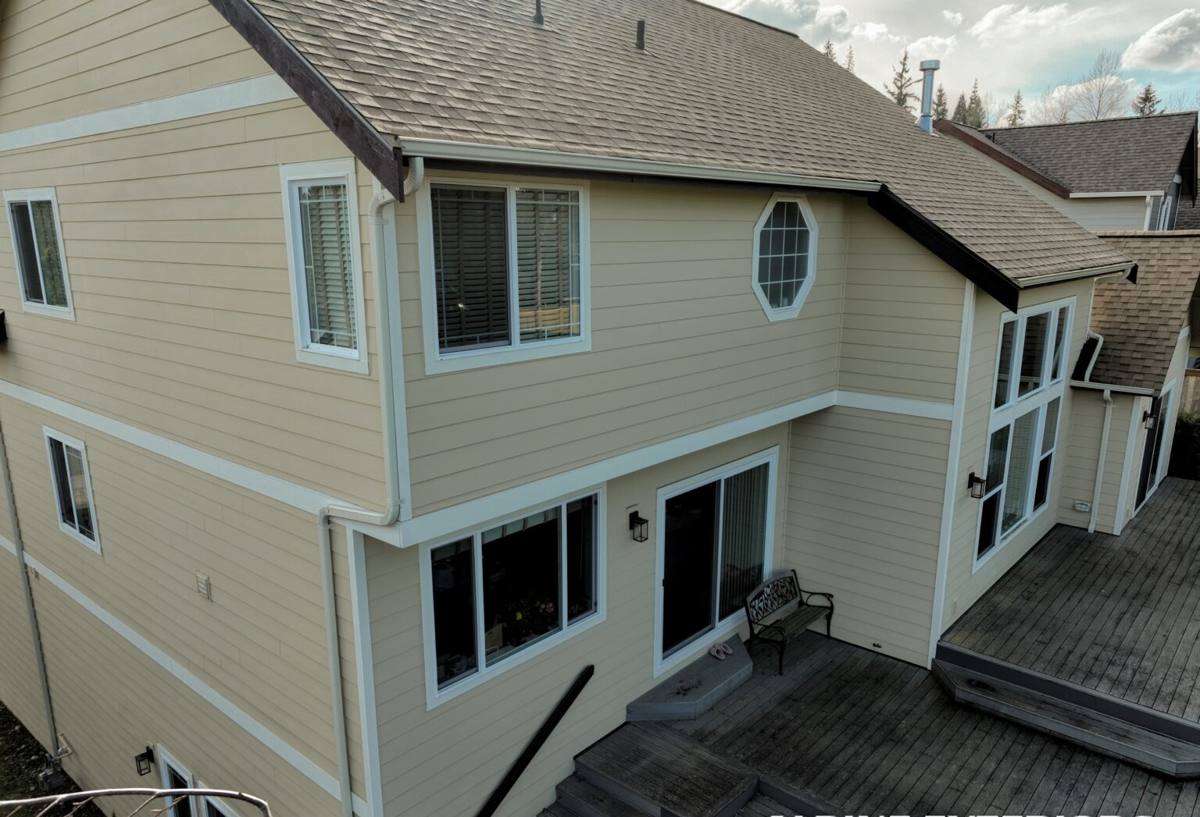
What "Energy-Efficient" Should Mean for This Climate
Energy-efficient windows are usually marketed around a single number, but in a marine climate like Semiahmoo's, several ratings matter more than any one headline figure.
U-Factor Over SHGC
Whatcom County is heating-dominated — you'll run a furnace or heat pump far more days a year than you'll run air conditioning. That makes U-factor (how well the window resists heat loss) the number to prioritize over Solar Heat Gain Coefficient (SHGC), which matters more in hot, sun-heavy climates. A low U-factor keeps the heat you're paying for inside the house instead of leaking out through the glass and frame.
Condensation Resistance
This is the rating homeowners here should ask about but rarely do. With persistent outdoor humidity and indoor heating running for months, interior condensation on glass and frames is a real problem — it's what feeds mold and mildew on sills and trim. A window with a strong condensation resistance rating and a warm-edge spacer between the glass panes will fog and sweat far less on cold, wet mornings.
Double vs. Triple Pane
Triple-pane glass offers better insulation and condensation resistance, but it adds weight, cost, and can be overkill on smaller or south-facing openings that get more passive solar gain. Double-pane with a quality low-E coating and argon fill is often the more sensible choice for many rooms, with triple-pane reserved for exposed elevations that take the brunt of the weather.
Signs Your Current Windows Are Already Costing You Money
Most homeowners don't replace windows because they woke up wanting new windows — they replace them because something specific started bothering them. If any of the following sound familiar, it's worth having them looked at:
- Fog or moisture trapped between the panes — the seal has failed and the argon gas has escaped
- Visible condensation or water staining on the interior sill, especially in fall and winter
- Sashes that stick, drag, or won't stay open without a prop
- A noticeable cold draft near the frame even when the window is fully latched
- Wood or vinyl frames that feel soft, discolored, or chalky to the touch
- Visible corrosion or white residue on hardware and hinges, especially on windows facing the water
- A jump in heating bills that isn't explained by anything else in the house
Any one of these can usually be diagnosed on a short visit — not every symptom means a full replacement, but ignoring them in this climate tends to let a small problem become a wall-framing problem.
What a Correct Installation Actually Involves
The window unit itself only accounts for part of how it performs. In an area that gets driving rain and salt air, the installation details matter as much as the product.
Flashing and Sill Pans
Every opening needs a sloped sill pan and properly lapped flashing so that any water that gets past the exterior trim drains back outside the wall assembly instead of collecting at the bottom corners — the single most common point of hidden rot in older installations.
Sealant and Fastener Choice
Salt air accelerates corrosion on standard fasteners and degrades cheaper sealants faster than an inland installation would see. We use corrosion-resistant fasteners and sealants rated for the movement and moisture exposure this location actually sees, not just what's cheapest to stock.
Insulation Without Gaps — or Over-Packing
The gap between the window frame and the rough opening needs to be fully but loosely filled with a low-expansion foam or backer rod and sealant. Overpacking with high-expansion foam can bow the frame and cause the sashes to bind; leaving gaps unsealed creates a direct path for drafts and moisture.
Weep Holes Stay Clear
Weep holes let water that gets into the frame track drain back out. They're small and easy to caulk over by accident during finishing work — when that happens, water has nowhere to go but into the wall.
Frame Material Comparison for a Coastal Whatcom County Home
There's no single "best" frame material — the right choice depends on the elevation, budget, and how much maintenance you want to take on. Here's how the common options hold up in this specific climate:
| Frame Material | Salt Air / Moisture Performance | Maintenance | Typical Tradeoff |
|---|---|---|---|
| Vinyl | Good — won't rot or corrode, but can become brittle with age | Low | Limited color options, can't be repainted easily |
| Fiberglass | Excellent — very stable in wet, salt-exposed conditions | Low | Higher upfront cost than vinyl |
| Wood (clad exterior) | Good on the clad face; interior wood needs protection from condensation | Moderate | Best look for period homes, more upkeep over time |
| Aluminum | Poor without thermal breaks — conducts cold and can corrode near salt air | Low to moderate | Not our recommendation for exposed elevations here |
For homes with direct water exposure or a north/west-facing wall that takes the worst of the winter storms, we generally steer clients toward fiberglass or a well-clad wood unit over bare aluminum or budget vinyl. It's not that vinyl or aluminum can't work anywhere on the house — it's about matching the material to how much weather a specific wall actually takes.
What Drives the Cost of a Window Project
Every home and every opening is different, so we won't quote a number before seeing the job, but these are the factors that move the price up or down:
| Factor | Why It Matters |
|---|---|
| Number and size of openings | More glass and larger units mean more material and labor per window |
| Frame material | Vinyl is typically the most budget-friendly; fiberglass and clad wood cost more upfront |
| Glass package | Double vs. triple pane, low-E coatings, and gas fill all add incremental cost |
| Access and elevation | Second-story or hard-to-reach openings take longer and may need staging |
| Existing damage | Rot or framing issues found once the old window is out add repair time before the new unit goes in |
| Retrofit vs. full-frame replacement | Full-frame replacement costs more but is often necessary when the old frame or flashing has failed |
The honest answer for most Peace Arch homes is that a full-house window replacement and a single failed unit in a back bedroom are completely different jobs with completely different budgets — which is exactly why we walk the house before quoting anything.
How Our Process Works
- On-site assessment. We look at each opening, check for existing rot or flashing failure, and talk through which rooms or elevations are priorities.
- Product and glass recommendation. Based on the elevation's exposure — sun, wind, direct rain — we recommend a frame material and glass package suited to that specific wall, not a one-size answer for the whole house.
- Precise measurement and ordering. Each unit is measured for its exact opening; poorly measured windows are one of the most common causes of drafts and callback issues.
- Careful removal. Old units are removed with attention to the surrounding siding and trim so we're not creating new repair work to finish the job.
- Inspection of the rough opening. This is where hidden moisture damage from years of wind-driven rain often shows up — we address it before the new window goes in, not after.
- Installation with proper flashing and sealing. Sill pans, flashing, low-expansion insulation, and weather-appropriate sealant, as described above.
- Interior and exterior finish work. Trim, caulking, and cleanup so the opening looks finished inside and out.
- Final walkthrough. We test operation on every window before we consider the job done.
Maintaining Windows in a Salt-Air, Moss-Prone Climate
Even a well-installed, high-quality window benefits from a little seasonal attention in this environment. A short annual routine catches small issues before they become expensive ones:
- Rinse salt residue off frames and hardware near the water a few times a year, especially after storms
- Check and clear weep holes so they aren't blocked by dirt, moss, or old caulk
- Inspect exterior caulking each fall before the wet season sets in and touch up any cracked or shrunken beads
- Wipe down interior sills during winter if you notice condensation forming, and confirm the room has adequate airflow
- Lubricate hinges and locking hardware annually to prevent salt-related corrosion from seizing moving parts
- Keep gutters and nearby vegetation clear so runoff isn't sheeting directly across window openings
Why a Crew That Already Works Peace Arch Matters
Window performance in this area isn't uniform from house to house — a home set back from the water behaves differently than one with a direct, unbroken exposure to wind off the bay. A crew that regularly works this specific stretch of Whatcom County has already seen which elevations take the worst weather, which older installations tend to fail first, and which product choices hold up versus which ones look fine in a showroom but struggle here. That local pattern recognition shortens the assessment, avoids guesswork on material selection, and means fewer surprises once the old windows come out.
It also matters for follow-through. If a seal ever fails or a question comes up after the install, you're dealing with a crew that's still working in the neighborhood, not a company that did one job and moved on to a different region.
Ready to Talk About Your Windows?
If your Peace Arch home has windows that are drafty, fogged, hard to operate, or just old enough that you're wondering whether they're worth repairing versus replacing, we're happy to take a look. The estimate is free, there's no pressure to move forward, and you'll get a straight answer about what your home actually needs — use the form below to get started.