 Semiahmoo Siding
 Building New in Marietta? The Windows Have to Match the Site
Marietta sits close enough to Semiahmoo Bay and the broader Whatcom County shoreline that new-construction window decisions can't be copied from a spec sheet built for inland homes. Salt-laden air corrodes hardware and finishes faster than manufacturers' standard warranties assume. Driving rain off the water pushes water sideways into wall assemblies during storms, not just straight down. And the region's long, damp moss season keeps exterior surfaces wet for months at a time, which matters more for window performance than most homeowners expect. On a new build, this is the one point in the project where getting the window opening right is far easier — and far cheaper — than fixing it later.
This page covers new-construction window installation specifically for Marietta-area homes: what the site conditions demand, what a correct install actually involves, how we run the job, and why hiring a crew that already works this stretch of Whatcom County coastline is worth the conversation before you sign with anyone.
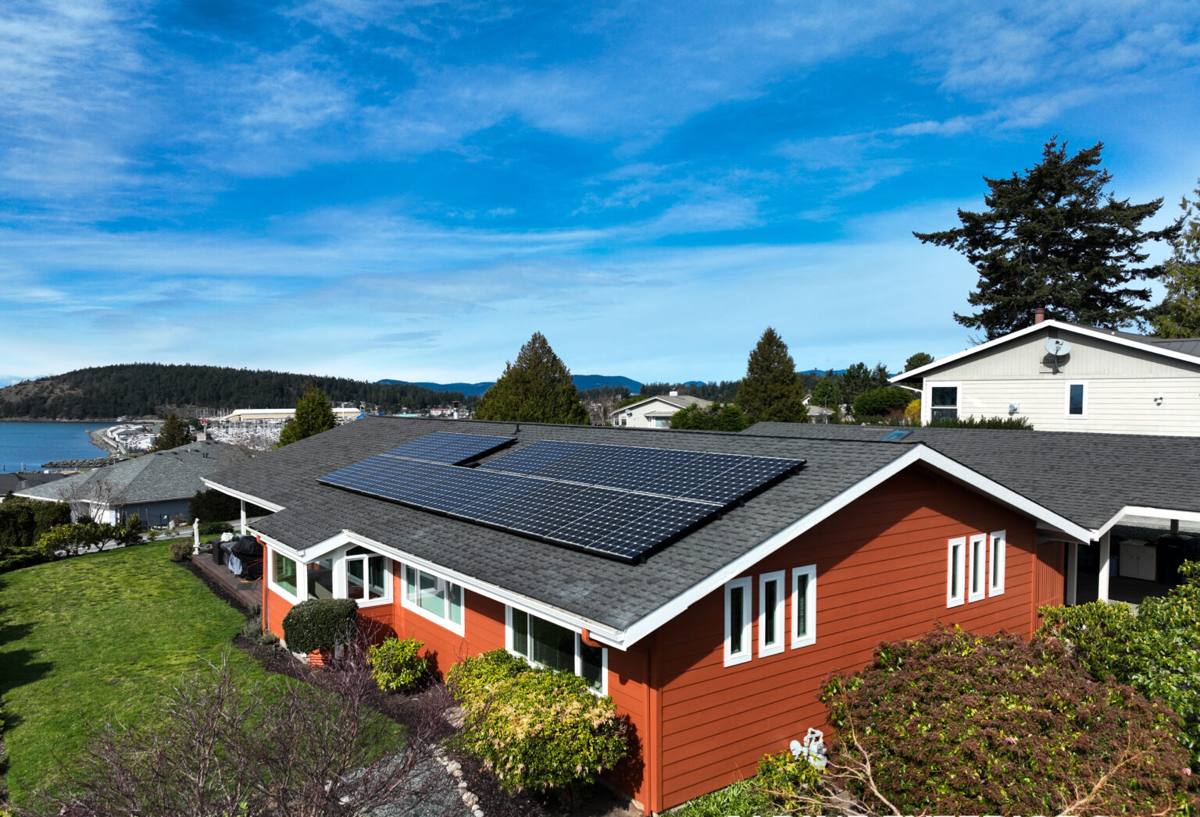
What Semiahmoo-Area Homes Are Up Against
Salt air
Airborne salt accelerates corrosion on window hardware, screen frames, and fasteners. It also attacks lower-grade aluminum components and can dull or pit certain factory finishes over years of exposure. On new construction, this affects which hardware and cladding options we recommend and how we detail any exposed metal.
Driving rain
Wind off the water doesn't just drop rain straight down — it drives it laterally into wall assemblies, which is exactly the condition that exposes a sloppy window opening. Flashing and drainage details that would be marginal in a sheltered inland lot become the difference between a dry wall cavity and a slow leak in a home exposed to Semiahmoo's weather patterns.
Long moss season
Whatcom County's extended wet season means exterior surfaces around window openings stay damp for long stretches rather than drying quickly between rain events. That prolonged moisture load is hard on unsealed or poorly sealed penetrations and rewards materials and details that shed water quickly rather than merely tolerate it.
Why New Construction Is the Right Time to Get This Right
On an existing home, window replacement has to work around whatever flashing and sheathing is already there. New construction removes that constraint — the rough opening, the water-resistive barrier (WRB), and the window can all be sequenced correctly from the start. That's an advantage worth using deliberately rather than treating windows as a late-stage finish item bolted on after the framing crew moves on.
The trade-off is that new-construction windows only perform as well as the opening they're set into. A premium window in a poorly flashed opening will leak. A modest window in a correctly detailed opening, on a site exposed to salt air and driving rain, will hold up for decades. The installation sequence matters at least as much as the product choice.
What a Correct New-Construction Window Install Involves
Rough opening and sill pan
Every opening gets a sloped sill pan so any water that gets past the window sheds outward, not into the framing. This is standard practice on any building sensitive to wind-driven rain, and it's non-negotiable on a Semiahmoo-exposed lot.
WRB and flashing integration
Flashing tape and the water-resistive barrier have to be layered in the correct shingle-lap order — head flashing over the WRB, side flashing lapped correctly, sill pan tied into the WRB below. Get the layering order wrong and water finds the one path it needs.
Nailing fin vs. block frame installation
New-construction (nailing fin) windows attach through a flange integrated into the flashing plane; block frame windows set into a finished opening and rely on perimeter sealant and trim. Which approach fits depends on the wall assembly and siding type — we confirm this during framing, not after siding is up.
Sealant and backer rod at the interior and exterior
Proper sealant joints — with backer rod where the gap calls for it — control both air leakage and the small amount of moisture that inevitably reaches the frame perimeter over a multi-decade service life.
Insulation at the perimeter gap
The gap between the window frame and rough opening needs insulation that doesn't compress out or trap moisture — this affects both energy performance and long-term condensation risk at the frame.
Window Type and Material Comparison
| Frame Material | Coastal/Salt-Air Performance | Maintenance | Typical Fit |
|---|---|---|---|
| Vinyl | Good — won't corrode; UV-stable finishes hold up well | Low | Most new-construction budgets |
| Fiberglass | Very good — dimensionally stable, resists salt and moisture well | Low | Larger openings, higher-end new builds |
| Wood-clad (aluminum or fiberglass exterior) | Depends heavily on cladding quality and installation detail — interior wood needs protection from any moisture intrusion | Moderate to high | Traditional look, interior wood trim priority |
| Bare aluminum | Weakest in salt air unless heavily coated — prone to corrosion and thermal performance issues | Moderate | Rarely our recommendation on this coastline |
We don't rule out wood-clad or aluminum-frame windows outright, but on a Semiahmoo-exposed lot we walk homeowners through the real maintenance and moisture-management trade-offs before they commit, rather than letting appearance alone drive the decision.
Glass and Performance Options Worth Discussing
- Low-E coatings — reduce heat loss and help control solar gain; standard on most quality windows today.
- Argon or krypton gas fill — improves insulating performance between panes at modest added cost.
- Double vs. triple glazing — triple glazing adds cost and weight; worth it on north- and west-facing exposures more than universally.
- Impact-resistant or laminated glass — not required by code here, but some homeowners near open water choose it for storm debris peace of mind.
- Hardware finish — matters more here than inland; ask specifically about corrosion resistance for any exposed hardware.
Our Process on Marietta New Builds
- Plan review before framing is finalized — we confirm rough opening sizes and flashing approach match the window line you've chosen.
- Site walk at the framing stage — checking sheathing, WRB sequencing, and any exposure-specific details before openings are closed in.
- Sill pan and flashing install — done in the correct shingle-lap order, with attention to any wall areas that take direct wind-driven rain.
- Window set and fastening — plumb, level, square, and fastened per manufacturer specification, not just "close enough."
- Sealant, insulation, and interior/exterior trim-out — completed once the window is confirmed square and properly shimmed.
- Final walkthrough — operation check on every unit, plus a review of care and maintenance specific to a salt-air, high-rainfall environment.
A Homeowner's Checklist for New-Construction Window Work
- Ask whether sill pans are standard on every opening, not just "as needed."
- Confirm the flashing sequence in writing — head, sides, sill, tied to the WRB.
- Ask which frame materials the crew recommends for a salt-air site, and why.
- Get hardware finish specifics if the home is within view of or close to the water.
- Confirm who is responsible if a window leaks after siding is installed — the window installer or the siding crew.
- Ask how the crew documents the install (photos before insulation and trim close it from view).
Cost Factors to Expect
| Factor | Why It Moves the Price |
|---|---|
| Number and size of openings | More and larger windows mean more flashing, labor, and material |
| Frame material | Vinyl is typically most economical; fiberglass and wood-clad cost more |
| Glass package | Triple glazing, impact glass, and specialty coatings add cost per unit |
| Wall exposure | Openings on the windward, water-facing side may warrant extra flashing detail |
| Timing in the build schedule | Coordinating window install tightly with framing and WRB work is more efficient than fixing gaps later |
Why Local Experience on This Stretch of Coastline Matters
A crew that only occasionally works near open water treats every job as a standard install and hopes the flashing detail is "good enough." A crew that regularly works Marietta and the surrounding Semiahmoo area already knows which walls take the worst of the driving rain, which hardware choices hold up through a full moss season without seizing up, and where builders in this specific part of Whatcom County tend to cut corners that cause callbacks two or three winters later. That local pattern recognition doesn't show up on a spec sheet, but it shows up in how few problems you have five years in.
Get a Straight Answer for Your Build
If you're framing a new home in Marietta or elsewhere near Semiahmoo and want the window openings done right the first time, we're happy to walk your plans, talk through frame and glass options suited to your site's exposure, and give you an honest estimate. Use the form below to request a free, no-pressure estimate — no obligation, just a straight assessment of what your project needs.