 Semiahmoo Siding
 Storm Damage Roof Repair Built for Marietta's Weather
Marietta sits close enough to the water that every roof here is doing double duty: shedding the driving rain that rolls off the Strait, and holding up under a steady drift of salt air that never really stops working on exposed metal and fasteners. When a storm comes through with real wind behind it, the damage it leaves isn't always the dramatic kind. More often it's a lifted shingle tab, a cracked pipe boot, or a seam that got just enough movement to start letting water in. That's the kind of damage that's easy to miss from the ground and expensive to ignore.
We repair storm-damaged roofs on homes throughout the Semiahmoo and Marietta area, and we treat this as its own specialty, not a smaller version of a full roof replacement. A storm repair has to solve the specific problem the storm caused, match into the existing roof cleanly, and hold up against the next storm — not just look fine until the next inspection.
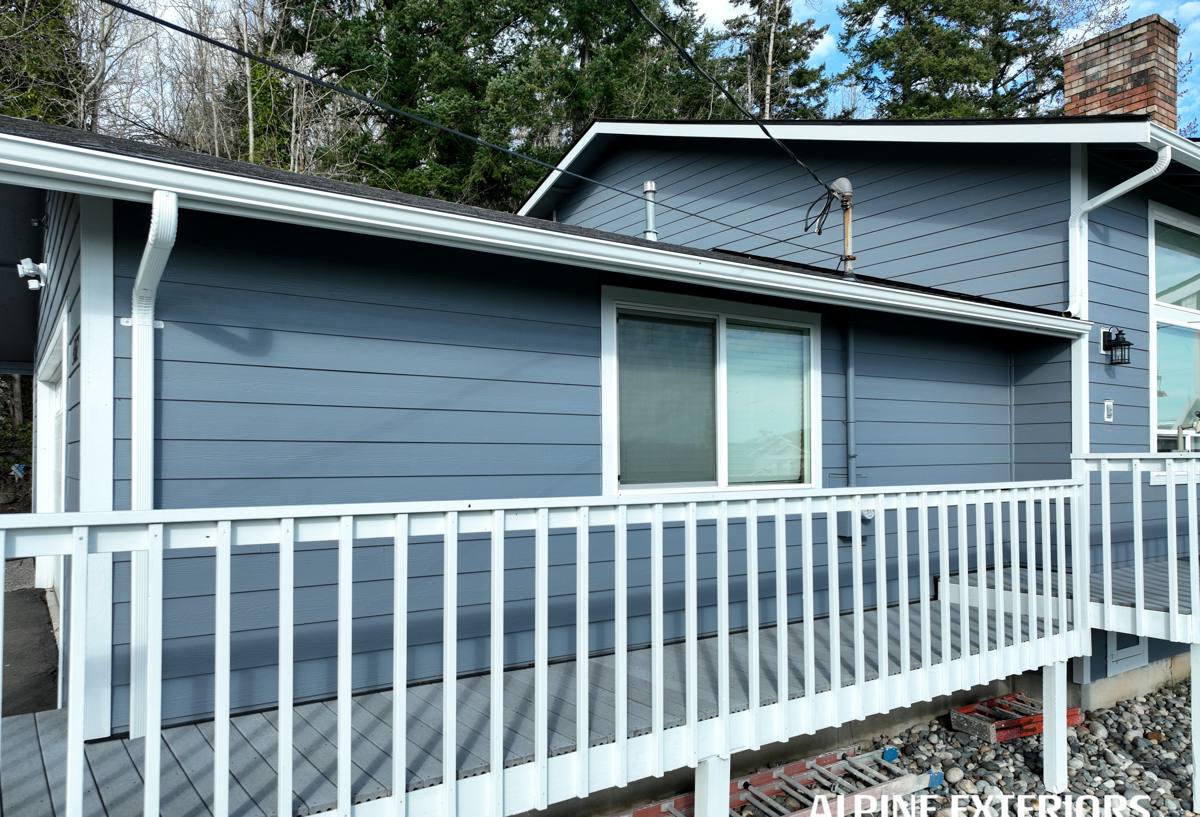
What Whatcom County Storms Actually Do to a Roof
Roof damage from weather in this part of Whatcom County tends to fall into a few repeatable patterns, and understanding them is most of what separates a correct repair from a cosmetic patch.
Wind-Driven Rain
Straight-down rain rarely causes leaks on a roof that's in decent shape. Wind-driven rain is a different problem — it gets pushed sideways and even slightly upward under shingle edges, around flashing, and into any gap that would normally stay dry. A roof can pass a casual visual check and still be letting water in during a windstorm because the entry point only opens up under wind pressure.
Salt Air and Corrosion
Being close to Semiahmoo Bay means airborne salt settles on the roof constantly, not just during storms. Over years, that accelerates corrosion on exposed fasteners, metal flashing, and gutter hardware. A fastener that's lost integrity to corrosion can back out or shear during high wind, which is often the real cause behind a shingle that "just blew off" — the shingle was never the weak point, the nail was.
Moss and Trapped Moisture
Whatcom County's long, damp shoulder seasons give moss plenty of time to establish itself on north-facing and shaded roof sections. Moss holds moisture against the roofing material far longer than open air would, which softens shingles, degrades granule adhesion, and can lift edges enough for wind to get underneath them during the next storm. A lot of the storm damage we find has moss as a contributing cause, not just a separate problem.
Signs Your Marietta Home May Have Storm Damage
Most storm damage doesn't announce itself with an obvious hole. It shows up as smaller signals that are worth checking after any significant wind or rain event.
- Shingles that look lifted, curled, or out of alignment compared to the rest of the roof
- Granules collecting in gutters or at downspout outlets after a storm
- New or growing water stains on ceilings or upper interior walls
- Visible gaps or bent sections in metal flashing around chimneys, vents, or skylights
- Soft or spongy-feeling roof decking near valleys or eaves
- Moss buildup that's thicker on one side of the roof, especially near a recent leak
- Debris, branches, or dents from hail or wind-blown material
- Gutters pulling away from the fascia or sagging after heavy rain
If you notice any of these after a storm, it's worth having the roof looked at before the next system rolls through, even if there's no active leak yet.
What a Correct Storm Damage Repair Involves
A storm repair that actually solves the problem starts with figuring out the real cause, not just replacing the shingle that's visibly missing.
Assessment First
We look at the damaged area and the surrounding roof, including the decking underneath where accessible. Wind and water damage often extends past what's visible from the ground, and a repair that only addresses the obvious spot can leave a weak point nearby that fails in the next storm.
Matching the Repair to the Roof
Shingles, flashing, and underlayment all need to tie into the existing roof correctly — proper overlap, correct fastening pattern, and materials that are compatible with what's already there. A mismatched patch can shed water fine on a calm day and still fail under wind-driven rain.
Addressing the Cause, Not Just the Symptom
If corroded fasteners caused the shingle loss, we replace the fastening, not just the shingle. If moss contributed to the failure, we address the moss and the moisture it trapped, not just the spot it damaged. Repairing around a cause instead of fixing it just means the same damage comes back.
Our Process for Storm Damage Repairs
- Inspection. We assess the damaged area and check for related issues nearby — flashing, decking, ventilation, and moss or debris buildup.
- Honest scope. We tell you plainly whether this is a targeted repair or whether the damage points to a bigger underlying issue worth knowing about.
- Documentation. We photograph the damage before starting work, which is useful if you're filing an insurance claim.
- Repair. We remove and replace only what's actually damaged or compromised, using materials and fastening suited to this area's wind and moisture exposure.
- Final check. We verify the repair ties in cleanly with the surrounding roofing and that flashing and seams are properly sealed.
Repair or Replace? Weighing the Real Factors
Not every storm-damaged roof needs to be replaced, and not every roof is worth repairing again. The right call depends on a few honest factors.
| Factor | Leans Toward Repair | Leans Toward Replacement |
|---|---|---|
| Roof age | Roof is within its expected service life | Roof is near or past its expected lifespan |
| Extent of damage | Isolated to one section or feature | Widespread across multiple roof planes |
| Repair history | First or infrequent repair | Repeated repairs in the same areas |
| Underlying decking | Solid, no rot or soft spots | Soft decking or signs of long-term moisture damage |
| Moss/corrosion extent | Localized and manageable | Widespread moss damage or corroded fastening throughout |
Cost ranges for storm repairs vary a lot depending on the scope, from a single flashing or shingle repair up to more involved decking and section replacement, so we give a firm number only after we've actually looked at the roof.
Materials That Hold Up Near the Water
For a marine climate like Semiahmoo's, we favor roofing materials and fasteners rated for coastal exposure — corrosion-resistant flashing and fastening, underlayment that handles sustained moisture well, and shingles with wind ratings appropriate for this area's storm exposure. We also pay close attention to ventilation during repairs, since a roof that traps moisture underneath is more prone to the kind of decking and moss problems that lead to repeat storm damage.
We won't upsell a repair into a full re-roof if it doesn't need one, but we also won't patch over a problem that's clearly going to recur. Our standard is a repair that's still doing its job three storm seasons from now, not just at the next inspection.
Insurance and Storm Claims
Many storm repairs are covered under homeowners insurance, particularly wind and impact damage. We document damage thoroughly with photos before repair begins, which supports a claim if you choose to file one. We're not a public adjuster and won't promise a claim outcome, but we can give you a clear, honest description of the damage and the repair scope to bring to your insurer.
Why a Crew That Already Works Marietta Matters
After a storm, it's common to see unfamiliar crews going door to door in affected neighborhoods offering fast repairs. Some of that work is fine. Some of it is a rushed patch by a crew that won't be around if it fails. A contractor who already works in Semiahmoo and the surrounding Whatcom County communities has a reputation to protect here and a reason to get the repair right the first time — not just to get it done before moving on to the next storm-hit town.
We also understand how this coastline behaves: which roof sections take the worst of the wind-driven rain, where moss tends to establish first, and how salt air shortens the working life of exposed fasteners and flashing. That local knowledge shapes how we assess and repair a roof, not just where we source materials from.
If a recent storm has left your Marietta roof with missing shingles, a new leak, or damage you're not sure about, we're glad to take a look and give you a straightforward assessment — no pressure, no obligation. Reach out using the form below to schedule a free estimate.