 Semiahmoo Siding
 Siding Replacement in Marietta: What the Climate Demands
Marietta sits in the same stretch of Whatcom County as Semiahmoo, close enough to the water that homes here deal with many of the same conditions our crew sees up and down the coastline: salt-laden air, wind-driven rain that doesn't fall straight down, and a moss and mildew season that runs longer than most homeowners expect. If you're looking at a full siding replacement rather than a patch or repaint, it's worth understanding what this particular environment does to exterior wall assemblies before you pick a material or a contractor.
Siding replacement isn't just a cosmetic upgrade. It's the point where you get to fix whatever let moisture in the first time, correct any shortcuts from the original installation, and put a system on the house that's actually engineered for a wet marine climate instead of one that just happens to be available at a supply house. That distinction matters more in low-lying, moisture-heavy areas like Marietta than it does a few miles further inland.
A Low-Lying, Moisture-Heavy Setting
Homes near the water and river-delta lowlands of Whatcom County tend to sit closer to grade, with less natural drainage fall away from the foundation than hillside properties get. That means splash-back, standing groundwater after heavy rain, and generally higher ambient humidity around the base of exterior walls. Siding in this kind of setting needs correct clearance from grade, proper flashing at the bottom course, and a material that won't wick or hold moisture even when it's in near-constant contact with damp air.
Salt Air and a Long Wet Season
Proximity to the water means salt exposure isn't limited to properties directly on the shoreline — it travels on the wind and settles on siding, trim, and fasteners across a wider radius than people assume. Combined with Whatcom County's long stretch of overcast, wet weather, that salt exposure accelerates corrosion in lower-grade hardware and breaks down site-applied paint finishes faster than a drier climate would. Any replacement siding job in Marietta needs to account for both factors from the first fastener to the last piece of trim.
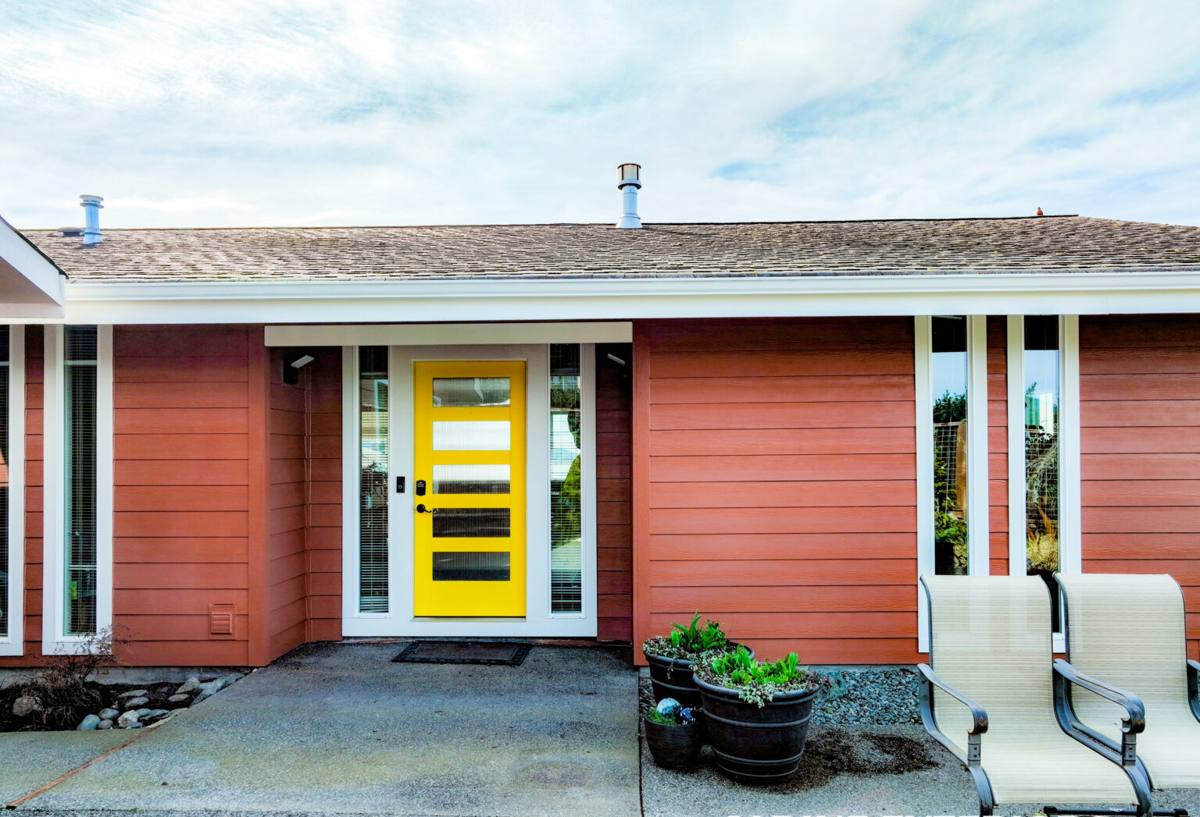
Signs a Marietta Home Needs Full Replacement, Not a Patch
Not every siding problem calls for a full tear-off. Sometimes a section of damaged boards, a few pieces of failed trim, or a caulking refresh is genuinely enough. But there's a point where patching stops making sense — where the underlying problem is spread across enough of the wall system that piecemeal repairs just delay the inevitable and waste money along the way. Here's what tells us a property has crossed that line:
- Soft, spongy, or crumbling siding in multiple locations, not just one isolated spot
- Visible cupping, warping, or bulging boards, especially on north-facing or shaded walls
- Persistent moss, algae, or mildew staining that returns within a season of cleaning
- Paint or finish failure — chalking, peeling, or bubbling — across large sections of the exterior
- Signs of moisture behind the siding: soft trim, staining at seams, or a musty smell near exterior walls inside the home
- Siding material that's simply past its realistic service life and was never engineered for this climate to begin with
When those signs show up in more than one or two places, the sheathing and weather-resistant barrier behind the siding have usually been compromised too. That's the real reason full replacement wins out over patching — it's the only way to actually inspect and correct what's happening underneath, not just cover it up again.
What a Correct Siding Replacement Involves
A siding replacement is only as good as what happens before the new boards go up. The visible finish work gets the attention, but the parts that determine whether the job lasts fifteen years or fifty happen underneath it.
Tear-Off and Sheathing Inspection
Once the old siding comes off, the sheathing underneath gets inspected board by board. Any water-damaged, soft, or delaminated sheathing gets cut out and replaced before anything new goes back on — installing new siding over compromised sheathing just resets the clock on the same failure. This is also the point where we can see exactly how the previous installation handled moisture, which tells us a lot about what to do differently.
Weather-Resistant Barrier and Flashing
A properly lapped weather-resistant barrier goes on next, with flashing integrated at every window, door, and roof-to-wall transition so water is directed out and down rather than trapped behind the cladding. In a setting like Marietta, where wind-driven rain can hit walls at an angle instead of falling straight down, flashing details at horizontal joints and penetrations matter more than they would on a sheltered inland lot. Where the assembly calls for it, drainage or rain-screen detailing behind the panels gives any incidental moisture a path to escape instead of sitting against the wall.
Fastening and Clearance
Fastener type, spacing, and depth all follow the manufacturer's published specification — not a generic "close enough" standard. We also hold the correct clearance between the bottom of the siding and grade, roof lines, and decks, since tight clearances are one of the most common reasons siding fails early in wet, low-lying areas.
Why We Install Only James Hardie Fiber Cement
We install James Hardie fiber cement siding exclusively. That's not a supplier arrangement — it's a standard we settled on after years of seeing which materials actually hold up in Whatcom County's wet, salt-influenced climate and which ones start showing problems within a few years of installation.
- Non-combustible core: Fiber cement doesn't feed a fire the way wood-based siding can, which matters for both safety and, often, insurance underwriting.
- Factory-applied ColorPlus finish: The finish is baked on under controlled conditions rather than brushed on in the field, and it resists fading, chalking, and moisture intrusion far longer than site-applied paint.
- Climate-engineered HZ formulation: Hardie's HZ5 product line is built for regions with heavy moisture exposure and freeze-thaw cycling — a fit for this part of Whatcom County.
- Dimensional stability: Fiber cement doesn't swell, cup, or warp the way engineered wood products can after repeated wetting over a long wet season.
- Strong transferable warranty: Hardie backs the product with a substantial warranty as long as installation follows its spec — which is exactly what our process is built around.
We don't install LP SmartSide, vinyl siding, Cemplank, Allura, primed spruce, or cedar. Each of those has a legitimate place in the market, and plenty of homeowners elsewhere are satisfied with them. But we've made a professional call to install one system and stand fully behind it, rather than offer a lower-cost option that quietly shifts long-term maintenance risk onto the homeowner in a climate this demanding.
Comparing Siding Materials for a Marietta Property
| Material | Moisture Performance in This Climate | Long-Term Maintenance |
|---|---|---|
| James Hardie fiber cement | Engineered HZ5 formulation for wet, moisture-heavy regions; dimensionally stable | Low — factory finish resists fading and moisture intrusion for decades |
| Vinyl | Doesn't absorb water, but seams and panels can allow moisture behind the cladding; expands and contracts with temperature swings | Low upfront, but can crack, fade, or warp over time in prolonged sun and cold exposure |
| LP SmartSide (engineered wood) | Wood-based core is more moisture-sensitive than fiber cement if any breach in the finish occurs | Moderate — relies on the factory finish and correct sealing at every cut edge |
| Cedar | Attractive natural material, but absorbs moisture and is prone to swelling, checking, and rot in a wet marine climate without diligent upkeep | High — regular refinishing and moisture monitoring needed |
| Primed spruce | Softwood core with a sprayed-on primer; moisture-sensitive at cut ends and fastener points | High — needs prompt repainting and moisture vigilance |
Cost Factors in a Marietta Siding Replacement
Every siding replacement is priced around the specifics of the house, not a flat per-square-foot number pulled from a website. The factors below are what actually move the estimate up or down:
| Factor | Why It Affects Cost |
|---|---|
| Condition of sheathing underneath | Water-damaged sheathing found during tear-off needs to be replaced before new siding goes on |
| Home size and number of stories | More wall area and taller elevations mean more material, more labor, and often more scaffolding or lift access |
| Trim, corner, and window detail complexity | Homes with more architectural detail take more time to flash and trim correctly |
| Siding profile chosen | Lap siding, board-and-batten, and shingle-style Hardie profiles differ in material and labor cost |
| Access and site conditions | Tight lots, landscaping, or limited driveway access can add time for material staging and disposal |
Our Siding Replacement Process
- On-site assessment of the existing siding and, where visible, the condition of the sheathing and trim underneath
- A clear, written scope of work and timeline before any contract is signed — no verbal estimates that leave room for surprises
- Full tear-off, with sheathing repair or replacement as needed once the old siding is off
- Weather-resistant barrier and flashing installed at every window, door, and transition point
- James Hardie siding installed to manufacturer specification, including correct fastening, clearance, and drainage detailing
- Final walkthrough with the homeowner before the job is considered complete
Why Hiring a Crew That Already Works This Area Matters
A siding replacement done by a crew unfamiliar with Whatcom County's marine climate can look fine on installation day and still fail early, because the mistakes that cause problems here — tight clearances, missed flashing laps, fasteners that aren't corrosion-resistant — don't show up until a wet season or two has passed. A crew that already works properties in and around Semiahmoo and Marietta has seen what tends to go wrong on these lots specifically, from drainage patterns near low-lying grade to how far salt exposure actually reaches inland from the water.
That familiarity also shows up in smaller, practical ways: knowing what permitting and inspection process to expect locally, understanding how weather windows affect scheduling a tear-off in this region, and having a realistic sense of what a given lot's drainage and sun exposure will do to a wall over the next twenty years. It's the difference between a crew that installs siding correctly in general and one that installs it correctly for this specific place.
If you're weighing a siding replacement for a Marietta property, we're glad to walk the exterior with you and give an honest read on what it actually needs — no pressure, no upsell on materials we don't stand behind. Reach out below for a free estimate.