 Semiahmoo Siding
 Siding for California Creek's Mix of Rural and Waterfront Exposure
California Creek sits inland of the Semiahmoo Spit, in the low-lying drainage that feeds Semiahmoo Bay through Drayton Harbor. It's a different exposure profile than the spit itself — more tree cover in places, more rural lot sizes, and low, often shaded ground near the creek corridor — but it still sits well within reach of the salt-laden marine air that moves off Semiahmoo Bay and Boundary Bay. Homes here get a combination most siding products were never designed for: the moisture-holding shade of a wooded or creek-adjacent lot, plus periodic salt exposure carried in on the wind. That combination is exactly the kind of setting where we install James Hardie fiber cement siding and nothing else.
This page is about that one product, in this one area. If you're weighing a siding replacement or new siding on a California Creek property, here's what the local climate actually demands, what a correct Hardie installation involves, and why hiring a crew that already works this stretch of Whatcom County makes a measurable difference.
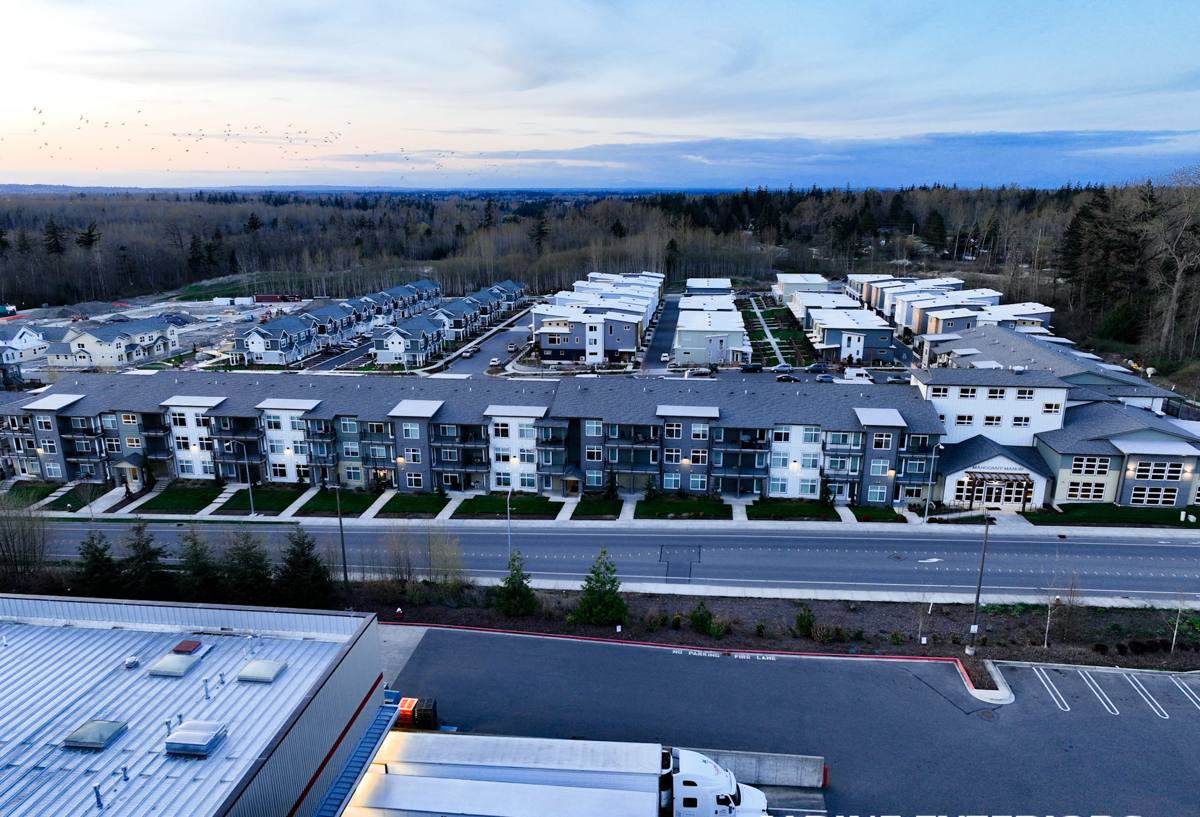
What This Climate Does to Siding in California Creek
Salt Air Reaching Inland Lots
You don't have to be on the water for salt air to matter. Prevailing wind off Semiahmoo Bay and Boundary Bay carries salt-laden moisture well inland along low-lying drainages like the California Creek corridor, and it settles on siding, trim, and fasteners the same way it does closer to shore — just less obviously. Salt accelerates corrosion in lower-grade fasteners and flashing, and it breaks down cheap paint and finish systems faster than a dry inland climate would. A siding product's finish and hardware need to account for that from day one, not after the first signs of rust or fading show up.
Driving Rain Through the Creek Corridor
Wind patterns funneling through a creek drainage don't behave like open water exposure, but they still push wind-driven rain sideways into wall assemblies more than a sheltered inland lot would see. Combined with Whatcom County's overall rainfall totals, that means wall systems here take on a heavier moisture load over the course of a wet season than the rainfall numbers alone would suggest. Siding that isn't dimensionally stable, or that was installed without proper clearances and drainage detailing, tends to show that stress first at seams, corners, and butt joints.
Shade, Moisture, and a Long Moss Season
Tree cover and low ground near the creek keep things shaded and slow to dry out, which is good for salmon habitat but tough on exterior building materials. Moss, algae, and mildew growth run most of the year across this part of Whatcom County, and shaded, low-lying lots like the ones around California Creek tend to hold that growth longer than open, sun-exposed properties do. North-facing walls and anything tucked under mature trees are usually the first places it shows up, and porous or moisture-absorbing siding materials give it more to hold onto than a dense, factory-finished fiber cement panel does.
Why James Hardie Is the Only Siding We Install Here
We don't offer a menu of siding brands and let the homeowner pick based on price. We install James Hardie fiber cement, full stop, and that standard applies on a shaded creek lot in California Creek the same as it does on an open waterfront property nearby. The reasoning is the same in both settings: this climate is hard on siding, and we'd rather stand behind one system we trust completely than offer something cheaper that quietly pushes maintenance risk onto the homeowner a few years down the road.
- Non-combustible fiber cement core: It doesn't feed a fire the way wood-based siding can, which matters for safety and often for insurance underwriting as well.
- Factory-applied ColorPlus finish: Baked on under controlled conditions rather than brushed on in the field, holding color and resisting moisture far longer than site-applied paint on a shaded, damp lot.
- Climate-engineered HZ product lines: Hardie's HZ5 formulation is built for regions with heavy moisture exposure and freeze-thaw cycling, which describes Whatcom County's wet-season conditions well.
- Dimensional stability: Fiber cement resists the swelling, cupping, and warping that engineered wood products can develop after repeated wetting in a shaded, slow-drying setting.
- Strong transferable warranty: Hardie backs its products with a substantial warranty structure, provided installation follows their published specifications.
We don't install LP SmartSide, vinyl siding, Cemplank, Allura, primed spruce, or cedar. Those are legitimate products with homeowners who are satisfied with them elsewhere, and we're not here to disparage them. But on a shaded, moisture-holding, salt-influenced lot like what you find around California Creek, we've made a professional call to install the one system we've seen hold up consistently, rather than offer a lower-cost option and hope the maintenance burden stays manageable for the homeowner.
What Correct Installation Requires
Fiber cement only delivers on its engineering when it goes on the way Hardie specifies. That means correct fastener type and spacing, proper clearance from grade and any adjacent landscaping or ground cover, drainage or rain-screen detailing behind the panels where the wall assembly calls for it, and factory-mitered or properly sealed corners and joints. On a shaded lot where walls take longer to dry between rain events, those details matter more, not less — a loosely installed Hardie product can still develop moisture problems if water gets trapped behind it with nowhere to drain or dry.
Choosing the Right Hardie Products for a Shaded, Moisture-Prone Lot
Not every Hardie product line is the automatic right fit for every property. On lots with heavy shade and slower drying — which describes a lot of the ground around California Creek — we pay close attention to trim details, water table flashing, and how siding terminates near grade or near landscaping that holds moisture against the wall. HardiePlank lap siding is the most common choice for full re-sides here, while HardieTrim and HardiePanel get used selectively around architectural details, porches, and accent areas. The product selection matters less than getting the drainage plane and flashing right underneath it.
Our Process for a California Creek Siding Project
We start with an on-site walk of the property, looking specifically at how the current siding — or the bare wall assembly, on new construction — is handling shade, moisture, and any salt exposure carried in off the bay. That includes checking for soft spots, existing moss or mildew patterns, and how water has been draining (or not draining) around the foundation and any low-lying grade near the creek corridor. From there we put together a clear, written scope covering product selection, trim details, and flashing plan before any work begins.
During installation, drainage detailing, fastener corrosion resistance, and proper clearances are treated as standard practice, not optional upgrades — on a shaded, moisture-holding lot like this, those details are what separate a siding job that lasts one wet season from one that lasts several decades.
Signs Existing Siding Needs Attention in California Creek
- Persistent moss or algae growth on shaded or north-facing walls that keeps returning after cleaning
- Soft, spongy panels or visible swelling at seams and butt joints, especially near ground level
- Paint or finish that's chalking, peeling, or fading faster than expected for its age
- Gaps or separation at corner boards and trim where caulking has failed
- Rust streaking from fasteners or flashing, a sign salt-influenced air is reaching the wall assembly
- Visible warping or cupping on any engineered wood or composite siding still on the house
Comparing Siding Materials for a Shaded, Moisture-Prone Lot
| Material | Moisture Behavior | Maintenance on a Shaded/Damp Lot | Typical Longevity Here |
|---|---|---|---|
| James Hardie fiber cement | Dimensionally stable, resists swelling even with slow drying | Low; factory finish resists fading, chalking, and moisture intrusion | 30+ years with correct install |
| Vinyl siding | Doesn't absorb moisture, but seams and fasteners are exposure points | Low upfront; can warp near heat sources and settle over time | Variable; shorter under sustained damp shade |
| LP SmartSide / engineered wood | Wood-based core is moisture-sensitive at cut edges and joints | Moderate to high; edge sealing and caulk upkeep matter more in shade | Depends heavily on installation quality and upkeep |
| Cedar / primed wood | Absorbs and releases moisture readily, slow to dry in shade | High; regular refinishing needed, more so on shaded walls | Shorter without consistent, ongoing maintenance |
Why a Crew That Already Works California Creek Matters
A contractor who regularly works properties around California Creek and the broader Semiahmoo area already understands how shaded, low-lying ground behaves differently than an open lot even a few miles away — where moss tends to establish first, how far salt-influenced air actually travels inland along the drainage, and which fastener and trim details hold up over a full wet season here. That local pattern recognition shows up in small decisions during installation: where extra drainage detailing gets added, how corners and water tables get flashed, which side of the house gets the closer look for existing moisture damage. Those are exactly the details that determine whether a siding job holds up for one wet season or several decades.
A Simple Checklist Before Hiring for Siding Work in California Creek
- Ask what siding material they install and why, and whether it's backed by a written manufacturer warranty
- Confirm current Washington contractor licensing and active liability insurance
- Ask how they handle drainage and flashing detailing on shaded, slower-drying lots
- Ask about fastener and trim corrosion resistance given salt-influenced air in the area
- Get a clear, written scope of work — including product line and trim details — before signing anything
If you're considering a siding replacement or new siding for a home in California Creek, we're glad to walk the property with you and give an honest read on what the specific lot and exposure actually call for. Reach out below for a free, no-pressure estimate.