 Semiahmoo Siding
 Fiber Cement Siding, Installed for What Lynden Actually Gets Hit With
Lynden sits inland from the immediate coastline, but it's still well within reach of the marine weather that shapes exterior work across northern Whatcom County. Homes here take on salt-tinged air moving in off the Sound, long stretches of driving rain through fall and winter, and a moss season that can run close to year-round on shaded, north-facing walls. Fiber cement siding handles all three of those pressures far better than most alternatives, but only when it goes on correctly — and "correctly" is a longer list than most homeowners realize until something goes wrong a few winters in.
This page is specifically about fiber cement siding for Lynden properties: what the product is, what a proper installation actually involves, which James Hardie lines and profiles fit this climate, and how our process works from first inspection to final walkthrough. We're based right here, and fiber cement is the only siding material we install.
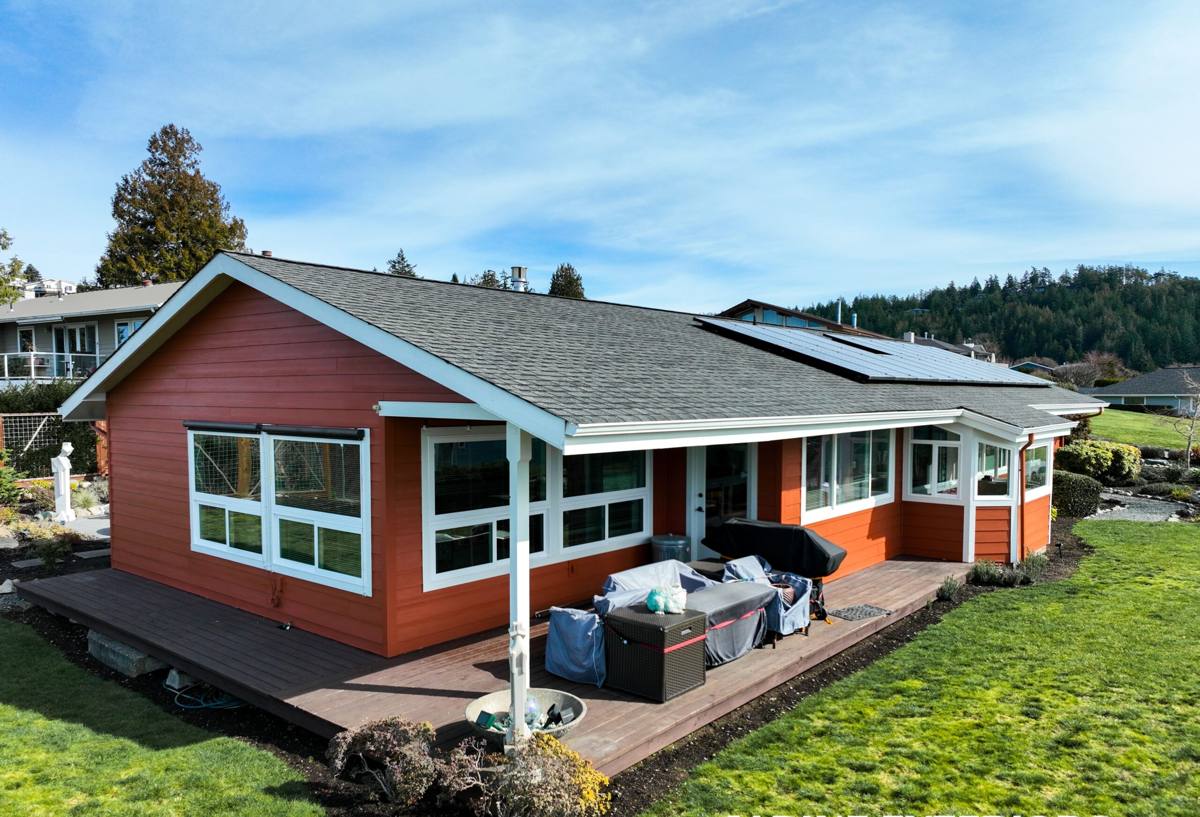
Why Fiber Cement Fits This Climate
Fiber cement is a blend of cement, sand, and cellulose fibers, engineered to be dimensionally stable and resistant to moisture absorption in a way that wood-based and wood-alternative siding products generally aren't. In a climate that delivers sustained rain, salt air, and shade-driven moss growth for most of the year, that stability matters more than color options or up-front cost. It doesn't swell, cup, or warp the way engineered wood siding can after repeated wetting and drying cycles, and it doesn't feed a fire the way wood-based products can, which is a real factor for both safety and insurance underwriting.
None of that means fiber cement is maintenance-free or forgiving of a rushed install. It still needs the right clearances, the right fastening pattern, and the right flashing details to actually deliver on its durability. A lot of the siding problems we get called out to inspect on Lynden homes aren't failures of the material — they're failures of the installation.
What Correct Fiber Cement Installation Actually Involves
Clearances and Ground Contact
Fiber cement siding needs a minimum clearance above grade, roofing, decks, and paved surfaces — typically several inches, per manufacturer spec. Siding installed too close to the ground or set directly against a deck or patio surface wicks up moisture over time, and that's true even for a material this resistant to water damage. We see this clearance skipped more often than any other detail on homes we're asked to inspect or reside.
Fastening Pattern
Fiber cement holds a nail or screw differently than wood, and it needs the correct fastener type, length, and spacing to perform as engineered. Over-driven or under-driven fasteners, or fasteners placed in the wrong zone of the board, create stress points that show up later as cracking or popped fastener heads — small problems on day one that turn into moisture entry points within a few wet seasons.
Joint and Seam Treatment
Every butt joint, corner, and penetration is a place where water can get behind the siding if it isn't treated correctly. That means proper overlap or joint flashing, the right sealant at seams that call for it, and keeping field cuts sealed on any exposed edge. Rushed jobs tend to caulk everything and call it done; correct installation uses flashing and design details to keep water out mechanically, with sealant as a backup rather than the whole strategy.
Weather Barrier and Wall Assembly
The siding itself is only one layer. Behind it, the house wrap or weather-resistive barrier, the flashing at every window and door, and the drainage plane that lets any moisture that does get through drain back out all matter as much as the cladding on top. In a climate with this much wind-driven rain, a good siding job with a compromised weather barrier underneath will still leak — it just takes longer to show.
HardieZone Engineering: Why HZ5 Fits Lynden
James Hardie manufactures its fiber cement in climate-specific formulations under what it calls the HardieZone system, rather than a single one-size-fits-all product. HZ10 is engineered for hot, humid, high-UV regions. HZ5 is engineered for regions with significant sustained moisture and freeze-thaw cycling — which describes Lynden and the rest of northern Whatcom County closely. We specify HZ5 for that reason, not as a default but because it's the formulation actually built for what this climate does to a house over a full year.
| Factor | HZ5 (used here) | HZ10 |
|---|---|---|
| Primary design concern | Sustained moisture, freeze-thaw cycling | Extreme heat, high UV, hurricane wind zones |
| Typical regions | Pacific Northwest, northern/coastal climates | Gulf Coast, Southeast, Southwest |
| Fit for Whatcom County | Matches local rain and moss exposure | Not engineered for this climate profile |
Product Lines and Profiles for This Area
Fiber cement isn't one product — it comes in several profiles, and the right one depends on the home's style and how much exposure different walls get. We walk Lynden homeowners through these options as part of every estimate rather than defaulting to one look.
| Profile | Best for | Notes for this climate |
|---|---|---|
| HardiePlank lap siding | Traditional and farmhouse-style homes | Most common choice here; wide range of exposure widths and textures |
| HardiePanel vertical siding | Modern or mixed-material exteriors | Works well paired with board and batten trim for accent walls |
| HardieShingle | Craftsman and cottage-style homes | Higher detail work at joints; benefits from a crew experienced with the profile |
| Board and batten | Farmhouse and barn-style exteriors | Popular on outbuildings and accent gables in this area |
Color selection matters too, and every one of these profiles is available in Hardie's ColorPlus finish system, which brings us to the next detail that separates a siding job that looks good for two years from one that looks good for twenty.
ColorPlus Factory Finish vs. Field-Applied Paint
Standard fiber cement can be primed and field-painted after installation, but James Hardie's ColorPlus finish is baked on at the factory under controlled conditions before the boards ever reach the job site. That controlled process gives a more consistent, better-adhered finish than paint applied outdoors in variable temperature and humidity — a real consideration in a climate where dry, paintable weather windows aren't guaranteed for months at a stretch. ColorPlus is also backed by its own finish warranty, separate from the substrate warranty on the siding itself, and it holds up against fading and moisture better than most field-applied coatings over the same span of years. We specify ColorPlus on the large majority of Lynden projects for that reason.
Our Installation Process, Start to Finish
- Inspection and estimate: We look at the current siding condition, check for signs of trapped moisture or sheathing damage, and note how sun, shade, and wind exposure differ across each wall of the house.
- Tear-off and substrate check: Once old siding comes off, we inspect the sheathing underneath for rot or soft spots before anything new goes up. Covering damaged sheathing just hides a problem that gets worse behind the wall.
- Weather barrier and flashing: House wrap, window flashing, and every wall penetration get addressed before the first piece of siding goes on. This step is the easiest to rush and the hardest to inspect once the siding is up, so we don't rush it.
- Installation to manufacturer spec: Hardie's warranty depends on following their published installation specifications — correct clearances, fastener spacing, and joint treatment. We install to that spec as the baseline, not as an add-on.
- Final walkthrough: We walk the finished job with the homeowner, cover basic care expectations, and confirm the completed work matches what was estimated.
Common Installation Mistakes We Fix on Lynden Tear-Offs
- Siding installed with no clearance above grade, decks, or roof lines, allowing moisture to wick up from below
- Missing or incorrect flashing above windows and doors, a frequent source of hidden water damage
- Fasteners driven at the wrong depth or in the wrong zone of the board, creating cracks over time
- Butt joints and corners sealed with caulk alone, with no flashing behind them
- Field-cut edges left unsealed, giving moisture a direct entry point into the board
- Siding installed directly over damaged or already-rotting sheathing without inspection
What Affects Fiber Cement Siding Cost on a Lynden Home
Every estimate is specific to the house, but a handful of factors consistently move the number. We walk through each of these directly during the estimate rather than handing over a flat per-square-foot figure with no explanation.
| Factor | Why it matters |
|---|---|
| Square footage and story count | More wall area and higher work (scaffolding, lifts) both add labor time |
| Sheathing condition | Rot or moisture damage found during tear-off requires repair before new siding goes on |
| Trim and detail complexity | Homes with more windows, dormers, and roof transitions need more flashing and cutting work |
| Profile and finish selection | Lap siding, panel, shingle, and board-and-batten profiles carry different material and labor costs |
| Existing siding removal | Tear-off and disposal of old material adds time compared to a bare wall |
Why a Crew Already Working in Lynden Matters
Fiber cement siding is a forgiving material when it's installed right and an unforgiving one when it isn't — problems from a rushed or incorrect install tend to stay hidden for a season or two before they show up as water damage. A crew that works in Lynden regularly, through every season rather than just when the weather cooperates, has seen firsthand which wall orientations on local homes stay wet longest, where extra flashing attention actually pays off, and which shortcuts cause callbacks two winters later. That local pattern recognition doesn't come from a spec sheet — it comes from tear-offs and service calls on houses a few miles from the next job. It also means that if a warranty question or maintenance issue comes up years down the road, it's a call to a crew still working in the same area, not one that's moved on.
If your Lynden home needs new siding, or you're deciding between repairing an aging exterior and replacing it, we're glad to take a look and walk you through the options honestly. Reach out using the form below to schedule a free, no-pressure estimate.