 Semiahmoo Siding
 Why Birch Bay Windows Wear Out Faster Than the Manufacturer's Warranty Expects
Birch Bay sits right on the water, and that changes what a window has to survive. Most window performance ratings are written for a generic climate — they assume moderate humidity, occasional rain, and no airborne salt. Homes along this stretch of Whatcom County get none of that. They get a marine layer that keeps wood and vinyl damp for days at a time, driving rain that comes in sideways off the Strait of Georgia, and a long stretch of the year — roughly October through April — when north-facing and shaded walls barely dry out between storms.
Salt air is the part homeowners underestimate most. It doesn't just sit on the glass — it settles into hardware, corrodes exposed fasteners, and slowly degrades weatherstripping and sealant faster than the same materials would age even twenty minutes inland. Add in Birch Bay's moss season, when spores find every damp, shaded gap around a frame or sill, and you have a climate that punishes any window installed with shortcuts. This page is about what actually holds up here, and what a correct installation looks like for this specific stretch of coastline.
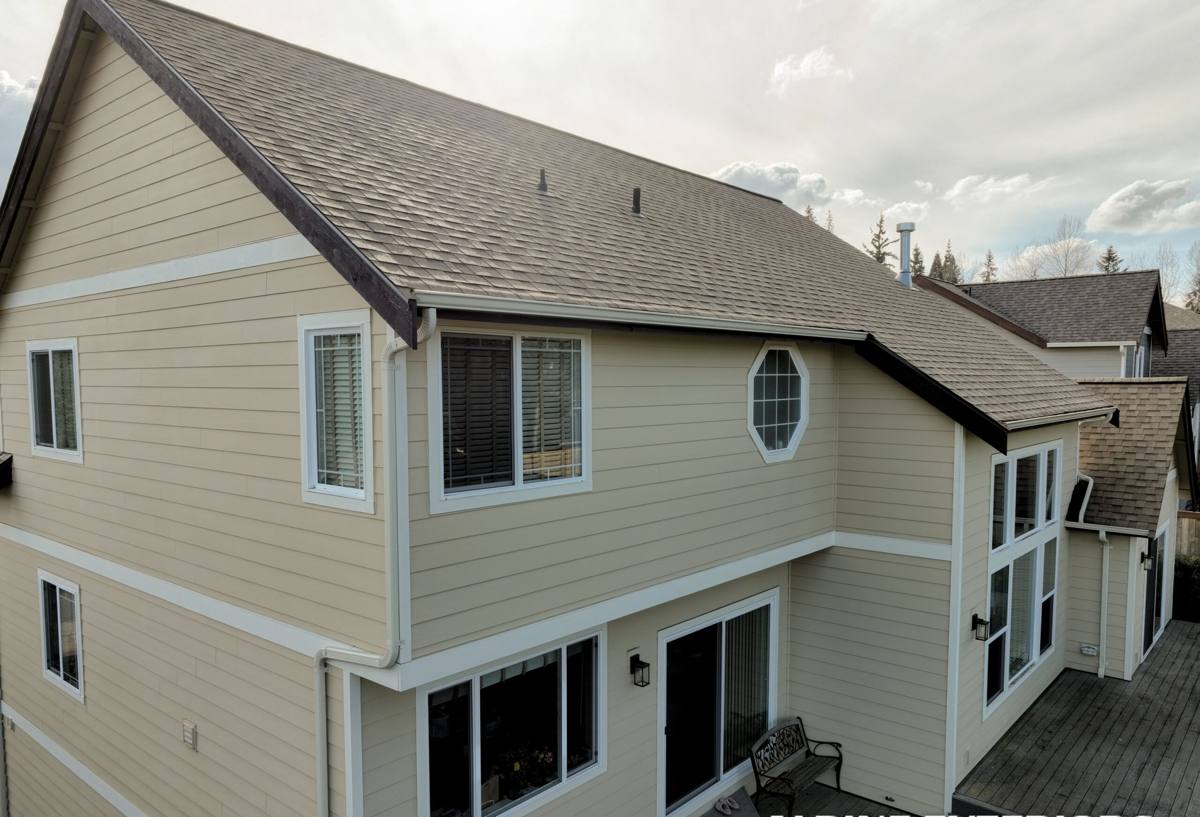
What "Energy-Efficient" Should Actually Mean in This Climate
Energy efficiency gets marketed as a glass spec — U-factor, solar heat gain, that kind of thing — and those numbers matter. But in Birch Bay, a window can have excellent glass and still perform poorly if the installation doesn't account for moisture. An energy-efficient window here has to do three jobs at once:
- Keep conditioned air in and keep the persistent damp, cool marine air out — not just resist temperature swings, but resist constant low-grade humidity pressure
- Shed wind-driven rain without letting water track behind the trim or into the wall cavity
- Hold its seal over years of salt exposure without the weatherstripping or gaskets breaking down early
Miss any one of those and you don't just lose comfort — you get soft trim, fogged double-pane glass, or moss creeping in around the frame within a couple of seasons. The glass package is the easy part. The installation detailing around moisture and salt is where most of the real difference in long-term performance comes from.
Signs a Birch Bay Home's Windows Are Underperforming
Homeowners usually notice one of these before they think to call about the windows specifically:
- Condensation forming between the panes (a failed seal, not a cleaning problem)
- A cold draft near the frame even with the window latched
- Sills or the bottom corners of the frame feeling soft, or paint bubbling there
- Visible green or black growth building up in the frame corners or track, faster than it should
- A noticeable jump in heating bills without any other change in the house
- Hardware that's stiff, corroded, or won't latch tight anymore
Any one of these is worth a look. Together, they usually point to a window that was fine when installed but was never detailed for this kind of exposure.
What a Correct Installation Involves
Swapping out old glass for a new unit in the same opening is the easy version of this job, and it's also the version most likely to fail early in a coastal climate. A correct installation treats the window opening itself as part of the water-management system, not just a hole to fill.
Before the New Window Goes In
The old unit comes out and the opening gets inspected — sheathing, framing, and any existing flashing. In a wet, salt-exposed climate, this step catches problems that a straight swap would just seal back up. Soft sheathing or compromised flashing found now is a fraction of the cost to fix compared to finding it after new siding and trim go back on.
Flashing and Water Management
This is the step that determines whether a window survives wind-driven rain. Proper flashing — sill pan, jamb flashing, and head flashing integrated with the house wrap in the correct shingle-lap order — directs any water that gets past the exterior trim back out, instead of letting it pool at the sill or migrate into the wall. This detail matters more in Birch Bay than in most of the county, given how directly this stretch of coast takes driving rain off the water.
Sealing and Insulation
Low-expansion foam or backer rod and sealant around the frame perimeter closes the air gaps that cause both drafts and condensation. Corrosion-resistant fasteners and hardware are worth insisting on this close to salt water — standard hardware can start showing rust within a couple of seasons here.
Finish Work
Exterior trim, caulking, and touch-up paint or capping get finished to shed water away from the frame, not toward it. A window installed correctly should need nothing more than routine cleaning for years.
Frame and Glass Options for a Salt-Air, High-Moisture Climate
There's no single "best" window brand — the right choice depends on budget, the home's style, and how much maintenance the homeowner wants to take on. What we can speak to honestly is how different frame materials tend to hold up in this specific climate.
| Frame Material | Coastal / Moss-Climate Behavior | Maintenance |
|---|---|---|
| Vinyl | Doesn't corrode or rot; handles salt air and constant damp well. Quality varies a lot between manufacturers. | Low — occasional cleaning |
| Fiberglass | Very stable in temperature swings and moisture; strong resistance to warping over time. | Low — occasional cleaning |
| Aluminum-clad wood | Attractive, but the cladding seams and any exposed wood are the weak point if sealant fails near salt air. | Moderate — sealant and seams need periodic checking |
| Solid wood | Best appearance for older or historic-style homes, but wood is the most exposed to Birch Bay's moisture and moss pressure. | Highest — repainting/sealing on a regular cycle |
We're not going to tell a homeowner that wood windows are a bad product — plenty of people want that look and are willing to keep up with the maintenance. Our job is to be honest about what each material asks of you in this specific climate, so the choice is made with eyes open rather than found out the hard way in year three.
Glass Packages
Double-pane, low-E, argon-filled units are the standard baseline for this region's energy code and climate — they cut heat loss and reduce condensation risk significantly over older single-pane or basic dual-pane glass. Triple-pane is available for homes that want the extra performance, particularly on north- or water-facing walls that take the brunt of the wind, though it adds cost and weight that isn't necessary on every elevation.
Our Process
The process is the same whether it's two windows or a whole house:
- Walk-through and assessment — we look at each opening, note existing damage or flashing issues, and talk through what the home actually needs given its exposure and orientation
- Straightforward proposal — frame material and glass package options with honest trade-offs, not an upsell script
- Removal and inspection — old units come out, framing and sheathing get checked before anything new goes in
- Installation with full flashing and sealing detail — the water-management work described above, done the same way whether it's visible in the final result or not
- Finish and walkthrough — trim, cleanup, and a check of every window's operation before we call it done
Keeping New Windows Performing in a Moss and Salt Environment
A correctly installed window in Birch Bay still needs some basic upkeep — this climate doesn't let anything coast on "maintenance-free" marketing forever.
- Rinse salt residue off frames and glass a few times a year, especially on water-facing sides of the house
- Keep weep holes (the small drainage openings at the base of the frame) clear of debris and moss so water can drain out
- Check exterior caulking annually, particularly after the wettest months, and touch up anywhere it's cracked or pulled away
- Trim back vegetation or anything shading a window that's staying damp longer than the rest of the house
- Operate hardware periodically through the winter so latches and hinges don't seize up from disuse combined with salt exposure
None of this is a heavy burden — it's the difference between a window that looks and performs the same in ten years and one that starts showing its age in three.
Why Local Installation Experience Matters Here
Window installation instructions are written by manufacturers who are thinking about a generic house in a generic climate. They're not thinking about a home two blocks from the water in Whatcom County, where wind-driven rain hits at an angle most flashing details aren't drawn for, and where moss finds any spot that stays damp a day too long. A crew that works this specific area regularly knows which elevations need the extra flashing detail, which frame materials are worth the added cost here versus a few miles inland, and what a Birch Bay winter actually does to a window that was installed to the bare minimum.
That local pattern recognition is the difference between a window job that needs revisiting in a few years and one that doesn't come up again until it's genuinely time for the next generation of windows.
Getting Started
If your Birch Bay home has windows that are drafty, fogged, showing soft spots at the sill, or just old enough that you're wondering whether it's time — we're happy to take a look and give you a straightforward read on what you're working with. Use the form below to request a free, no-pressure estimate.