 Semiahmoo Siding
 Custer's Roofs Work Harder Than Most
Custer sits close enough to the water and open farmland that its roofs take a different kind of beating than a roof twenty miles inland. You've got salt-laden air drifting off the Strait and Boundary Bay, driving rain that comes in sideways during winter storms, and long stretches of grey, damp weather that give moss and algae months at a time to get established. None of that is dramatic on its own, but stacked together year after year, it shortens the life of a roof that wasn't built or installed with this climate in mind.
A roof replacement out here isn't just about swapping old shingles for new ones. It's about choosing materials and details that hold up to salt corrosion on metal fasteners, shed wind-driven rain instead of letting it work under the shingle edges, and resist the moss growth that Whatcom County's damp winters practically guarantee. Get those details right and a roof will go the distance. Skip them and you'll be dealing with premature granule loss, soft decking, or moss lifting shingles well before the roof's rated lifespan is up.
Signs a Custer Roof Needs Replacing — Not Just Patching
Not every roof problem means a full replacement, but there are signs that patching is just delaying the inevitable and spending money that won't carry forward into a new roof.
- Granules collecting in gutters or at downspout outlets, especially after a hard rain
- Shingles that are cupping, curling at the edges, or cracking when you look at them from the ground
- Moss growth thick enough that it's lifting shingle tabs rather than just staining the surface
- Soft or spongy spots when walked on, which usually means the decking underneath has taken on moisture
- Daylight visible through the roof deck from inside the attic, or water stains on attic sheathing
- A roof that's already had two or more rounds of patch repairs in the same areas
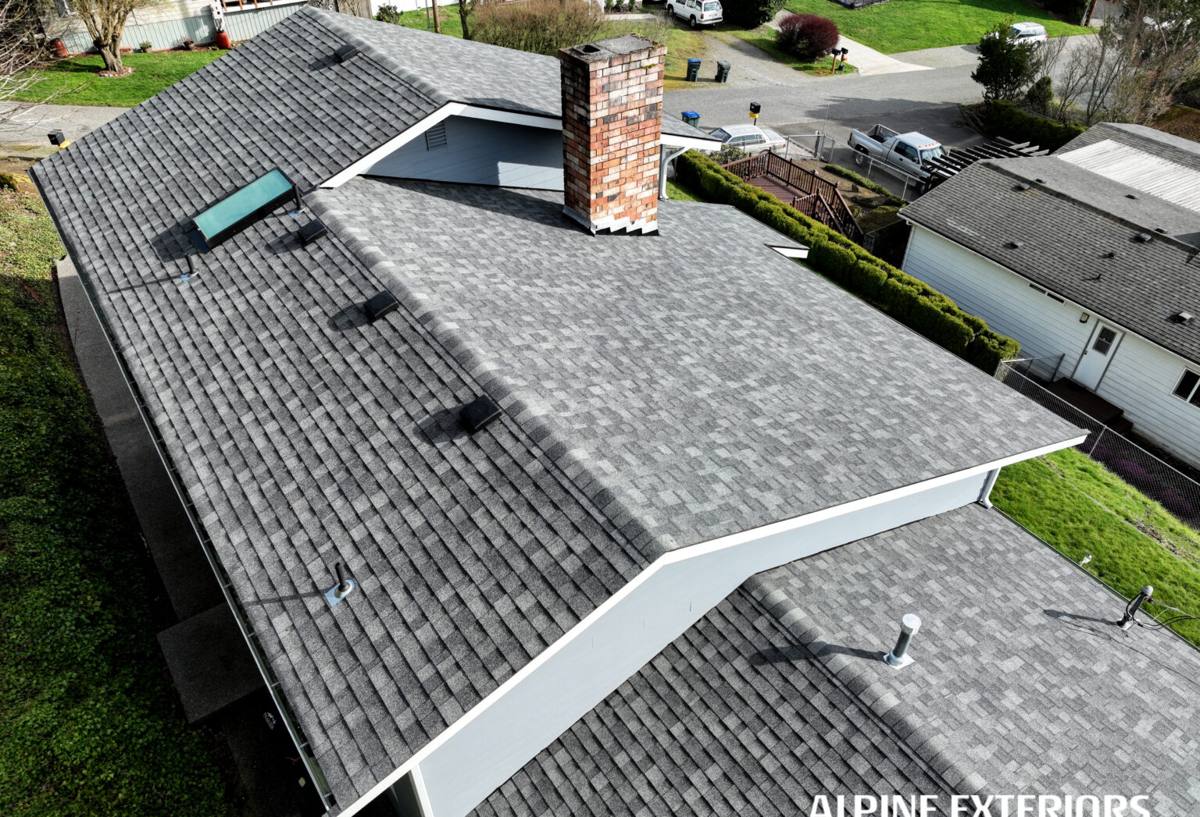
- Flashing around chimneys, skylights, or vent pipes that's rusted, pulled loose, or was never sealed correctly
If a roof is showing two or more of these at once, patching tends to become a cycle of chasing the same leak in different spots. At that point a full replacement usually costs less over time than continuing to repair a roof that's past the point of it being worth it.
What a Correct Roof Replacement Actually Involves
Full Tear-Off, Not Overlay
Some contractors will offer to install new shingles directly over the old layer to save time and money. We don't recommend that approach for Custer homes. Overlaying traps moisture between layers, hides the condition of the decking underneath, and adds weight the structure wasn't necessarily designed to carry long-term. A full tear-off lets us see exactly what's underneath — rot, soft spots, old flashing — before it gets covered up again.
Decking Inspection and Repair
Once the old roofing is off, every section of decking gets checked. Given how much rain this area sees, it's common to find some soft plywood or boards around valleys, chimneys, and eaves where water has been finding its way in slowly for years. Any compromised decking gets replaced before anything new goes down — installing new shingles over weak decking just guarantees another failure down the road.
Underlayment Built for Wind-Driven Rain
Standard felt underlayment is a minimum, not a standard we consider adequate for a coastal-adjacent property. We use synthetic underlayment and self-adhering ice-and-water barrier at eaves, valleys, and around penetrations — the spots where wind-driven rain is most likely to push water sideways and upward under the shingle line. This is one of the details that separates a roof that handles a real Whatcom County winter storm from one that doesn't.
Flashing Done Right
Flashing failures are one of the most common causes of roof leaks, and they're almost always a workmanship issue rather than a material one. Chimneys, skylights, sidewall intersections, and vent penetrations all need step flashing, counter-flashing, or pipe boots installed correctly and sealed with materials rated for the exposure. We replace flashing as part of every full roof replacement rather than reusing old pieces.
Ventilation That Matches the Roof
Proper intake and exhaust ventilation keeps the attic temperature and moisture level in balance, which matters as much for preventing condensation-driven rot as it does for shingle life. A roof that's ventilated correctly also resists ice damming and helps keep moss growth in check, since a drier, better-circulated roof surface gives algae and moss less to hold onto.
Choosing a Roofing Material for This Climate
There's no single "best" roofing material — the right choice depends on budget, how the home is built, and how much long-term maintenance the owner wants to take on. Here's how the common options stack up for a Custer property dealing with salt air, rain, and moss.
| Material | Moss Resistance | Salt Air Durability | Maintenance | Typical Lifespan |
|---|---|---|---|---|
| Standard 3-tab asphalt | Low — needs regular cleaning | Fair with proper fasteners | Moderate | 15–20 years |
| Architectural (laminate) shingle | Better, especially algae-resistant lines | Good | Low to moderate | 25–30 years |
| Standing seam metal | High — sheds moss and debris | Very good with coated fasteners | Low | 40–50+ years |
| Cedar shake | Low unless treated and maintained | Fair, needs regular sealing | High | 20–25 years with upkeep |
For most Custer homes, we steer clients toward architectural shingles with an algae-resistant (copper- or zinc-infused granule) rating, or standing seam metal for anyone planning to stay in the home long term and wanting to minimize maintenance. We're generally cautious about cedar shake in this specific microclimate — not because it's a bad product, but because the moisture retention and moss susceptibility mean it demands a level of upkeep many homeowners underestimate when they choose it.
Moss and Algae — Prevention Built Into the Job
Moss doesn't just sit on top of a roof looking bad — its root structure holds moisture against the shingle surface and can work its way under tabs, lifting them enough for wind and rain to get underneath. A long moss season like Custer gets every winter makes prevention part of the job, not an afterthought.
- Zinc or copper strips installed near the ridge, which release trace metal ions with every rain to inhibit moss and algae growth downslope
- Algae-resistant shingle granules on architectural shingle installs
- Proper attic ventilation to reduce the moisture the roof surface holds onto
- Keeping overhanging tree limbs trimmed back so the roof gets sunlight and airflow
- Annual or biannual gutter cleaning so trapped debris doesn't hold moisture against the roof edge
None of these steps eliminate moss entirely — nothing does in this climate — but together they buy a homeowner years of extra roof life compared to a roof with no moss strategy at all.
Our Roof Replacement Process
- Inspection and estimate. We walk the roof (or use a drone where pitch or access makes that safer) and check decking condition where visible, flashing, ventilation, and the areas most exposed to wind and rain.
- Written scope and pricing. You get a clear breakdown of materials, labor, and what's included — no vague line items.
- Tear-off and decking check. Old roofing comes off, decking gets inspected and any bad sections replaced, and we haul debris off site the same day where possible.
- Underlayment and flashing. Ice-and-water barrier at vulnerable areas, synthetic underlayment across the field, and new flashing at every penetration and intersection.
- Roofing installation. Shingles or metal panels installed to manufacturer spec, with attention to nailing pattern and exposure — details that affect wind resistance and warranty validity.
- Ventilation check and final walkthrough. We confirm intake and exhaust venting is balanced, clean up the site, and walk the finished roof with you.
What Affects the Cost of a Roof Replacement
Every roof is different, so we won't quote a number without seeing the job, but these are the factors that typically move the price up or down.
| Factor | Effect on Cost |
|---|---|
| Roof size and number of facets/valleys | More cuts and valleys mean more labor and material waste |
| Decking condition | Rotted or soft decking adds material and labor to replace before roofing goes on |
| Material choice | Standard asphalt is the lowest upfront cost; metal costs more upfront but less over its lifespan |
| Roof pitch and access | Steep or hard-to-access roofs require more safety setup and time |
| Number of penetrations | Chimneys, skylights, and vents each need individual flashing work |
| Ventilation upgrades needed | Adding or correcting intake/exhaust vents adds modest cost but pays off long-term |
Why It Matters to Hire a Crew That Already Works Custer
Roofing crews that mostly work drier, inland areas don't always build in the underlayment coverage, flashing details, or ventilation balance that a Whatcom County coastal-adjacent property actually needs — because they haven't had to deal with the consequences of skipping them. A crew that regularly works Custer and the surrounding area knows which details matter here: where wind-driven rain tends to find its way in, how much moss pressure to plan for, and which materials hold up versus which ones create ongoing maintenance headaches in this specific climate.
That local familiarity also means faster response if something needs attention after the job — no guessing about drive time or scheduling around a crew based somewhere else entirely.
Get a Straight Answer on Your Roof
If you're not sure whether your roof needs a full replacement or just some targeted repair, the honest answer starts with a look at the actual roof, not a guess over the phone. We offer a free, no-pressure estimate for Custer homeowners — we'll tell you plainly what we find and what your real options are, and you can use the form below to get one scheduled.