 Semiahmoo Siding
 Custer's Climate Asks More of Your Siding Than Most Places
Custer sits close enough to Semiahmoo Bay and the Strait of Georgia that salt-laden air is a daily fact of life, not an occasional nuisance. Add Whatcom County's long stretch of driving rain each fall and winter, plus the shaded, damp conditions that let moss and algae get a foothold on north- and west-facing walls, and you've got a climate that's genuinely tough on exterior building materials. Siding here doesn't just need to look good — it needs to shrug off moisture cycling, resist the slow corrosive effect of salt air on fasteners and finishes, and hold up under months of gray, wet weather without swelling, cupping, or feeding mold.
This is exactly the kind of environment where the wrong siding choice shows its weaknesses fast. We've standardized on James Hardie fiber cement siding for homes in this area because it's engineered to handle these specific conditions — not because it's the easiest thing to install or the cheapest thing to sell.
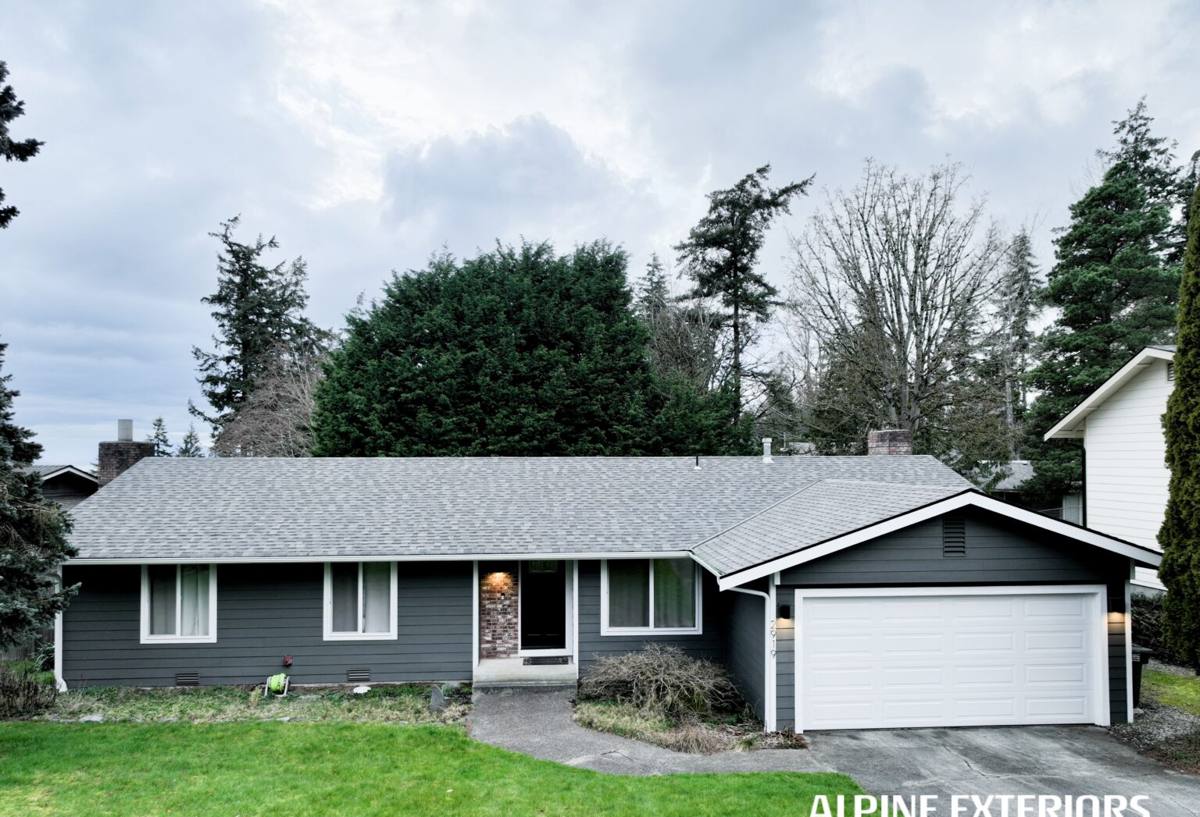
Why We Only Install James Hardie in This Area
We don't install vinyl, LP SmartSide, cedar, primed spruce, or other fiber cement brands like Cemplank or Allura. That's a deliberate standard, not a limitation of what we're capable of. Each of those products has real strengths, but each also has a trade-off that becomes a liability in a coastal, high-moisture climate like Custer's — vinyl can warp and fade under UV and temperature swings, wood-based siding is vulnerable to moisture absorption and rot, and other fiber cement brands don't offer the same climate-specific engineering or factory finish warranty that James Hardie does.
James Hardie is non-combustible, dimensionally stable, and manufactured with regional climate zones in mind. For the Pacific Northwest, that means their HZ10 product line, formulated specifically to resist the freeze-thaw cycling, moisture exposure, and humidity patterns common west of the Cascades. That's not marketing — it's a real difference in how the board is formulated and how it performs over decades on a house exposed to Boundary Bay weather.
ColorPlus Factory Finish vs. Field-Applied Paint
Most of what fails first on a Custer home isn't the siding board itself — it's the paint. Field-applied paint is more porous, wears unevenly, and requires repainting every 5-8 years in a climate this wet. James Hardie's ColorPlus Technology is a baked-on, factory-applied finish that's more UV- and moisture-resistant than site-applied paint, backed by its own dedicated finish warranty. In an area where salt air accelerates finish breakdown, that difference matters more than it would somewhere drier and inland.
What Correct Installation Actually Involves Here
James Hardie siding performs the way it's designed to only when it's installed to spec — and in a climate like Custer's, the installation details matter more than the brand name on the box. Here's what a correct job includes:
- Proper water-resistive barrier and flashing at every window, door, and penetration, lapped correctly to shed water downward
- Rainscreen or adequate drainage gap where wall assembly and local conditions call for it, so moisture that gets behind the siding can dry out instead of sitting against the sheathing
- Correct minimum clearances from grade, roofing, and decks — James Hardie specifies these for a reason, and skipping them is one of the most common causes of early moisture damage
- Fastener patterns and types matched to the substrate and to the coastal environment, since corrosion-resistant fasteners matter more here than inland
- Caulking only where James Hardie's installation guide actually calls for it — over-caulking traps moisture, and under-caulking lets it in
- Field-cut edges properly sealed and primed before installation, since exposed cut edges are a common failure point if left untreated
Every one of these steps is spelled out in James Hardie's published installation instructions, and skipping any of them can void the product warranty — separate from whatever a contractor might offer on their own labor. A big part of what a homeowner is paying for isn't the board; it's a crew that follows the manufacturer's spec exactly, every time, on a house exposed to this much weather.
Salt Air and Fasteners: A Detail Worth Understanding
Custer's proximity to the water means airborne salt is a constant, low-level presence on exterior surfaces. It doesn't damage the fiber cement board itself — James Hardie is not organic material and doesn't rot or corrode — but it does accelerate corrosion in lower-grade fasteners and trim hardware over time. Using corrosion-resistant fasteners and compatible trim components isn't optional in this location; it's part of what separates a job that looks right for a few years from one that holds up for decades.
Moss, Algae, and the Long Wet Season
Whatcom County's wet season runs long, and shaded or north-facing walls in Custer can stay damp for extended stretches, which is exactly the environment moss and algae need to establish. James Hardie fiber cement doesn't feed mold or fungal growth the way wood-based siding can, since it has no organic wood fiber for organisms to consume. That doesn't make a wall immune to surface growth — anything can develop surface moss in the right conditions — but it does mean the siding material itself isn't contributing to the problem, and a simple wash removes surface growth without damaging the board or finish.
Comparing Siding Options for a Custer Home
| Factor | James Hardie Fiber Cement | Vinyl | Wood / Primed Spruce |
|---|---|---|---|
| Salt air resistance | Strong — non-organic, engineered finish | Moderate — can fade and become brittle | Weak — finish breaks down faster near salt air |
| Moisture behavior | Resists swelling/rot when installed to spec | Doesn't absorb moisture but can trap it behind panels | Absorbs moisture, prone to rot without diligent upkeep |
| Moss/algae susceptibility | Low — no organic material to feed growth | Low, but seams and J-channel trap debris | Higher — organic material supports growth |
| Fire performance | Non-combustible | Combustible, can melt/warp near heat | Combustible |
| Finish longevity | Factory ColorPlus finish, long warranty | Color molded in, but fades and chalks over time | Field paint, typically needs repainting every 5-8 years |
Our Process for a Custer Siding Project
1. On-Site Assessment
We walk the exterior, check current siding condition, look for existing moisture issues or damaged sheathing, and talk through what's driving the replacement — failing siding, an addition, storm damage, or simply wanting something built for this climate long-term.
2. Product and Color Selection
We help you choose the right James Hardie line and profile for your home's style and exposure — lap siding, panel systems, or shingle-style accents, in ColorPlus finish colors suited to the regional palette.
3. Prep and Installation
This includes addressing any water-resistive barrier or sheathing issues found during tear-off, installing flashing and drainage details correctly, and fastening and finishing according to James Hardie's specifications for our climate zone.
4. Final Walkthrough
We review the completed work with you, confirm caulking and trim details, and go over basic care so the siding performs the way it's designed to for the long haul.
Why It Matters to Hire a Crew That Already Works This Area
A crew that regularly works Whatcom County's coastal communities already knows how local exposure — wind-driven rain off the water, shaded lots, salt air — should change small installation decisions: where a rainscreen gap is worth the extra step, which fastener grade holds up, how much clearance to leave near grade on a lot that stays damp longer than average. That's knowledge you build from doing the work here repeatedly, not from a general installation manual alone. It's also why we stick to one product system instead of installing several — deep familiarity with how James Hardie behaves in this specific climate, rather than surface-level experience across five different products.
What to Expect Cost-Wise
James Hardie siding costs more upfront than vinyl and is generally comparable to or less than quality cedar installation once you factor in the ongoing maintenance wood requires. Exact pricing depends on your home's size, current siding condition, trim complexity, and product line chosen. We give straightforward, itemized estimates so you know what you're paying for and why — no inflated square footage numbers and no vague allowances.
If you're weighing a siding replacement in Custer and want a straight answer about what your home actually needs, we're happy to take a look. Reach out for a free, no-pressure estimate — we'll walk your home's exterior, answer your questions honestly, and give you a clear picture of the work and cost involved.