 Semiahmoo Siding
 Roof Repair on Cherry Point: What the Roof Actually Deals With
Cherry Point sits along the Strait of Georgia shoreline in Whatcom County, between Semiahmoo/Blaine and Ferndale, and the properties out here run the gamut from bluff-top homes with open water views to wooded, rural lots set back from the shore. Both types of property put real demands on a roof, just in different ways. Waterfront and bluff homes take wind and salt air head-on with little to break it up, while tree-covered inland lots deal with shade, falling debris, and moisture that lingers longer before it dries. A roof repair that works for one setting doesn't automatically work for the other, and that's part of why we treat Cherry Point as its own service area rather than folding it into a generic Whatcom County roofing page.
We handle roof repair specifically — not full tear-offs, not new construction — for homes in and around Cherry Point. That means our focus is on diagnosing what's actually failing, fixing the cause instead of just patching the symptom, and giving an honest answer on whether a repair is really the right call or whether the roof is past the point where repair makes financial sense.
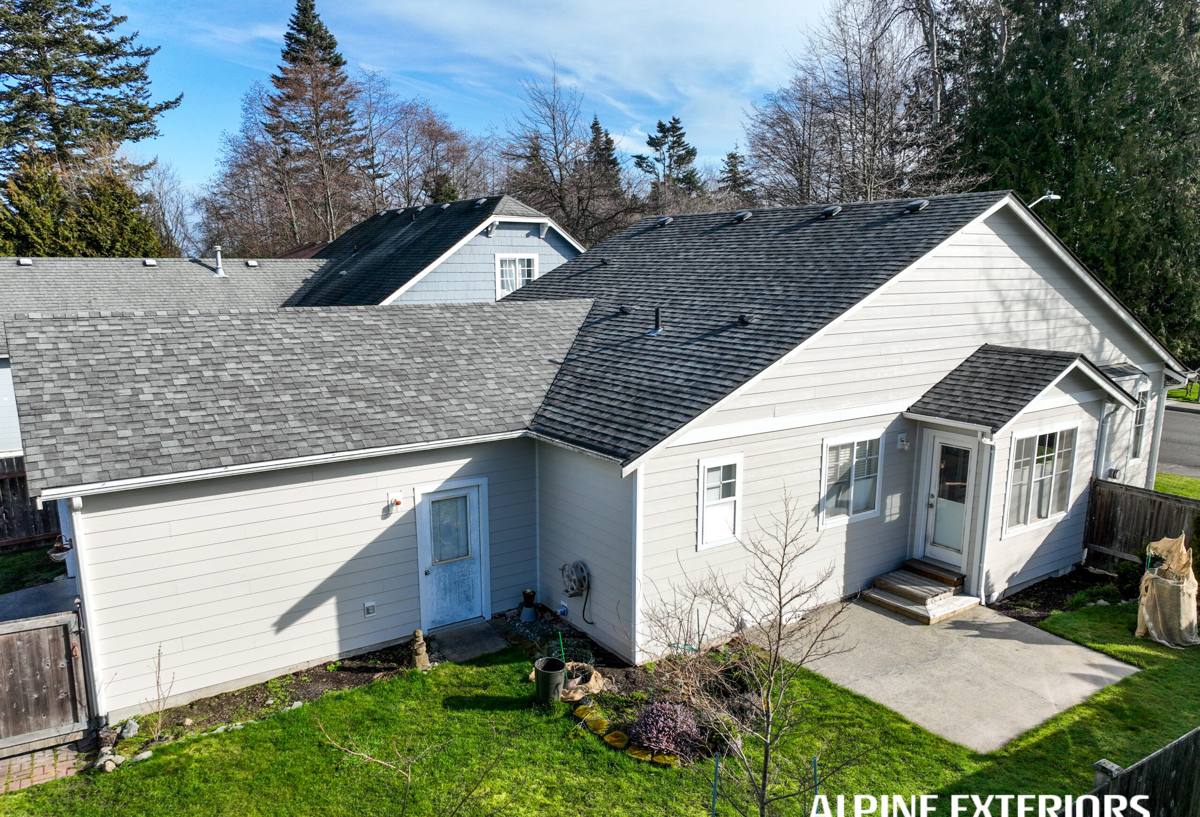
What This Climate Does to a Cherry Point Roof
Salt Air and Corrosion
Properties along this stretch of shoreline get salt-laden air blowing in off the Strait of Georgia on a regular basis, and that air is hard on anything metal on a roof — nails, flashing, vent caps, gutter hardware. Corrosion here isn't cosmetic; it's a structural problem, because a corroded fastener or a rusted-through flashing seam is exactly where a roof starts leaking. Homes closer to open water see this faster than homes further inland on the same property line.
Driving Rain and Open Wind Exposure
With little to block the wind on the bluff and shoreline sections of Cherry Point, rain doesn't just fall on a roof — it gets driven sideways into laps, valleys, and roof-to-wall transitions with more force than a sheltered inland roof ever experiences. That's a heavier moisture load than the region's rainfall totals alone suggest, and it's why flashing and lap details that hold up fine on a calmer lot can still fail here, even on a roof that isn't old.
A Moss Season That Doesn't Take a Break
Mild temperatures, near-constant humidity, and shaded, tree-covered sections of the wooded inland lots around Cherry Point add up to a moss season that runs most of the year in this part of Whatcom County. Moss holds moisture against roofing material long after a storm has passed, and on asphalt shingles in particular that constant dampness accelerates granule loss and shortens the life of the roof underneath it. North-facing slopes and roof sections shaded by mature trees are almost always the first place it shows up.
Common Roof Repair Issues We See on Cherry Point Roofs
The specific problems we're called out for on Cherry Point roofs tend to trace back to the same handful of causes — salt exposure, wind-driven rain, and moss. The table below covers what we see most often and what a correct repair actually addresses.
| Issue | Likely Cause | What a Correct Repair Involves |
|---|---|---|
| Moss buildup in valleys or on shaded slopes | Shade, humidity, and trapped organic debris | Careful removal, treatment, and addressing the drainage or debris source — not just a one-time cleaning |
| Lifted or missing flashing at chimneys, vents, and skylights | Wind uplift, sealant breakdown, or corrosion | New flashing properly lapped and fastened, with compatible sealant, not a bead of caulk over the old piece |
| Granule loss or bald spots on asphalt shingles | UV exposure, wind-driven rain, and age | Spot shingle replacement matched to the existing coursing, or a straight recommendation for replacement if the wear is widespread |
| Soft or spongy sections of roof deck | A prolonged leak or trapped moisture under moss or failed flashing | Repairing or replacing the affected sheathing, plus fixing the moisture source that caused it |
| Damaged or loose ridge and hip caps | Sustained wind exposure on open, unsheltered roof lines | Re-securing or replacing cap material with fasteners and lap spacing rated for the exposure |
Repair or Replace? How We Make That Call
Not every roof problem on Cherry Point calls for a full replacement, and not every leak can be reasonably fixed with a patch. We look at four things before recommending either direction: how far along the roof is in its expected service life, how widespread the damage actually is, whether the underlying deck is still sound, and how many times this same roof has already been repaired.
| Factor | Leans Toward Repair | Leans Toward Replacement |
|---|---|---|
| Age of the roofing material | Well within its expected service life | At or near the manufacturer's expected lifespan |
| Extent of the damage | Isolated to one or two localized areas | Granule loss, moss damage, or flashing failures spread across the roof |
| Condition of the roof deck | Solid, dry sheathing beneath the damaged section | Soft, rotted, or repeatedly wet decking |
| Repair history | First or second repair on this roof | The roof has already needed several separate repairs |
When a roof genuinely falls into the repair column, we say so and repair it — we don't push a replacement a homeowner doesn't need. When it doesn't, we'll walk through why and what the honest options look like.
What a Correct Roof Repair Actually Involves
Matching Materials and Coursing
A patch that doesn't match the existing shingle profile, exposure, or color doesn't just look wrong — it can create a mismatched water path where the old and new material meet. We source shingles that match as closely as possible and tie new courses into the existing pattern the way the original installation was laid out, rather than laying a visibly different patch over the top.
Flashing Done Right, Not Just Sealed Over
A lot of roof leaks on Cherry Point trace back to flashing that's been caulked over instead of properly lapped and replaced. Caulk is a short-term fix at best in a climate with this much driving rain and UV exposure — it dries out, cracks, and fails again within a season or two. Correct flashing repair means removing the failed piece, replacing it with new material lapped the right direction for water flow, and integrating it with the surrounding shingles or siding correctly.
Ventilation Still Matters on a Repair
It's easy to overlook attic and roof ventilation when the job is "just a repair," but blocked or inadequate ventilation is part of what drives moss growth and slows drying after wind-driven rain events. When we're already up on a roof for a repair, we check that intake and exhaust ventilation are actually working, since a repair on a roof that can't dry out properly won't hold up as long as it should.
Our Roof Repair Process
- On-site inspection: We get on the roof and in the attic where accessible to find the actual source of the problem, not just the visible symptom — a stain on a ceiling can trace back to a flashing failure several feet away from where the water is showing up.
- Written scope and options: Before any work starts, we put together a clear, written scope that explains what we found, what we recommend, and why — including whether repair or replacement is the more honest answer.
- Matching materials: We source shingles, flashing, and cap material that match the existing roof as closely as possible, so the repair blends in and performs consistently with the rest of the system.
- Fixing the cause, not just the symptom: If moss, poor drainage, or blocked ventilation contributed to the failure, we address that as part of the repair rather than leaving the same conditions in place to cause the next leak.
- Cleanup and walk-through: We clear debris from gutters and the roof surface, and walk the homeowner through what was done and what to watch for going forward.
Why a Local Cherry Point Crew Matters
A roofing crew that regularly works this specific stretch of Whatcom County shoreline already knows the difference between a bluff-top roof taking wind and salt air head-on and a wooded, inland lot dealing with shade and moss. That distinction shapes real decisions on a repair — which fastener grade to use, how much flashing lap to build in for wind-driven rain, where moss is likely to come back and why. A crew unfamiliar with Cherry Point's specific exposure can still do competent work, but they're more likely to miss the small details that determine whether a repair holds for years or needs to be redone after the next wet season.
A Checklist Before Hiring for Roof Repair Near Cherry Point
- Ask whether they're recommending a repair or a replacement, and why — and be wary of a contractor who only offers one answer
- Confirm current Washington contractor licensing and active liability insurance
- Ask how they handle flashing repairs specifically — replaced and lapped, or just resealed
- Ask about fastener and hardware corrosion resistance for a salt-air, waterfront-adjacent property
- Get a written scope of work, including what's included and what isn't, before signing anything
If you're dealing with a leak, moss buildup, or damaged flashing on a Cherry Point roof, we're glad to take a look and give you an honest read on what it actually needs. Reach out below for a free, no-pressure estimate.