 Semiahmoo Siding
 Why Decks in California Creek Wear Out Faster Than the Brochure Says
If you own a home in the California Creek area near Semiahmoo, you already know your deck doesn't age the way a deck does inland. The combination of salt-laden air off the bay, long stretches of driving rain, and a moss season that can run from fall through spring puts real, measurable stress on wood, fasteners, and even composite decking. Most decks in this part of Whatcom County aren't failing because the original build was lazy — they're failing because standard deck construction, the kind used in drier or less coastal climates, wasn't built for this environment in the first place.
Salt air accelerates corrosion in fasteners and hardware faster than people expect, even on decking rated for exterior use. Constant moisture keeps wood fiber saturated longer between dry spells, which is exactly the condition rot fungus needs to take hold. And moss doesn't just look bad — it holds water against boards and framing, which turns a cosmetic problem into a structural one if it's left alone season after season.
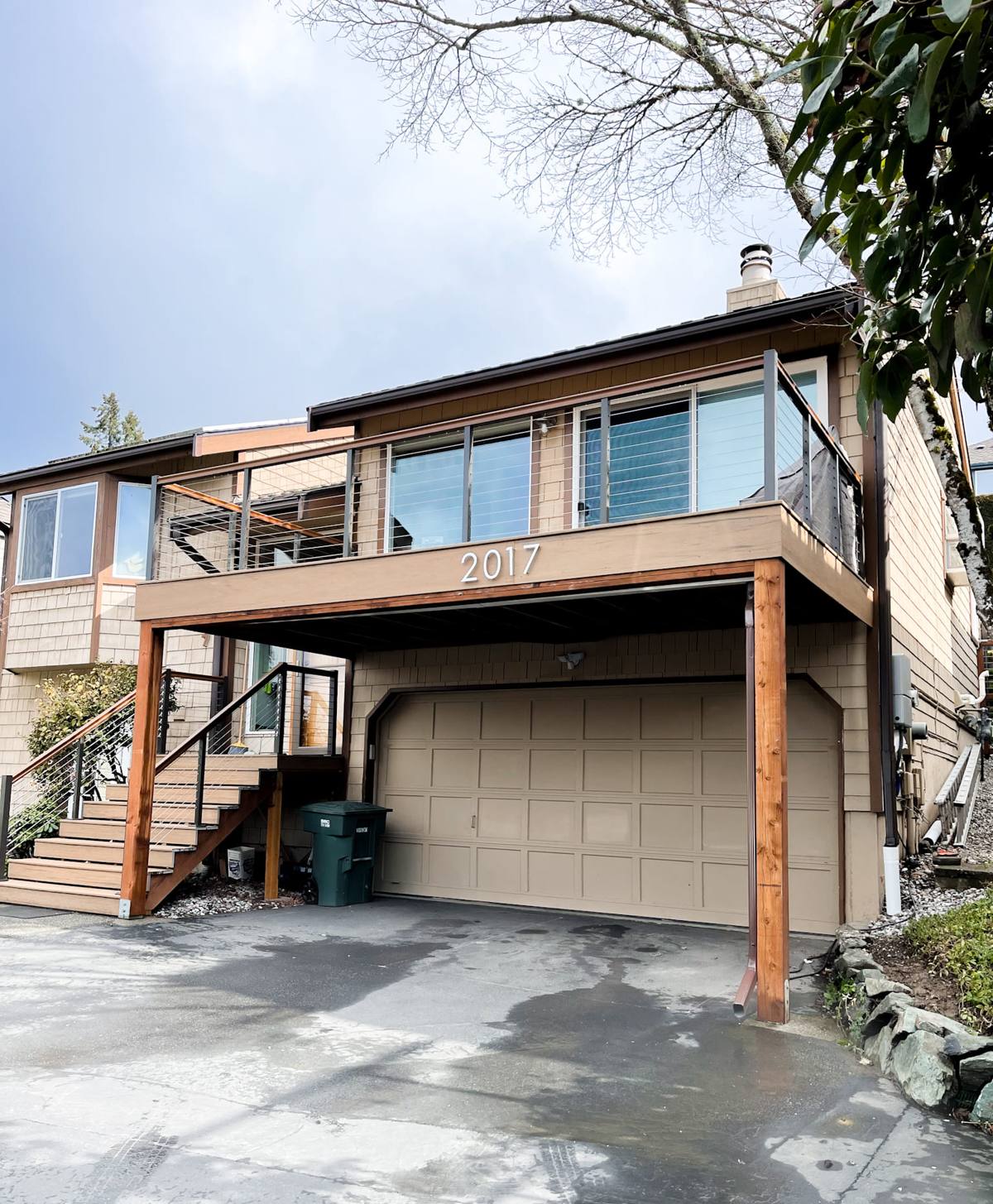
Signs Your Deck Needs Replacement, Not Another Repair
Homeowners often ask us to patch a board or two, and sometimes that's genuinely the right call. But a deck built or maintained without this climate in mind usually has damage that goes deeper than the visible boards. Here's what tells us a deck is past the point of spot repair:
- Soft or spongy spots underfoot, especially near the house ledger board or stair stringers
- Fasteners that are rusted, bleeding stains onto the decking, or backing out on their own
- Persistent moss or algae growth that returns within weeks of cleaning
- Visible gaps, cupping, or splitting across multiple boards rather than isolated spots
- Railings or posts that flex or feel loose when you lean on them
- Any sign of rot, discoloration, or soft wood where the deck attaches to the house
- A substructure (joists, beams, footings) that's more than 15-20 years old, even if the surface decking looks okay
That last point matters more than most homeowners realize. Decking is the part you see, but the framing underneath is what actually holds you up. In a climate this wet, framing failure is often hidden until someone notices a bounce or a soft spot — by then, the deck has usually been unsafe for longer than anyone realized.
What a Correct Deck Replacement Actually Involves
It Starts Below the Decking, Not At It
A proper replacement isn't just pulling up old boards and screwing down new ones. The parts of a deck that fail first in this climate — the ledger board connection, the joists, the footings, and the flashing — are exactly the parts a surface-only repair never touches. We evaluate and, where needed, rebuild:
- Ledger board and flashing — where the deck attaches to the house is the single most common source of hidden rot in coastal Whatcom County homes, because water gets trapped between the ledger and the siding if it isn't flashed correctly
- Footings and posts — checked for movement, rot, or undersized bearing that wasn't adequate for the original build
- Joists and beams — sized and spaced for the actual span and load, not just matched to what was there before
- Fasteners and hardware — corrosion-resistant hardware rated for coastal or treated-lumber contact, not standard interior-grade fasteners
Then the Decking Surface Itself
Once the structure underneath is sound, the decking material and its installation details — gapping for drainage, ventilation underneath, and drip edges away from the house — determine how long the surface lasts before it needs attention again.
Choosing the Right Decking Material for This Climate
There's no single "best" decking material — there's a best material for your budget, your maintenance appetite, and how close your lot sits to salt air and shade. Here's how the common options actually perform in a Semiahmoo-area climate:
| Material | Moisture & Moss Resistance | Maintenance | Typical Lifespan Here |
|---|---|---|---|
| Pressure-treated lumber | Good if sealed and cleaned regularly; moss and mildew still take hold in shaded, damp spots | Annual cleaning, periodic sealing/staining | 15-20 years with upkeep |
| Cedar | Naturally moisture and insect resistant, but still needs sealing against constant rain exposure | Regular sealing, more sensitive to neglect | 15-20 years with upkeep |
| Composite decking | Very good — resists rot and doesn't absorb water like wood, though moss and algae can still grow on the surface film | Occasional washing, no sealing or staining | 25-30+ years, warranty-backed |
| PVC decking | Excellent — fully synthetic, no wood fiber for rot or insects to work with | Lowest maintenance of the group | 25-30+ years, warranty-backed |
We're honest with California Creek homeowners about this: in a climate with this much sustained moisture and moss pressure, wood decking asks for a real maintenance commitment — cleaning and sealing on a schedule, not "when it starts looking rough." Composite and PVC cost more upfront but shift that burden away from you. Neither choice is wrong; it depends on whether you'd rather spend time or spend money on long-term upkeep.
Framing and Fasteners: Where Failures Actually Start
Most of the deck failures we see in this area trace back to two things: undersized or corroding fasteners, and framing that was never properly protected from moisture. Standard galvanized fasteners can corrode faster than expected in salt-influenced air, especially in contact with pressure-treated lumber's chemical makeup. We use fasteners and structural hardware rated for that combination, and we detail joists and beams with flashing tape or joist protectors where moisture collects — a step that's easy to skip and impossible to see once the decking goes down, but it's often the single biggest factor in whether a deck lasts 15 years or 30.
Our Deck Replacement Process, Start to Finish
- On-site evaluation — we inspect the existing deck's framing, ledger connection, footings, and decking condition, not just the surface
- Honest scope discussion — we tell you plainly what needs full replacement versus what could realistically be reused, and why
- Material selection — we walk through the trade-offs above so you're choosing based on your priorities, not a sales pitch
- Demolition and disposal — old decking, and any compromised framing, removed and hauled off
- Structural rebuild — ledger, flashing, footings, and framing corrected to current standards and properly protected against this climate
- Decking installation — proper gapping, ventilation, and fastening for the material you've chosen
- Final walkthrough — we go over care and maintenance specific to what you had installed, so you know what to expect year to year
Permits and Local Considerations
Deck replacement projects, especially those involving structural changes, footing work, or decks above a certain height, typically require a permit in Whatcom County. Requirements can also depend on where your property sits relative to shoreline or setback rules, which matter more for properties near Semiahmoo Bay and California Creek than for a typical inland lot. We handle the permitting conversation as part of the process so you're not left guessing about what's required for your specific property.
Maintenance That Actually Extends a Deck's Life Here
A well-built deck still needs upkeep in this climate — the difference is how much and how often. A few habits make a real difference for homeowners in the California Creek area:
- Clean moss and algae off the surface at least once a year, ideally before it gets a foothold in fall
- Keep gutters and downspouts clear so runoff isn't draining directly onto or under the deck
- Trim back vegetation that shades the deck and slows drying after rain
- Check railings, stairs, and fasteners for looseness or corrosion each spring
- For wood decking, reseal on the schedule recommended for your product — don't wait until it looks dry and gray
- Address any soft spots or discoloration immediately rather than waiting for the next dry season
Why Hiring a Crew That Already Works California Creek Matters
A deck built to a generic national spec sheet isn't necessarily built for a lot that sits near tidal air, in a shaded microclimate, or on ground that stays damp longer than it would a few miles inland. Contractors who work regularly in the Semiahmoo and greater Whatcom County area already know which framing details and fastener choices hold up here versus which ones fail early — not from a manual, but from having replaced the decks that didn't get those details right the first time. That local pattern recognition is worth more than it sounds like on paper: it's the difference between a deck that needs attention again in eight years and one that comfortably makes it to its warranty date.
If your deck is showing any of the signs above, or you'd simply like a straight assessment of whether repair or full replacement makes sense for your property, we're happy to take a look. Reach out for a free, no-pressure estimate using the form below.