 Semiahmoo Siding
 Why Blaine Homes Take a Different Kind of Beating
Blaine sits about as close to saltwater and open weather as a Whatcom County home can get. That combination shows up on siding faster than it does a few miles inland. Salt-laden air accelerates corrosion on fasteners, trim, and any exposed metal flashing. Wind-driven rain off the water pushes moisture sideways into joints and laps that would stay dry in a calmer climate. And the long, damp shoulder seasons here give moss and algae months to establish themselves on north- and west-facing walls before a homeowner even notices.
None of this means Blaine siding is doomed to fail early. It means siding here needs to be inspected, maintained, and repaired with those specific stresses in mind. A repair that would hold up fine in a drier part of the state can fail again within a year or two here if it doesn't account for how water actually moves across this coastline.
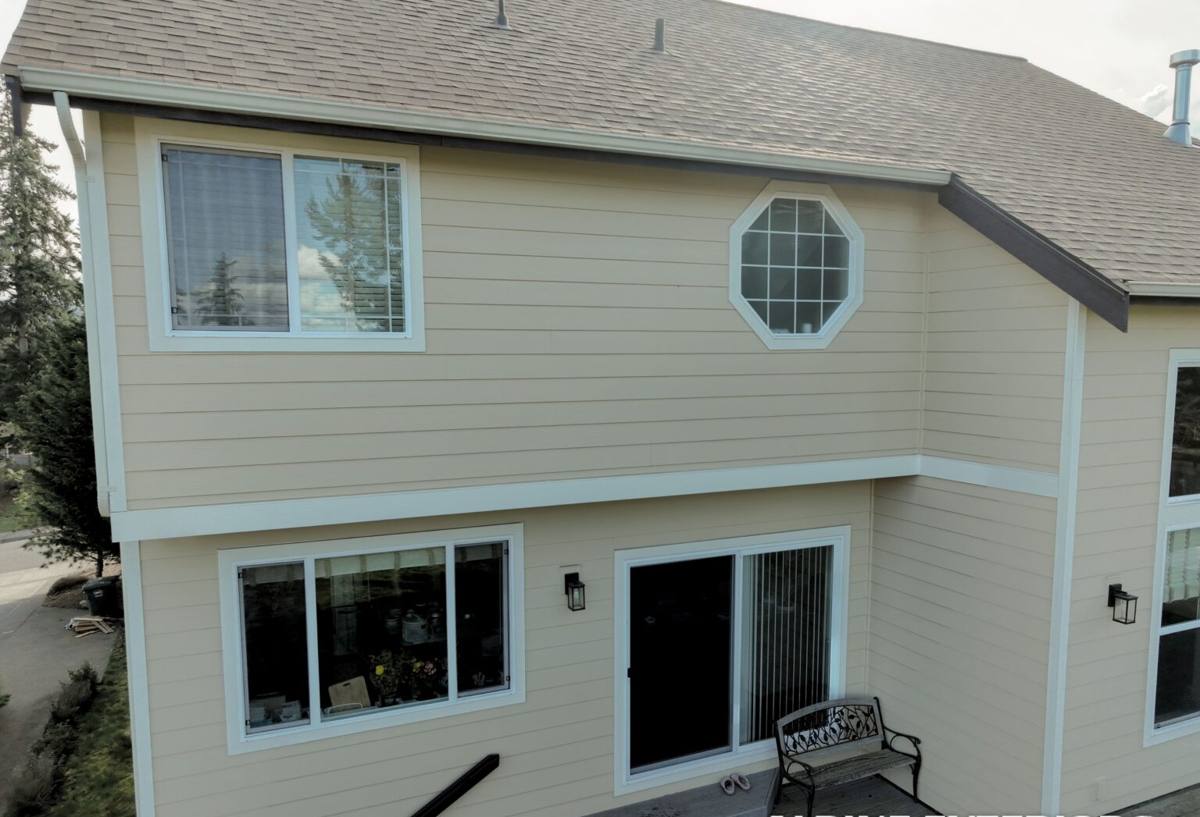
The Siding Problems We See Most Often in Blaine
Moisture Intrusion at Joints and Trim
Butt joints, window and door trim, and anywhere two pieces of siding meet are the weak points. Caulk breaks down faster in salt air and constant damp, and once it cracks, wind-driven rain finds its way behind the siding rather than running off the surface.
Rot and Soft Spots
Wood-based siding and trim — cedar, primed spruce, or older engineered wood products — are especially vulnerable once water gets behind them. By the time a soft spot is visible from the outside, the damage underneath is often already spreading into sheathing or framing.
Moss, Algae, and Staining
Shaded and north-facing walls in this climate can develop moss and green staining within a season or two if the surface holds moisture. This isn't just cosmetic — moss holds water against the siding surface, which speeds up whatever deterioration is already happening underneath.
Fastener and Flashing Corrosion
Standard fasteners and light-gauge flashing corrode faster this close to the water. Rust streaks below nail heads or flashing seams are usually a sign the hardware needs upgrading, not just the visible siding.
Impact and Wind Damage
Storm debris, ladders, and general wear crack or dislodge panels. On brittle or aging materials, a small impact crack can widen into a real moisture entry point within a season if it's left alone.
Repair or Replace? How We Actually Make That Call
Not every damaged section needs a full re-side, and not every problem area can be patched and trusted. We look at the extent of the damage, what's underneath it, and how the existing material is holding up overall before recommending a path.
| Situation | Usually a Repair | Usually a Larger Project |
|---|---|---|
| Damage extent | Isolated area, sound siding elsewhere | Damage scattered across multiple walls |
| Underlying sheathing | Dry, structurally sound | Soft, water-stained, or rotted |
| Cause of damage | Single event (impact, failed caulk joint) | Systemic issue (missing flashing, chronic moisture path) |
| Material condition | Otherwise stable, still performing | Widespread delamination, cracking, or age-related failure |
| Color/finish match | Reasonably close match available | Discontinued or badly weathered original material |
When we open up a damaged area and find the sheathing or framing compromised, we'll tell you plainly — patching over hidden rot is a short-term fix that costs more later. Our job is to give you an honest read, not just close up the wall and move on.
What a Correct Siding Repair Actually Involves
A repair that actually holds up in this climate is more than cutting out a bad board and nailing in a new one. The steps that matter most, and that get skipped when repairs are done in a hurry:
- Find the water's real path. Visible damage often isn't where the moisture is entering — it's frequently a foot or more away from a failed joint, seam, or flashing detail.
- Cut back to sound material. Removing only what's obviously damaged, without checking a few inches beyond it, is how repairs fail again within a year.
- Inspect and repair the weather-resistive barrier. If the house wrap or building paper behind the siding is torn or improperly lapped, replacing the siding without fixing that guarantees a repeat problem.
- Correct the flashing detail, not just the siding. Window heads, kick-out flashing at roof-to-wall intersections, and butt joint flashing all need to shed water correctly, not just look patched.
- Match material and finish where possible. A visible patch is a sign of a rushed job. We aim for a repair that blends into the wall, not one that stands out as an obvious fix.
- Reseal and refinish to spec. Proper sealant products, correctly applied, at the joints that actually need them — not caulk smeared over everything as a catch-all.
Why the Repair Material Matters as Much as the Workmanship
What you patch a wall with matters almost as much as how you patch it. This company installs and repairs with James Hardie fiber cement exclusively — we don't install vinyl, LP SmartSide, Cemplank, Allura, primed spruce, or cedar, and we won't tell you those are bad products in general. What we will tell you is why we standardized on one system for every home we touch.
Fiber cement doesn't rot, and it isn't a food source for the moss and organic growth that thrives in this climate's damp shoulder seasons. It holds up to wind-driven rain and salt air far better over the long run than wood-based or foam-backed engineered products, which are more sensitive to sustained moisture exposure at cut edges and joints. Hardie's ColorPlus factory finish is also engineered to resist the fading and chalking that salt air and UV exposure cause faster here than inland, which matters a lot when you're trying to match a repair to existing siding years down the road.
If your home currently has a different siding product and needs repair, we'll still give you a straight assessment of what a like-for-like patch looks like versus what a longer-term plan toward Hardie would involve — no pressure, just the honest trade-offs so you can decide with real information.
A Quick Reference: Why We Don't Patch With These
- Vinyl siding — expands and contracts significantly with temperature swings, and matching an old, sun-faded panel exactly is often impossible.
- LP SmartSide and similar engineered wood — performs well when the moisture barrier behind it stays intact, but cut edges and failed caulk joints are more sensitive to sustained damp than fiber cement.
- Cedar and primed spruce — a real, attractive material, but it requires an ongoing maintenance commitment that most homeowners underestimate, especially in a climate this consistently damp.
Our Repair Process for Blaine Homeowners
We keep the process straightforward because most homeowners just want to know what's wrong, what it'll take to fix it, and what it'll cost.
- Inspection. We look at the damaged area and the surrounding siding, not just the spot you called about — often there's a related issue nearby that's easier to catch now than later.
- Diagnosis and plain-English explanation. We tell you what's causing the problem, not just what's visible, and show you what we find if we open up a section.
- Written scope and estimate. You'll know what's being repaired, with what material, and why — before any work starts.
- Scheduling around the weather. Repairs that involve opening up a wall need a reasonable dry window to do correctly. We plan around Whatcom County's weather patterns rather than rushing a repair into a rain system.
- The repair itself. Proper tear-out, barrier and flashing correction, matched material, and a finish that blends with the surrounding wall.
- Cleanup and walkthrough. We don't consider the job done until the area is clean and you've had a chance to look it over with us.
Why a Crew That Already Works Blaine Matters
Siding repair isn't identical everywhere, and a crew that mostly works drier, more sheltered areas can miss things that are obvious to someone who repairs siding in Semiahmoo and Blaine regularly. That local familiarity shows up in a few concrete ways: knowing which fastener and flashing upgrades are worth the extra cost this close to saltwater, recognizing early moss and staining patterns before they become bigger moisture problems, and understanding which walls in this area take the worst of the wind-driven rain and need extra attention at joints and trim.
It also means realistic scheduling. We're not guessing at when a dry stretch is likely, or how long a damp shoulder season might delay a repair — we plan around it because we do this work here regularly.
Preventing the Next Repair: A Homeowner's Maintenance Checklist
Good repairs last longer when they're paired with basic upkeep. A few habits go a long way in this climate:
- Walk the exterior twice a year — especially after winter storms — and look for cracked caulk, loose panels, or soft spots near the ground and around trim.
- Keep gutters clear so water isn't overflowing onto siding below the roofline.
- Trim back vegetation and shrubs that trap moisture against exterior walls.
- Address moss and algae staining early with gentle cleaning rather than letting it sit for a full season.
- Check caulking at windows, doors, and butt joints yearly — it's a cheap fix when caught early, an expensive one when ignored.
- Watch for rust streaking below fasteners or flashing, an early sign of hardware failing in the salt air.
If you're dealing with a soft spot, a cracked panel, staining that won't go away, or you just want a second opinion on a repair another contractor quoted, we're happy to take a look. Fill out the form below for a free, no-pressure estimate on your Blaine home.