 Semiahmoo Siding
 Why Blaine Harbor Windows Wear Differently Than Windows Inland
Blaine Harbor sits close enough to the water that salt-laden air, wind-driven rain, and long stretches of damp, shaded weather are just part of daily life. Windows here don't fail because the glass wears out — they fail because water and salt find a way past the seals, flashing, or frame joints and start working on the wood, framing, and hardware behind them. A window installation that would hold up fine in a drier inland part of Whatcom County can start showing problems within a few years on a Semiahmoo-area home if it wasn't detailed for this specific exposure.
That's the core difference between a generic window install and one done right for Blaine Harbor: the window unit matters, but the flashing, sealant, and drainage details around it matter just as much, if not more.
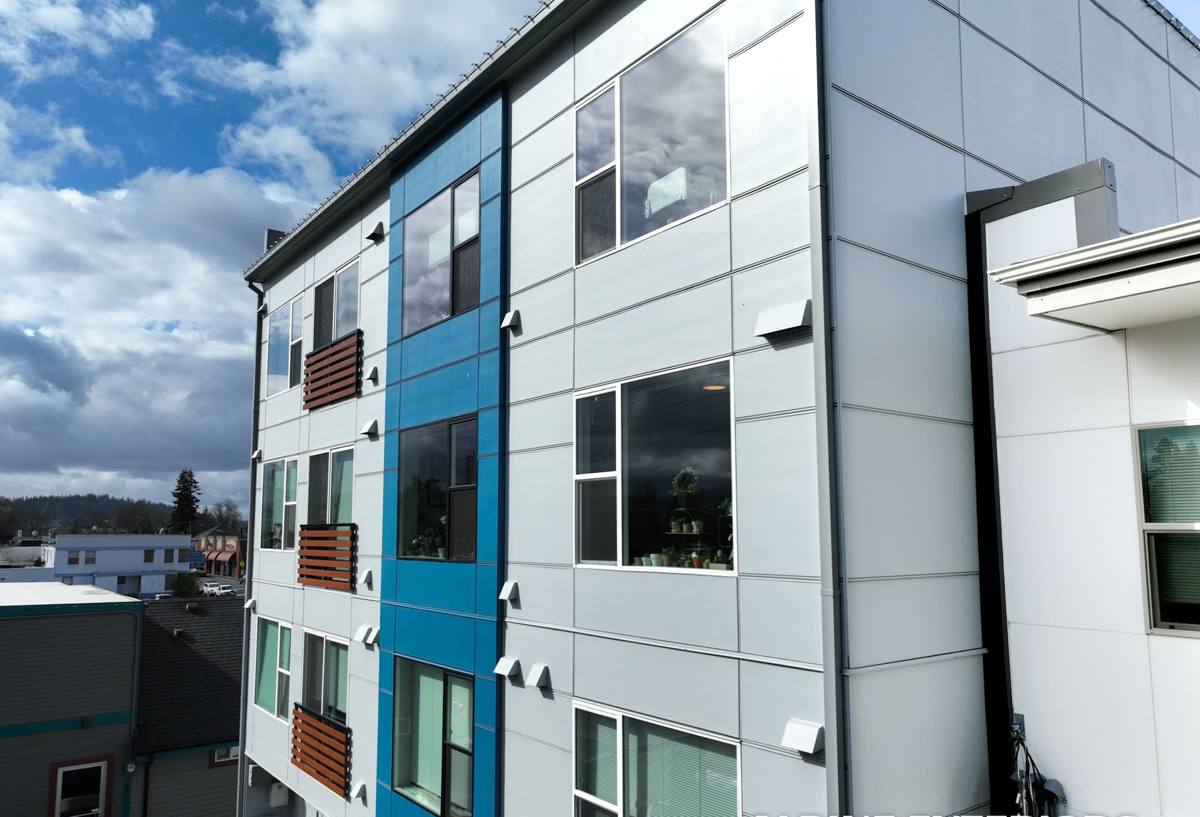
What Salt Air, Driving Rain, and Moss Season Actually Do
Salt Air
Airborne salt settles on every exterior surface, including window frames and hardware. Over time it accelerates corrosion on lower-grade fasteners, hinges, and cladding finishes, and it can degrade some sealants faster than the manufacturer's stated service life would suggest. Materials and hardware that aren't rated for coastal exposure tend to show pitting, discoloration, or stiff-operating hardware well ahead of schedule.
Driving, Wind-Blown Rain
Rain that comes in sideways during a winter blow doesn't behave like rain falling straight down. It gets driven up under trim, into head flashing laps, and into any gap where the installer cut a corner. A window that's watertight in a calm rain test can still leak in a real Blaine Harbor windstorm if the flashing sequence wasn't built to shed water in every direction, not just down.
Long Moss Season
The extended cool, damp stretch of the year that keeps moss and algae going on roofs and siding does the same thing to window sills, frames, and the caulk lines around them. Moss and algae hold moisture against the surface far longer than open air would, which is exactly the condition that lets rot start in wood trim, sills, or framing that's already been compromised by a small water intrusion point.
What a Correct Window Installation Involves
A window install is really two jobs layered together: setting a quality window unit, and building a weatherproofing system around it that will actually manage water for the life of the window. Skipping steps in the second job is why replacement windows sometimes leak sooner than the old ones they replaced.
- Removing the old unit and inspecting the rough opening, sill, and framing for hidden rot or prior water damage before anything new goes in
- Repairing or replacing any compromised framing or sheathing — never installing a new window over damaged wood
- Installing a sloped sill pan so any water that gets past the window drains back outside instead of sitting against the frame
- Sequencing flashing correctly — sill, jambs, then head — so each layer overlaps the one below it, shedding water down and out
- Using a compatible, coastal-appropriate sealant at all penetration points, not just whatever caulk is on the truck
- Setting the window level, plumb, and square, then securing it per the manufacturer's fastening schedule
- Insulating the gap between the frame and rough opening properly, without over-packing it in a way that bows the frame
- Finishing exterior trim and siding tie-in so water sheds past the window, not toward it
Choosing Windows for a Salt Air, High-Rain Property
There's no single "best" window material for every home — it depends on your home's exposure, your maintenance preferences, and your budget. Here's how the common options actually perform in a Blaine Harbor-type environment:
| Material | Salt Air / Moisture Behavior | Maintenance | Our Take |
|---|---|---|---|
| Vinyl | Won't rust or rot; performs well in salt air when frames and hardware are quality-grade | Low — occasional cleaning | Solid, cost-effective choice for most Blaine Harbor homes |
| Fiberglass | Excellent dimensional stability, resists moisture and corrosion very well | Low | Strong option where budget allows, especially on exposed elevations |
| Wood / Wood-Clad | Attractive but requires an intact exterior cladding and diligent sealing to keep moisture off bare wood | Higher — regular inspection and upkeep | We're honest that this option demands more ongoing attention in this climate |
| Aluminum | Conducts cold and can corrode over time in salt air unless properly finished | Moderate | Rarely our first recommendation for direct coastal exposure |
Whatever material you choose, we pay close attention to hardware grade and glazing package — a good frame paired with cheap hardware or a low-grade seal will still underperform in this climate.
Our Process, Start to Finish
- On-site assessment — we look at each window opening individually, since exposure varies window to window depending on which direction a home faces
- Honest recommendation — we tell you which windows actually need replacing now versus which can wait, and why
- Clear, written estimate — materials, scope, and timeline spelled out before any work begins
- Removal and inspection — old units come out, and we check the framing behind them before proceeding
- Installation — sill pan, flashing sequence, sealant, and fastening done to spec, not shortcuts
- Exterior finish work — trim and siding tie-in restored so the whole assembly sheds water correctly
- Final walkthrough — we check operation, seals, and appearance with you before calling the job done
Signs Your Current Windows Are Already Losing the Fight
Homeowners in Blaine Harbor often notice one or two of these before deciding to look into replacement. If you're seeing any of the following, it's worth having a professional take a look before it turns into a bigger repair:
- Soft or discolored wood trim around the window frame
- Condensation building up between panes of a double-pane window
- Windows that stick, won't latch fully, or have gone stiff to operate
- Visible gaps, cracked caulk, or peeling paint at the frame edges
- A musty smell or soft drywall near the window on the inside
- Drafts you can feel even when the window is fully closed
- Moss or dark staining building up on the sill or lower frame
What Affects the Cost of a Window Installation Here
Every home is different, so we don't post fixed pricing, but these are the main factors that move the number up or down on a typical Blaine Harbor project:
| Factor | Why It Matters |
|---|---|
| Hidden framing damage | Rot found behind an old window adds repair scope before a new one can go in correctly |
| Window material and glazing package | Vinyl, fiberglass, and wood-clad options carry different material costs and performance |
| Number and size of openings | Larger units and more openings mean more material and labor time |
| Exterior finish tie-in | Matching existing siding and trim around the new window can add scope |
| Access and height | Second-story or hard-to-reach openings take more time to stage and complete safely |
We'd rather walk your home and give you real numbers than guess in general terms — broad estimates without seeing the actual openings tend to be wrong in one direction or the other.
Why Local Blaine Harbor Experience Matters
A crew that only occasionally works this stretch of Whatcom County coastline has to relearn the local conditions on your dime. A crew that regularly works Blaine Harbor and the broader Semiahmoo area already knows which elevations catch the worst of the wind-driven rain, how far salt exposure typically reaches inland from the water, and how long the moss season really runs here. That familiarity shows up in the small decisions — sealant choice, flashing detail, hardware grade — that determine whether a window install is still performing well in ten years or already showing problems in three.
Caring for Your New Windows After Installation
A correctly installed window still benefits from basic upkeep in this climate. Rinse salt residue off frames and glass periodically, especially on elevations facing the water. Keep an eye on caulk lines and touch up any cracking before it becomes a leak path. Clear moss or algae buildup off sills before it holds moisture against the frame for weeks at a time. None of this is heavy maintenance — it's the kind of occasional attention that lets a quality installation reach its full lifespan instead of fighting the coastal exposure alone.
If you're dealing with drafty, foggy, or failing windows on a Blaine Harbor property, we're happy to take a look and walk you through your options. Reach out for a free, no-pressure estimate using the form below.