 Semiahmoo Siding
 Windows Built for Life Near Blaine Harbor
Blaine Harbor sits right at the water's edge in Whatcom County, and that proximity to Semiahmoo Bay and Drayton Harbor changes what a window has to deal with compared to a home even a mile or two inland. Salt-laden air moves off the water and settles on everything nearby, driving rain comes in sideways during winter storms, and the marine humidity here keeps moss and mildew active for most of the year. Windows are one of the hardest-working parts of a home's exterior in this kind of setting — they're a seal, a frame, and a piece of hardware all exposed to the same conditions, all at once, day after day.
A window that performs fine in a drier or more sheltered part of the county can fail years early in a harbor-side location, not because the product itself was bad, but because it wasn't matched to this specific exposure. This page covers what Blaine Harbor homes actually need from their windows, what a correctly done custom window job involves, and how our process works for properties in this part of Semiahmoo.
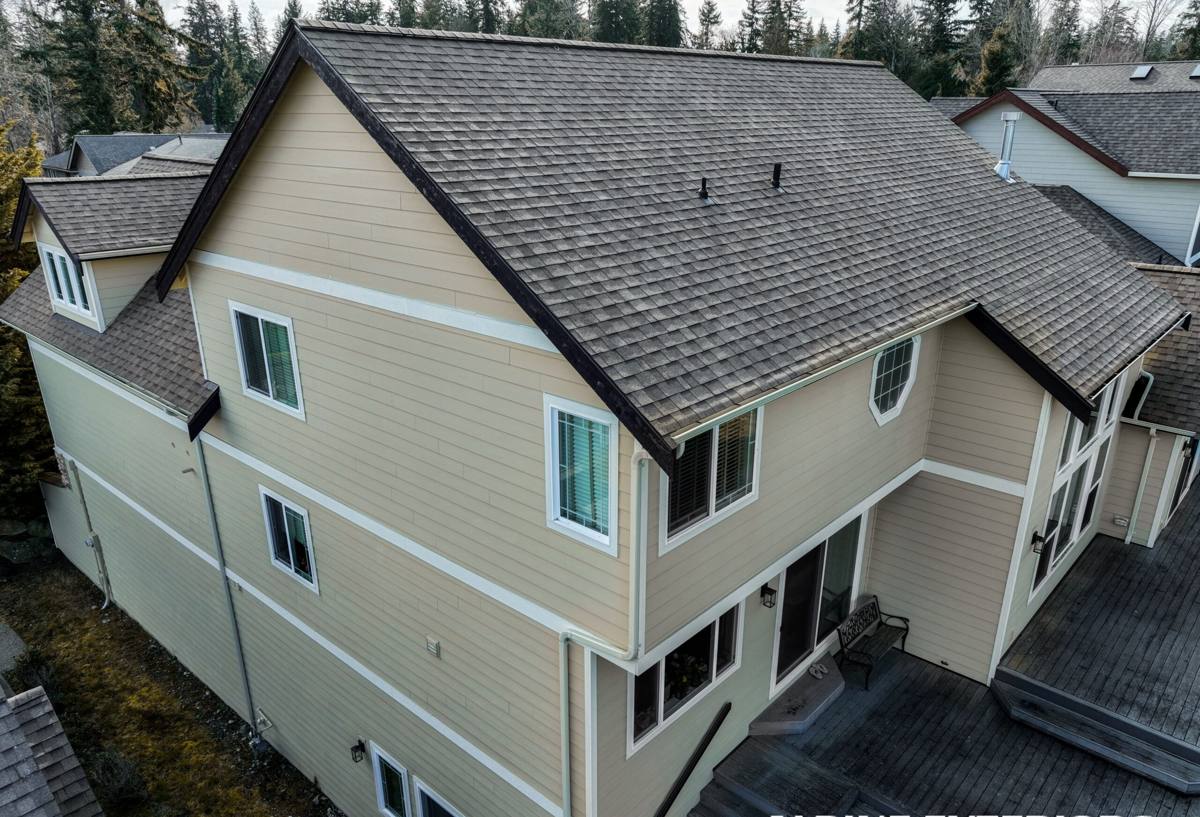
What Blaine Harbor's Climate Does to Windows
Salt Air and Corrosion
Homes close to the harbor take a steadier dose of salt-laden air than properties set further back from the water, and windows sit exposed to it on every elevation, not just the side facing the bay. Salt accelerates corrosion in exposed metal hardware — hinges, locks, balance systems, and screen frames — well before the glass or the visible frame shows any wear. A window can still look presentable while its hardware has already lost smooth operation underneath, which is often the first real sign something's going wrong.
Driving Rain and Wind-Driven Moisture
Storms coming off the water at Blaine Harbor don't arrive as simple vertical rainfall; wind pushes it sideways and drives it directly against window units, testing seals and flashing in a way calmer inland conditions rarely do. A window installed with standard flashing details built for mild weather can perform fine on an ordinary rainy day and still let moisture in the moment wind gets involved — and at a harbor location, wind-driven rain isn't the exception, it's a regular part of the weather pattern.
A Long Moss and Mildew Season
Mild temperatures combined with near-constant humidity give moss and mildew an extended growing season in this part of Whatcom County, and window sills, tracks, and frame corners are common places it takes hold first. These spots hold moisture longer than the surrounding wall surface and stay damp between rain events, giving organic growth exactly what it needs. Shaded elevations and north-facing windows are usually the first to show it, and any frame material with surface porosity or poor drainage paths gives moss something to grip onto.
Signs Your Windows Are Struggling in This Environment
Because harbor-side exposure accelerates wear, problems often show up years before a homeowner further inland would notice anything. Watch for:
- Hardware — locks, cranks, or balances — that feels stiff, gritty, or requires extra force to operate
- Visible pitting, discoloration, or rust bleed on hinges, screens, or exposed fasteners
- Fogging or condensation between panes of double- or triple-glazed units, which signals a failed seal
- Soft or discolored wood at the sill or lower frame corners
- Drafts or a noticeable temperature difference near the window on a windy day
- Moss, algae, or persistent black staining in the tracks or lower sash
- Difficulty opening or fully latching a window that used to operate smoothly
Any one of these on its own might just mean routine maintenance. Several together, especially on the water-facing side of the house, usually means the window assembly itself is losing the fight against the exposure it sits in.
Choosing the Right Window Materials for Blaine Harbor
Frame material matters more here than it would on a more sheltered inland lot, because the performance gap between a well-suited product and a poorly matched one shows up faster in salt air and sustained moisture. The main categories homeowners weigh are vinyl, fiberglass, and wood or wood-clad.
Vinyl
Vinyl frames don't rust or corrode and hold up well against moisture, which makes them a solid, budget-conscious option for harbor exposure. The trade-off is that vinyl expands and contracts more with temperature swings than fiberglass, and lower-grade vinyl can become brittle with age; a well-made, reinforced vinyl frame from a reputable line generally holds up fine here, but frame quality varies more within this category than in the others.
Fiberglass
Fiberglass frames are dimensionally stable across temperature changes, resist corrosion entirely, and hold paint or finish well over time, which suits the sustained moisture and salt exposure at Blaine Harbor particularly well. They typically cost more than vinyl, but for homeowners planning to stay put and wanting the least maintenance over the long run in this environment, that upfront cost is often the trade-off they're making deliberately.
Wood and Wood-Clad
Wood-frame and wood-clad windows offer a traditional look that some harbor-side homes are built around, and a clad exterior with a wood interior can perform well if the cladding is intact and properly sealed at every joint. The real maintenance burden shows up if the exterior finish is ever breached — bare wood exposed to this level of salt air and moisture deteriorates quickly, so these units need more diligent upkeep and inspection than vinyl or fiberglass in this specific location.
| Frame Material | Salt Air & Moisture Handling | Maintenance | Typical Cost |
|---|---|---|---|
| Vinyl (reinforced) | Good — won't corrode, quality varies by line | Low | Lower |
| Fiberglass | Excellent — stable, corrosion-proof | Low | Higher |
| Wood-clad | Good if cladding stays intact | Moderate to high | Higher |
| Bare wood | Weak against sustained salt/moisture exposure | High | Varies |
Glass and Hardware Choices That Matter Here
Glazing
Double-pane windows with a low-E coating and an argon or krypton gas fill are the practical baseline for a harbor-side home, cutting both heat loss and condensation risk. Triple-pane adds further insulation value and is worth considering on the elevations that take the brunt of the wind and weather off the water, though it comes at added cost and weight per unit.
Hardware
Standard-grade locks, hinges, and balance hardware corrode faster in this environment than most homeowners expect going in. Stainless steel or otherwise corrosion-resistant hardware costs more upfront but avoids the sticky, stiff, or seized operation that plain-finish hardware develops within a few seasons of harbor exposure.
Weatherstripping and Seals
The seal around the sash and the flashing behind the frame do as much work as the glass itself when wind-driven rain is a regular occurrence. Quality weatherstripping that compresses evenly and doesn't harden or crack in cold, damp conditions matters more here than in a drier climate, where a marginal seal might go unnoticed for years.
What a Correct Window Installation Involves
The window unit itself gets most of the attention when homeowners picture a replacement job, but at a harbor-side property the installation details around it are what actually determine whether the unit performs as intended. A correctly done job includes:
- Removal of the old unit down to the rough opening, checking the framing and sheathing underneath for hidden moisture damage before anything new goes in
- Correct flashing integration with the home's existing water-resistive barrier, so the new window ties into the wall's drainage plane rather than sitting on top of it
- Sill pan flashing to direct any moisture that does get past the frame back out, rather than letting it sit against the rough opening
- Proper shimming and squaring so the sash operates smoothly and the seal compresses evenly around the full perimeter
- Low-expansion foam and backer rod at the gap between the frame and rough opening, sized correctly rather than overfilled or left with gaps
- Exterior sealant appropriate for this climate at all frame-to-siding joints, applied to a clean, properly prepared surface
- Interior air sealing, not just exterior weatherproofing, since both sides of the assembly affect long-term performance
- A final operational check on every unit — smooth opening, full latch engagement, and even reveal all the way around
Skip any one of these steps and a window can still look correctly installed on day one. The consequences — a leak at the sill, a draft at the corner, hardware that seizes early — tend to show up a winter or two later, once the exposure has had time to find the weak point.
Our Process for a Blaine Harbor Window Project
We start with an on-site walkthrough of the windows in question, checking not just the units themselves but the condition of the framing and siding around them, since window work often surfaces issues in the surrounding wall that are worth addressing at the same time. From there we go over material options suited to the specific exposure of that elevation — a window facing straight into the prevailing weather off the water may warrant a different spec than one on a sheltered side of the same house.
We provide a written estimate covering material, labor, and a realistic timeline before any work begins, with no pressure to decide on the spot. Installation is scheduled around weather windows where possible, since a dry stretch makes for a cleaner tie-in with the existing wall assembly. Once the work is done, we walk the job with the homeowner, checking operation on every unit and confirming the site is left clean.
Cost Factors for Custom Windows at Blaine Harbor
Every project is different, but the factors that most often move the price on a Blaine Harbor window job are the same handful:
| Factor | Why It Affects Cost |
|---|---|
| Frame material chosen | Vinyl, fiberglass, and wood-clad carry different material costs |
| Number and size of openings | More units and larger openings mean more material and labor |
| Condition of the rough opening | Hidden moisture damage found during removal adds repair work |
| Glazing package | Double-pane low-E versus triple-pane changes unit cost |
| Hardware grade | Corrosion-resistant hardware costs more than standard-grade |
| Access and elevation | Upper-story or hard-to-reach openings take more time and equipment |
We go over these factors specifically for your home during the walkthrough rather than quoting off a generic price list, since the right spec for a harbor-facing window and a sheltered one on the same house can genuinely differ.
Why a Crew That Already Works Blaine Harbor Matters
Window work at a harbor-side property isn't the same job as window work a few miles inland, even within the same county. A crew that already understands how salt air, wind-driven rain, and this area's moss season interact with different frame materials and installation details isn't guessing at the right spec — they've seen how the wrong choice plays out here and how the right one holds up. That familiarity shows up in the small decisions: which hardware grade actually justifies its added cost on this exposure, which flashing detail matters most on a wind-facing wall, and which frame material earns its keep over years of harbor weather rather than just looking good on install day.
It also means realistic expectations from the start — an honest read on what a given material or installation approach will and won't hold up to here, instead of a one-size-fits-all pitch. For a homeowner making a real investment in their windows, that local track record is worth as much as the product spec sheet.
If you're weighing window options for a Blaine Harbor property, we're glad to walk the house with you and put together a straightforward, no-pressure estimate. Use the form below to get started.