 Semiahmoo Siding
 Asphalt Shingle Roofing Built for Lynden's Weather
Asphalt shingles remain the most common roofing material on homes in and around Lynden, and for good reason — installed correctly, a modern shingle roof holds up well against the wet, gray stretch of weather that defines this part of Whatcom County. But "installed correctly" is doing a lot of work in that sentence. A shingle roof that's rushed, under-vented, or missing the right underlayment in the wrong spots will show problems here faster than almost anywhere else in the state, because the climate gives it no room for error.
This page covers what a shingle roof needs to hold up in Lynden specifically, what a proper installation looks like, and how we approach the job when we're on your roof.
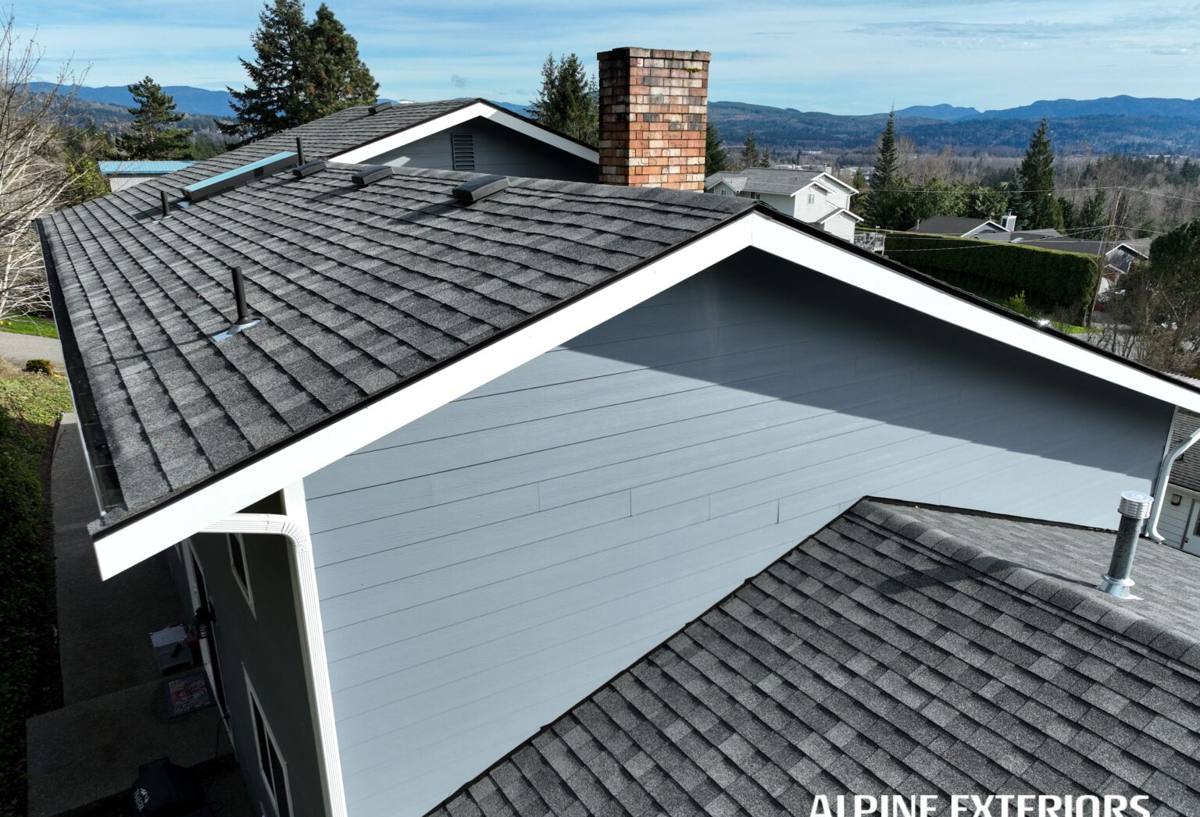
Why This Climate Is Hard on Shingle Roofs
Lynden sits in the part of Whatcom County that gets a long, wet fall-through-spring stretch, with driving rain that doesn't just fall straight down — wind off the open farmland and out of the Fraser Valley pushes it sideways into laps, valleys, and any gap in flashing. Add in a salt-tinged air current that moves through this whole corner of the county off the Strait and Semiahmoo Bay, and you get a slow, steady corrosion pressure on exposed metal fasteners and flashing that inland roofs further south rarely deal with.
Then there's moss. The combination of shade, moisture, and mild temperatures means Whatcom County roofs run a long moss and algae season — often close to nine or ten months a year where conditions stay favorable for growth. Moss doesn't just look bad. It holds water against the shingle mat, works its way under tab edges, and lifts shingles just enough to let wind-driven rain find a path underneath. A roof that would last 25+ years in a drier climate can lose real years of service life here if moss and algae aren't kept in check.
None of this means asphalt shingles are the wrong choice for Lynden — they're not. It means the installation details that get skipped on an easy job matter a lot more on a Whatcom County roof.
What a Correct Asphalt Shingle Installation Actually Includes
A shingle roof is a system, not a single product. The shingles themselves get most of the attention, but the layers underneath and around them are what actually keep water out over the long run.
The Layers Under the Shingles
- Ice and water shield at eaves, valleys, and around every penetration — the areas most likely to see standing or backed-up water during heavy rain
- Synthetic underlayment across the rest of the deck, lapped correctly so every course sheds water downhill into the one below it
- Drip edge at eaves and rakes so water leaves the roof cleanly instead of wicking back under the fascia
- Starter strip along the eaves, which gives the first course of shingles the sealant contact it needs to resist wind lift
Ventilation
An under-vented attic traps moisture, and trapped moisture is exactly what moss, mold, and premature shingle aging feed on. A correct install balances intake at the soffits with exhaust at the ridge or roof vents, sized to the attic space — not just whatever vents happen to already be there.
Flashing and Valleys
Chimneys, skylights, sidewalls, and valleys are where the majority of roof leaks actually start, not the open field of shingles. Step flashing, counter-flashing, and valley metal need to be formed and lapped correctly, then tied into the underlayment in the right order — flashing installed after the fact, caulked in as an afterthought, is one of the most common shortcuts we see on older Lynden roofs.
Choosing the Right Shingle for a Lynden Roof
Not every shingle product is built the same way, and the differences matter more in a wet, moss-prone climate than they do somewhere dry.
| Shingle Type | Typical Lifespan | Algae/Moss Resistance | Wind Rating | Best Suited For |
|---|---|---|---|---|
| 3-Tab | 15–20 years | Standard (unless algae-resistant granules specified) | Lower | Budget-driven projects, secondary structures |
| Architectural / Laminate | 25–30 years | Better with algae-resistant (AR) granules | Higher, multi-layer construction | Most Lynden homes — the standard we recommend |
| Impact-Resistant (Class 4) | 25–30+ years | Good with AR granules | Highest | Homes wanting extra durability and possible insurance credit |
For most homes in this area, we recommend architectural shingles with algae-resistant granules as a baseline, not an upgrade. The AR granules contain a copper or zinc compound that slows algae and moss growth on the shingle surface itself — it doesn't eliminate the need for roof cleaning, but it buys real time between maintenance cycles, which matters when your roof spends most of the year damp.
Our Asphalt Shingle Roofing Process
- On-site inspection. We look at the existing roof, deck condition, ventilation, flashing points, and any moss or moisture damage before quoting anything.
- Honest scope. We tell you what's actually needed — full tear-off versus repair, deck replacement if we find soft or rotted sheathing, ventilation corrections — before work starts, not as a surprise mid-job.
- Tear-off and deck check. Old material comes off down to the deck so we can see and fix what's underneath, rather than layering over hidden problems.
- Underlayment and flashing first. Ice and water shield, synthetic underlayment, drip edge, and flashing go on before a single shingle is nailed.
- Shingle installation. Correct nailing pattern, exposure, and alignment — installation errors here are what void manufacturer warranties even when the shingle itself is fine.
- Ventilation and cleanup. Ridge and intake ventilation confirmed, job site cleaned, magnetic sweep for stray nails.
- Final walkthrough. We go over the finished roof with you before we consider the job done.
Signs Your Lynden Roof Needs Attention
- Dark streaking or green-black patches on north-facing or shaded slopes
- Moss visibly growing at shingle edges, ridges, or in valleys
- Granules collecting in gutters or downspouts
- Curling, cupping, or lifted shingle edges
- Daylight visible through the attic roof deck, or damp insulation
- Water stains on interior ceilings, especially after a heavy rain event
- Soft or spongy spots when walking the roof (or visible sagging from the ground)
- Rusting or lifted flashing around chimneys, vents, or skylights
Any one of these on its own doesn't necessarily mean a full replacement — but it's worth a look before the next wet season, not after.
Keeping Moss and Algae From Taking Over
Moss prevention on an asphalt shingle roof is mostly about limiting the conditions moss needs, not fighting it after the fact.
- Trim back overhanging branches so more sun and air reach the roof surface
- Keep gutters and valleys clear so water doesn't sit against the shingle edge
- Have moss physically removed by hand or soft-wash rather than pressure-washed, which can strip granules and shorten shingle life
- Consider zinc or copper control strips near the ridge on shaded roofs, which release trace metal ions that inhibit regrowth as rain washes over them
A roof that gets this kind of light, occasional attention holds its granules, its color, and its warranty coverage far longer than one that's left alone until moss is visibly thick.
What Affects the Cost of a Lynden Roofing Project
| Factor | How It Affects Your Project |
|---|---|
| Roof size and pitch | More square footage and steeper slopes mean more material and labor time |
| Number of layers to remove | Tearing off multiple old layers costs more than a single-layer tear-off |
| Deck condition | Rotted or soft sheathing found underneath needs replacement before new shingles go down |
| Shingle grade chosen | 3-tab, architectural, and impact-resistant products carry different material costs |
| Roof complexity | Valleys, dormers, skylights, and chimneys all add flashing work and time |
| Ventilation upgrades | Adding or correcting intake/exhaust ventilation is worth pricing in if the current setup is inadequate |
We walk through these factors with you during the estimate so you understand what's driving the number, not just what the number is.
Why Hire a Crew That Already Works in Lynden
A roofer who works this part of Whatcom County regularly knows how much ice and water shield your roof actually needs, how to size ventilation for a house that stays damp most of the year, and where moss tends to build up first on a given roof orientation. That's not something you get from a national installer passing through on a storm-chasing crew, and it's not something a homeowner should have to explain to their own contractor. We do this work here, on roofs like yours, in this weather — every week.
If you're weighing a repair against a full replacement, or just want a straight answer on what your current shingle roof has left in it, we're happy to take a look. Reach out for a free, no-pressure estimate — we'll tell you what we actually see up there.