 Semiahmoo Siding
 Coastal Conditions That Are Hard on Windows in Semiahmoo Resort
Semiahmoo Resort sits out on the spit between Semiahmoo Bay and Drayton Harbor, which puts homes here closer to open water than almost anywhere else in Whatcom County. That location brings near-constant salt-laden air moving off the bay, wind-driven rain that hits window seals from angles most inland homes never deal with, and a shaded, damp climate that keeps moss and algae established on north-facing walls and sills for much of the year. Add in the freeze-thaw swings of a Pacific Northwest winter, and older wood and aluminum-frame windows out here tend to fail years before comparable windows a few miles inland.
Any window installer can hang a window in calm, dry conditions. Doing it correctly on a wind-exposed peninsula, where the assembly has to shed driving rain and resist salt corrosion for the next twenty-plus years, is a different job. That's the standard we hold ourselves to on every Semiahmoo Resort project.
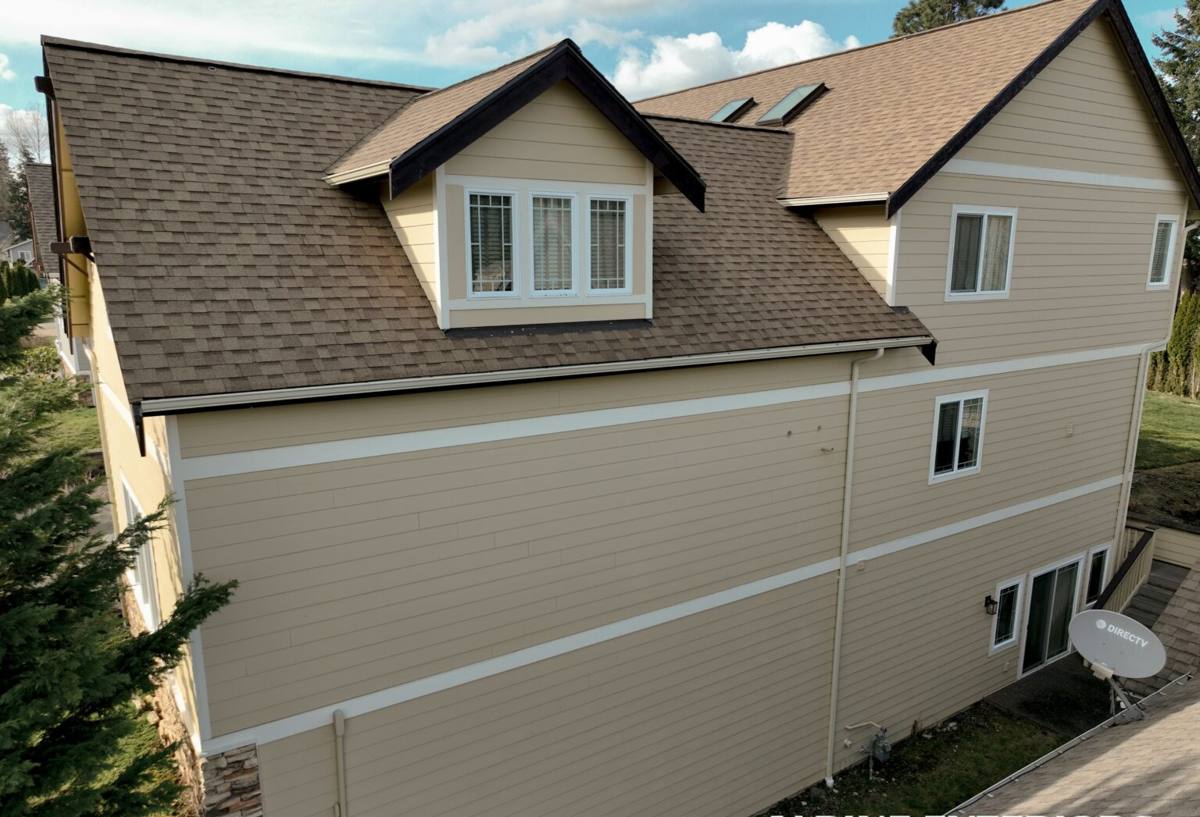
Signs Your Windows Are Losing the Battle
Coastal exposure doesn't fail windows all at once — it wears them down gradually, and the warning signs are easy to write off as "just an older house." Worth checking for:
- Fogging or a hazy film between panes (a broken seal, not something you can clean off)
- Soft, spongy, or discolored wood at the sill or lower frame corners
- A draft you can feel with your hand near the frame on a windy day
- Windows that stick, won't stay open, or take real effort to latch
- Visible gaps or cracked caulking where the frame meets the siding or trim
- Condensation forming on the inside of the glass in cool weather
- Moss, algae, or black mildew staining building up around the frame or sill
One or two of these on a single window is often repairable. Several of them, or the same symptoms across multiple windows on the same exposure, usually points to a failing installation rather than a failing window unit — and that's a distinction worth having a contractor confirm before you spend money.
What a Correct Window Installation Actually Involves
A window is only as good as what's behind it. Most of the failures we get called out to fix in this area trace back to installation shortcuts, not bad windows.
Flashing and the Weather-Resistive Barrier
Every opening needs to be flashed so that any water that gets past the exterior finish drains back out, never toward the framing. That means flashing tape or pan flashing at the sill, integrated properly with the house wrap or weather-resistive barrier above and below, shingle-style so gravity always moves water outward. On a site this exposed to wind-driven rain, skipping or shortcutting this step is the single biggest cause of rot we find behind old window openings.
Sealing and Insulation
The gap between the window frame and the rough opening gets insulated with low-expansion foam or backer rod, not just stuffed with fiberglass, and the exterior joint gets sealed with a sealant rated for the movement and moisture this climate puts it through. Caulk alone, without flashing behind it, is a temporary fix that fails within a few seasons here.
Fastening and Structural Fit
The window has to be shimmed level, plumb, and square before it's fastened, or it will bind, leak, and wear its own weatherstripping out prematurely. On a home this close to open water, we also pay attention to fastener material — the wrong screws or nails corrode and stain the finish long before the window itself gives out.
Choosing Windows Built for This Exposure
Frame material matters more here than it does a few miles inland. This is a general comparison of what we most often discuss with Semiahmoo Resort homeowners:
| Frame Material | How It Handles Salt Air & Moisture | Maintenance | Notes for This Area |
|---|---|---|---|
| Vinyl | Won't corrode or rot; performs consistently in salt air | Occasional rinsing to clear salt film | Most common choice we install here for the value and low upkeep |
| Fiberglass | Very stable, resists expansion/contraction and moisture damage | Low; holds paint and finish well over time | Good option where a homeowner wants extra durability and is willing to pay more upfront |
| Wood-clad | Interior wood warmth with an exterior shell, but the cladding seams are a moisture-entry point to watch | Higher; exterior finish and seams need regular inspection | We'll install it if that's the look a homeowner wants, but we're upfront about the added maintenance on a site this exposed |
| Aluminum (older/existing) | Conducts heat and cold, and is prone to pitting and corrosion in salt air over time | Higher; finish and hardware degrade faster near the water | Most of the aluminum windows we replace out here are original to the home and past their service life |
Beyond frame material, look for windows with a marine-grade or coastal-rated finish where available, and glass packages with a low-E coating suited to Pacific Northwest light and heat patterns rather than a desert climate spec. We'll walk through what fits your home and budget rather than pushing one product line.
Our Installation Process, Start to Finish
- Assessment and measurement — we check the existing opening for hidden rot or flashing failure before quoting anything, since that changes the scope of the job.
- Careful removal — the old window and any damaged trim come out without tearing up more siding than necessary.
- Opening prep — any soft framing gets replaced, and the opening is flashed and wrapped correctly before a new window ever goes in.
- Setting the window — shimmed level, plumb, and square, then fastened per the manufacturer's specification.
- Insulating and sealing — the gap around the frame is filled and the exterior joint is sealed with a coastal-appropriate sealant.
- Trim and finish — exterior trim and interior casing are restored to match the rest of the home.
- Final walkthrough — we open, close, and lock every window with you before we consider the job done.
Mistakes We Routinely Find on Older Semiahmoo Installs
When we're called out to fix a leak or a rotted sill, the underlying cause is usually one of the same handful of shortcuts:
- Caulk applied over a gap with no flashing behind it, so the seal is doing a job it was never designed for
- Old, deteriorated flashing reused instead of replaced during a window swap
- Insulation gaps packed too tightly, which can bow the frame and cause it to bind
- Nailing fins fastened on top of the house wrap instead of properly integrated with it, giving water a path in behind the barrier
None of these are visible from inside the house until there's already damage. It's part of why we recommend having any window installed before roughly the mid-2000s inspected, even if it still looks fine from the room.
Why Local Experience on the Spit Matters
We work in Semiahmoo Resort regularly, which means we already know how the wind behaves coming off the bay, how far salt spray travels onto north- and west-facing walls, and how the resort community's shared aesthetic standards generally run — so we can flag those considerations before a project starts instead of after. We also know to plan around weather windows here rather than the forecast for Blaine or Bellingham proper, since conditions on the spit can differ from a few miles up the road. A crew unfamiliar with the area is more likely to miss these details, and on a site this exposed, missed details are what show up as leaks two winters later.
Keeping New Windows Performing After Installation
A correctly installed window on the Semiahmoo peninsula still needs a little upkeep to get its full service life:
- Rinse accumulated salt film off frames and glass periodically, especially on water-facing sides
- Check exterior caulking once a year for cracking or separation and have it touched up before it fails
- Keep gutters and downspouts clear so runoff isn't sheeting across window heads, which feeds moss and algae growth
- Treat moss on siding and trim near windows promptly rather than letting it hold moisture against the frame
None of this is complicated, but skipping it is how a well-installed window ends up with problems a decade earlier than it should.
If your windows in Semiahmoo Resort are drafty, fogging, or just older than the rest of the house, we're happy to take a look and give you a straightforward, no-pressure estimate — no obligation, just an honest read on what your home actually needs. Use the form below to get started.