 Semiahmoo Siding
 Window Installation Built for Bellingham's Climate, Not Just Any Climate
Bellingham sits close enough to the Salish Sea that salt-laden air, near-constant winter rain, and long stretches of overcast, damp weather are just part of owning a home here. Windows take the brunt of that exposure more than almost any other part of the building envelope. A window that performs fine in a dry inland climate can fail early in Whatcom County if it wasn't installed with this specific environment in mind. That's the difference between a window installation and a correct window installation: the product matters, but the flashing, sealing, and fit around it matter just as much.
We install windows for homes in and around Bellingham regularly, which means we're used to the moisture patterns, the moss growth on north-facing walls, and the wind-driven rain that finds every gap a careless installer leaves behind. This page focuses specifically on window installation for Bellingham homes — what the climate demands, what a proper job looks like, and how to tell a solid installer from one who's just hanging glass in a frame.
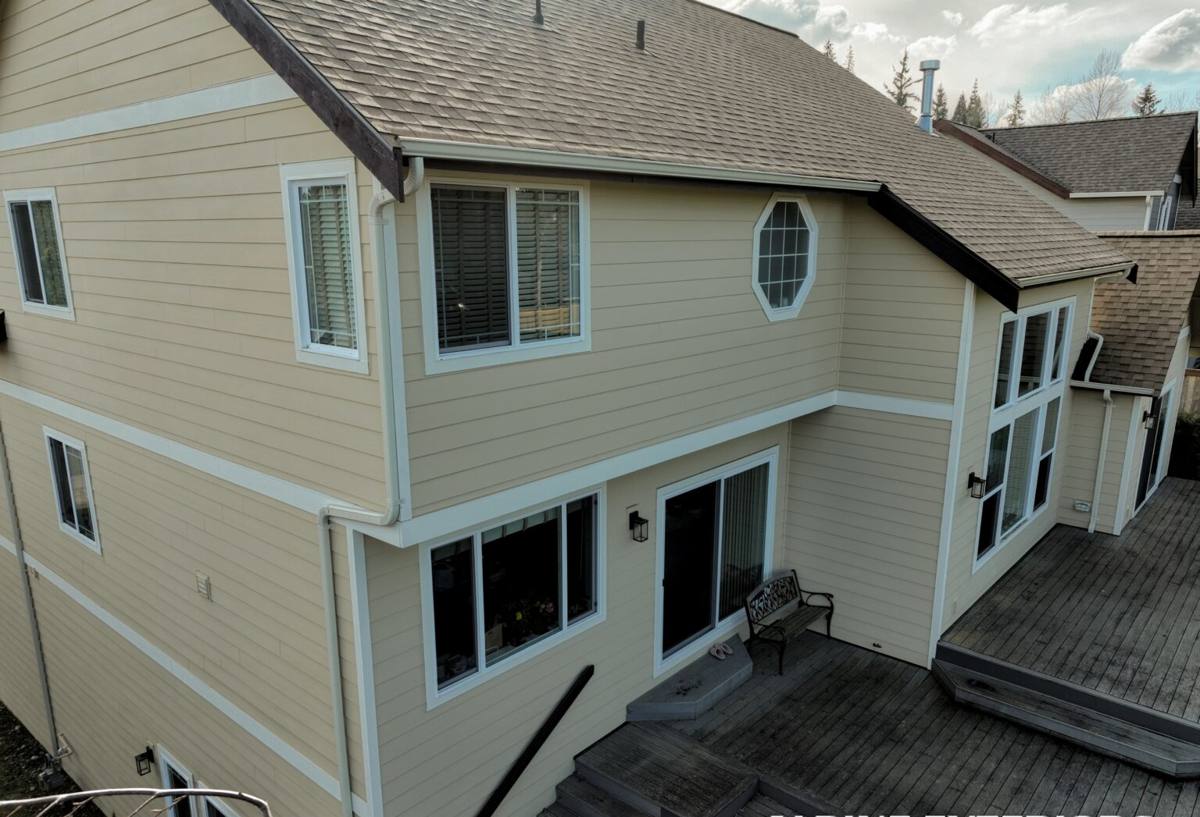
What Salt Air, Driving Rain, and Moss Season Do to Windows
Three regional conditions shape how windows age here, and understanding them helps explain why installation quality matters so much more in Bellingham than in drier parts of the state.
Salt Air and Metal Fatigue
Homes closer to Semiahmoo Bay and the surrounding shoreline deal with airborne salt that accelerates corrosion on window hardware — hinges, locks, balance mechanisms, and screen frames. Aluminum and lower-grade steel components corrode faster in this environment than they would twenty or thirty miles inland. This doesn't mean windows near the water are a bad idea; it means hardware and frame material choices should account for it from the start.
Driving Rain and Water Intrusion
Whatcom County storms often come with real wind behind the rain, which pushes water sideways into any gap around a window opening rather than letting it simply run down the glass. This is where most window failures actually start — not with the window unit itself, but with water getting behind it through poorly sealed flashing, gaps in the weather-resistive barrier, or caulk used as a substitute for proper flashing.
Moss, Algae, and Prolonged Dampness
Long stretches of cool, wet weather keep exterior surfaces damp for days at a time, which is exactly the environment moss and algae need to establish themselves. On window installations, this shows up as moss growth in sill tracks, along frame edges, and in any spot where water sits instead of draining. Over time, trapped moisture behind trim and sills contributes to wood rot and can hide problems until they're serious.
Signs a Bellingham Home Needs New Windows
Not every drafty window needs full replacement, and not every old window is a problem. Here's what we actually look for when evaluating windows on local homes.
- Visible fogging or moisture between panes of double- or triple-glazed glass, which means the seal has failed
- Soft or discolored wood on the sill, jamb, or surrounding trim
- Difficulty opening, closing, or locking windows, especially after damp weather
- Visible gaps, cracked caulk, or daylight visible around the frame from inside
- Persistent condensation on the interior glass during cold, wet months
- Noticeable drafts near the window even when it's fully closed and locked
- Moss or dark staining building up in the sill track or on exterior trim
Some of these are cosmetic or minor and can be addressed without replacement. Others — especially failed seals and soft wood — are signs that moisture has already gotten behind the window, and that's worth an honest look before it spreads to the surrounding wall framing.
What a Correct Window Installation Actually Involves
Swapping an old window for a new one in the same opening sounds simple, and sometimes it is. But a proper installation in this climate involves several steps that are easy to skip and impossible to see once the trim goes back on.
Assessing the Opening First
Before any new window goes in, the existing opening needs to be checked for rot, water staining, or damaged framing. Installing a new window into a compromised opening just seals the problem behind new material — it doesn't fix it. Any soft or damaged wood should be repaired or replaced before the new window goes in.
Flashing, Not Just Caulk
Proper flashing directs water that gets behind the siding back out and away from the window opening, layered so each piece overlaps the one below it — the same principle as roof shingles. Caulk alone is not a substitute for this; it's a secondary seal, not the primary defense against water intrusion. This is the single most common shortcut we see on poorly done installations, and it's usually invisible until a leak shows up years later.
Air Sealing and Insulation Around the Frame
The gap between the window frame and the rough opening needs to be sealed and insulated correctly — not stuffed tight with excess spray foam, which can bow the frame and cause operational problems, and not left with gaps that let air and moisture through. Getting this right affects both energy efficiency and long-term comfort near the window.
Level, Plumb, and Square
A window that isn't set level, plumb, and square will bind, won't seal tightly when closed, and will wear out its hardware faster. This is a basic step, but it's also one of the easiest to rush.
Frame Materials: What Holds Up in This Climate
Frame material choice matters more here than in a dry climate because the frame is dealing with constant moisture cycling and, closer to the water, salt exposure. Here's how the common options compare for Bellingham conditions.
| Material | Moisture & Salt Air Performance | Maintenance | Typical Lifespan |
|---|---|---|---|
| Vinyl | Good — won't rot or corrode, handles moisture well | Low | 20-30 years, condition dependent |
| Fiberglass | Very good — dimensionally stable, resists warping and corrosion | Low | Often 30+ years |
| Wood (unclad) | Requires diligent upkeep — attractive but vulnerable to rot in this climate | High | Varies widely with maintenance |
| Wood, aluminum- or fiberglass-clad | Good exterior protection with interior wood look | Moderate | 20-30+ years with proper install |
| Aluminum | Prone to corrosion near salt air; poor insulator | Moderate | Varies; hardware often fails first |
We don't push one material for every homeowner — budget, home style, and personal preference are all legitimate factors. But we're upfront about the maintenance and moisture trade-offs of each option so the decision is made with full information, not just a showroom sample.
Glass and Hardware: The Details That Matter Locally
In a climate with this much sustained damp weather, glass package and hardware quality make a real difference in day-to-day comfort and long-term durability.
Insulated Glass and U-Factor
Double- or triple-pane insulated glass with a low U-factor helps reduce condensation on the interior glass surface, which is a common complaint in homes with older single-pane or poorly sealed windows during Whatcom County's wet season. Low condensation also means less moisture sitting on the sill and frame over time.
Corrosion-Resistant Hardware
For homes closer to the water, we pay attention to lock and hinge hardware specifically — stainless steel or coated hardware holds up far better against salt air than basic mild steel components, which can start showing corrosion within a few seasons.
Drainage Paths
Every window needs a way for any water that does get into the frame to drain back out rather than pool. Weep holes and drainage channels need to be clear and functioning — something worth checking even on existing windows, since debris and old paint can block them over time.
Our Installation Process
We keep the process straightforward and communicate clearly at each stage, since replacing windows means opening up part of your home's exterior.
- On-site assessment of existing windows, openings, and any signs of moisture damage
- Honest recommendation on repair versus replacement, and material options suited to your home's exposure
- Written estimate with clear scope — no vague line items
- Removal of old windows with careful inspection of the opening before new units go in
- Repair of any damaged framing or sheathing found during removal
- Proper flashing, air sealing, and insulation around each new window
- Installation set level, plumb, and square, with hardware tested before we leave
- Exterior trim and sealant work finished to shed water correctly
- Final walkthrough so you know how to operate and maintain your new windows
Common Mistakes We See From Other Installations
Part of working in this region long-term is seeing what goes wrong after a rushed or under-scoped installation. The recurring issues are consistent: caulk used in place of proper flashing, rot in the opening that was covered up rather than repaired, spray foam overfilled around the frame causing the window to bind, and mismatched hardware that corrodes quickly near the water. None of these show up on install day — they show up a year or two later as leaks, drafts, or stuck windows. Catching these issues during a replacement, rather than repeating them, is a big part of doing this job right the first time.
Why Local Experience in Bellingham Matters
A crew that regularly works in and around Bellingham and the broader Semiahmoo area already understands how the local weather behaves against a house — which walls take the worst of the driving rain, where moss tends to establish first, and how salt air affects hardware over a few seasons. That's not something you can fully learn from a manual; it comes from doing the work here repeatedly and seeing how installations hold up over time. It also means we're not guessing at flashing details or material choices — we're applying what consistently works on homes with the same exposure as yours.
If your windows are drafty, fogging, sticking, or just old enough that you're wondering whether it's time, we're happy to take a look and give you a straightforward, no-pressure estimate. Use the form below to get started.