 Semiahmoo Siding
 Siding Repair Built for Where Semiahmoo Resort Sits
Semiahmoo Resort homes sit out on the water in a way most Whatcom County properties don't. The spit puts houses and condos right in the path of wind coming off the bay, and that changes what "siding repair" actually needs to mean here. A patch job that would hold up fine in a sheltered inland neighborhood can fail fast on a wall that takes salt spray, driving rain, and long stretches of shade and moisture every winter. We work on siding in this specific setting regularly, and the repairs we do here look different from the ones we do ten miles inland.
This page covers what Semiahmoo's coastal climate does to exterior siding, what a correct repair actually involves, and why the crew doing the work matters as much as the material going back on the wall.
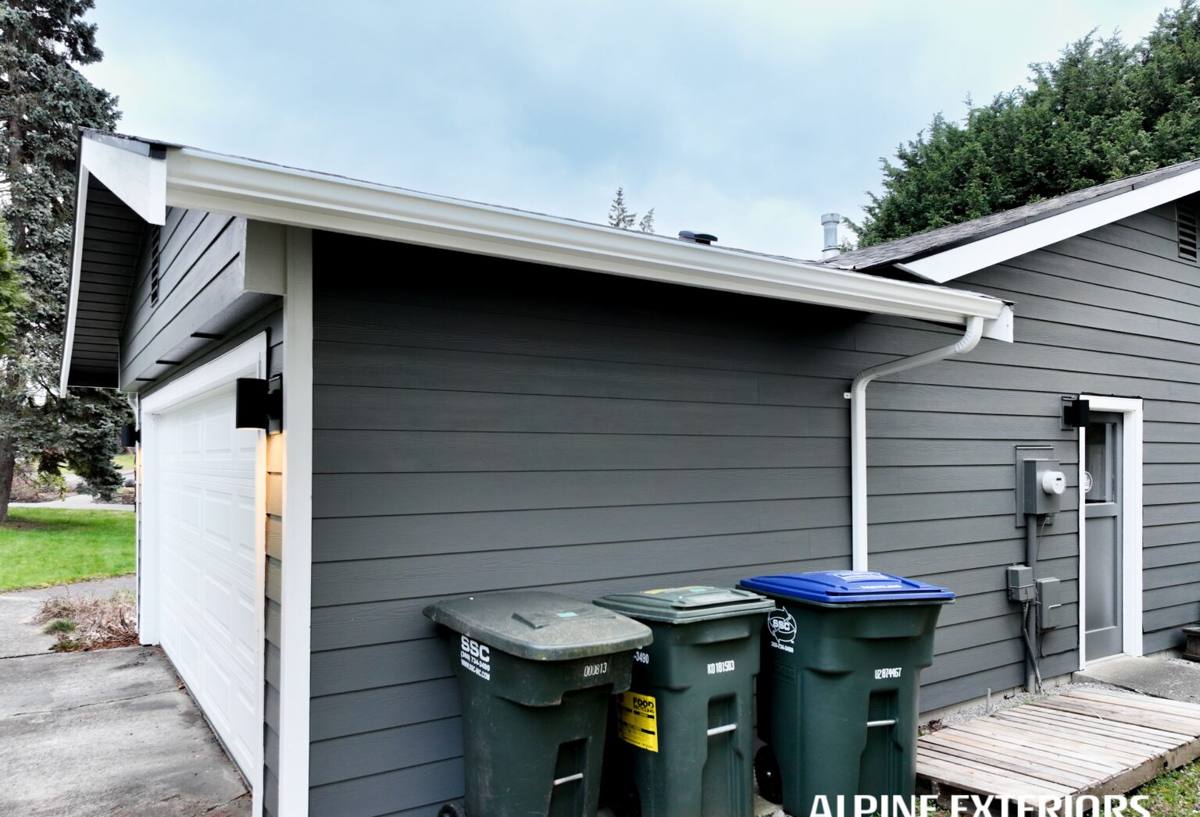
What Semiahmoo's Coastal Climate Does to Siding
Salt Air and Corrosion
Homes on or near the water pick up airborne salt that settles on siding, trim, and especially fasteners. Over years, salt exposure accelerates corrosion in anything metal — nail heads, flashing, hose bibs, light fixture mounts — and corroding fasteners are one of the most common hidden causes of siding failure we find on coastal Whatcom County homes. A repair that reuses corroded fasteners or skips corrosion-resistant hardware is a repair that fails again within a few years.
Driving Rain and Wind-Driven Moisture
Rain that falls straight down is easy for siding to shed. Rain that's being pushed sideways by wind off the water is a different problem — it finds gaps, works behind laps, and pushes moisture into seams that were never designed to handle direct pressure. Semiahmoo Resort's exposure means wind-driven rain is a bigger factor here than it is for a similar house set back from the water, and it's often the real reason a small crack or gap turns into a moisture problem behind the wall.
A Long Moss and Algae Season
Western Washington's wet season runs long, and shaded, north-facing, or tree-lined walls around Semiahmoo stay damp for extended stretches. That moisture supports moss and algae growth on siding surfaces, and on some products it goes further — trapped moisture behind growth can soften substrate over time. Even when it's purely cosmetic, moss and algae staining is usually a sign that a wall isn't drying out properly between storms, which is worth checking during any repair.
Signs a Semiahmoo Resort Home Needs Siding Repair
Most siding problems here start small and stay hidden until they're not. Homeowners along the water should watch for:
- Soft or spongy spots when you press on the siding, especially near the bottom courses or around windows
- Visible gaps, cracks, or separation at seams and corners
- Persistent moss or algae staining that comes back soon after cleaning
- Rust streaks running down from nail heads or trim fasteners
- Peeling or bubbling paint, particularly on walls facing the water or prevailing wind
- Warping, buckling, or boards that look wavy from a distance
- Soft trim around window and door casings
- Higher heating bills with no other explanation, which can point to moisture-compromised insulation behind the siding
Common Repair Scenarios We See at Semiahmoo Resort
Wind and Storm Damage
Wind off the water can crack, split, or knock loose individual boards, particularly older or lower-grade siding that's already been weakened by years of moisture exposure. These repairs need matching material and correct fastening, not just a patch over the damage.
Hidden Water Intrusion
Where wind-driven rain has been getting behind the siding — usually at a poorly flashed window, a gap at a corner, or a failed seam — the visible damage is often smaller than what's happening underneath. Sheathing and framing can take on moisture for a long time before it shows on the surface.
Moss, Algae, and Surface Staining
On walls that stay damp, growth returns quickly after a simple cleaning if the underlying moisture issue — poor drainage, lack of sun, clogged gutters directing water onto the wall — isn't addressed as part of the repair.
Caulking and Trim Failure
Caulking around windows, doors, and trim joints has a shorter service life in a marine environment than manufacturers' general guidance assumes. Failed caulking is a small-looking problem that lets in a lot of water over a wet Whatcom County winter.
What a Correct Siding Repair Actually Involves
A repair that holds up at Semiahmoo Resort has to do more than look right from the driveway. Every repair we do includes:
Checking for Hidden Moisture First
Before replacing any board, we check the sheathing and framing behind the damaged area. If there's moisture or soft wood underneath, patching over it just seals the problem in — it needs to be dried out and, if necessary, the substrate repaired before new siding goes back on.
Matching Material and Finish
Repairs should blend with the surrounding siding in profile, exposure, and color. We keep manufacturer product and color information on file so a repair years down the road can match cleanly instead of leaving a visible patch.
Correct Flashing and Fastening
Flashing gets checked and corrected at every window, door, and penetration involved in the repair — this is where wind-driven rain gets in, and it's the step that's easiest to skip if a crew is rushing. Fasteners go in with corrosion resistance appropriate for a marine environment, not standard interior-grade hardware.
Sealing and Finish Work
New caulking, touch-up paint or factory-matched finish, and a final check that water sheds away from the repair rather than toward it.
Repair or Replace? What Actually Drives That Decision
Not every problem at Semiahmoo Resort calls for full replacement, and not every problem should be patched. The honest answer depends on a few factors:
| Factor | Leans Toward Repair | Leans Toward Replacement |
|---|---|---|
| Extent of damage | Isolated to a few boards or one wall section | Widespread across multiple walls or the whole house |
| Underlying moisture | Localized, caught early, substrate still sound | Moisture has spread behind large areas of siding |
| Siding material and age | Newer, well-installed material with isolated failure | Original material is old, brittle, or a lower-grade product nearing the end of its life |
| Product being matched | Discontinued color or profile can still be reasonably matched | Product is unmatchable or was a poor original choice for this climate |
| Cost over time | Repair cost is a small fraction of replacement cost | Repeated repairs are adding up close to what replacement would cost |
We'll tell you honestly which side of that table your home falls on. A good repair is often the right call — but a home that's needed three repairs in five years is usually telling you something about the original material or installation, not just bad luck.
Why We Only Work with James Hardie Fiber Cement
When repair work opens up a wall enough that matching material becomes a real question — or when a homeowner decides it's time to stop patching and replace a section or a whole elevation — we only install James Hardie fiber cement siding. We don't install vinyl, LP SmartSide, or other fiber cement brands, and in a marine environment like Semiahmoo Resort, the reasons matter more than they would somewhere drier and more sheltered.
Fiber cement is non-combustible and doesn't feed insects, and it holds up to sustained moisture exposure without the softening or swelling that wood-based and some engineered wood products can experience over time in a wet climate. James Hardie's HZ5 product line is engineered specifically for regions like the Pacific Northwest that see extended moisture and freeze exposure — it's not a one-size-fits-all product adapted for our climate, it's built for it.
Hardie's ColorPlus factory finish is also a real advantage on a salt-air property: it's baked on under controlled conditions rather than field-applied, resists fading and chipping better than site-applied paint, and comes with its own finish warranty. For a home facing sun, salt, and wind on a regular basis, a factory finish that's engineered to hold color is worth more than it would be on a sheltered inland lot.
None of this means every other product is a bad product everywhere. It means that after years of doing repair and replacement work in exactly this kind of exposure, Hardie fiber cement is what we're willing to put our name behind and warranty.
Our Process for Semiahmoo Resort Homeowners
- Inspection. We look at the damaged area and the surrounding siding, and check behind the surface for hidden moisture — not just what's visible.
- Honest assessment. We tell you plainly whether this is a repair, and if it's not, why, and what the alternative looks like in real terms.
- Material matching. For repairs, we source matching Hardie product and finish wherever possible so the fix doesn't stand out.
- The repair itself. Substrate correction if needed, proper flashing, corrosion-resistant fasteners, and finish work — done to the same standard as new installation.
- Final check. We confirm the repair sheds water correctly and walk you through what we found and what we did.
Why a Crew That Already Works Semiahmoo Resort Matters
Siding repair on a waterfront resort property isn't identical to siding repair on a standard residential lot. Access can be tighter around shared driveways and closely spaced homes, some properties fall under community or association expectations for exterior appearance, and the exposure itself — wind, salt, and moisture — is more aggressive than a crew used to inland Whatcom County work might expect. A crew that has already worked on homes in this specific setting knows to check for salt-accelerated fastener corrosion, expects wind-driven water intrusion at flashing points, and doesn't treat a Semiahmoo Resort repair like a generic siding job with the address changed.
That local familiarity shows up in small ways that matter: knowing which fastener hardware actually holds up here, recognizing moss patterns that point to a drainage issue rather than just a cleaning need, and setting homeowner expectations honestly about how often exterior maintenance needs attention this close to the water.
If you're dealing with damaged, stained, or failing siding on a Semiahmoo Resort property, we're glad to take a look and give you a straight answer — repair or replace, no pressure either way. Fill out the form below for a free estimate.