 Semiahmoo Siding
 Board & Batten Siding in Blaine Harbor: A Style That Has to Earn Its Keep
Board & batten has a strong pull in Blaine Harbor. The vertical lines suit the mix of craftsman cottages, newer coastal builds, and waterfront-adjacent homes that make up this stretch of Whatcom County, and the profile reads as clean and substantial from the street or from the water. But in this location, board & batten isn't just a style choice — it's a siding system that has to hold up against salt-laden wind off the harbor, sideways rain, and long stretches of damp, low-light weather that keep surfaces wet far longer than they would inland. A board & batten job that looks right on day one and starts failing at year five isn't a good outcome, and it's a common one when the wrong material or the wrong details go into the wall.
This page is about doing board & batten correctly for homes in Blaine Harbor specifically — what the climate actually does to this siding profile, what a correct installation involves, and why we only build it in one material.
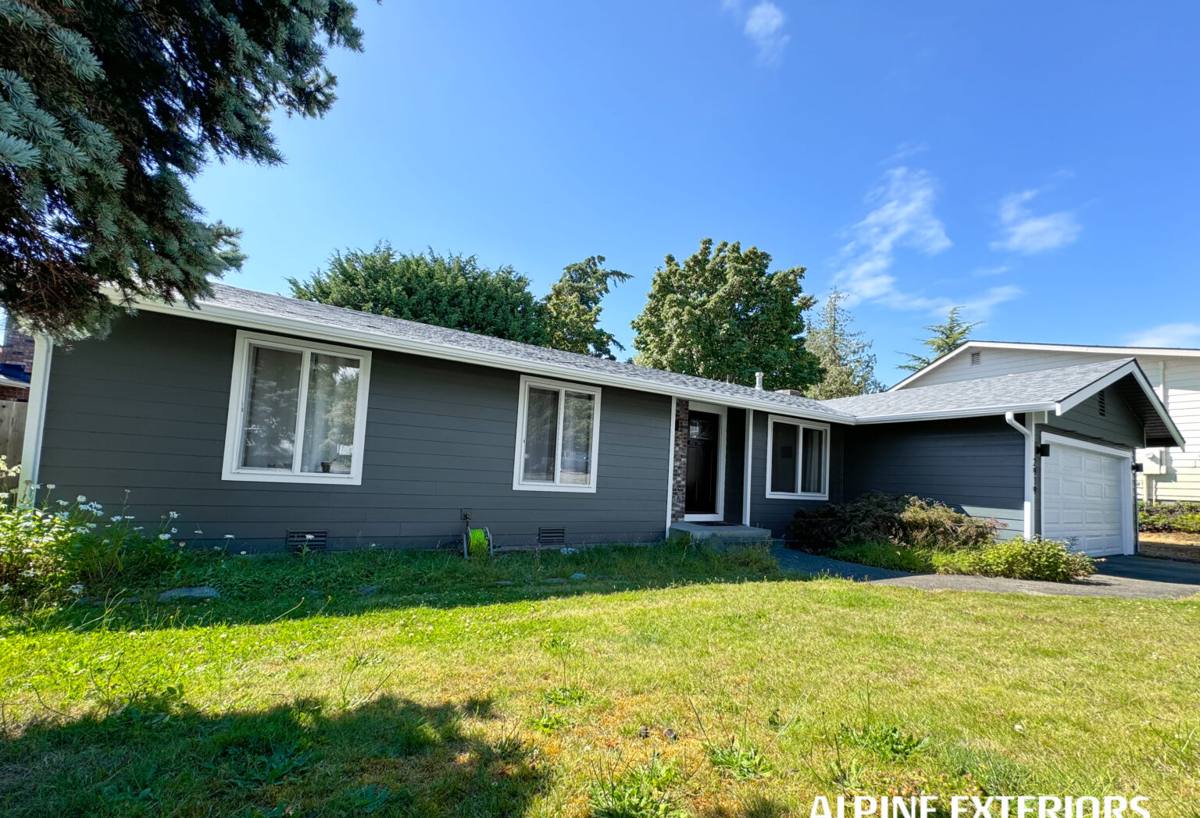
What Blaine Harbor's Climate Does to a Board & Batten Wall
Board & batten is a vertical-board siding pattern with narrow strips (battens) covering the seams between wider boards. That seam pattern is exactly where Blaine Harbor's climate does the most damage if the system isn't built right.
Salt Air
Homes near the harbor sit close enough to saltwater that airborne salt settles on siding, trim, and especially on fasteners. Salt accelerates corrosion in anything less than a fully corrosion-resistant fastener, and a rusting fastener at a batten seam eventually stains the siding and loosens its grip. Salt exposure also breaks down cheaper paint films and low-grade coatings faster than a standard exterior-paint durability rating assumes.
Driving Rain
Wind off the water doesn't just drop rain straight down — it drives it sideways into the wall, and board & batten's vertical seams are a natural path for water to find if the flashing and drainage plane behind the siding aren't handled correctly. A profile that isn't designed to shed wind-driven rain will let moisture track behind the boards and battens, where it can sit against sheathing for days between storms.
Moss and Prolonged Dampness
Blaine Harbor's moss season runs long. Shaded elevations, north-facing walls, and areas near trees or fences stay damp for extended stretches, and moss and algae take hold on any siding material that holds moisture at its surface or in its grain. Once organic growth establishes itself on a batten seam or board face, it holds even more water against the material, and the cycle accelerates.
None of this means board & batten is a bad choice here — it means the material and the install details matter more in Blaine Harbor than they would in a drier, more sheltered part of the county.
Why We Install Board & Batten Only in James Hardie Fiber Cement
Board & batten can be built in several materials — engineered wood, vinyl, real wood, or fiber cement — and each behaves differently once salt air, driving rain, and moss season are part of the equation. Our standard for this profile, in Blaine Harbor and everywhere else we work, is James Hardie fiber cement. That's not a brand preference; it's a decision based on how each material actually performs against this specific climate.
Fiber cement's core advantage here
James Hardie fiber cement is a cement-and-cellulose composite. It does not have the wood grain that lets moisture wick along fibers, and it is not petroleum-based plastic that expands, contracts, and can distort under heat and cold. It holds a factory-applied ColorPlus finish that's baked on and warranted against fading and peeling far longer than a field-applied paint job on wood-based battens typically holds up — which matters directly against salt-air paint breakdown and moss staining.
What we see with the alternatives
Engineered wood board & batten relies on a resin-treated wood substrate that is more moisture-tolerant than raw wood, but it is still a wood-based product — edges and cut ends need diligent sealing, and once moisture gets past that seal, swelling and softening follow. Real wood board & batten is beautiful but demands a repainting and caulking schedule that most homeowners can't keep up with in a marine climate, and it's the material most vulnerable to the sustained dampness of moss season. Vinyl board & batten is low-maintenance in the sense that it doesn't need paint, but it's a thin, flexible material that can warp in temperature swings and shows impact damage in a way fiber cement does not; its seams also rely heavily on the installer's skill to stay weathertight, with less margin for error than fiber cement's more rigid panel system.
We don't say any of these materials are junk — they're reasonable products used correctly in the right setting. We've simply made a standard, based on years of seeing what holds up on homes exposed to salt air and sustained rain, and that standard is James Hardie.
What Correct Board & Batten Installation Actually Involves
The material is half the equation. The other half is installation detail, and this is where board & batten jobs most often go wrong — even with a good material.
- Drainage plane behind the siding: A weather-resistive barrier and, ideally, a rainscreen gap so water that gets past the siding face can drain and the wall can dry rather than trap moisture.
- Flashing at every horizontal transition: Window heads, door heads, roof-to-wall intersections, and any trim board need flashing detail sized for wind-driven rain, not just standard-rainfall assumptions.
- Correct board and batten spacing: Gaps sized to manufacturer specification so the boards can expand and contract with temperature and humidity without binding, cracking, or opening a gap that lets water track behind the batten.
- Corrosion-resistant fasteners throughout: Given the salt air off the harbor, fastener grade isn't optional — the wrong fastener rusts, stains the siding, and eventually loses its hold years before the siding itself would fail.
- Factory-cut and factory-primed edges wherever possible: Field cuts need to be sealed per manufacturer spec so no raw, unprotected edge is left exposed to rain.
- Clearance from grade, decks, and roof lines: Board & batten that runs too close to soil, hardscape, or a lower roof plane invites splash-back moisture and debris that holds dampness against the base of the wall — exactly what feeds moss growth.
Skip any one of these and the siding can still look right for a season or two before the climate finds the gap.
Board & Batten Material Comparison for a Marine Climate
| Factor | James Hardie Fiber Cement | Engineered Wood | Vinyl |
|---|---|---|---|
| Salt air / corrosion behavior | Non-combustible composite, doesn't corrode; performance depends on fastener grade used | Resin-treated but wood-based; edge sealing critical near salt air | Doesn't corrode, but UV and salt exposure can dull the finish over time |
| Driving rain / moisture resistance | Dimensionally stable, low water absorption when factory-finished | Moisture-resistant substrate, but vulnerable once seals fail | Sheds water well at the face, but seams depend heavily on install quality |
| Moss and organic growth resistance | Factory finish resists staining; smooth surface sheds moss more easily than raw wood grain | Wood grain can hold moisture and support growth if coating wears | Smooth surface, but can trap moisture behind panels if ventilation is poor |
| Finish durability | Factory-baked ColorPlus finish, long warranted color/finish life | Field-applied paint typically needed sooner | Color molded through material; can fade unevenly over decades |
| Repainting/maintenance cycle | Long interval between repaints when maintained per warranty | Shorter repaint cycle, especially on cut edges and battens | No painting, but limited repair options if a panel is damaged |
How Our Process Works for Blaine Harbor Homes
Assessment
We start by walking the exterior and identifying the elevations that take the worst of the weather — usually the sides facing the harbor and any shaded, slow-to-dry walls — since those areas get the most attention in the flashing and drainage detail.
Removal and sheathing check
Old siding comes off and we inspect the sheathing underneath for any moisture damage before anything new goes up. In a climate like this, covering over a compromised wall just locks the problem in.
Weather barrier and drainage plane
We install the water-resistive barrier and drainage detail correctly the first time, since this layer does most of the real work protecting the wall long after the siding itself is up.
Board & batten installation to manufacturer spec
Boards, battens, and all flashing go in following James Hardie's installation requirements for spacing, fastening, and clearance — the details that keep the warranty valid and the wall dry.
Final inspection and cleanup
We walk the finished job checking caulking, fastener pattern, and clearances before we consider it done, and we clean the site thoroughly.
Simple Maintenance for Board & Batten in a Marine Climate
Fiber cement board & batten is genuinely low-maintenance compared to wood, but "low-maintenance" in Blaine Harbor still means a bit of seasonal attention:
- Rinse the siding periodically, especially shaded and north-facing walls, to keep salt residue and early moss growth from taking hold.
- Keep gutters and downspouts clear so roof runoff isn't dumping extra water down a wall section.
- Trim back vegetation and shrubs that hold moisture against the lower courses of siding.
- Check caulking at window and door trim yearly and have any cracked or missing caulk redone before wet season.
- Watch for any early moss or algae film and clean it off before it establishes, rather than after it's visibly growing.
Why Local Experience in Blaine Harbor Matters
General siding knowledge isn't quite the same as knowing how a specific stretch of coastline behaves. A crew that regularly works Blaine Harbor knows which elevations take the worst wind-driven rain, which yards hold dampness longest into spring, and where salt exposure is heaviest versus where it tapers off a block or two inland. That local pattern recognition shapes real decisions — where to add extra flashing attention, which walls need the most careful drainage detailing, and where moss pressure is going to be worst year over year. It's the difference between a board & batten installation built to a spec sheet and one built for the actual conditions on your property.
Get a Straight Answer for Your Home
If you're weighing board & batten siding for a home in Blaine Harbor, we're glad to take a look and give you a straightforward assessment — no pressure, no sales script. Request a free estimate below and we'll walk your property, talk through what your specific exposure calls for, and give you honest numbers.