 Semiahmoo Siding
 Storm Damage Roof Repair Built for Sumas Conditions
Sumas sits in a part of Whatcom County that takes weather seriously. The lowland along the Nooksack River funnels wind and rain differently than the coastal side of the county, and homeowners here deal with a mix of wind events, sustained heavy rain, and a moss season that runs longer than most people expect. When a storm damages a roof in Sumas, the fix isn't just about replacing a few shingles — it's about understanding how this specific area's weather works and repairing the roof so it holds up the next time conditions turn.
This page covers what storm damage actually looks like on a Sumas roof, what a correct repair involves, and how we approach the work when we're called out after a wind or rain event.
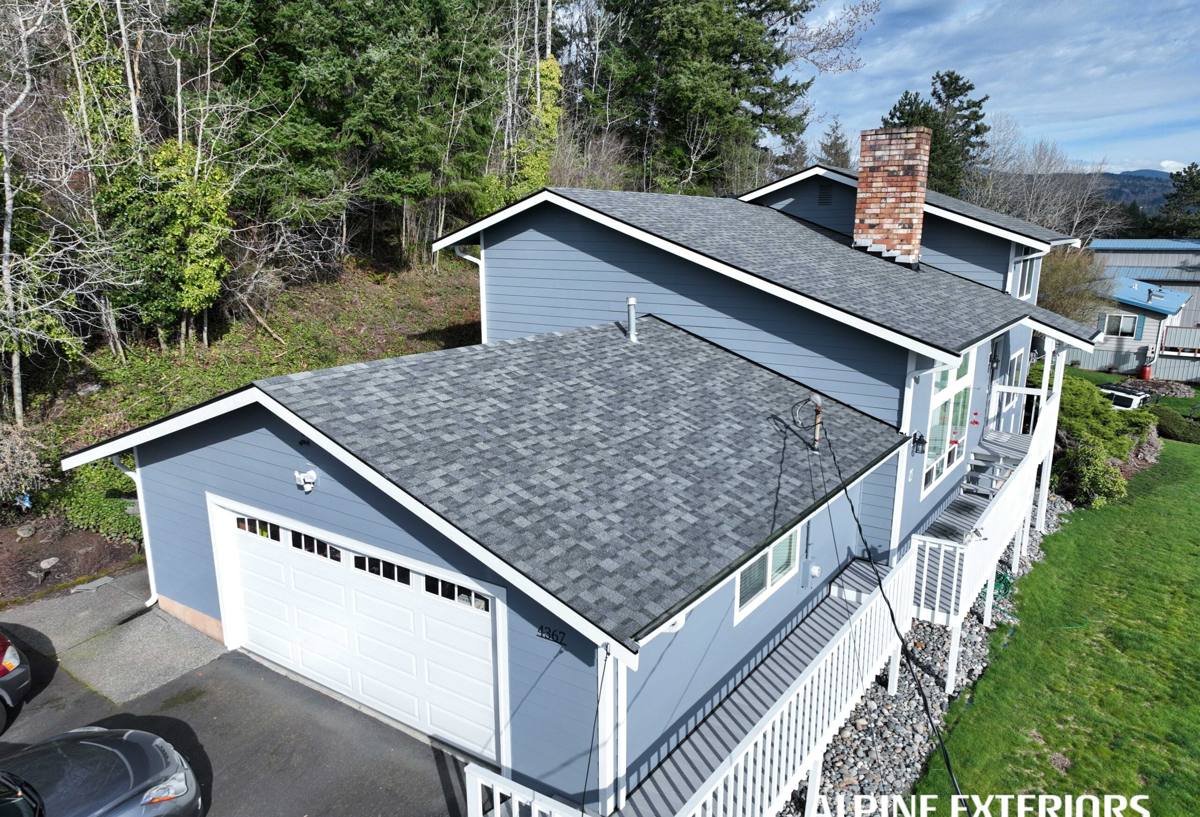
Why Storm Damage Hits Sumas Roofs the Way It Does
Sumas sits near the gap where the Fraser Valley narrows between the Cascade foothills, and that geography matters for roofs. Outflow wind events that funnel through this corridor can hit harder and more suddenly than the steadier coastal wind pattern homeowners see closer to Semiahmoo Bay. A roof that's been fine for years can take real damage in a single wind event if a section of flashing, ridge cap, or shingle edge was already starting to lift.
Add to that the region's driving rain — storms that come in sideways rather than straight down — and you get wind-driven water finding its way under shingles, around vent boots, and behind flashing that would stay dry in a calmer rain. Then there's the long moss season. Whatcom County's mild, wet winters give moss and algae months to establish themselves on north-facing slopes and shaded sections of roof, and a moss mat holds moisture against the roofing material and decking long after a storm has passed.
None of this is unique to any one house — it's the baseline reality for roofs in this part of the county. What it means practically is that storm damage here is rarely just "a shingle blew off." It's usually a combination of wind stress, water intrusion, and pre-existing moss or moisture issues that a storm exposes.
What Actually Counts as Storm Damage
Signs You Can See From the Ground
- Missing, torn, or curled shingles, especially on the side of the roof that faces prevailing wind
- Shingles or granules collected in gutters or on the ground after a storm
- Visibly lifted or bent flashing around chimneys, vents, or roof-to-wall transitions
- Sagging or discoloration on the ceiling inside the home, even a small water stain
- Debris, broken branches, or heavy moss buildup sitting on the roof surface
Damage That Hides Until It Leaks
Some of the most costly storm damage isn't visible from the driveway. Wind can loosen a shingle just enough to break its seal without tearing it off, which leaves it vulnerable to the next rain event even though the roof looks intact. Flashing can shift slightly out of place around a vent pipe or skylight and not leak until water pressure builds during a heavy downpour. This is why a storm damage inspection needs to include a physical walk of the roof, not just a look from the ground.
What a Correct Storm Repair Actually Involves
A repair that only addresses the obvious damage often leaves the underlying problem in place. When we assess storm damage, we're looking at three layers, not just the surface:
The Roofing Material
This is the shingle, cap, or panel that took the visible hit. Replacing it correctly means matching the existing material as closely as possible and integrating the new piece into the surrounding courses so water sheds properly, not just covering the gap.
The Underlayment and Flashing
If wind or water got past the shingle layer, the underlayment and flashing underneath need to be checked. A shingle repair over compromised flashing or torn underlayment is a temporary fix that will leak again.
The Decking
If water has been getting in for any length of time — which happens more often than homeowners expect, especially with moss holding moisture against the roof — the plywood or board decking underneath can be soft or delaminated. Any decking issues need to be addressed before new roofing goes back on, or the repair won't hold.
Temporary vs. Permanent Repair
In some cases, especially right after a storm, we'll put a temporary weatherproof cover in place to stop active leaking while a permanent repair is scheduled and, if applicable, an insurance claim is documented. A temporary fix is not a substitute for the permanent repair — it buys time, nothing more.
Our Process for Sumas Storm Repairs
- Inspection. We walk the roof (weather permitting) and document the damage with photos, including areas that may not be visibly damaged but are at risk.
- Assessment and plan. We explain what's actually wrong, what needs to be repaired versus monitored, and give you a clear scope before any work starts.
- Documentation. If you're filing an insurance claim, we provide the photo and written documentation your adjuster will need.
- Repair. We match materials as closely as possible, address the roofing, flashing, and decking as needed, and make sure the repaired section ties in properly with the rest of the roof.
- Cleanup and final check. We clear debris, check gutters and downspouts for storm debris that can cause backup, and do a final walk-through with you.
Matching the Repair Approach to the Damage
Not every storm-damaged roof needs the same fix. The table below covers common scenarios we see after storms in this area and how the repair approach differs.
| Situation | Typical Cause | What the Repair Involves | General Cost Factor |
|---|---|---|---|
| Isolated wind-lifted or missing shingles | Wind gusts breaking the shingle seal | Remove and replace affected shingles, reseal surrounding courses | Lower — localized labor and materials |
| Flashing failure at a vent, chimney, or wall | Wind flexing metal flashing or breaking its seal | Remove surrounding shingles, replace or re-seal flashing, reinstall | Moderate — more disassembly involved |
| Widespread shingle or granule loss | Sustained high wind or impact from falling debris | Larger section replacement, decking inspection | Higher — depends on square footage affected |
| Soft or damaged decking under a leak | Prolonged moisture intrusion, often moss-related | Decking replacement before new roofing goes back on | Higher — structural work, not just surface |
These are general categories, not quotes. Every roof is different, and the only way to know what a specific repair will actually cost is with an on-site look.
Storm Damage and Insurance Claims
Wind and storm damage is often covered under a standard homeowner's policy, but coverage details vary by carrier and policy. Our role is to document what we find honestly and thoroughly — clear photos, an accurate description of the damage, and a repair scope that reflects what's actually needed. We don't inflate damage to pad a claim, and we don't downplay it to make a sale. If you're working with an adjuster, we're glad to walk the roof with them or provide documentation directly.
Moss, Salt Air, and Long-Term Roof Health in Sumas
Storm repair and roof maintenance are connected. A roof that's carrying a heavy moss mat going into storm season is more vulnerable — moss holds water against the shingles and decking, and it adds weight and surface area for wind to grab. Salt air moving inland from the Semiahmoo and Drayton Harbor area can also accelerate wear on metal flashing and fasteners over time, even this far from the immediate shoreline.
When we repair storm damage, we'll flag anything we see that's setting the roof up for the next problem — heavy moss growth, clogged gutters, deteriorating flashing elsewhere on the roof — so you can decide whether to address it now or plan for it. We'd rather tell you what we see than let it turn into a bigger repair later.
What to Do Right After a Storm
- Check your attic or top-floor ceilings for water stains or drips as soon as it's safe to do so
- Look at your yard and gutters for shingle pieces or granules, which often indicate roof damage before you can see it directly
- Avoid getting on the roof yourself, especially on wet or steep sections — this is exactly the situation ladder and fall accidents happen
- Take photos of any visible damage from the ground for your own records
- Call for an inspection before the next rain event, even if the damage looks minor
- Don't sign anything with a storm-chasing contractor who shows up unannounced offering an immediate deal — get a second opinion from a local crew first
Why Hire a Crew That Already Works in Sumas
A contractor who works this part of Whatcom County regularly knows what to look for here specifically — where wind tends to do the most damage on a typical roof orientation, how long moss takes to become a real problem in this climate, and what a storm-driven leak usually looks like once it's tracked back to its source. That familiarity means a faster, more accurate inspection and a repair plan based on what actually works here, not a generic approach.
It also means someone who can respond promptly after a storm, when a tarped roof or an active leak is a time-sensitive problem, not a job that can wait weeks for an out-of-area crew to schedule a visit.
If your roof took damage in a recent storm — or you're not sure and just want a second set of eyes before the next one hits — we're happy to come take a look. Fill out the form below for a free, no-pressure estimate.