 Semiahmoo Siding
 Storm Damage Roof Repair for California Creek
Homes around California Creek sit close to Semiahmoo Bay, tucked in among mature evergreens and low, moisture-holding terrain. That combination is hard on a roof in a way that homes further inland rarely experience. Salt-laden air off the bay accelerates corrosion on fasteners and flashing, wind funneling off the water can lift shingles and shift ridge caps, and the shade from surrounding trees keeps roof surfaces damp long after a storm has passed. When wind and rain do damage here, it rarely shows up as a single obvious hole — it's usually a handful of smaller issues that add up to a leak weeks later.
This page is specifically about storm damage roof repair for California Creek properties — what to look for after a blow, what a repair actually needs to include in this climate, and how our process works from the first call to the final walk-through.
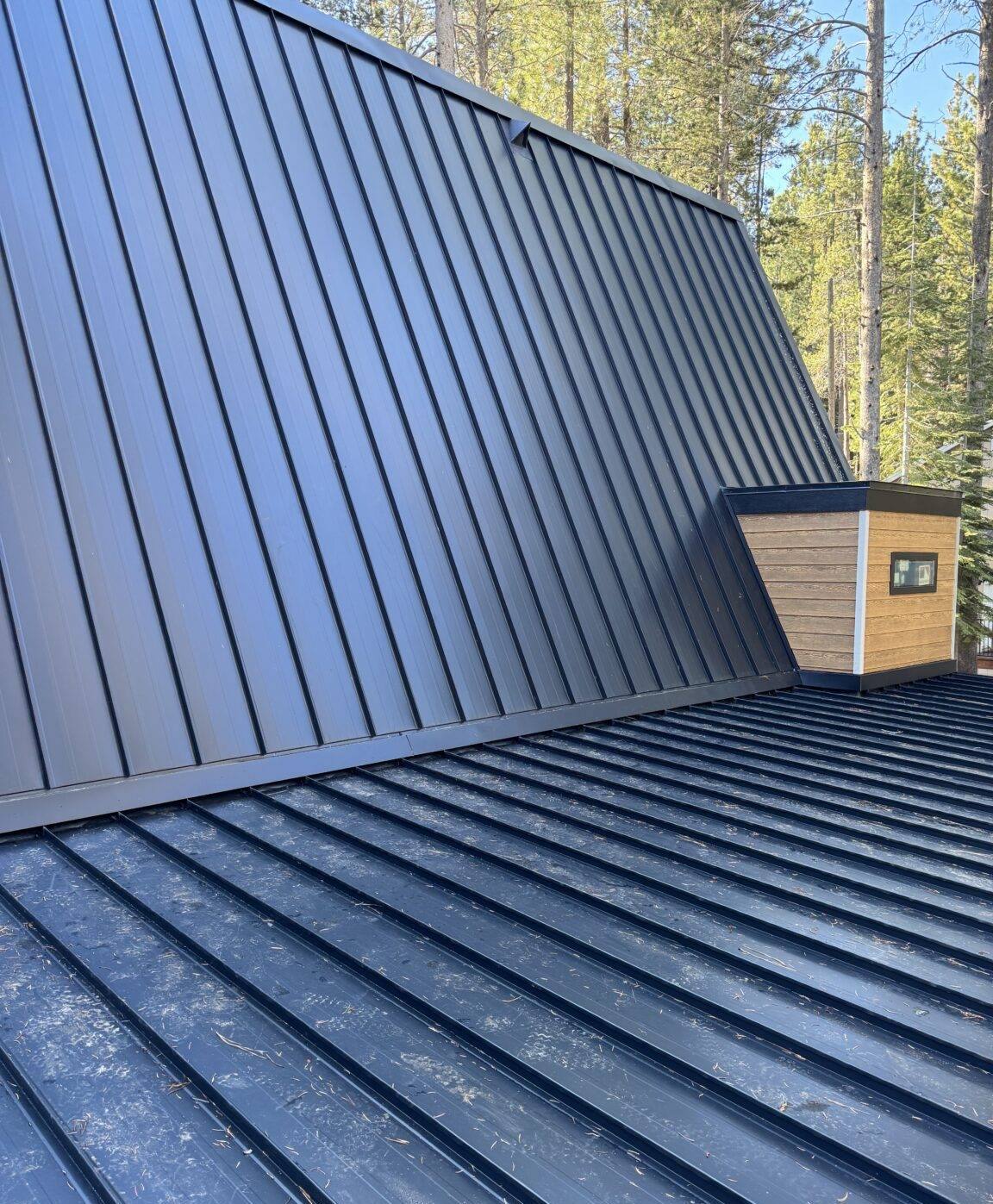
What Whatcom County Storms Do to a Roof
Whatcom County gets a steady run of fall and winter storm systems off the Pacific, and the shoreline exposure around Semiahmoo means California Creek homes catch more wind-driven rain than properties set back from the water. The damage patterns we see most often here are:
- Wind-lifted shingles along ridges, hips, and roof edges where uplift pressure is highest.
- Driving rain intrusion at flashing points — chimneys, skylights, wall-to-roof transitions — where wind pushes water sideways instead of letting it run off.
- Debris impact from branches and cones dropping out of the tree cover common around the creek and bay-side lots.
- Moss and algae growth that takes hold fast in shaded, damp sections and works shingle edges loose over a full season, not just after one storm.
- Fastener and flashing corrosion from salt air, which weakens the metal long before it looks obviously rusted.
Individually, none of these look dramatic. Together, over a wet Whatcom County winter, they're exactly how a roof starts leaking without ever suffering a single dramatic event.
Signs Your Roof Has Storm Damage
Most storm damage isn't visible from the ground, and it's not always obvious from inside the attic right away either. After any significant wind or rain event, it's worth checking for:
- Shingles that look lifted, curled, or creased at the tab, even if none are missing outright
- Granules collecting in gutters or at downspout outlets — a sign of shingle surface wear from wind abrasion
- Bent, lifted, or missing flashing around chimneys, vents, or skylights
- New or spreading moss patches, especially on north-facing or shaded slopes
- Water stains on ceilings or in the attic, particularly near exterior walls or roof penetrations
- Soft or spongy spots when walking the roof (a sign moisture has already reached the decking)
- Gutters pulling away from the fascia or sagging after heavy rain
If you notice any of these after a storm, the right move is a roof-level inspection, not just a look from the driveway. Damage that's caught early is almost always a repair. Damage that sits through a second or third storm often turns into a decking or interior repair too.
Why Waiting Costs More Here Specifically
In a drier climate, a small opening in the roofing system might sit for months without consequence. Near California Creek, with damp shaded ground and near-constant humidity off the bay, a compromised shingle or flashing point stays wet far longer between storms. That extended wet time is what turns a five-minute flashing fix into a full sheathing repair — it's the local climate, more than the severity of any one storm, that makes fast follow-up worth it here.
What a Correct Storm Damage Repair Actually Involves
A proper storm damage repair is more than swapping out the shingles that are obviously missing. Here's what we check and address on every job:
Full Roof-Level Inspection
We walk the roof rather than relying on ground or drone photos alone for a repair scope. Wind and impact damage is frequently only visible up close — a lifted tab or cracked shingle can be invisible from the yard but is exactly where the next leak will start.
Flashing and Transition Points
Because driving rain off the bay pushes water sideways, flashing at chimneys, skylights, and wall intersections gets more stress here than on a typical inland roof. We check every transition point for gaps, corrosion, and proper lap direction — not just the section where damage was reported.
Underlayment and Decking
If water has been getting past the shingle layer, the underlayment and decking underneath need to be checked, not just covered back over. We open up the repair area enough to confirm the decking is dry and sound before closing it back up. Skipping this step is the single most common shortcut in storm repairs, and it's the reason a "fixed" roof leaks again the following winter.
Matching Materials Properly
Shingle repairs need to match not just color but profile and exposure to lay flat and shed water correctly. A mismatched patch can look fine and still trap water at the seams.
Moss and Debris Clearing
Given how fast moss establishes in the shaded, damp conditions around California Creek, any repair we do includes clearing moss and organic debris from the surrounding area — leaving it in place undermines the repair from day one.
Our Process, Start to Finish
- Call and initial details. We ask what you noticed and when, so we know what to focus on before we ever get on the roof.
- On-site inspection. We walk the roof, check the attic where accessible, and document what we find with photos.
- Written scope and estimate. You get a clear explanation of what's damaged, what needs repair versus what's just cosmetic, and a straightforward price — no vague allowances.
- Insurance documentation, if needed. If you're filing a claim, we provide the photos and written scope your adjuster will need. We don't handle the claim for you, but we make sure the paperwork reflects what's actually wrong.
- Repair work. We open up affected areas fully, confirm the decking underneath is sound, replace what's needed, and reseal and flash every transition point we touch.
- Cleanup and walk-through. Debris and old materials are hauled off, and we walk the completed repair with you before we consider the job done.
Repair vs. Replacement — What Actually Decides It
Not every storm-damaged roof needs full replacement, and not every roof can be reasonably patched. The honest answer depends on a few concrete factors:
| Factor | Favors Repair | Favors Replacement |
|---|---|---|
| Age of roof | Under roughly 10-12 years, most shingle types | Nearing or past manufacturer's expected service life |
| Extent of damage | Localized to one slope or section | Spread across multiple slopes or the whole roof |
| Decking condition | Dry, sound sheathing under the damaged area | Soft, delaminated, or repeatedly wet decking |
| Moss/algae history | Manageable with cleaning and localized treatment | Long-term growth has degraded shingle granules broadly |
| Insurance scope | Adjuster approves a defined repair area | Adjuster's scope covers full roof replacement |
We'll tell you honestly which category your roof falls into. A repair that's genuinely appropriate is the right call financially and practically — there's no reason to push a full replacement on a roof that doesn't need one.
Materials and Methods We Use in This Climate
Given the salt air and moisture exposure around California Creek, a few details matter more here than they would inland:
- Corrosion-resistant fasteners and flashing — standard-grade metal degrades faster this close to the bay, so we use materials rated for coastal exposure on repairs.
- Ice-and-water shield at vulnerable transitions — even though hard freezes aren't the main concern here, this membrane also protects against the wind-driven rain intrusion that's common in this area.
- Proper ventilation checks — trapped moisture under the deck accelerates decking rot in a humid, shaded environment, so we check attic ventilation as part of any repair that opens up the roof structure.
- Algae-resistant shingle options when full sections need replacing, which slow (not eliminate) the moss and algae growth that's constant in this setting.
Why Local Experience in California Creek Matters
A crew that hasn't worked this specific stretch of Whatcom County coastline can miss things that aren't obvious from a standard inspection checklist — how fast moss reclaims a north-facing slope here, which flashing details actually hold up against wind off the bay, or how much extra drying time damp, shaded decking needs before it's safe to close back up. We work roofs in this area regularly, and that familiarity shows up in fewer callbacks and repairs that hold through the next storm season, not just through the next dry week.
Insurance Claims for Storm Damage
Most storm damage claims come down to clear documentation: what was damaged, when, and what it will reasonably cost to repair correctly. We provide detailed photos and a written scope that describes the damage in plain terms, which gives you and your adjuster something concrete to work from. We're not a public adjuster and won't promise a claim outcome — but a well-documented, honestly scoped repair estimate is the single biggest factor in getting a fair claim result.
Getting Started
If a recent storm has you wondering whether your California Creek roof took damage, it's worth getting a professional look before the next system rolls through. We offer free, no-pressure estimates — use the form below to tell us what you're seeing, and we'll schedule a straightforward inspection.