 Semiahmoo Siding
 Roof Repair Built for Wiser Lake's Climate
Wiser Lake sits inland in Whatcom County, but it doesn't escape what the Pacific Northwest throws at a roof. Homes here deal with the same driving rain and long, gray wet season as the rest of the region, plus the extra moisture that comes from being close to open water and surrounded by mature trees. Add in the salt-laden air that moves through Whatcom County off the Salish Sea, and you've got a combination that ages roofing materials faster than homeowners expect. A roof that would hold up fine in a drier climate can develop real problems here in half the time if it isn't repaired correctly the first time.
We repair roofs for homes around Wiser Lake and the broader Semiahmoo area, and the calls we get follow a pattern: a small leak that got ignored for a season, moss that was never cleared, or a patch job from years back that was never done right. Most of what we do isn't complicated once it's diagnosed correctly — but diagnosing it correctly is the part that gets skipped.
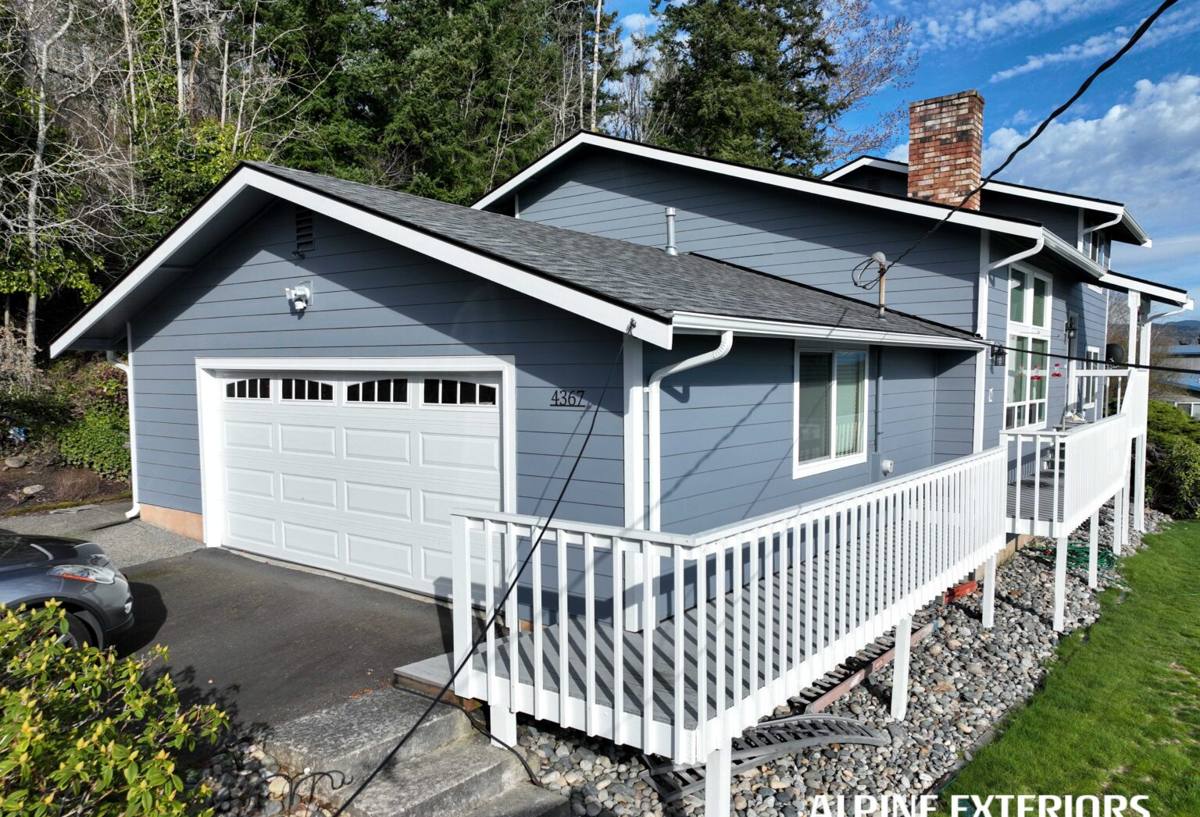
What Driving Rain and Salt Air Do to a Roof
Rain alone isn't the problem — it's rain driven sideways by wind, which finds every gap in flashing, every lifted shingle tab, and every spot where a fastener has backed out. Over time, wind-driven rain pushes water uphill under roofing materials in ways that gravity-fed water never would. That's why leaks so often show up nowhere near where the actual damage is; water travels along the roof deck before it finds a way through the ceiling.
Salt air adds a slower, quieter kind of wear. It accelerates corrosion on exposed metal — nail heads, flashing, vent caps, and gutter hardware all break down faster in a coastal-influenced climate than they would further inland. Once a fastener corrodes and loosens, the seal around it fails, and that's an entry point for water that wasn't there when the roof was installed. This is a big part of why we inspect metal components as carefully as we inspect the shingles or panels themselves.
Why This Matters for a Repair, Not Just a Replacement
A repair only holds if it accounts for how the damage actually happened. Patching a soft spot on the surface without addressing corroded flashing underneath, or replacing a few shingles without checking the underlayment for saturation, just delays the next leak. We treat every repair as a diagnosis first, a fix second.
Moss: The Slow Damage Wiser Lake Homeowners Underestimate
Whatcom County's tree cover and consistent moisture make it near-ideal growing conditions for moss, and roofs shaded by fir or cedar canopy — common around Wiser Lake — tend to see it worse than roofs in more open areas. Moss doesn't just look bad. It holds moisture against the roofing surface long after the rain stops, and on shingle roofs it works its rhizoids under the tabs, gradually lifting them and breaking the granule surface that protects the shingle from UV and weather.
By the time moss is visible from the ground, it's usually already established in the shaded, north-facing sections and in the valleys where debris collects. Left alone through a full wet season, moss growth is one of the most common reasons we see otherwise sound roofs develop leaks 5-10 years earlier than they should have.
- Moss holds water against shingles and roof decking far longer than open air-drying allows
- Growth concentrates in shaded valleys, north slopes, and areas under tree canopy
- Rhizoids lift shingle tabs and create channels for wind-driven rain to enter
- Granule loss from moss removal (or from the moss itself) shortens shingle lifespan
- Debris buildup from surrounding trees feeds moss growth and clogs drainage paths
Signs Your Roof Needs Repair
Most roof problems give warning signs well before they become an active leak inside the house. Catching them early is the difference between a straightforward repair and a much larger project.
- Water stains or discoloration on ceilings or in the attic, even if they aren't actively dripping
- Shingles that are curling, cracking, or missing granules in patches
- Visible moss or dark streaking concentrated in shaded areas of the roof
- Soft or spongy spots when the roof deck is walked, which usually means trapped moisture
- Rusted, lifted, or missing flashing around chimneys, vents, and skylights
- Sagging gutters or granules collecting in the gutter troughs
- Daylight visible through the roof deck from inside the attic
If you're seeing more than one of these, it's worth having someone look before the next storm system moves through.
What a Correct Roof Repair Actually Involves
Diagnosing the Real Problem
Every repair starts with finding the actual source of the issue, not just the symptom. That means checking the attic side as well as the roof surface, tracing water stains back along rafters and decking, and testing suspect areas rather than assuming the nearest damaged shingle is the cause. On a roof with moss or heavy tree debris, we also check how much moisture has already worked into the underlayment and decking, since that affects whether a section can be spot-repaired or needs to come out entirely.
Matching Materials and Technique
A repair should use materials and methods consistent with the rest of the roof — matching shingle type, weight, and, where possible, color, and using flashing and fasteners rated for the same coastal-influenced exposure that aged the original components. Mismatched materials or shortcuts here are a common reason repairs fail early, especially around flashing details, which do more of the actual waterproofing work than most homeowners realize.
Repair Options and Cost Factors
Not every roof problem calls for the same fix. The table below outlines the general categories of repair work and what tends to drive the cost within each.
| Repair Type | What It Involves | Typical Cost Factors |
|---|---|---|
| Spot repair | Replacing a small number of damaged shingles or a section of flashing | Roof pitch, access, and whether matching materials are available |
| Section replacement | Tearing off and rebuilding a damaged area down to the decking | Extent of decking damage, underlayment condition, size of the section |
| Flashing repair | Re-sealing or replacing flashing at chimneys, vents, skylights, or valleys | Number and complexity of penetrations, corrosion severity |
| Moss remediation | Safe removal, treatment, and prevention measures on affected areas | Extent of coverage, roof access, whether granule loss has occurred |
| Deck repair | Replacing rotted or saturated roof decking beneath the roofing material | Square footage affected, structural condition underneath |
We give a straight answer on which category a given repair falls into after inspection — we don't pad a spot repair into a bigger job, and we don't undersell a job that genuinely needs deck replacement just to win the bid.
Our Repair Process
- On-site inspection of both the roof surface and the attic or interior where damage is suspected
- A clear explanation of what's causing the problem and what it will take to fix it correctly
- A written estimate that separates the actual repair scope from any optional work, like moss treatment or gutter cleaning
- The repair itself, using materials matched to your existing roof and details built for wind-driven rain
- A final check of the repaired area and surrounding roof for any other developing issues
We don't believe in scare tactics or pushing a full replacement when a repair will genuinely hold. If a roof is close to the end of its service life, we'll say so honestly and let you weigh the repair against a longer-term plan — but that's your call, not a sales pitch.
Why a Local Wiser Lake Crew Makes a Difference
Roofing crews who work Whatcom County regularly know which details actually matter here — how much overlap and sealant a flashing detail needs to hold up against sideways rain, which slopes and orientations around Wiser Lake tend to hold moss longest, and how fast corrosion sets in on exposed metal in this air. That knowledge shows up in small decisions during a repair: where to add an extra course of underlayment, which fastener spacing to use, how far to extend flashing past a vulnerable seam.
It also means we're not guessing at what "normal" looks like for a roof in this area. A repair pattern that would be unusual somewhere drier — like reinforced valley flashing or moss-resistant treatment on shaded slopes — is standard practice for us because we see the failure modes it prevents on a regular basis.
Simple Maintenance Between Repairs
A well-done repair still needs basic upkeep to last, especially in a climate that stays wet for months at a time.
- Keep gutters and downspouts clear so water isn't backing up under roof edges
- Trim back tree branches that shade the roof and feed moss growth
- Have moss treated before it spreads, rather than after it's covering a full slope
- Check the attic after major storms for new staining or moisture, especially following high wind
- Schedule a roof check every year or two, even without an obvious problem
None of this replaces a proper inspection, but it buys time between repairs and helps us catch small issues before they become expensive ones.
If you're seeing signs of trouble on your roof, or just want an honest opinion on its condition, we're glad to take a look. Fill out the form below for a free, no-pressure estimate — we'll tell you what we actually find, not what's easiest to sell.