 Semiahmoo Siding
 Why Roofs in Laurel Take a Different Kind of Beating
Laurel sits close enough to the water around Semiahmoo that homes here deal with a mix most inland Washington roofs never see: salt-laden air off the bay, driving rain that comes in sideways during winter storms, and a wet season that stretches long enough to grow a healthy crop of moss on anything that holds shade or moisture. None of that is dramatic on its own. The problem is what it does over years, not days — salt air accelerates corrosion on unprotected metal and fasteners, wind-driven rain finds every gap in flashing and underlayment that a calmer climate would forgive, and moss holds water against a roof surface long after the rain has stopped.
A roof built for a drier or more sheltered part of the state will often look fine here for the first few years. The difference shows up later — in rust bleeding from fastener heads, in soft decking under a moss mat nobody ever cleared, in ice-dam-style backups where debris blocked a valley during a heavy fall storm. Metal roofing done right is one of the more durable answers to that pattern, but "done right" is doing a lot of work in that sentence, and it depends on decisions most homeowners never get asked about.
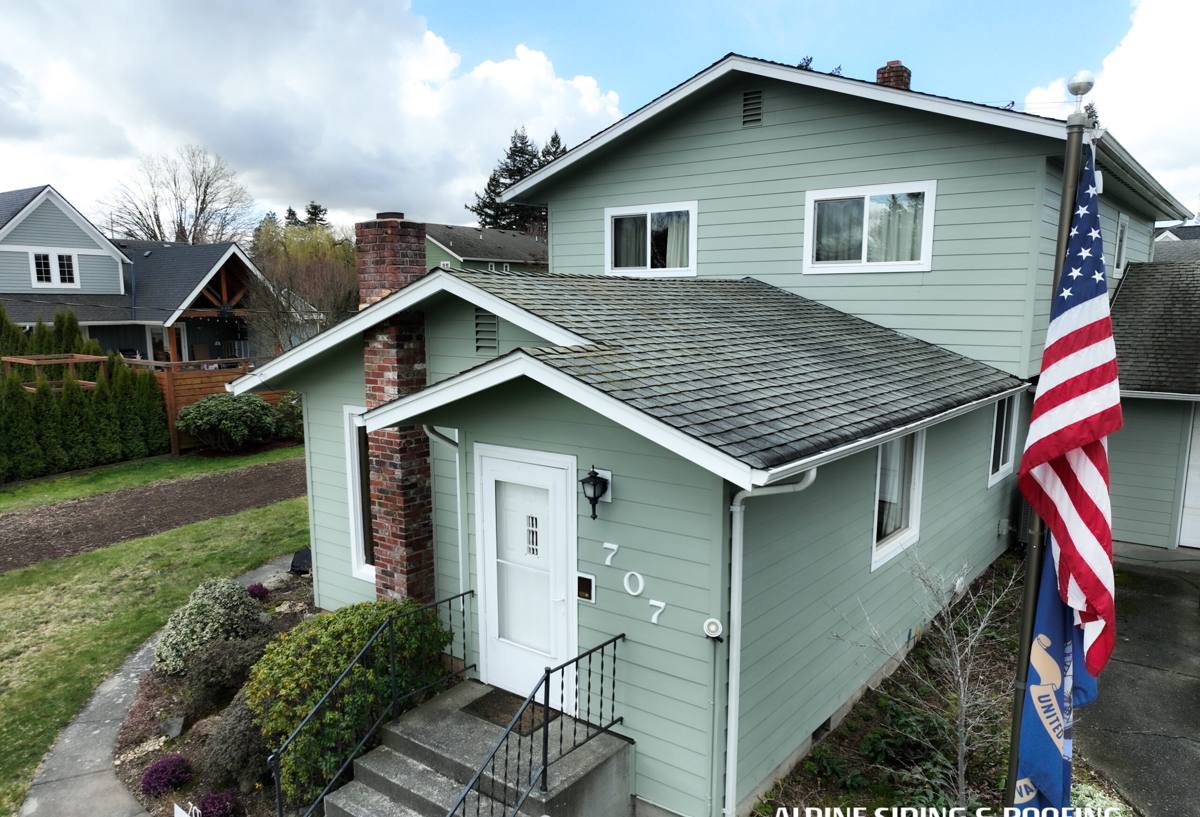
What a Correct Metal Roof Install Actually Involves
Underlayment and Moisture Control
Metal panels shed water fast, but they aren't the only layer keeping a house dry. Underneath the panels, a synthetic or self-adhered underlayment handles the water that gets past seams, fastener penetrations, and flashing during wind-driven rain — which is a regular event here, not a rare one. Skimping on underlayment, or reusing what's left over from the old roof, is one of the more common shortcuts we see and one of the least visible until a leak shows up somewhere unrelated to where the water actually entered.
Fasteners, Flashing, and Salt Exposure
Close to Semiahmoo's salt air, fastener choice matters more than it does further inland. Mismatched metals, exposed fastener heads without proper sealing washers, and standard flashing in place of corrosion-rated material are all places where a roof can start failing years before the panels themselves would ever wear out. The panel is rarely the weak point on a poorly performing metal roof — the connections and edges usually are.
Ventilation
Metal roofing performs best over a properly vented assembly. Trapped moisture underneath the panels, from an attic that can't breathe, causes condensation problems that have nothing to do with the roof surface and everything to do with what's happening below it. This gets overlooked constantly because it doesn't show up on the exterior — it shows up as mold or rot in the attic a few years down the line.
Panel Systems: Matching the Roof to the Home
Not every metal roofing system makes sense for every house in Laurel. The right choice depends on roof pitch, budget, how visible the roof is from the street, and how the home is oriented to weather.
| System | Best fit | Trade-offs |
|---|---|---|
| Standing seam (concealed fastener) | Homes exposed to direct wind/rain, longer-term ownership | Higher upfront cost, cleanest look, fewest long-term penetration points |
| Exposed fastener panel | Outbuildings, budget-conscious re-roofs, lower-slope sections | Lower cost, but fastener seals need periodic inspection over time |
| Metal shingle / shake profile | Homes wanting a traditional look with metal's durability | More seams and detail work than standing seam; installer skill matters more |
We'll walk through which of these actually fits your roof's pitch, orientation, and how long you plan to own the home — there's no single "best" system, only the one that matches your situation honestly.
How Our Process Works
- Walkthrough and honest assessment — we look at the existing roof, decking condition, ventilation, and any moss or moisture history before recommending anything.
- Written estimate — panel system, underlayment spec, flashing detail, and timeline, laid out so you know what you're paying for and why.
- Decking check before install — any soft or water-damaged decking gets addressed before panels go on, not covered over.
- Install — underlayment, flashing, and panels installed to the spec you approved, with attention to valleys, penetrations, and edges where this climate causes the most trouble.
- Final walkthrough — we review the finished roof with you and explain what maintenance, if any, it'll need going forward.
Nothing here is complicated, but skipping any one of these steps is exactly how a roof ends up with a five-year problem instead of a thirty-year one.
Moss, Algae, and the Long Wet Season
Whatcom County's wet season is long enough that moss and algae growth is a normal part of roof life here, not a sign something went wrong. Metal roofing resists moss far better than composition shingles because there's no porous surface for spores to root into, but it isn't immune — moss can still take hold in debris that collects in valleys, around chimneys, or wherever shade and moisture linger. Left alone, that debris holds water against the panel and its fasteners longer than the roof was ever designed to tolerate.
The maintenance metal roofing needs in this area is modest but real: keeping valleys and gutters clear of needles and leaf debris, especially heading into fall storms, and an occasional visual check after major wind events. This is a fraction of the upkeep a shingle roof demands, but "none" isn't accurate for any roof exposed to this climate.
What Drives Cost on a Laurel Metal Roof
| Factor | Why it matters |
|---|---|
| Roof pitch and complexity | More valleys, dormers, and penetrations mean more flashing detail and labor time |
| Panel system chosen | Standing seam costs more upfront than exposed fastener panel, but demands less long-term attention to fastener seals |
| Decking condition | Any rot or soft decking found during tear-off adds repair cost before panels can go on |
| Existing roof layers | Full tear-off vs. install over existing roofing affects labor and disposal cost |
| Access and site conditions | Steep pitches, limited staging area, or difficult site access add time |
We don't quote a job until we've actually seen the roof — anyone giving a firm number over the phone for a metal roof they haven't inspected is guessing, and that guess usually turns into a change order later.
Mistakes We See on Rushed or Under-Spec'd Installs
- Standard fasteners used in a salt-air environment instead of corrosion-rated hardware
- Underlayment skipped or reused from the old roof to save a step
- Flashing reused instead of replaced at valleys and penetrations
- No attention paid to attic ventilation before panels go on
- Decking issues covered over rather than repaired during tear-off
- Panel systems chosen by price alone without matching pitch or exposure
Every one of these is invisible from the ground on day one. They all show up as a problem three, five, or ten years later — which is exactly why the installer's judgment matters more than the panel brand.
Why a Crew That Already Works This Area Matters
A lot of what makes a metal roof perform well here isn't printed on the panel's spec sheet — it's judgment calls about flashing detail near the water, fastener selection for salt exposure, and knowing which valleys in this area tend to collect debris during fall storms. A crew that already works roofs around Semiahmoo and greater Whatcom County has made those calls before and seen how they hold up over time. That's different from a crew installing their first metal roof in a coastal microclimate and hoping the general specs are enough.
It also means someone who understands the practical side of scheduling around this area's weather — knowing when a install window is genuinely dry versus when it just looks that way for a morning.
Is Metal Roofing the Right Call for Your Home?
Metal roofing isn't the automatic right answer for every house in Laurel. It's a strong fit for homeowners planning to stay long-term, homes with direct wind or rain exposure, and anyone tired of moss and algae maintenance on a shingle roof. It's a bigger upfront investment than an asphalt re-roof, and that trade-off is worth weighing honestly rather than assuming it's the right move for every budget or timeline.
If you're deciding between a metal re-roof and another shingle replacement, the honest answer depends on how long you plan to own the home, how exposed your roof is to wind and salt air, and what you value more — lower upfront cost or lower long-term maintenance. We'll give you a straight answer either way, even if that answer is that a metal roof isn't the best use of your budget right now.
If you're weighing a metal roof for a home in Laurel or anywhere around Semiahmoo, we're happy to take a look and walk you through what your specific roof needs — no pressure, no obligation. A free estimate is the easiest way to get a straight answer on what the job actually involves and what it'll cost.