 Semiahmoo Siding
 Ferndale's Climate Is Harder on Siding Than Most Homeowners Realize
Ferndale sits close enough to the water and low enough in Whatcom County's weather patterns that its homes take on a specific combination of stresses: salt-laden air drifting in off the bay, long stretches of driving rain pushed sideways by wind, and a moss and algae season that can run most of the year in shaded, north-facing areas. Individually, none of these are unusual for western Washington. Together, over years, they're exactly the conditions that expose weak siding choices — the ones that looked fine at installation but weren't built for this specific mix of moisture and salt.
Salt Air and Slow Corrosion
Airborne salt doesn't just affect metal railings and fasteners near the water — it settles on exterior surfaces and accelerates the breakdown of coatings, caulking, and any material that wasn't engineered to resist it. Paint film on wood or engineered wood siding tends to chalk and fail faster in a salt-air environment, and once the protective layer is compromised, moisture gets a foothold underneath.
Driving Rain and Wind-Driven Moisture
Ferndale gets rain that doesn't fall straight down. Wind off the water drives it sideways into wall assemblies, which means siding here needs to shed water at every lap, seam, and penetration — not just resist a light drizzle. Poor flashing details or the wrong siding profile can let wind-driven rain track behind the cladding, where it does damage you won't see until it's expensive.
A Long Moss and Algae Season
Shaded walls, tree cover, and persistent dampness give moss and algae a long growing season on siding surfaces. This is mostly a cosmetic and maintenance issue, but on materials that absorb moisture, surface growth can be a sign that the substrate underneath is staying wet longer than it should.
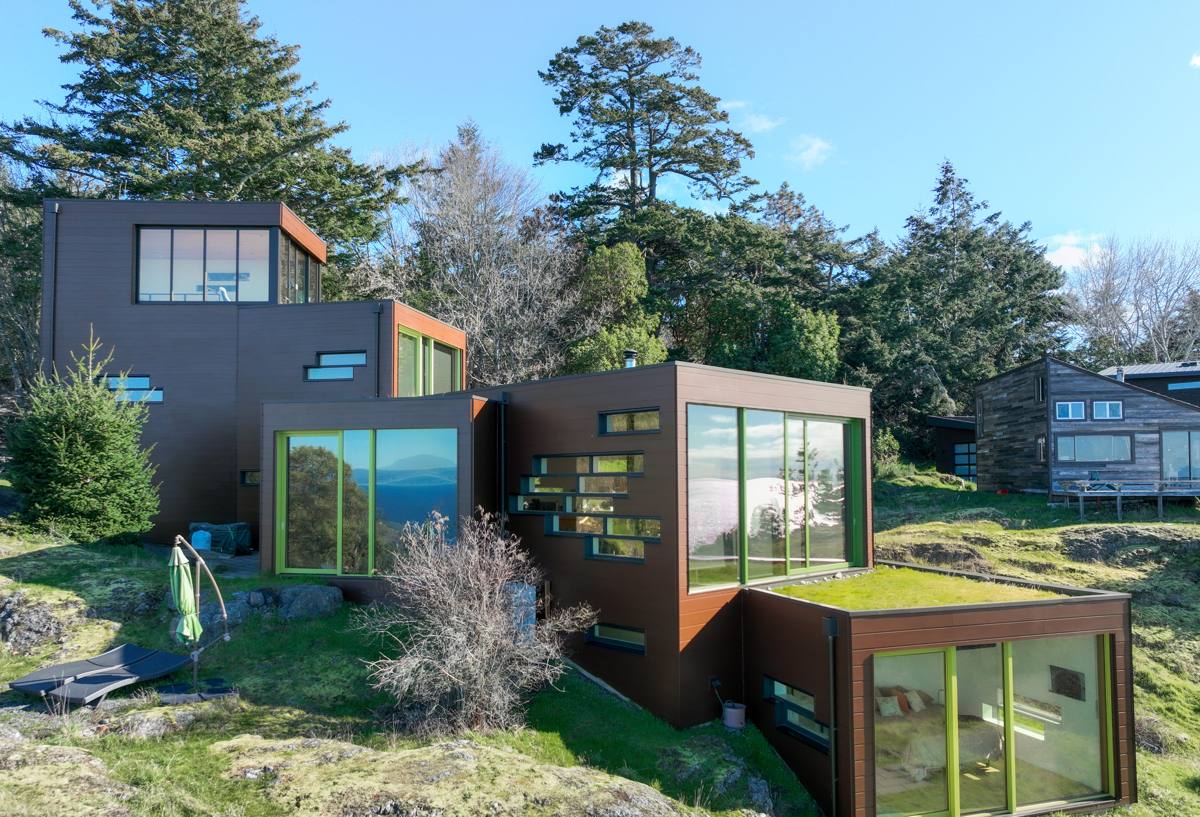
Why Fiber Cement Is the Right Call for This Job
Fiber cement siding is made from cement, sand, and cellulose fibers, cured into a dense, stable board. It doesn't absorb water the way wood or wood-based composite sidings do, it doesn't rot, and it's non-combustible. For a Ferndale home dealing with salt air and near-constant moisture exposure, those three properties matter more than they would somewhere drier and further from the coast.
We install James Hardie fiber cement exclusively, and for a project in this specific climate zone, that usually means their HZ5 formulation — engineered for wetter, harsher climates rather than a generic all-purpose board. The factory-applied ColorPlus finish is baked on and backed with a separate finish warranty, which matters in a salt-air environment where field-applied paint tends to fail earlier than it would inland.
What a Correct Fiber Cement Installation Actually Involves
Fiber cement performs the way it's supposed to only when the installation details are right. This is where a lot of the long-term problems on any siding job actually start — not with the material, but with shortcuts in the assembly behind it.
Weather Barrier and Flashing
Every home gets a continuous weather-resistant barrier, and every window, door, and penetration gets flashed so that water is directed out and down, never trapped behind the cladding. In a driving-rain environment like Ferndale's, flashing details at horizontal joints and butt seams aren't optional extras — they're the difference between siding that sheds water and siding that stores it.
Fastening and Clearances
James Hardie specifies fastener type, spacing, and placement for a reason — get it wrong and you can crack boards, void the warranty, or create points where water intrudes. We also hold proper clearance between the siding's bottom edge and the ground, decks, and roof lines, which keeps splash-back moisture and debris from sitting against the board.
Factory Finish, Not Field Paint
Because we install pre-finished ColorPlus boards rather than priming and field-painting on site, the finish is more consistent and better suited to hold up against UV and salt exposure than a coat applied outdoors in variable weather.
How Our Process Works
- On-site inspection. We look at your current siding, wall assembly, trouble spots (especially north-facing and water-facing walls), and any moisture or moss issues already present.
- Product and color selection. We walk through the appropriate HardiePlank, HardiePanel, or trim profiles and ColorPlus color options for your home's exposure and style.
- Written estimate. A detailed, itemized quote — material, labor, tear-off, disposal, and any repair work uncovered.
- Tear-off and inspection of sheathing. Old siding comes off and we check the wall assembly underneath for hidden rot or damage before anything new goes up.
- Weather barrier and flashing installation. This step gets done to spec, not eyeballed — it's the part of the job that determines how the siding performs in ten years, not day one.
- Siding installation. Installed to James Hardie's fastening, clearance, and joint-treatment specifications.
- Final walkthrough and warranty registration. We register the installation so your Hardie product and finish warranties are properly on file.
Fiber Cement Compared to Other Siding Options
Homeowners in Ferndale often ask how fiber cement stacks up against the other materials they've seen quoted. Here's an honest comparison based on how each performs in this specific climate.
| Material | Moisture Behavior | Salt Air Durability | Moss/Algae Resistance | Long-Term Maintenance |
|---|---|---|---|---|
| James Hardie Fiber Cement | Does not absorb water or rot | Cement substrate and ColorPlus finish hold up well | Non-organic surface resists growth better than wood-based materials | Occasional washing; no repainting on ColorPlus finish |
| Vinyl Siding | Sheds water but can warp, and seams can allow moisture behind panels | Can fade and become brittle faster with UV and salt exposure over time | Grows moss/algae similarly to other materials in shaded areas | Low upkeep but panels can crack in impacts and are hard to color-match if replaced |
| Engineered Wood (LP SmartSide) | Wood-based core is more vulnerable to moisture intrusion if seals fail | Coating can degrade faster in salt-heavy air | Wood-based substrate more susceptible if surface growth isn't kept in check | Requires diligent caulking/paint upkeep to protect the wood core |
| Cedar | Absorbs moisture; needs consistent sealing to control swelling and rot | Salt air accelerates weathering and finish breakdown | Organic material is naturally more prone to moss and algae | Regular refinishing, staining, or sealing required |
What Affects the Cost of a Ferndale Fiber Cement Project
There's no honest flat number for a siding job before we've seen the house, but the main cost drivers are consistent from project to project.
| Factor | Why It Matters |
|---|---|
| Home size and wall complexity | More square footage, gables, and cutouts mean more material and labor time |
| Condition of existing sheathing | Hidden rot found during tear-off adds repair work before new siding can go on |
| Product line and profile | HardiePlank lap siding, HardiePanel vertical siding, and trim/accent options are priced differently |
| Color and finish selection | Standard ColorPlus colors versus premium or custom options can shift cost |
| Site access and disposal | Tight lots, multi-story walls, or heavy old-siding disposal affect labor and haul-away costs |
Living With Fiber Cement Siding in Ferndale's Climate
Fiber cement is genuinely low-maintenance compared to the alternatives, but "low-maintenance" doesn't mean "no maintenance," especially in a moss-prone, salt-air environment.
- Rinse siding periodically with a garden hose to clear salt residue, pollen, and surface grime, especially on walls facing the water or prevailing wind.
- Keep shrubs and trees trimmed back from siding so shaded, damp walls get more airflow and sunlight, which slows moss and algae growth.
- Check caulking around windows, doors, and trim annually — caulk failure is usually the first thing to go, not the siding itself.
- Address gutter overflow or downspout issues quickly; repeated water sheeting down a wall section will accelerate staining and organic growth in exactly the spots you'd expect.
- If moss does appear, a gentle wash is normally enough — fiber cement's surface doesn't feed organic growth the way a wood-based product can.
Why Hiring a Crew That Already Works in Ferndale Matters
Siding installation instructions look the same on paper everywhere. What changes is judgment on site — knowing which walls in this area take the worst wind-driven rain, which orientations need extra attention to moss and moisture, and which flashing details actually hold up through a Whatcom County winter versus one that just meets the minimum on the spec sheet. A crew that has worked other homes in and around Ferndale and Semiahmoo has already seen how this specific climate treats siding over time, and builds that knowledge into every detail of the install rather than learning it on your house.
It also matters for warranty follow-through. James Hardie's product and finish warranties are tied to correct installation. A contractor who installs Hardie regularly in this region knows the fastening, clearance, and flashing requirements cold, and stands behind the work if a question ever comes up later.
Questions Worth Asking Before You Hire
- Are you a James Hardie-focused installer, or do you install several different siding brands?
- Will the quote specify which HardiePlank or HardiePanel profile and which HZ product line you're using?
- Does the estimate include tear-off, sheathing inspection, and disposal, or are those added later?
- How do you handle flashing at windows, doors, and horizontal joints?
- Will you register the installation for the manufacturer's product and finish warranty?
If your Ferndale home's siding is showing its age, staying damp longer than it should, or you're simply planning ahead of a needed replacement, we're happy to take a look and put together a straightforward, no-pressure estimate — just fill out the short form below.