 Semiahmoo Siding
 Deck Replacement Built for Drayton Harbor Conditions
Drayton Harbor sits close enough to the water that every deck in the area is dealing with the same combination of stressors: salt-laden air off the harbor, long stretches of driving rain through the fall and winter, and a moss season that can run half the year in shaded, north-facing yards. A deck that would hold up fine forty miles inland can start failing structurally out here well before it looks like a problem on the surface. That's the gap we see most often on inspection calls — a deck that looks presentable from the yard but has soft framing, corroded fasteners, or rot at the ledger board underneath.
Replacing a deck correctly in this part of Whatcom County means building for the environment it's actually in, not just swapping old boards for new ones. That's the approach we take on every Drayton Harbor project.
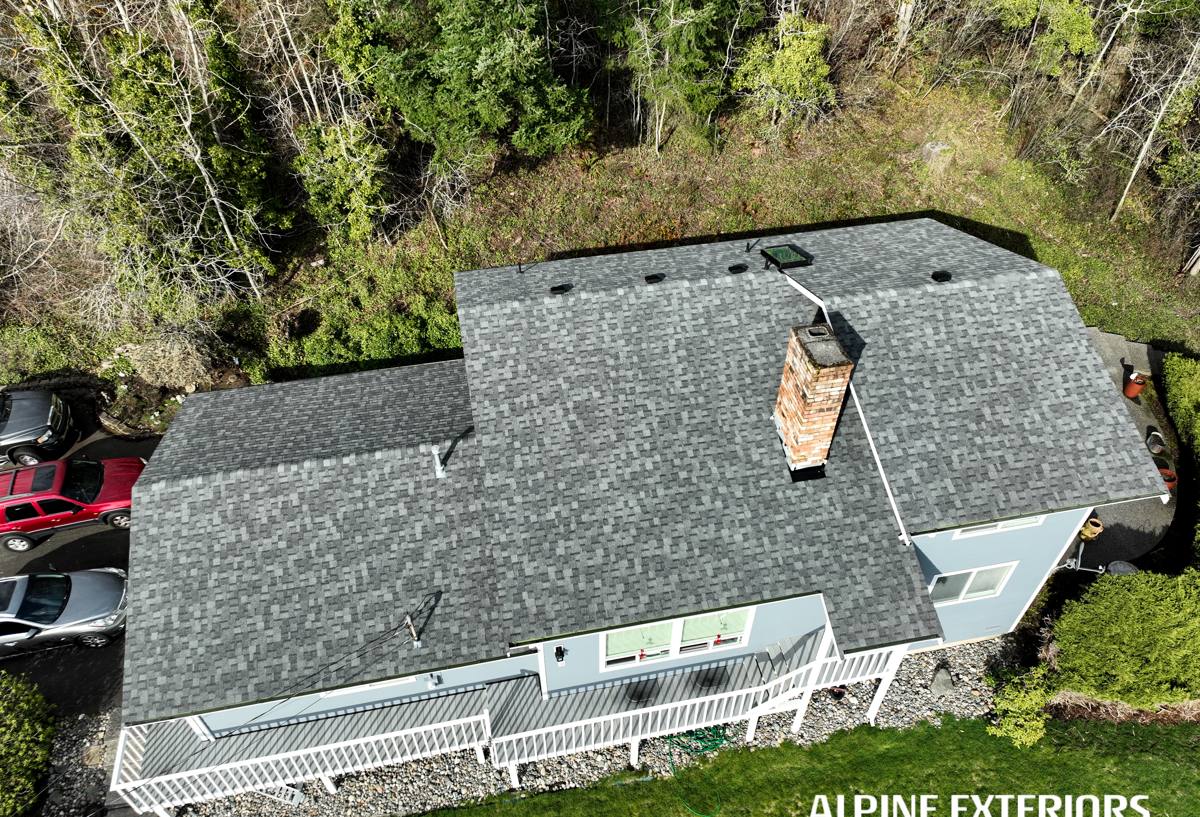
Why Decks Break Down Faster Near the Harbor
Salt Air and Metal Fasteners
Airborne salt accelerates corrosion on any exposed metal — nails, screws, joist hangers, bolts. Once a fastener starts to corrode, it loses holding strength long before it looks visibly bad. On older decks built with standard galvanized hardware instead of coastal-rated stainless or heavy hot-dip galvanized fasteners, this is usually the first structural weak point we find, often years before the decking boards themselves need attention.
Driving Rain and Water Intrusion
Rain that comes in sideways off the water doesn't behave like rain falling straight down. It gets pushed under railings, into end-grain cuts, and behind ledger boards and fascia where a lot of decks were never properly flashed to begin with. Water that gets trapped against a house wall or pinned between boards without a way to drain and dry out is what causes hidden rot — the kind that isn't visible until a board flexes underfoot or a post feels soft.
Moss, Shade, and Slow Drying
Decks with any shade cover — from trees, the house itself, or neighboring structures — stay damp longer here than they would in a drier climate. Moss and algae aren't just a slip hazard; they hold moisture against the wood surface and accelerate decay underneath, especially on horizontal surfaces like deck boards, stair treads, and railing caps that never fully dry between rain events.
Repair or Replace? Signs to Look For
Not every aging deck needs a full replacement, but in this climate, deferred repairs tend to compound quickly once moisture gets into the framing. Here's what tells us a deck is past the point of patching:
- Soft or spongy spots underfoot, especially near the house or at stair landings
- Visible corrosion or rust staining around fasteners, hangers, or bolts
- Gaps, cupping, or splitting boards that keep recurring after replacement of individual pieces
- Railing posts that wiggle or flex when pushed
- Persistent moss or dark staining in the same spots year after year, even after cleaning
- Rot or discoloration at the ledger board where the deck attaches to the house
- A deck more than 20-25 years old built with original hardware and no flashing at the ledger
If you're only seeing one or two of these and the framing underneath tests solid, repair may still make sense. Once we find compromised framing or a ledger connection with water damage behind it, replacement is usually the more honest recommendation — patching over structural rot just delays a bigger repair later.
What a Correct Deck Replacement Involves
A deck replacement isn't just new boards on old framing. Done right, it starts from the ground up:
Ledger and Flashing
The ledger board — where the deck attaches to the house — is the single most common source of hidden rot on this coastline. A correct replacement includes proper flashing and a water-resistant barrier between the ledger and the house sheathing, not just lag bolts through untreated wood.
Footings and Framing
Footings need to be sized and set to current code depth for frost and load, and framing lumber should be rated for ground contact or exposure where it's within splash range of grade. We use corrosion-resistant hardware throughout — this matters more here than almost anywhere inland, given the salt air.
Decking and Railing Material
This is where homeowners have real choices, and where the wrong choice shows up fastest in a harbor climate. More on that below.
Drainage and Ventilation
Decks built low to the ground or over living space need a way for water to shed and air to circulate underneath. Blocking that off traps moisture and shortens the life of everything above it.
Choosing the Right Decking Material for This Climate
We install several decking materials, and each has real trade-offs. In a salt-air, high-rain environment, some perform noticeably better with less upkeep than others.
| Material | Moisture & Salt-Air Performance | Maintenance | Typical Lifespan |
|---|---|---|---|
| Pressure-treated wood | Prone to checking and fastener corrosion over time; needs consistent sealing | Annual cleaning and re-sealing recommended | 10-15 years before boards need attention |
| Cedar | Naturally rot-resistant but still absorbs moisture; ages gray without sealing | Periodic sealing or staining to control moisture and moss | 15-20 years with upkeep |
| Composite decking | Handles moisture well; some early-generation products were prone to moisture absorption at cut edges | Occasional washing to keep moss/algae from taking hold | 25-30 years, manufacturer-dependent |
| PVC/capped polymer decking | Fully sealed surface, best resistance to moisture and salt exposure | Lowest maintenance; occasional rinsing | 25-30+ years |
We don't push one product on every job. Wood is a legitimate, lower-cost option if a homeowner is willing to stay on top of sealing and cleaning. Where a deck gets heavy shade, sits close to the water, or the owner wants to minimize upkeep, composite or capped polymer boards generally hold up with far less maintenance — the trade-off is a higher upfront material cost. We'll walk through the honest pros and cons for your specific site during the estimate rather than defaulting to whatever's easiest to install.
What Affects Deck Replacement Cost
Every deck is different, but the same handful of factors drive most of the cost variation we see on Drayton Harbor projects:
| Factor | Why It Matters |
|---|---|
| Deck size and footprint | More square footage means more material, more footings, and more labor hours |
| Height and stairs | Multi-level decks and stair systems add framing complexity and railing code requirements |
| Decking and railing material | Wood, composite, and PVC span a wide cost range for both material and installation time |
| Existing framing condition | If footings and framing are sound, we may be able to reuse them; if not, that adds scope |
| Permit and code requirements | Guardrails, stair geometry, and footing depth are governed by local code and can't be skipped |
| Site access | Waterfront and hillside lots can complicate material delivery and equipment access |
We give a written, itemized estimate before any work starts so there are no surprises once the old deck comes out.
Our Process for a Drayton Harbor Deck Replacement
- On-site assessment — we inspect the existing deck, framing, ledger connection, and footings to determine actual scope, not just surface appearance.
- Written estimate — a clear breakdown of material options, cost factors, and timeline, so you can compare choices before committing.
- Permitting — we handle the permit process where required, since guardrail height, stair rise/run, and footing depth are all code-governed.
- Tear-out and disposal — full removal of the old deck, checking framing and the house connection as we go for any hidden damage.
- Rebuild — new footings, framing, ledger flashing, decking, and railings installed to code and to the material spec you chose.
- Final walkthrough — we go over the finished deck with you, including basic care guidance specific to whichever material was installed.
Why a Local Crew Matters Here
A contractor who works this stretch of Whatcom County regularly already knows what a harbor-adjacent deck is up against — where flashing tends to fail first, which fastener grades hold up and which don't, and how much shade and moisture a given lot typically deals with. That's not something you can fully assess from a generic estimate template built for a drier inland climate. It also means someone who's already familiar with local permitting requirements and can spot the difference between a deck that just needs new boards and one where the framing underneath is the real problem.
Keeping Your New Deck Ahead of the Climate
Whatever material you choose, a few habits go a long way in this environment:
- Sweep debris and standing water off the deck surface regularly, especially in shaded areas
- Rinse off salt residue periodically if the deck is exposed to direct harbor spray or wind
- Check railing posts and stair connections once a year for movement or corrosion staining
- Keep gutters and downspouts clear so runoff isn't draining directly onto or under the deck
- Re-seal wood decking on the manufacturer's recommended schedule rather than waiting until it looks gray or dry
- Trim back vegetation that's keeping sections of the deck in constant shade and slow to dry
If your deck is showing any of the signs above, or you're just ready to stop maintaining a wood deck that can't keep up with the weather out here, we're happy to take a look. We offer free, no-pressure estimates for Drayton Harbor homeowners — use the form below to get a time on the calendar.