 Semiahmoo Siding
 Decks in Lynden Face a Different Set of Problems Than Decks Inland
Lynden sits close enough to the water and the weather patterns coming off Semiahmoo Bay that decks here age differently than decks fifty miles inland. The combination of salt-laden air, long stretches of driving rain, and a moss season that can run eight months or more means a deck built to a generic spec sheet often starts showing problems well before it should. We've replaced enough failed decks in this area to know exactly which corners get cut, and which details actually matter once the weather starts working on the wood.
A deck isn't just a platform bolted to the house. It's a structure that has to shed water, resist rot at every joint, and keep moss and algae from turning the walking surface into a hazard every winter. Get the framing and drainage details right, and a deck in Whatcom County can last decades. Skip them, and you're looking at soft boards, rusted fasteners, and a ledger board connection that's quietly rotting behind the flashing.
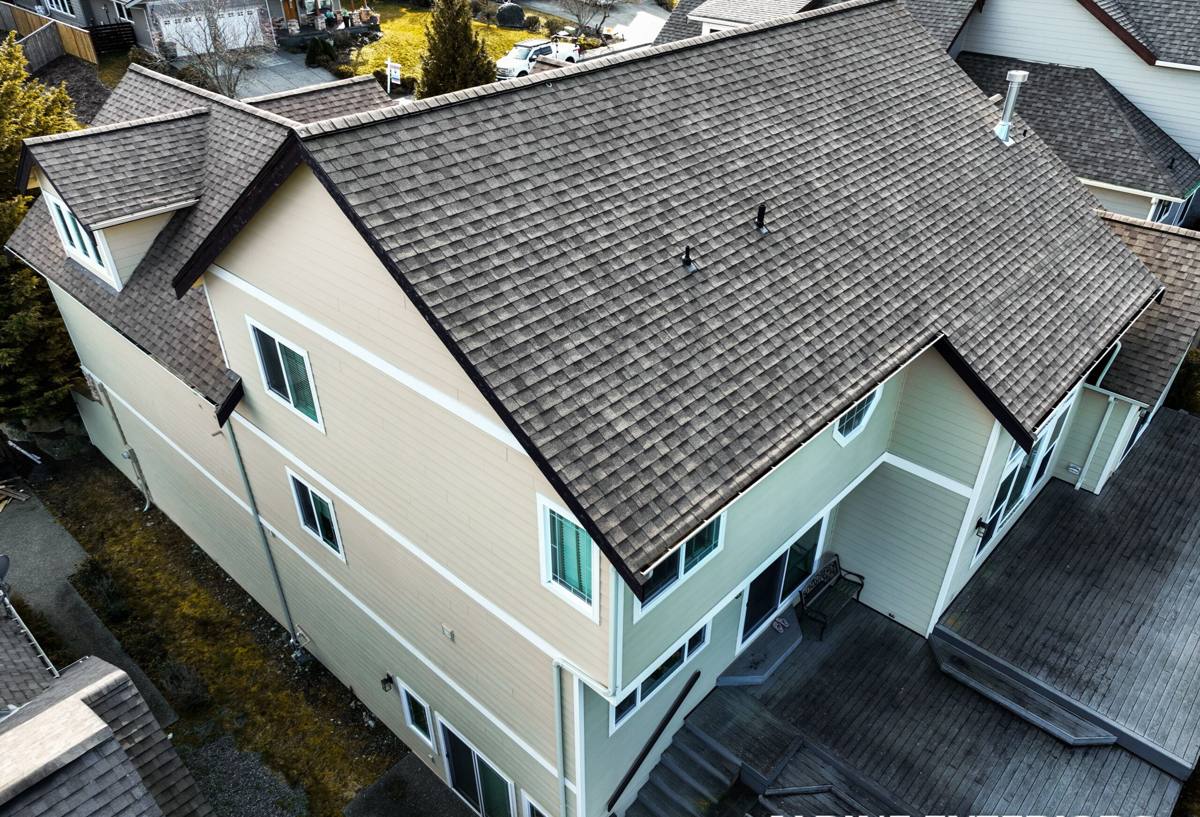
What Lynden's Climate Actually Does to a Deck
Moisture That Never Fully Leaves
Coastal Whatcom County doesn't get the hard freeze-thaw cycles that crack concrete in other climates, but it gets something arguably harder on wood decks: near-constant low-grade dampness. Wood that never fully dries out between rain events is wood that rots from the inside, often in places you can't see until a board gives way underfoot.
Salt Air and Metal Fasteners
Proximity to the bay means airborne salt settles on everything, including your deck's hardware. Standard fasteners and connectors corrode faster here than they would in a drier, inland location. Once a fastener starts rusting, it loses holding strength long before it looks bad enough to notice from the surface.
The Long Moss Season
Shaded decks, north-facing decks, and decks under mature trees in this area can stay damp enough to grow moss nearly year-round. Beyond looking neglected, moss holds moisture against the decking surface and turns it slick and dangerous, especially on stairs.
What a Correctly Built Deck Requires in This Area
A deck built for Lynden's conditions needs a few specific things a generic build might skip:
- Properly flashed ledger board connection, with the flashing lapped correctly so water can't work its way behind the house's siding or sheathing
- Corrosion-resistant fasteners and structural connectors rated for coastal or treated-lumber contact, not standard interior-grade hardware
- Joist tape or an equivalent moisture barrier on top of every joist, so standing water doesn't sit directly against cut lumber
- Footings sized and set below frost depth and on undisturbed soil, not just poured into whatever was convenient
- Proper board spacing and a consistent slope away from the house so water actually drains instead of pooling
- Ventilation underneath the deck so the framing can dry out between rain events instead of staying damp
None of these add much to the cost of a build. What they do is determine whether the deck is still solid in fifteen years or needs major repair in five.
Choosing the Right Decking Material for Lynden
Material choice matters more here than in drier climates, because moisture exposure is longer and more constant. There's no single "best" material for every homeowner — it depends on budget, how much upkeep you're willing to do, and how long you want to go before replacing boards.
| Material | Upfront Cost | Moisture & Moss Resistance | Maintenance | Realistic Lifespan Here |
|---|---|---|---|---|
| Pressure-treated pine | Lowest | Fair — needs sealing to perform well | Annual cleaning, periodic staining/sealing | 10-15 years |
| Cedar | Moderate | Good natural rot resistance, but surface still needs care | Regular cleaning and refinishing to prevent graying and moss | 15-20 years |
| Capped composite | Higher | Very good — cap layer resists moisture absorption and moss growth | Occasional washing, no staining or sealing | 25-30+ years |
| PVC decking | Highest | Excellent — no wood fiber to absorb moisture | Lowest of any option; simple washing | 25-30+ years |
We install composite and PVC products from established manufacturers such as Trex and TimberTech, alongside traditional wood, because they hold up to sustained coastal moisture with far less upkeep than natural wood. That's a maintenance and moisture-performance decision on our part, not a knock on wood decking done well — a properly sealed and maintained cedar or treated deck can still serve a homeowner for many years if you're willing to stay on top of the upkeep.
Capped Composite vs. Uncapped or PVC
Not all composite decking is built the same. Older or budget composite products without a full cap layer can absorb moisture at cut ends and around fastener holes, which matters in a climate where boards rarely dry out completely. Fully capped composite or solid PVC boards seal that vulnerability off, which is why we favor them for wetter, shadier lots common around Lynden.
How We Approach a Deck Project in Lynden
1. On-Site Assessment
We look at sun exposure, drainage patterns, existing framing condition if it's a replacement, and how close the site is to prevailing weather and salt exposure. This shapes material and hardware recommendations before we ever talk numbers.
2. Design and Material Selection
We walk through the material comparison above with you in the context of your actual home — budget, how the deck will be used, and how much maintenance you want to take on.
3. Permitting
Most new decks and many deck replacements in Whatcom County require a building permit, particularly for structures attached to the house or built above a certain height. We handle that process rather than leaving it to you to sort out.
4. Framing and Structural Work
This is where the climate-specific details above get built in — flashing, fastener selection, joist protection, footing depth, and drainage slope.
5. Decking, Railing, and Finish Work
Surface material goes down last, along with railings, stairs, and any lighting or finish details agreed on during design.
6. Final Walkthrough
We walk the finished deck with you, point out how it's built to drain and dry, and go over what upkeep it actually needs — which for a lot of composite and PVC installs is very little.
What Drives the Cost
Deck pricing depends on more than square footage. The factors that actually move the number are:
| Factor | Why It Matters |
|---|---|
| Decking material | Composite and PVC cost more upfront than treated lumber but need far less long-term maintenance |
| Height and stairs | Elevated decks need more structural framing, railing, and often engineered footings |
| Site access and slope | Difficult access or a sloped yard increases labor for footings and framing |
| Railing style | Cable, glass, and composite railing systems cost more than standard wood or metal baluster railing |
| Existing structure condition | Replacements built on rotten or undersized framing may need more structural work than a straight resurface |
We give straightforward, itemized estimates so you can see where the money goes and where you have room to adjust the budget without compromising the structure underneath.
Maintaining a Deck Through a Whatcom County Moss Season
Whatever material you choose, a little seasonal attention goes a long way in this climate:
- Sweep debris and standing leaves off the deck regularly, especially in fall — trapped organic matter feeds moss and holds moisture against the surface
- Clean moss and algae off boards and stairs before they build up a slick film, particularly on shaded sections
- Check fastener heads and railing connections yearly for early rust or looseness
- Confirm gutters and downspouts near the deck aren't dumping extra water onto the structure or the ledger connection
- For wood decks, plan on resealing or restaining on the schedule your product calls for — skipping a cycle in this climate shows up fast
Why It Matters to Hire a Crew That Already Works in This Area
A contractor who mostly builds inland or in drier climates isn't wrong about deck-building in general — they're just working from experience that doesn't fully apply here. The flashing details, fastener grade, and drainage planning that hold up against Lynden's rain and salt air aren't things you can bolt on after the fact if they're missed during framing. We build decks in this specific area regularly, which means we're not guessing at how a given material or connection detail performs against this particular combination of moisture and salt exposure — we've seen it play out on real jobs, year after year.
Ready to Talk Through Your Deck Project?
Whether you're replacing a deck that's showing its age or planning a new one from scratch, we're happy to walk your property, talk through material options, and give you a clear, no-pressure estimate. There's no obligation — just a straight answer on what your home needs and what it will cost to do right. Use the form below to get started.