 Semiahmoo Siding
 Asphalt Shingle Roofing Built for Wiser Lake's Climate
Homes around Wiser Lake sit in a stretch of Whatcom County where the weather doesn't do anything gently. Rain comes in sideways off the water for days at a stretch, salt-laden air works its way inland from the Semiahmoo waterfront, and shaded, tree-lined lots hold moisture long after a storm has passed. Asphalt shingle roofing is still one of the most practical, cost-effective choices for this area — but only when it's specified and installed with this specific climate in mind. A shingle roof built the same way you'd build one in a dry inland county will underperform here, sometimes by a decade or more.
This page covers what we actually do differently on Wiser Lake roofs: the materials we lean on, the details we won't skip, and the maintenance rhythm that keeps a shingle roof doing its job through another wet Pacific Northwest winter.
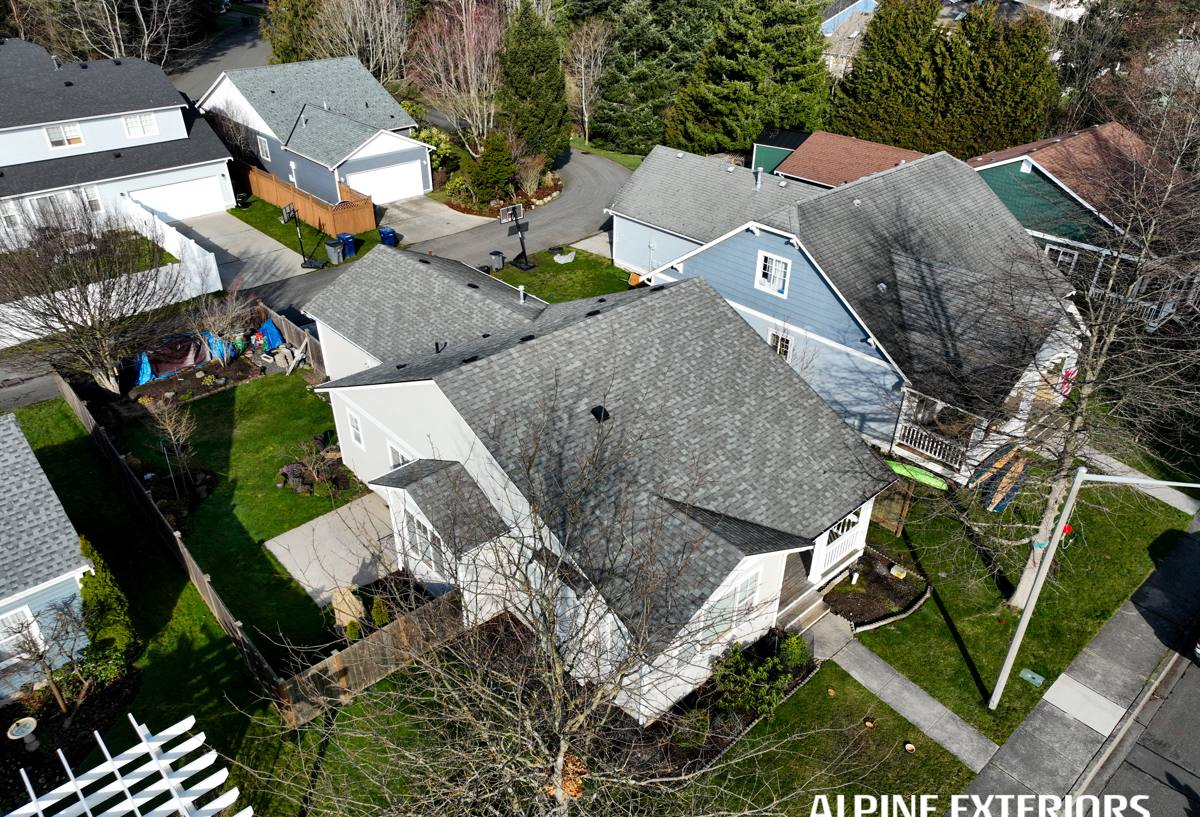
What Wiser Lake Roofs Are Up Against
Driving Rain and Wind-Driven Water
Storms in this corner of Whatcom County frequently bring rain at an angle, not straight down. That matters because a roof can shed vertical rain perfectly well and still leak under wind-driven rain if the underlayment, flashing, and starter courses weren't detailed for it. We treat every valley, eave, and penetration on a Wiser Lake roof as a spot where water will be pushed uphill under wind pressure at some point in its life — because it will be.
Salt Air and Metal Fasteners
Proximity to the Semiahmoo shoreline means a measurable amount of salt in the air, even a few miles inland. Salt accelerates corrosion on exposed metal — nails, flashing, vent caps, drip edge. Standard galvanized fasteners can start showing rust streaks well before the shingles themselves are due for replacement. We spec corrosion-resistant fasteners and flashing on every coastal-exposure job, not as an upsell, but because replacing rusted flashing under an otherwise good roof is a needless expense we'd rather help you avoid.
Moss, Shade, and Long Wet Seasons
Many Wiser Lake lots have significant tree cover, which is great for privacy and terrible for roof drainage. Shaded roof sections stay damp longer after every rain, and that's exactly the environment moss needs to get established. Once moss roots into a shingle mat, it lifts the tabs, holds water against the granule surface, and shortens the shingle's usable life — sometimes cutting a 25-year shingle down to 15 or less if it's left unmanaged.
What a Correct Asphalt Shingle Job Includes Here
A shingle roof is a system, not a single product. On Wiser Lake homes, we pay particular attention to the layers most inland roofers treat as optional:
- Underlayment: Synthetic or self-adhered ice-and-water membrane in vulnerable zones — valleys, eaves, around chimneys and skylights — not just a single layer of felt across the whole deck.
- Starter strips and drip edge: Properly lapped starter courses along eaves and rakes so wind-driven rain can't get under the first course of shingles.
- Valley treatment: Closed-cut or metal-lined valleys, chosen based on roof pitch and how much water a given valley actually funnels.
- Flashing: New step flashing and counterflashing at every wall intersection and chimney, not a re-use of old flashing tucked under new shingles.
- Ventilation: Balanced intake and exhaust venting so the attic can dry out between wet spells instead of trapping moisture against the underside of the deck.
- Fastener corrosion resistance: Hot-dip galvanized or better on all exposed nails and metal, given the salt-air exposure.
Skip any one of these and the roof may still look fine for a year or two — the failures that come from cut corners in this climate tend to show up as slow leaks and rot, not dramatic blowoffs, which is part of why they get missed until the damage is already inside the wall or attic.
Choosing the Right Shingle for a Wiser Lake Roof
Not every asphalt shingle product handles moss, moisture, and wind the same way. We walk homeowners through the real trade-offs rather than pushing a single option:
| Shingle Type | Typical Lifespan Here | Best Fit | Trade-Offs |
|---|---|---|---|
| 3-Tab (economy) | 15–20 years | Budget-conscious re-roofs, secondary structures | Lower wind rating, less algae/moss resistance, thinner mat holds up less well under moss pressure |
| Architectural / Dimensional | 25–30 years | Most Wiser Lake homes | Higher upfront cost than 3-tab, but heavier mat and better wind rating pay off in this weather |
| Algae/Moss-Resistant Architectural | 25–30 years | Heavily shaded or tree-covered lots | Slightly higher cost for copper- or zinc-infused granules that slow moss regrowth |
| Premium/Designer | 30+ years | Homeowners prioritizing longevity and appearance | Highest material cost; benefit is marginal if underlayment and ventilation aren't equally upgraded |
For most shaded or waterfront-adjacent lots around Wiser Lake, we steer homeowners toward architectural shingles with algae/moss-resistant granules. The cost difference over a standard architectural shingle is modest, and it directly addresses the specific problem this area's climate creates.
Our Process on a Wiser Lake Re-Roof
1. On-Site Assessment
We walk the roof, not just the yard. That means checking deck condition at penetrations, looking for soft spots from past moss or moisture damage, and evaluating existing ventilation before we ever talk shingle brands.
2. Tear-Off and Deck Inspection
Full tear-off to the deck on re-roofs, with any rotted or soft sheathing replaced before new underlayment goes down. Roofing over existing layers hides problems instead of solving them, and it's a bad trade-off in a climate this wet.
3. Underlayment and Flashing First
This is where a roof's real weather resistance is decided — before a single shingle is laid. We install ice-and-water membrane at vulnerable zones and new flashing at every wall, chimney, and vent penetration.
4. Shingle Installation to Manufacturer Wind Specs
Nailing pattern and placement matter more than most homeowners realize, especially given how much wind this area sees off the water. We install to the manufacturer's high-wind nailing specification, which also keeps the warranty intact.
5. Ventilation Check
We confirm intake and exhaust venting are balanced for the attic's actual size, adding ridge or soffit venting where the existing setup falls short.
6. Final Walkthrough
We walk the finished roof and the site with you, cover care and maintenance, and make sure gutters and downspouts are clear and functioning before we consider the job done.
Why a Crew That Already Works Wiser Lake Matters
Roofing crews that mostly work drier, inland regions can install a technically sound roof and still miss the details that matter specifically here — the moss-resistant granule upgrade, the corrosion-resistant fastener spec, the extra ice-and-water membrane in valleys. None of that is exotic; it's just knowledge that comes from repeatedly seeing what fails in this exact climate and building around it from the start. A crew that's worked Semiahmoo-area roofs season after season isn't guessing at what Wiser Lake weather does to a shingle roof over ten or fifteen years — we've seen it, and we build to avoid it.
Local presence also matters for the boring, practical stuff: knowing which permit office to work with, having a realistic sense of scheduling around this area's wet season, and being reachable if something needs a follow-up look after a big storm.
Maintaining an Asphalt Shingle Roof Near Wiser Lake
A well-installed shingle roof still needs upkeep in this climate. A short seasonal checklist goes a long way toward hitting the shingle's full rated lifespan:
- Clear leaves, needles, and debris from valleys and behind chimneys at least twice a year — fall and late winter are the priority windows here.
- Check for moss growth on shaded roof sections annually; treat early rather than letting it establish and lift shingle tabs.
- Keep gutters and downspouts flowing freely — clogged gutters back water up under the eave line, which is exactly where wind-driven rain is already testing the roof.
- Trim back overhanging branches to reduce shade, debris, and physical abrasion on the shingle surface.
- After any major windstorm, do a visual check (or have us do one) for lifted or missing shingles before the next rain event finds the gap.
- Have a professional inspection every few years, even with no visible problems — flashing and fastener corrosion often show up before shingle wear does.
Cost Factors for Wiser Lake Homeowners
Every roof is different, but the main variables that move the price on an asphalt shingle re-roof in this area are consistent:
| Factor | Why It Matters Here |
|---|---|
| Roof pitch and complexity | Steeper pitches and multiple valleys mean more labor and more flashing/valley material |
| Deck condition | Moisture-damaged sheathing found at tear-off adds repair cost but prevents a much bigger problem later |
| Shingle grade | Standard architectural vs. algae/moss-resistant vs. premium lines carry different material costs |
| Ventilation upgrades | Adding or correcting intake/exhaust venting is a smaller line item during a re-roof than as a standalone project later |
| Access and tree cover | Heavily treed lots common around Wiser Lake can add setup and cleanup time |
We give straightforward, itemized estimates so you can see exactly what you're paying for and where — no vague lump-sum numbers.
Get a Straight Answer on Your Wiser Lake Roof
If your roof is showing moss, granule loss, or you're just due for an honest look before it becomes an emergency, we're happy to come take a look. We'll tell you what we actually see — not a worst-case pitch — and walk you through options that make sense for your home and budget. Reach out for a free, no-pressure estimate using the form below.