 Semiahmoo Siding
 Fiber Cement Siding Built for Sumas, Washington
Sumas sits at the edge of Whatcom County, where marine-influenced weather off the Salish Sea meets the wetter, cooler air pushing down from the Fraser Valley. Homes here take a beating that's easy to underestimate from the outside: driving rain that comes sideways during fall and winter storms, long stretches of overcast humidity that never quite let siding dry out, and a moss season that can run six months or more on north-facing walls and anything shaded by trees. Add in the salt-tinged air that carries inland across Whatcom County from the coast, and you've got a climate that's genuinely hard on exterior materials — not dramatic, just relentless.
That combination is exactly why we install James Hardie fiber cement siding and nothing else. This page covers what fiber cement siding work looks like specifically for Sumas homes — what the climate demands, what a correct installation actually involves, and how our process works from first call to finished wall.
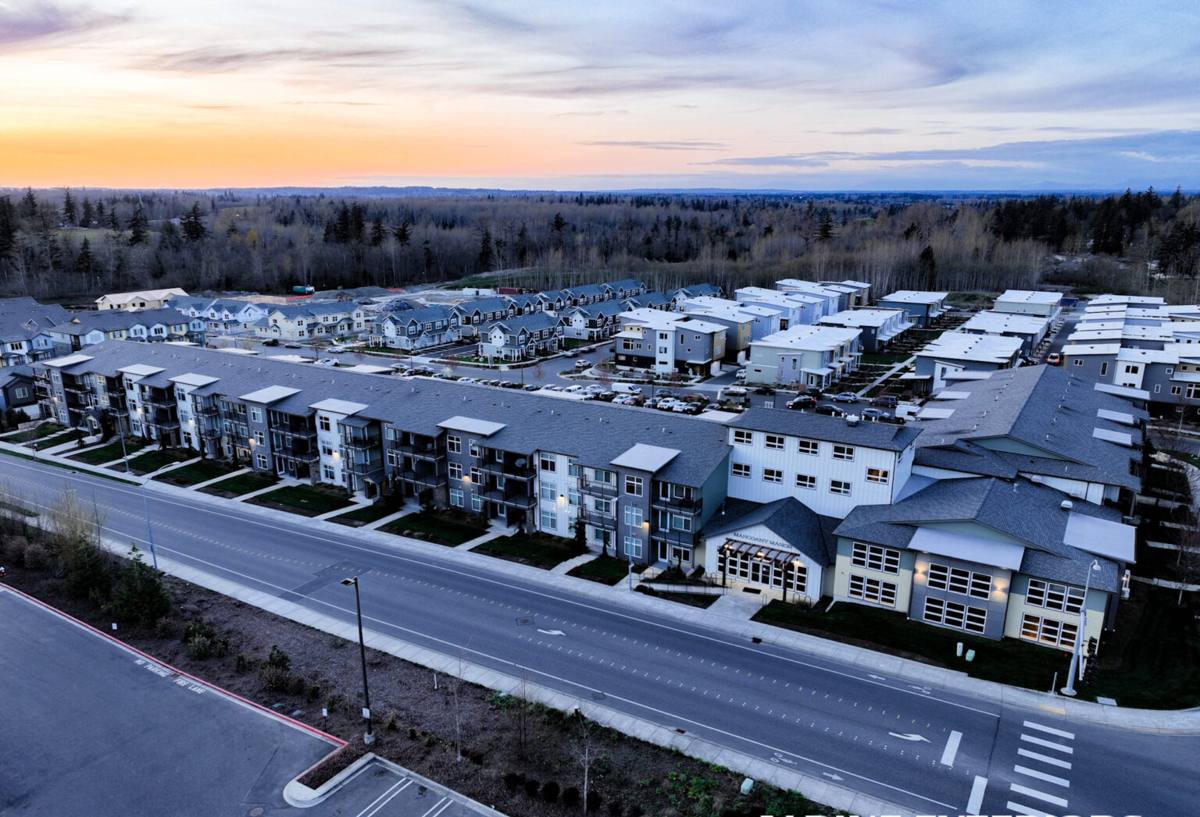
What Sumas Homes Are Actually Up Against
Before talking about siding products, it helps to be honest about what's degrading exterior walls in this part of Whatcom County. It's rarely one dramatic event — it's cumulative moisture exposure over years.
Moisture That Doesn't Get a Break
Sumas gets a real wet season, and unlike drier climates, the siding on a typical home doesn't get long dry stretches to fully release moisture between rain events. Materials that absorb water and swell, or that rely on paint film alone to stay sealed, are working overtime here.
Moss and Organic Growth
Shaded elevations, tree-lined lots, and north- and west-facing walls in this area routinely develop moss, algae, and mildew staining. Beyond the cosmetic issue, sustained organic growth holds moisture against the siding surface, which accelerates whatever underlying degradation is already happening.
Salt-Influenced Air and Corrosion
Whatcom County's proximity to the coast means fasteners, trim metal, and any exposed hardware are dealing with a mildly corrosive environment over time, even well inland. Cheap fasteners or unprotected metal flashing age faster here than they would in a dry interior climate.
Temperature Swings Near the Border
Sumas sits close enough to the Canadian border and the foothills that it sees a bit more temperature swing than the immediate coast — freeze-thaw cycles in winter, warm dry stretches in summer. Siding materials that expand and contract with humidity and temperature need to do so predictably, or joints open up and paint fails early.
Why We Install James Hardie Fiber Cement — and Nothing Else
We standardized on James Hardie fiber cement siding because it's engineered to handle exactly this kind of climate, and because it holds up to real-world installation conditions better than the alternatives we used to install.
- Non-combustible core: Fiber cement doesn't burn, which matters as wildfire smoke and dry-season fire risk have become more common even in wetter parts of Washington.
- Climate-engineered HZ5 formulation: James Hardie makes region-specific product formulations. The HZ5 line used in the Pacific Northwest is engineered for wet, moisture-heavy climates like ours, rather than a one-size-fits-all product.
- ColorPlus factory finish: Instead of relying on field-applied paint (which is only as good as the weather conditions on the day it's sprayed), ColorPlus is baked on at the factory under controlled conditions, giving a more consistent, longer-lasting finish and a dedicated finish warranty.
- Dimensional stability: Fiber cement doesn't swell and shrink with moisture the way wood-based products do, which means fewer open joints, less paint cracking at seams, and a tighter look over time.
- Strong transferable warranty: Backed by a manufacturer with decades in the fiber cement category, not a warranty structure that depends on aftermarket paint maintenance.
We don't install LP SmartSide, vinyl, Cemplank, Allura, primed spruce, or cedar. Each of those has legitimate uses somewhere, but given what Sumas's climate does to a wall over 20-30 years, we've made fiber cement — specifically James Hardie — our standard, and we stand behind that on every job.
What a Correct Fiber Cement Installation Actually Involves
Fiber cement siding is only as good as the installation behind it. A huge share of the siding problems we get called out to inspect on older homes aren't product failures — they're installation shortcuts. Getting it right involves several details that don't show up in a driveway walk-through after the job's done:
Water Management Behind the Cladding
A correctly installed drainage plane and house wrap sit behind the siding, with proper weather-resistive barrier overlaps, so any moisture that does get past the cladding has somewhere to go besides your wall sheathing.
Flashing at Every Penetration
Windows, doors, hose bibs, light fixtures, vents — every penetration through the siding is a potential leak point. Correct flashing and integrated sealant details at these transitions matter more in a high-rain climate than almost anything else in the job.
Fastening and Clearances to Manufacturer Spec
James Hardie has specific requirements for fastener type, placement, and spacing, plus minimum clearances from grade, roofing, and decking. Skipping these clearances is one of the most common ways moisture gets trapped at the bottom of a wall.
Joint Treatment and Caulking
Butt joints and trim intersections need to be treated correctly — factory-primed cut edges sealed, appropriate caulk used at movement joints — or you get early paint failure right at the seams, which is usually the first visible sign of a rushed install.
Our Process, Start to Finish
- On-site evaluation: We walk the exterior, check existing siding and sheathing condition, and look specifically for moisture or moss patterns tied to your home's exposure.
- Written estimate: A clear scope covering product line, color, trim details, and any sheathing or moisture repair needed before new siding goes on.
- Tear-off and inspection: Removing old siding lets us actually see the sheathing and framing underneath — this is where hidden moisture damage from years of exposure often turns up.
- Weather barrier and flashing: House wrap, flashing at every penetration, and drainage details installed to spec before a single piece of siding goes up.
- Installation: James Hardie panels or lap siding installed to manufacturer clearance, fastening, and joint requirements.
- Trim, caulking, and finish details: Corner trim, window and door casing, and final caulking at movement joints.
- Final walkthrough: We review the finished exterior with you before calling the job done.
Fiber Cement vs. Other Siding Options for This Climate
| Material | How It Handles Sumas's Wet, Mossy Climate | Long-Term Consideration |
|---|---|---|
| James Hardie Fiber Cement | Dimensionally stable, moisture-resistant core, factory finish holds up to sustained damp conditions | Strong transferable warranty, minimal repainting |
| Vinyl | Doesn't absorb water, but can warp with temperature swings and shows wear faster in direct weather exposure | Lower upfront cost, shorter realistic lifespan, limited repair options |
| Wood-Based / Engineered Wood (e.g. LP SmartSide) | Wood-based core is more moisture-sensitive; performance depends heavily on maintaining paint and sealant over time | Ongoing maintenance burden in a high-rain climate |
| Primed Spruce / Cedar | Natural wood movement with humidity, needs consistent refinishing to keep moisture out | Highest maintenance, shortest interval between repaints |
What Drives Cost on a Sumas Fiber Cement Project
Every home is different, but the same handful of factors tend to move the price up or down on most jobs in this area:
| Factor | Why It Matters |
|---|---|
| Existing sheathing condition | Years of moisture exposure can mean hidden repairs are needed once old siding comes off |
| Home size and wall complexity | More corners, gables, and trim detail means more labor and material cuts |
| Product line chosen | Lap siding, panel siding, and shingle-style Hardie products carry different material costs |
| Access and site conditions | Tree cover, tight lot lines, or multi-story walls affect scaffolding and staging time |
| Trim and detail scope | Full trim replacement adds cost versus reusing sound existing trim where appropriate |
We give a straightforward written estimate after seeing the home in person — we don't quote sight-unseen, because the sheathing condition underneath old siding genuinely changes the scope.
Maintenance and What to Expect Over Time
One of the practical advantages of James Hardie siding in a climate like this is how little it asks of you afterward. A rinse-down once or twice a year to knock back moss and pollen buildup, an occasional check of caulking at trim joints, and prompt attention if a gutter starts overflowing onto a wall section — that's realistically the extent of it. Compare that to wood-based siding, which in this climate typically needs repainting or resealing on a much tighter cycle just to keep moisture out.
A Quick Home-Exterior Checklist
- Check for moss or algae buildup on shaded, north-facing walls each fall
- Look at caulking around windows and trim joints for cracking or gaps
- Confirm gutters are directing water away from siding, not overflowing onto it
- Watch for soft spots or discoloration near ground level, a common sign of splash-back moisture
- Note any fastener corrosion or staining, especially on trim and flashing metal
Why Hiring a Crew That Already Works in Sumas Matters
Fiber cement siding is a forgiving product when it's installed correctly and an unforgiving one when it's not — gaps, missed flashing, and wrong fastener spacing don't show up as problems on day one, they show up as moisture damage three or five years later. A crew that regularly works Whatcom County homes has already seen how moss, driving rain, and salt-influenced air behave against real walls in this specific area, not just in a manufacturer's general installation guide. That local pattern recognition is what catches a marginal flashing detail before it becomes a callback.
If you're weighing siding options for a home in or around Sumas, we're happy to take a look and give you an honest read on what your walls actually need — no pressure, no inflated scope. Reach out for a free estimate using the form below.