 Semiahmoo Siding
 Windows Built for Custer's Coastal Exposure
Custer sits close enough to Semiahmoo Bay and the Strait of Georgia that salt-laden air is a daily fact of life, not an occasional nuisance. Add Whatcom County's long wet season, driving rain off the water, and months of low sun angle that keeps north and west elevations damp, and you have a climate that is genuinely hard on windows. Vinyl frames chalk and go brittle faster near salt spray. Aluminum corrodes at fasteners and hardware. Wood sashes that aren't detailed and finished correctly take on moisture at the joints and start failing from the inside out, long before the glass itself shows any problem.
None of that means Custer homeowners need exotic materials or premium-tier everything. It means the window package and the installation details have to match the exposure the house actually gets — which side of the house faces the water and prevailing weather, how much roof overhang protects the wall, and how old the existing flashing and trim work is. A correct job here looks different on a wide-open, wind-exposed lot than it does on a sheltered inland parcel a few miles away, even though both are technically "Custer."
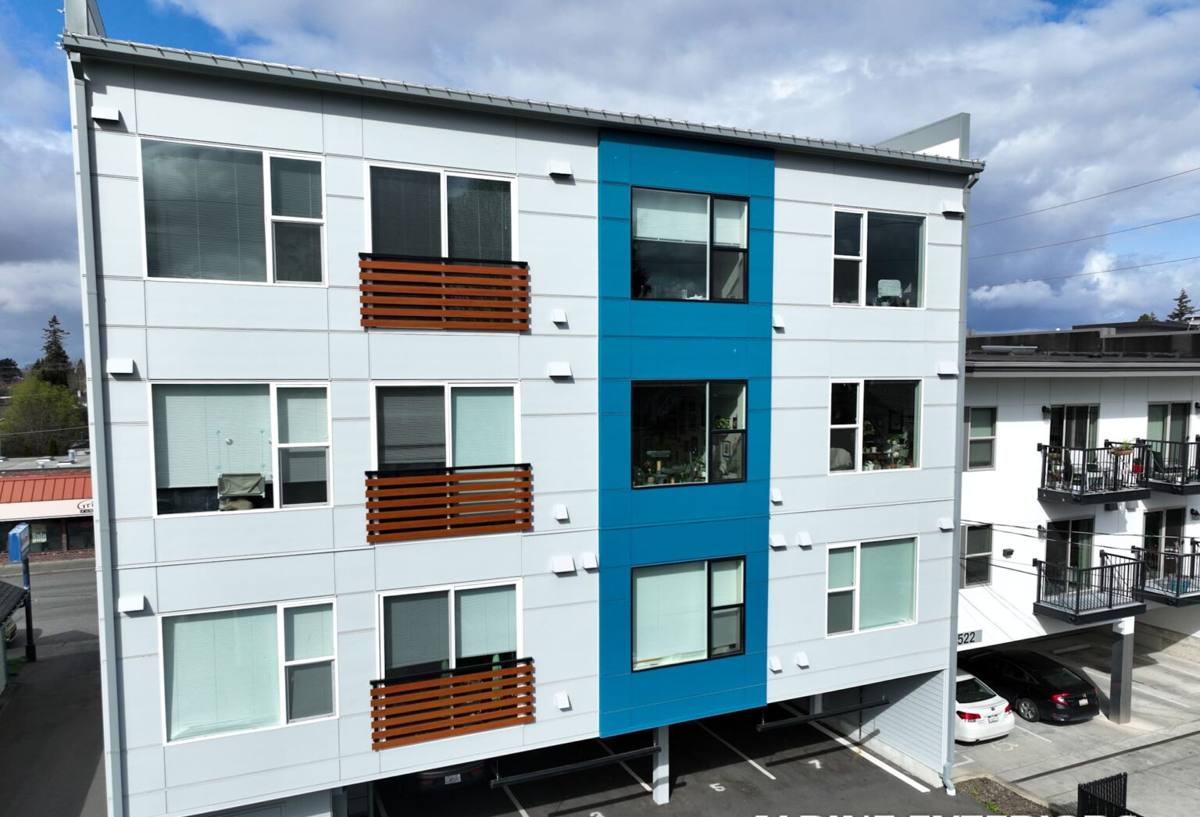
What Actually Fails First in This Climate
When we get called out to look at failing windows in this area, the problems cluster into a short list. Knowing them ahead of time helps homeowners understand what to prioritize and what questions to ask any contractor bidding the job.
Seal and Glass Failure
Insulated glass units rely on a perimeter seal to keep the gas fill in and moisture out. Constant humidity cycling and temperature swings between a cold, driving rain and brief sun breaks stress that seal faster than it would in a drier climate. The tell is fogging or a hazy ring between the panes that won't wipe off — once you see that, the seal is gone and the unit needs replacing, not just cleaning.
Frame and Sash Corrosion or Rot
Salt air accelerates corrosion on aluminum hardware, hinges, and cranks. On wood-framed units, moisture that gets past a failed exterior seal or bad flashing sits in the sill and lower corners — the classic soft-wood spots on an older window. Vinyl doesn't rot, but UV and salt exposure over many years can leave frames brittle and prone to cracking at the corners.
Moss and Organic Growth Around the Frame
Custer's long moss season isn't just a roof problem. Moss and algae take hold in the shaded, damp perimeter where a window meets siding, especially on north-facing walls or under trees. Left alone, that growth holds moisture against the frame and trim, which shortens the life of both the window and the wall assembly behind it.
Air and Water Infiltration at the Flashing
This is the one that costs the most to ignore. A window can be perfectly good and still leak if the flashing, house wrap integration, and sealant details around it were done wrong — either at original construction or during a prior replacement. Driving rain off the water finds these gaps. It's usually a bigger factor in window failure and interior damage than the window unit itself.
What a Correct Custer Window Replacement Involves
Replacing a window is straightforward in concept and easy to get wrong in the details that matter for this climate. Here's what we consider non-negotiable on every job in this area.
- Remove the old unit and inspect the rough opening, sill, and sheathing for hidden moisture damage before anything new goes in
- Repair or replace any soft or rotted framing found at that stage — never install a new window over a compromised opening
- Install self-adhered flashing membrane at the sill and jambs, integrated correctly with the existing house wrap using proper shingle-lap sequencing so water always sheds outward
- Set the window level, plumb, and square, with proper shimming so the frame isn't under stress that can crack seals prematurely
- Insulate the gap between the frame and rough opening with low-expansion foam or backer rod — not just caulk, which isn't a substitute for an insulated, air-sealed cavity
- Apply exterior sealant at the correct joints only, leaving the designed weep path clear so any incidental water can still drain out
- Finish interior trim and check operation — smooth open/close, tight lock engagement, no binding
Skipping the flashing and rough-opening steps is the single most common shortcut we see on prior installs in this region, and it's exactly the step that determines whether a window survives ten years of Whatcom County weather or starts leaking within a couple of seasons.
Choosing the Right Frame Material for a Custer Property
There isn't one right answer for every house — it depends on exposure, budget, and what the rest of the home's exterior is doing. Here's how the common options actually compare for this specific climate, framed as honest trade-offs rather than a sales pitch for any one product.
| Material | Salt Air Behavior | Maintenance | Best Fit |
|---|---|---|---|
| Vinyl | Good; can chalk over many years of salt exposure | Low — occasional wash | Most Custer homes, especially budget-conscious full-house replacements |
| Fiberglass | Excellent; dimensionally stable, resists corrosion | Low | Exposed, wind-driven walls facing the water |
| Aluminum-clad wood | Fair; cladding protects wood but fasteners/joints need attention | Moderate | Homes wanting a wood interior look with better exterior durability |
| Solid wood | Poor without diligent upkeep | High — regular painting/sealing required | Historic or architecturally specific homes only, with owner committed to upkeep |
We'll walk through this table against your actual house — which walls take the weather, what your budget target is — rather than defaulting to whatever we happen to stock. That's a five-minute conversation on-site, not a guessing game from a brochure.
Glass Packages Worth Considering
For this climate, we generally steer homeowners toward double-pane units with a low-E coating as the baseline, with argon fill as a worthwhile step up for west- and north-facing rooms that take the brunt of wind and rain. Triple-pane makes sense for homeowners prioritizing sound dampening or maximum efficiency, but it's a real cost jump and isn't necessary on every elevation of every house — another reason a room-by-room look matters more than a blanket spec.
Our Process for Custer Jobs
The process is the same discipline whether it's two windows or a whole-house replacement — what changes is scope and timeline.
- On-site assessment. We look at each window from both sides, check for soft framing, note which elevations face the prevailing weather, and measure accurately.
- Honest scoping. We tell you which windows are cosmetic replacements and which have underlying moisture or framing issues that need addressing first — before you commit to a number.
- Written estimate. Material, labor, and any framing repair broken out separately so you know what you're paying for and why.
- Removal and opening inspection. Every opening gets checked before the new unit goes in, not after a problem shows up.
- Correct flashing and installation. The sequence described above, every time, regardless of how small the job is.
- Final walkthrough. We test operation, check seals, and clean up before we call it done.
Why a Crew That Already Works Custer Matters
Window installation quality comes down to details that don't show up in a spec sheet — how the flashing integrates with your specific siding type, how much the wind actually loads a given wall, whether the moss and shade pattern on your lot means extra attention at the sill. A crew that's already worked houses in Custer and around Semiahmoo has seen how these homes age in this exact exposure, not a generalized "coastal Pacific Northwest" assumption. That local pattern recognition is what prevents a technically fine window from becoming a five-year callback.
It also means a contractor who's reachable if a question comes up after the job — not a crew that installed once and moved three counties away. For a climate that punishes shortcuts slowly and quietly, that continuity is worth more than it sounds.
Signs It's Time to Replace, Not Repair
Not every window issue means full replacement. Use this as a rough guide before you decide:
- Fogging or haze between panes that won't clean off — seal failure, glass unit needs replacing
- Soft, spongy, or discolored wood at the sill or lower corners — likely rot, needs inspection before any repair decision
- Drafts or a noticeable temperature difference near the window even when closed and locked
- Difficulty opening, closing, or locking that isn't fixed by cleaning the tracks and hardware
- Visible daylight or water staining on interior trim below or beside the frame — an active infiltration path
- Frame cracking, chalking heavily, or corroding at hardware points
If you're only seeing one or two of these on isolated windows, targeted replacement usually makes more sense than a whole-house project. If it's showing up across multiple elevations, especially ones facing the water or prevailing wind, that's often a sign the original installation details were off across the board — worth a full assessment rather than fixing them one at a time as they fail.
Get a Straight Answer for Your House
Every Custer property handles wind, rain, and salt air a little differently depending on lot exposure and how the original windows were installed. We'd rather look at your specific windows and tell you honestly what needs replacing now, what can wait, and what the right material choice is for your budget than sell you a package that doesn't fit the house. Reach out for a free, no-pressure estimate — we'll walk the exterior with you and give you a clear, itemized picture before anything is decided.