 Semiahmoo Siding
 Why Decks in Sumas Take a Beating
A deck in this part of Whatcom County lives a harder life than most homeowners realize. The combination of salt-tinged air drifting in off the water, long stretches of driving rain, and a moss season that can stretch from fall well into spring means a deck's structure is under near-constant moisture pressure for most of the year. It's rarely one dramatic storm that takes a deck down. It's the slow, repeated cycle of wet-then-dry, freeze-then-thaw, and shade-grown moss holding water against wood and fasteners long after the surface looks dry.
Decks that were built to a lower standard, or that have simply reached the end of their service life, tend to fail from the inside out. The boards on top can still look presentable while the framing underneath is already compromised. That's the gap we look for on every deck we walk in Sumas: what the eye sees versus what's actually holding the structure together.
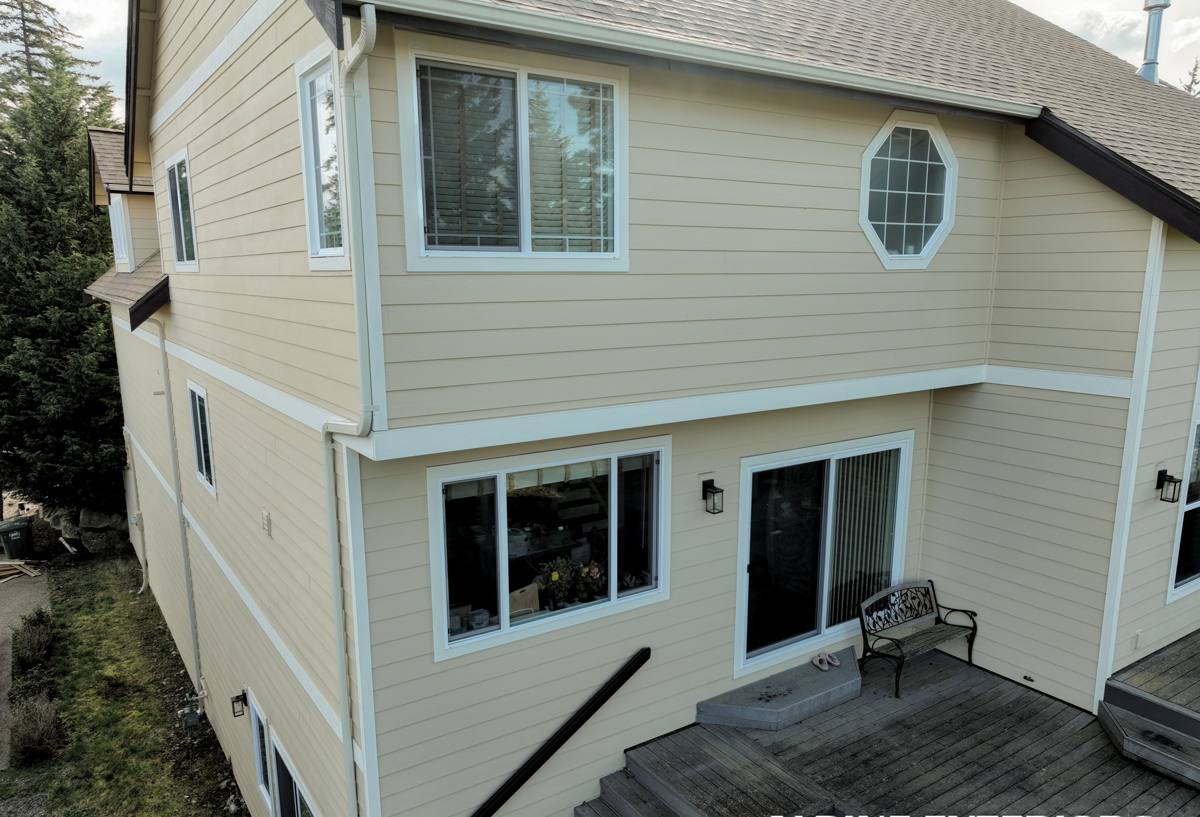
Repair or Replace? Signs It's Time
Not every tired-looking deck needs a full replacement, but a lot of the decks we're called out to see in this area are past the point where patching makes sense. Some signs point clearly toward replacement rather than repair:
- Soft or spongy spots in the decking, especially near the house or in shaded corners where moss and debris collect
- Visible rot, delamination, or crumbling at the ledger board where the deck attaches to the house
- Posts or footings that have shifted, settled, or show rot at the base where they meet the ground
- Rusted, loose, or corroded fasteners and connectors, particularly on older decks built before code required stainless or coated hardware in wet climates
- A railing that flexes or feels loose when leaned on — a structural and safety issue, not a cosmetic one
- Persistent moss or algae growth that keeps returning within weeks of cleaning, which usually signals the wood underneath is staying wet longer than it should
If the problems are limited to surface boards and the framing underneath tests sound, resurfacing can be a reasonable option. But once rot has reached the framing, ledger, or posts, repair becomes a patchwork of fixes that won't hold up through another wet season. That's when full replacement is the honest recommendation.
What a Correct Deck Replacement Actually Involves
A deck replacement done right isn't just new boards on old bones. It starts below the surface, with the parts of the deck that never get seen once the project is finished but determine how long it actually lasts.
Framing and Footings
We evaluate the existing footings, posts, and beams before assuming anything gets reused. In a climate with this much sustained ground moisture, footings that were undersized or poured too shallow originally are common culprits behind a deck that feels bouncy or has started to lean. Where footings don't meet current standards, they get replaced or supplemented — not built around.
Ledger Board and Flashing
The ledger board — where the deck bolts into the house — is the single most common failure point we find on older decks in wet regions like this one. If it was installed without proper flashing, or with flashing that's degraded over the years, water has likely been getting behind it and into the house's rim joist for a long time. Every replacement we do treats the ledger connection and its flashing as a critical structural detail, not an afterthought, because a failure here doesn't just damage the deck — it can lead to hidden rot in the home itself.
Fasteners and Hardware
Structural screws, joist hangers, post bases, and bolts all need to be rated for exterior, high-moisture use. Mixing incompatible metals or using interior-grade hardware is a shortcut that shows up as rust streaks and weakened connections within a few seasons in this climate.
Choosing Decking Material for This Climate
Material choice matters more here than in drier parts of the state. Salt-influenced air and a long stretch of damp, shaded months put real pressure on whatever surface you choose. There's no single right answer for every homeowner — it depends on budget, how much upkeep you're willing to do, and how the deck is exposed to sun and shade.
| Material | Moisture Behavior | Maintenance | Typical Lifespan |
|---|---|---|---|
| Pressure-treated wood | Resists rot when properly sealed, but end grain and cut edges are vulnerable if not treated | Annual cleaning and periodic sealing/staining | 10–15 years with upkeep |
| Cedar | Naturally rot-resistant, but surface graying and moisture absorption increase without maintenance | Regular sealing recommended in this climate | 15–20 years with upkeep |
| Composite decking | Doesn't rot, but lower-grade boards can absorb moisture at cut ends without proper capping | Periodic washing to prevent moss and mildew buildup | 25–30 years |
| PVC/capped polymer | Fully moisture-resistant surface, best performance in prolonged wet and shaded conditions | Occasional washing, minimal upkeep | 25–30+ years |
We don't push one product over another as a default. What we do push is honesty about trade-offs: wood costs less up front but demands ongoing maintenance to keep moss and rot at bay in this climate, while composite and PVC systems cost more initially but shift the long-term burden away from yearly sealing and staining. For decks with heavy shade or limited airflow underneath — common in wooded lots around Sumas — we're often more cautious about lower-grade wood options, simply because that's where moisture sits longest.
Our Deck Replacement Process
We keep the process straightforward so you know what to expect from the first visit to the final walkthrough.
- On-site evaluation. We inspect the existing deck's framing, footings, ledger connection, and hardware to determine what's salvageable and what isn't.
- Written scope and options. You get a clear breakdown of what needs replacing, material options with honest trade-offs, and a straightforward estimate — no vague allowances.
- Demolition and disposal. The old deck comes down, including any compromised framing, and debris is hauled off the property.
- Structural rebuild. Footings, posts, beams, joists, and ledger flashing are installed or upgraded to current code requirements.
- Decking, railing, and stairs. Surface materials go down per manufacturer spacing and fastening specs, with attention to drainage and airflow underneath.
- Final walkthrough. We go over the finished deck with you, including basic care guidance for the material you chose.
Permits and Code Considerations in Whatcom County
Deck replacement projects that involve structural work — new footings, a rebuilt ledger connection, or changes to railing height and guard spacing — typically require a permit and inspection. This isn't paperwork for its own sake; it's what ensures the footings are sized correctly for our soil and moisture conditions, and that railings and stair geometry meet current safety standards. We handle the permit process as part of the job rather than leaving it for the homeowner to sort out, and we build to pass inspection the first time rather than cutting corners that get flagged later.
Keeping a New Deck Looking Good Through the Wet Months
A well-built deck still needs some seasonal attention in a climate like this one. A little routine care goes a long way toward protecting the investment:
- Sweep leaves and debris off the surface regularly, especially in fall — trapped organic matter holds moisture and feeds moss growth
- Rinse off surface moss or algae before it has a chance to establish, rather than waiting until it's visibly thick
- Check that gaps between boards stay clear so water can drain through rather than pooling
- Inspect railings and stair connections once a year for any looseness
- For wood decks, plan on resealing or restaining on the schedule recommended for the product — skipping a cycle in this climate shows up fast
- Keep gutters and downspouts near the deck clear so runoff isn't draining directly onto or under it
Why Hiring a Crew That Already Works in Sumas Matters
Deck framing and material choices that work fine in a dry inland climate don't always hold up here. A crew that regularly works decks in this part of Whatcom County already knows where moisture tends to collect on a typical lot, which ledger and flashing details actually keep water out through a wet winter, and which materials are worth the added cost versus which ones just add maintenance without adding much life. That local pattern recognition is the difference between a deck that needs attention again in five years and one that's still solid in twenty.
We also stand behind the work with clear communication throughout the project — what we found once the old decking came off, why a repair became a replacement in areas we didn't expect, and what the finished structure can be expected to handle. No surprises buried in the fine print.
If your deck in Sumas is showing signs of wear, or you're just not sure whether it needs repair or a full replacement, we're glad to take a look. Reach out for a free, no-pressure estimate using the form below.