 Semiahmoo Siding
 Cherry Point's Siding Takes a Different Kind of Beating
Cherry Point sits on open water at the edge of the Semiahmoo area, and that shoreline exposure changes what siding has to deal with. Homes a few miles inland in Whatcom County might go years between siding issues. Homes closer to the water deal with salt-laden air, wind-driven rain that hits siding sideways instead of straight down, and a moss season that can run most of the year in our marine climate. None of that is exotic weather — it's just constant, and constant is what wears siding out.
We repair siding in this area regularly enough to know the difference between damage that's cosmetic and damage that's a warning sign. A repair done right addresses the cause, not just the visible spot. A repair done fast — caulk over a gap, paint over a stain — usually comes back within a season or two, often worse than before.
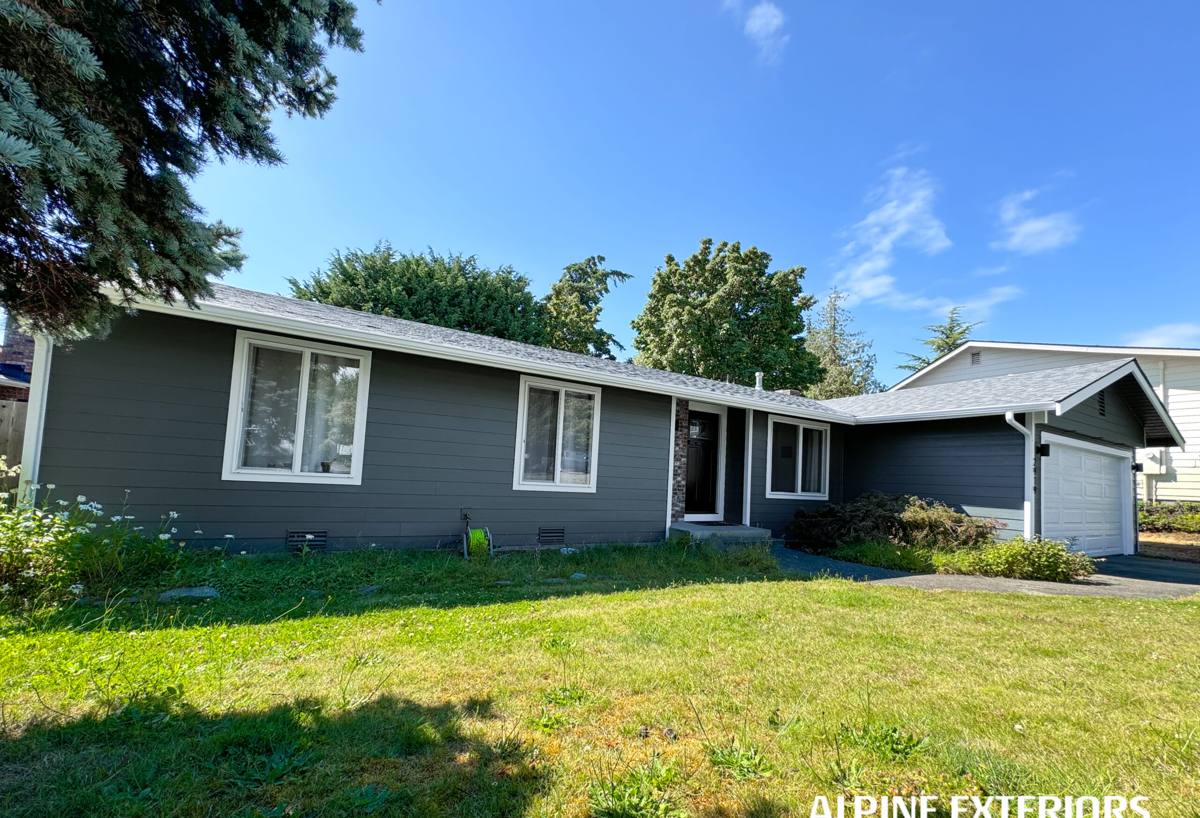
How Salt Air, Rain, and Moss Actually Damage Siding
Salt Air and Fastener Corrosion
Airborne salt doesn't just sit on the surface of your siding — it works its way into seams, joints, and fastener heads. Over time it accelerates corrosion in nails, screws, and any exposed metal trim. Once fasteners start to corrode, they lose their grip, siding panels loosen, and gaps open up that let water behind the cladding. This is a slow process, which is exactly why it's easy to miss until a panel is already loose or a section has visibly shifted.
Wind-Driven Rain
Rain that falls straight down is relatively easy for siding to shed. Rain pushed sideways by wind off the water behaves differently — it gets forced into laps, corner joints, and anywhere caulk or flashing has started to fail. That's why we see more water intrusion around windows, corners, and butt joints on wind-exposed elevations than on the sheltered side of the same house.
Moss, Algae, and Trapped Moisture
A long moss season means organic growth has more time to establish itself on north-facing walls, under eaves, and anywhere siding stays damp longer than it should. Moss itself isn't just cosmetic — it holds moisture against the siding surface far longer than open air would, and on moisture-sensitive materials that constant dampness is what leads to swelling, softening, and paint failure. Even on materials that resist rot, trapped moisture behind moss growth can degrade caulk, trim, and finish coatings faster than expected.
Common Repair Situations We See in Cherry Point Homes
| What We Find | Likely Cause | What Happens If Ignored |
|---|---|---|
| Loose or popped panels | Corroded or backed-out fasteners | Wider gaps, wind intrusion, panel loss in storms |
| Soft or swollen siding near the ground | Splash-back moisture and poor drainage | Rot spreads upward, framing damage behind siding |
| Persistent black or green staining | Moss and algae holding moisture on the surface | Finish failure, accelerated material breakdown |
| Cracked or failed caulk at joints | UV exposure and repeated wet/dry cycling | Water tracking behind siding, hidden sheathing damage |
| Peeling or bubbling paint | Moisture trying to escape from behind the siding | Sign of an active moisture problem, not just a paint issue |
The common thread in almost every one of these is that the visible damage is downstream of a moisture or fastener problem. Painting over stains or caulking over a gap treats the symptom. Fixing the actual entry point is what keeps the repair from repeating.
What a Correct Siding Repair Actually Involves
A repair that's built to hold up on the Semiahmoo waterline usually includes more steps than homeowners expect, especially when the damage has been developing for a while.
- Remove affected panels rather than patching over them, so we can see the sheathing and framing underneath.
- Inspect for hidden water damage — soft sheathing, rot, or mold that isn't visible from outside.
- Repair or replace damaged framing and sheathing before any new siding goes back on. Skipping this step is the single most common reason repairs fail early.
- Correct the water management detail that let moisture in — flashing, house wrap laps, kick-out flashing at rooflines, or drainage gaps behind the siding.
- Match or upgrade the siding material for the repaired section, with fasteners and caulk rated for coastal exposure.
- Reseal and finish so the repaired area sheds water and blends with the surrounding siding.
Steps one through four are the part that gets skipped by quick patch jobs. They're also the part that determines whether a repair lasts five years or fifteen.
Repair or Replace: How We Make That Call
Not every damaged section needs full replacement, but a lot more sections need it than homeowners assume once we're actually behind the siding.
| Factor | Points Toward Repair | Points Toward Replacement |
|---|---|---|
| Extent of damage | Isolated to one or two panels | Spread across a wall or multiple elevations |
| Sheathing condition | Dry, solid framing underneath | Soft, stained, or rotted sheathing found |
| Cause of damage | A single fixable defect (bad caulk joint, one failed fastener run) | A systemic issue — poor original flashing, wrong material for the exposure |
| Age of existing siding | Still well within its expected service life | Already near end of life, with repair just delaying the inevitable |
| Material match | Discontinued but matchable material | Material no longer made, or the original product wasn't suited to this exposure to begin with |
We'll always tell you honestly which side of this table your home falls on. Recommending a full re-side when a targeted repair would genuinely hold up doesn't help you or us — but neither does patching over a problem that's going to reopen the same wall in two years.
Why Material Choice Matters Even for a "Repair"
When a repair section needs new siding — whether it's a few boards or a whole wall — the material you put back matters as much as the workmanship. This is one of the reasons we install exclusively James Hardie fiber cement siding rather than vinyl, LP SmartSide, or untreated wood products. In a salt-air, high-moisture environment like the Semiahmoo shoreline, fiber cement doesn't swell, rot, or feed the kind of trapped moisture that keeps re-triggering the same repairs. It's also non-combustible and holds a factory-applied ColorPlus finish engineered to handle sun and moisture cycling without the repeated repainting some materials demand.
If your home currently has a different siding material and you're only looking for a repair, we'll repair it — but we'll also give you an honest read on whether that material is the reason the damage happened in the first place, and what a Hardie-based repair or partial re-side would change going forward.
Why It Matters to Hire a Crew That Already Works This Coastline
Siding repair looks straightforward from the outside, which is exactly why it's easy to underestimate. A crew that mostly works inland jobs may not think to check for salt-accelerated fastener corrosion, or may not recognize how much longer moss holds moisture against a wall in a marine climate compared to a drier part of the county. A crew that regularly works Cherry Point and the surrounding Semiahmoo shoreline knows which elevations take the worst wind-driven rain, where moss builds up fastest, and which original installation shortcuts tend to fail first in this exact exposure.
That local pattern recognition is what separates a repair that actually holds from one that's back on the schedule next winter.
What to Ask Before Hiring Anyone for a Siding Repair
- Will you inspect and repair the sheathing/framing underneath, not just replace the visible siding?
- What fastener and flashing details will you use given the coastal exposure here?
- Do you work with fiber cement, and can you match or transition cleanly from the existing material?
- Is the repair warrantied, and does that warranty cover workmanship as well as materials?
- Have you done repair work elsewhere on the Semiahmoo shoreline or similar waterfront exposure?
Simple Maintenance That Extends Time Between Repairs
No maintenance routine eliminates the need for repairs eventually, but a few habits meaningfully slow the clock in a salt-air, high-moss environment.
- Rinse salt residue and grime off siding once or twice a year, especially on wind-exposed elevations.
- Keep gutters clear so overflow isn't running down and pooling against siding at the corners.
- Trim back vegetation and tree cover that keeps north-facing walls shaded and damp longer than necessary.
- Check caulk at window and door trim annually — it's usually the first thing to fail and the cheapest to catch early.
- Address moss at first sign rather than waiting for visible staining; earlier removal means less time it's held moisture against the surface.
- Walk the exterior after major windstorms to catch loosened panels or trim before the next rain event.
Getting a Straight Answer on Your Repair
If you're seeing loose panels, staining, soft spots, or recurring moisture issues on your Cherry Point home, it's worth having someone look behind the siding before deciding whether it's a patch job or something bigger. We offer free, no-pressure estimates — we'll tell you plainly what we find, what it will take to fix it correctly, and what it would cost to do it right, whether that's a small repair or a larger conversation about replacement. Fill out the form below to get a time on the calendar.